

The crypto markets keep buzzing with speculation over when a new altcoin rally or altcoin buzz will happen. These are periods during which altcoins typically follow a Bitcoin (BTC) market rally or break out on their own. Important themes to look out for include Bitcoin dominance, market breadth, sentiment indicators and confirmation signals.
Currently, markets are rotating; altcoins are outperforming while BTC is consolidating. Studying how these pieces fit together, traders and investors can better determine whether the altcoin buzz kickstarts the beginning of a widespread rally or just mere hype that should be avoided.
Altcoin Buzz vs Bitcoin Rally: End of the Cycle
Crypto investors have a saying that “When Bitcoin goes up, altcoins follow.” There is some truth to this, but with caution as well. Bitcoin naturally is crypto’s most important benchmark, drawing most of the market cap. Strong rallies by BTC therefore, tend to lift overall market sentiment.
As confidence builds, some capital “rotates” out of Bitcoin and into smaller altcoins. In other words; a Bitcoin rally can prime the pump for altcoins but usually not right away. Bitcoin actually usually leads first, and then altcoins rise after Bitcoin’s uptrend slows or consolidates.
In the 2020-2021 bull market, for example; Bitcoin reached new all-time highs before dominance peaked. Once BTC settled, alts took off. Ethereum, Solana, Cardano and more jumped in what was indeed an altseason.
In the late 2017 bull run, Bitcoin topped out around $20,000 in December of that year and then collapsed by early 2018 with BTC dominance falling from 86% to 38% in the process. Speculative capital began flooding into hundreds of altcoins, ICO tokens, especially leading to massive returns. In each instance, altcoins trailed Bitcoin’s early charge but then led the latter phases of the market.
However, the trend is not always guaranteed. Not all altcoins lift at the same time, nor do they always rise when Bitcoin spikes. A BTC pump may do hardly anything for some altcoins, and sometimes altcoins rally by themselves due to a specific news or tech development.
The secret lies in the market phase. At the start of a bull cycle, money is poured into BTC first; then it rotates into smaller coins. Understanding what phase the market is in, whether bull phase, peak or recovery, is essential for interpreting the excitement surrounding some altcoins.
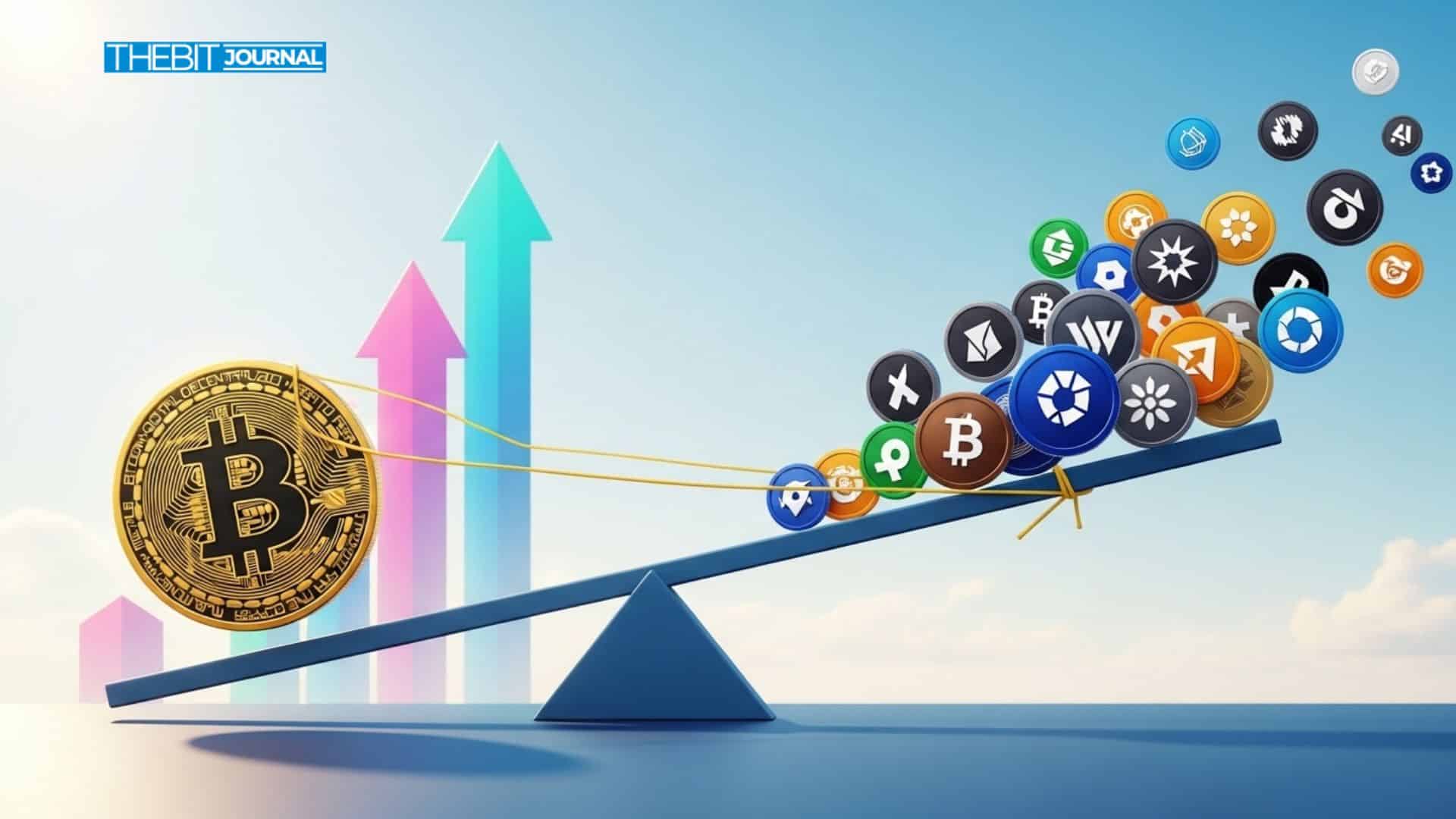
Why Altcoins Lag or Lead Depending on Market Phase
Bitcoin usually takes the lead early on in every crypto cycle. In the early part of a bull phase, institutional and more conservative investors crowd into Bitcoin as the “safer” large-cap crypto. At this state, most altcoins are on the backseat. Well, when its movement becomes stabilized or is losing steam, part of this capital goes to altcoins. To explain it simply, traders cash out on BTC or take profits and redeploy into altcoins that have not ran up yet.
Table 1: Market Phases and Altcoin Reaction
| Market Phase | Bitcoin Trend | Altcoin Behavior |
| Early Bull | Sharp rally or breakout | Altcoins largely lag; few big alt outliers |
| Consolidation Phase | BTC stabilizes or plateaus | Altcoins begin to rise; profit-taking shifts into alts |
| Late Bull (Altseason) | Widespread exuberance (sometimes BTC still rising) | Broad alt rally; many alts outperform Bitcoin; Caution: bubble risk |
| Correction/End | BTC falls sharply | Altcoins often crash harder; safe-haven flows back to BTC and stablecoins |
As highlighted above, altcoin buzz tends to pick up steam as a bull cycle matures. They often do extremely well towards the middle/late stages of a bull cycle. This effect is well-documented.
Similarly; after Bitcoin’s rally in late 2020, many investors reallocated funds into Ethereum, DeFi tokens and NFTs in the early part of 2021. Bitcoin dominance dropped from 70% to 38% in April 2021, driven by massive inflows into altcoins. If BTC is in a rally, but dominance is high then altcoins are lagging behind.
In 2025-2026, this same pattern reemerged. In November 2025; analysts pointed to Bitcoin domination decreasing from 61% to 58.8%, the same month that coincided with a month-high in the Altcoin Season Index. This movement indicated capital was certainly rotating into mid-cap tokens. Even so, experts warn that simply because an alt is surging, doesn’t mean it’s a full-blown alt-season without confirmation.
Bitcoin Dominance: The Simple Guide
Bitcoin dominance (BTC. D) is the percentage of total crypto market capitalization held by Bitcoin. It serves as a barometer of relative investor confidence in Bitcoin versus all other coins. A rising BTC. D means more capital is flowing into Bitcoin compared to Altcoins; a declining BTC. D indicates that altcoins are taking an increased portion of the market.
BTC. D is used by traders to gauge market phases. If Bitcoin is rallying but BTC. D is moving flat or up, it means altcoins are not yet involved. If BTC. D takes a sudden dump, particularly after a top or pause in BTC rally, it may be a sign that altseason is here.
In practical terms then, traders need to treat Bitcoin dominance levels as technical barriers. If BTC. D has already bounced off support (e.g. staying above 60%), and altcoins may have a hard time closing the break.
Current levels at approximately 58% at the time of publication are lingering around multi-month lows, suggesting that some capital has rotated out of Bitcoin.
Bitcoin dominance is just one metric. It could be affected by the issuance of stablecoins, issuing new altcoin or market cap decrementation. Still, major breaks in BTC. D on volume confirmation generally match nicely to rotation phases.
BTC trends should be paired with BTC. D, and the larger market outlook before forming any opinions.
Breadth Indicators: How Many Coins Are Moving
Market breadth indicators point to how broadly a price move is distributed among assets. In crypto, breadth measures whether a rally is being carried by just a handful of large coins or many smaller ones.
High breadth (lots of altcoins rising) is a bullish indication of broad participation, while low breadth (few gainers) reflects narrow action.
Some key breadth concepts include:
Advance-Decline Line (A/D Line): This tracks the difference between the number of coins rising versus falling. A rising A/D line indicates broad coin growth. A falling A/D line outlines a multi-year downtrend in the top-100 crypto market.
Earlier this year 2026, Cowen pointed out that broad sentiment and the A/D Index were subdued, with defensive flows into Bitcoin and liquidity spread thin across many altcoins.
Altcoin Season Index: this measures the percentage of top coins outperforming Bitcoin over 30 days. A high index of about 75%+ is a sign of an “altseason.” According to reports in late Feb 2026, the Altcoin Season Index was at its highest since January with altcoins as a whole, outpacing Bitcoin.
Broad Market Indices: CoinDesk 80 (CD80) Index tracks large caps beyond BTC/ETH. An all-coins rally typically pulls up these indices. A 1.7% increase in CD80 in late February 2026 was cited as proof of improving breadth across the altcoin market. The movement of these indices together with Bitcoin rallies is a confirmation that alts are participating.
Table 2 summarizes a few signals:
| Breadth Indicator | Interpretation | Recent Signal |
| Advance-Decline Index (Top 100) | +ve trend: many coins rising; -ve trend: few coins rallying | Currently declining: experts Multi-year downtrend, indicating poor breadth. |
| Altcoin Season Index (30d) | % of altcoins beating BTC; above 75% signals altseason | Recently rose to January’s highs, suggesting modest breadth gain. |
| CoinDesk 80 Index | Broad altcap index; +ve move = broad participation | Up 1.7% in late Feb 2026, reflecting broad alt strength. |
| Volume and Open Interest | High altcoin trading volume/open interest can confirm rallies | Feb 2026 saw modest volume/inflow into alt futures; BTC range-bound. |
In essence, breadth measures help to answer this question: “Is this rally driven by a few tokens or the market as a whole?”
When altcoin buzz is real, many coins in all sectors will be pumping (breadth indicators rise). If top tokens or meme coins are the only ones spiking, there’s no breadth.
The breadth was actually seen as improving as of February 2026, when altcoins such as Solana (SOL), Cardano (ADA), and hundreds of smaller tokens took part in a recovery rally with double-digit gains. But breadth overall was still nowhere near the participation of 2021.
Traders need to monitor these indicators to confirm whether an altcoin buzz is for real or one-dimensional.
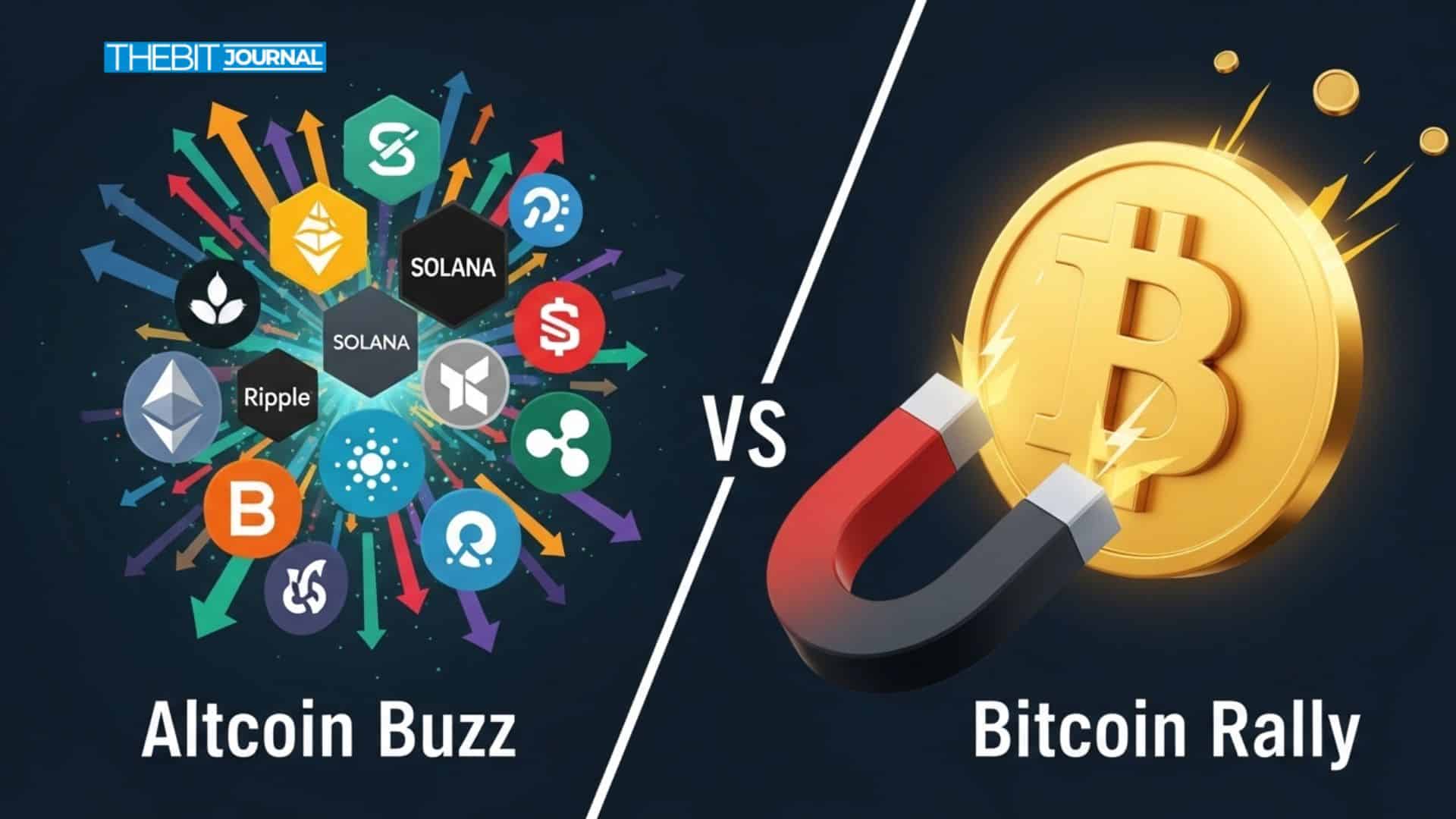
When Altcoin Buzz Is a Warning Sign
An extreme altcoin buzz may mean that the top or bubble is near. In bubbles media stories scream, small retail traders FOMO in and prices go up.
Parabolic price action and extreme sentiment often gives clear warning signs of the peak. When altcoins are going up 2x or 3x in days and the social media is full of crypto cheers, it is important to be careful. As a historical matter, bubbles are driven by stories and hype, not fundamentals.
Warning signals in altcoin buzz:
Excessive hype: Too many headlines, influencers and “X to the moon” talk can mean retail mania. As an example, the classic signs of a crowd-crazy market in late 2021’s peak were headlines about crypto on mainstream outlets and tokens going up left and right.
Leveraged spikes and funding extremes: When most traders open up futures or leverage bets on altcoins, it makes trading very unstable. When funding rates are high (which occurs during euphoria), the market has in most parts become crowded. Real bubbles are characterized by extreme leverage and retail participation, which typically come before their busts.
Parabolic charts: The price chart of an altcoin that curves vertically without making the slightest pause frequently comes before a sharp reversal. Many altcoins in 2026 are still consolidating rather than blowing off, only upon actual breakouts with volume would rallies be sustainable. In its absence, a sudden spike can be a false start.
Diverging macro/indicative data: when everything rallies but critical risk appetite indicators like equity markets, credit spreads do not, that crypto rally can be isolated and fragile. In February 2026, Bitcoin put options were still heavily traded, indicating a protective stance; a subtle warning.
When altcoin buzz is a warning, it means that the crowd is delirious, and fundamentals or larger context are being disregarded. It is the opposite of confirmation. Market tops often occur when skepticism leaves and everyone is all-in on altcoins. Traders should know that parabolic moves and sentiment saturation are warning signs.
What to Watch Next: Signs of Active Confirmation
Assuming conditions are conducive for an altcoin rally, what signals confirm the altcoin buzz is real and not a fakeout?
These include:
Volume and Open Interest: If a true alt rally occurs, expect high trading volumes and increasing futures open interest across different altcoins. In late February 2026, alt rallies were seen alongside moderate volume and open interest increases (e.g. across futures markets, increases in open interest ticked up with the spot rises). A clear breakout would need to see volumes break outside of that congestion range.
BTC price stability: Ideally, Bitcoin should hold up. A prolonged alt rally usually has Bitcoin pausing, maybe a light pullback, but not a crash. In the case that Bitcoin regains some of its momentum and sets new highs, it would normally draw capital back from alts.
Dominance continuation: As stated before, a verified drop in BTC dominance below critical thresholds has typically aligned with strong alt seasons. A sustained dominance below 54% could confirm an impending alt rally. If BTC.D bounces back instead, it warns alts are weakening.
Technical Breakouts: Most analysts use chart patterns. Altcoins in early 2026, for instance, were already forming into multi-year basing patterns like those in the 2017/2021 cycle peaks. Confirmation on higher highs is indicated by RSI or MACD would be a positive sign as it must have broken clear from consolidation. On the other hand, failure to overcome resistance would be a sour note of caution.
Correlation to the Total Crypto Market: Another notable index is TOTAL3 (summed value of all non-BTC, non-ETH market capital). If TOTAL3 starts accelerating; it confirms broad alt strength. Keep an eye on if the crypto market cap (excluding BTC) begins to expand noticeably.
On-Chain and Fundamentals Catalysts: Look for adoption news, DeFi usage spikes or network upgrades driving specific alts. For instance; upgrades or decisive regulatory wins could provide confirmation. Institutional moves can count as well.
To sum it up, fundamental validation, not only technical, can ensure that the altcoin buzz and actual momentum will last.
Conclusion
Altcoin Buzz shows the stage of the crypto cycle. In the past, altcoin rallies generally follow in Bitcoin’s footsteps where BTC leads the first leg of the bull run, before Altcoins take over and capital flows in.
For an altseason to be genuine, the Bitcoin dominance and market breadth are important indicators. If, however, BTC dominance is consistently in decline but indices are rising as seen late February 2026, altcoin buzz could be pointing to a persistent change.
If only a handful of tokens rise on parabolic charts, that altcoin buzz may be an early warning for a bubble.
Keep an eye on BTC dominance at key levels, leverage breadth measures and look for trendbreak or volume confirmation.
Glossary
Altcoins: Every cryptocurrency except for Bitcoin like Ethereum, Solana, Cardano.
Altcoin Season: A market phase during which many altcoins greatly outperform Bitcoin.
Bitcoin Dominance (BTC. The percentage of total crypto market cap that is for Bitcoin.
Altcoin Season Index: An indicator that tracks how many big altcoins are performing better than BTC over a certain time period (usually 30 days). Anything over 75% is indicative of an altseason.
Parabolic Move: A steep move that is almost, but not quite, vertical on a price chart. It is often a sign of unsustainable buying that can come before a crash.
Frequently Asked Questions About Altcoin Buzz
What is the term Altcoin Buzz referring to?
It generally refers to a time when many altcoins are on the rise; inspired by investor euphoria, fresh narratives (such as DeFi/NFTs) or value rotating away from Bitcoin.
What impact does Bitcoin dominance have on the price of altcoins?
Bitcoin dominance (BTC. D) calculates Bitcoin’s share of total crypto market cap. When BTC.D falls, it typically indicates that altcoins are rising in value against the Price of BTC. A declining BTC. D is often a sign of capital flowing to altcoins, and can lead to outperformance in altcoins. Conversely, rising BTC. D points to the capital race that Bitcoin is winning, while altcoins will likely be left further behind.
What are market breadth indicators and why should traders care?
Breadth indicators (e.g. advance-decline line, altcoin indexes) gauge the number of cryptos involved in a market rally. They are important to know because they show whether a rally is broad-based or narrow.
When can a strong altcoin rally be interpreted as bubble risk?
Classic signs of a bubble are extreme conditions like parabolic price curves, explosive trading volume with high leverage, and overly optimistic media/sentiment. If altcoins are pumping on the daily and social media is flooded with FOMO, that altcoin hype may be a red flag.
References
Disclaimer: This article is intended for informational purposes only and in no way should be taken as financial advice. Crypto markets are extremely volatile; please be careful and always do your own research or consult a professional before investing.