





This article was first published on The Bit Journal.
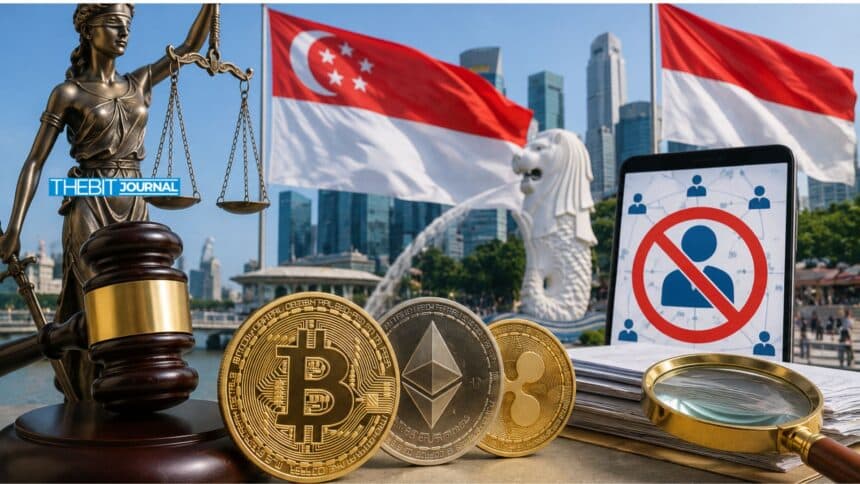
Asia crypto regulation veered sharply this week as Singapore flagged up decentralized exchange Hyperliquid on its Investor Alert list, Indonesia rolled out licensing requirements for crypto influencers, and Japan moved on a consolidation deal.
Considering all these developments, regulators are no longer focused solely on exchanges. Attention is expanding to social media promotion, stablecoin infrastructure, data protection, tokenized securities, and cross-border settlement networks.
Singapore Adds Hyperliquid to Its Watchlist
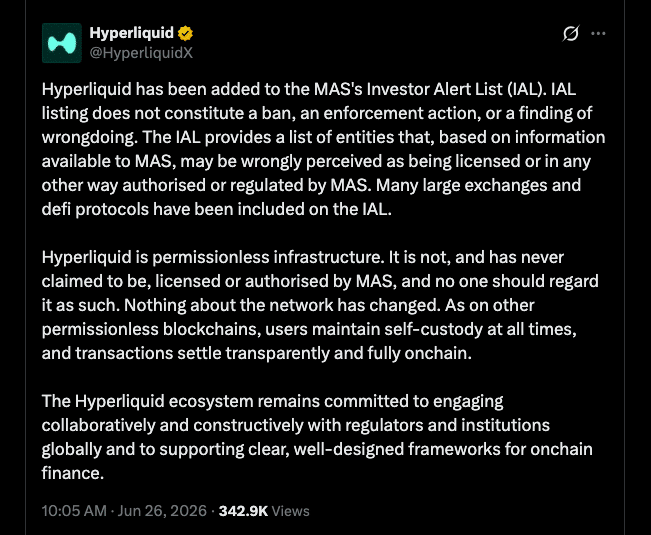
Just a few days ago, the Monetary Authority of Singapore (MAS) slapped Hyperliquid and the Hyper Foundation on to its Investor Alert list on June 26th.
The list is designed to identify companies that may be mistakenly viewed as being licensed or regulated by MAS. Although, being on the list doesn’t constitute a ban or punishment of any sort.
Hyperliquid dealt with the situation fairly quickly, stating that they’d never claimed to be licensed in Singapore and that their usual permissionless infrastructure remains unchanged.
It should be noted that MAS had recently also flagged Bybit on the same list. KuCoin and Bitget are also on the list.
For now at least, Hyperliquid continues to trade as normal, but Asia crypto regulation is moving fast beyond the traditional exchange business.
Indonesia’s Rating: No More Unqualified Influencers
This week as well, Indonesia took an interesting step in its quest to get the Asia crypto regulation scene better aligned.
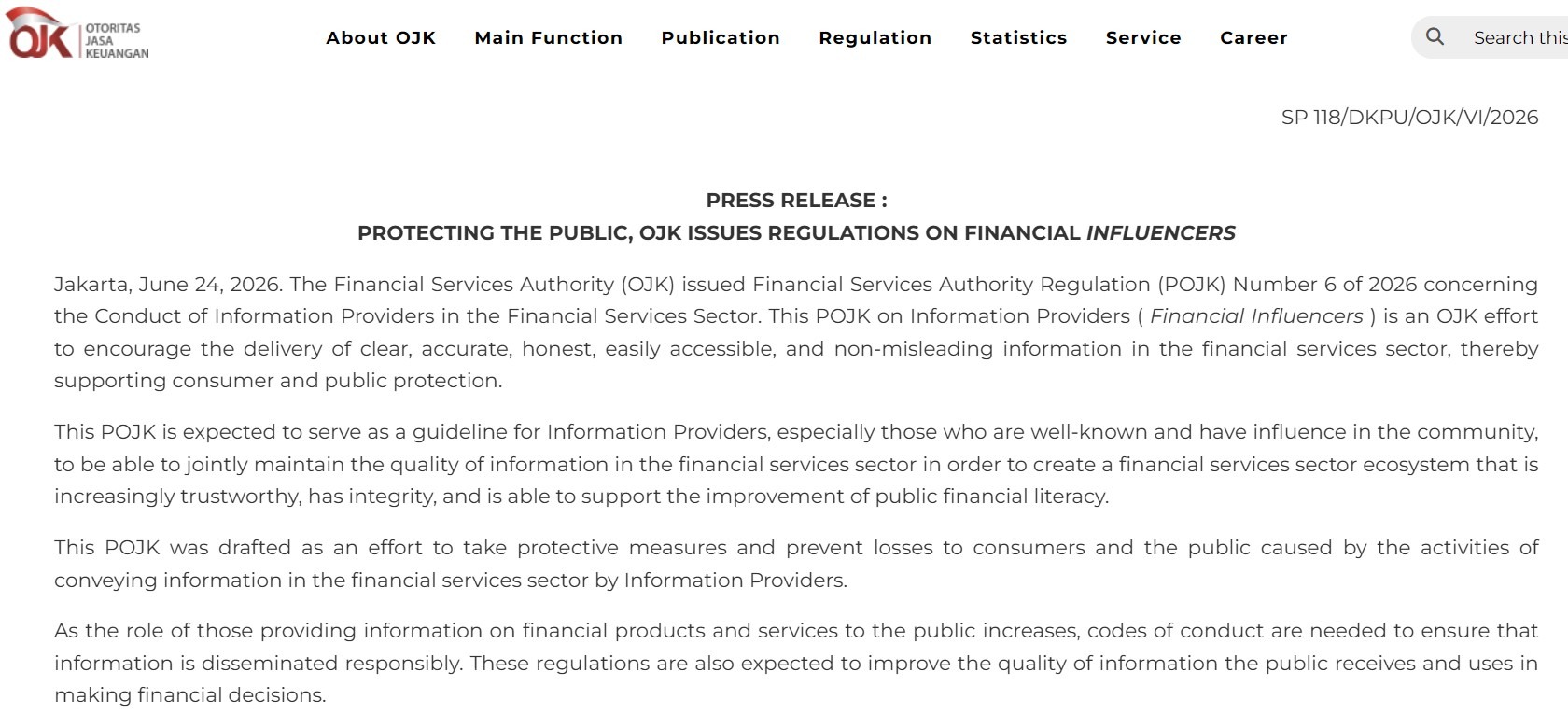
Under new rules set out by the Financial Services Authority in Regulation No. 6 of 2026, any individual promoting cryptocurrencies and digital financial products on social media will need to get a competency certification unless they already fall under another set of licenses.
The rules also mean that influencers are now only allowed to discuss digital assets that are listed on exchanges that have been properly vetted. Any company they are promoting has to have all the necessary licenses and the campaign itself must be pushed through proper channels controlled by regulated financial institutions.
Indonesia has now essentially matched the lead of several other countries like Australia, the UK, and the Philippines to introduce tighter regulations on financial marketing on social media.
Regulators are showing concerns about unqualified social media personalities driving investment decisions among retail investors.
Japan’s Crypto Market Is Getting Bigger, Not Smaller
While some regulators are increasing oversight, Japan is witnessing further institutional expansion.
SBI Holdings, the giant financial services company, has announced plans to purchase Bitbank for 46.7 billion yen (or $289 million). The deal is due to be wrapped up by the end of October, pending regulatory approval.
Once completed, the combined operation of Bitbank and SBI VC Trade is expected to hold roughly 1.1 trillion yen in crypto assets under custody and serve approximately 2.92 million customer accounts.
That would make the combined entity Japan’s largest cryptocurrency exchange group by assets under custody.
The SBI also stands to gain a bigger distribution network for stablecoins, tokenized securities and other blockchain-based financial products.
Stablecoins and Tokenization Gain Momentum Across Asia
Quite a few announcements this week show that stablecoins are slowly being viewed as a genuinely useful tool.
Chainlink has just partnered with Project Pangea, a collaboration between European and South Korean banking groups. They’re looking to use euro and Korean won-denominated stablecoins to explore direct foreign-exchange settlement.
The potential market size is truly massive. The Bank for International Settlements reckons that global foreign-exchange trading runs at roughly $9.6 trillion per day.
Meanwhile, reports indicate that Circle and Nomura Holdings are in talks to bring stablecoin-based foreign exchange settlement services for Japanese corporations, potentially launching by 2027.
The goal is to cut out the delays caused by banking hours and international payment networks.
South Korea is pushing ahead with a plan to integrate tokenized securities into a broader capital market modernization effort which includes faster settlement systems and more use of artificial intelligence.
Data Protection Still A Concern

Not all the Asia crypto regulation news this week was about innovation.
In South Korea, the authorities fined crypto exchange Bithumb a hefty $136,000 sum because they discovered that user information had been sent overseas without getting the proper consent from the users first.
The investigation found that customer information had been shared while they were making trades and transferring virtual assets with other exchanges overseas.
The fine is a reminder that regulatory compliance has gone beyond trading rules and it is now very much about how you look after users’ data.
Conclusion
This week’s developments show that Asia crypto regulation is becoming more sophisticated instead of being more restrictive.
Singapore is focusing on warning people about scams, Indonesia is targeting financial influencers, Japan is pushing exchanges to consolidate and become more regulated, and South Korea is building frameworks for tokenized assets while making sure people’s data gets protected.
Meanwhile, stablecoin settlement projects involving banks, exchanges and blockchain infrastructure providers are starting to pick up pace.
Glossary
Investor Alert List: A public register that shows which entities might be mistaken for being licensed by a regulator.
Finfluencer: A social media personality who shares financial or investment-related content.
Stablecoin: A cryptocurrency that is designed to hold its value, usually by being pegged to a fiat currency.
Tokenized Securities: Traditional financial assets like shares and bonds are represented digitally on a blockchain.
Foreign Exchange Settlement: The process of completing currency conversion transactions between parties.
Frequently Asked Questions About Asia Crypto Regulation
Why did Singapore add Hyperliquid to its Investor Alert List?
MAS said the list is there to help people avoid thinking that these entities are licensed or regulated. Just because they’re on the list doesn’t mean they’re banned.
What are Indonesia’s finfluencer rules now?
Crypto influencers must obtain competency certification unless covered by another licensing framework and may only promote approved digital assets.
Why is SBI buying Bitbank?
The acquisition is all about expanding SBI’s crypto business and when it’s done, it is expected to create Japan’s biggest crypto exchange group.
How are stablecoins being used across Asia?
A lot of financial institutions are now experimenting with stablecoins for foreign-exchange settlement, cross-border payments, and wholesale financial infrastructure.
References