




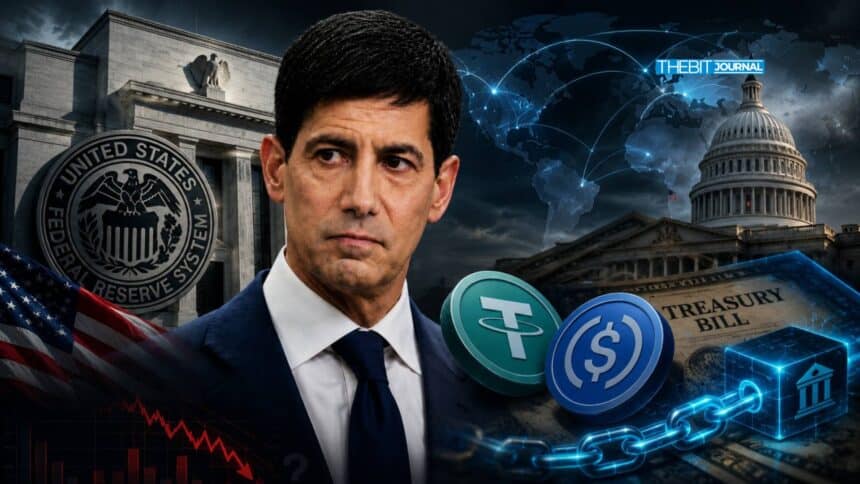

Stablecoins are no longer viewed as simple crypto trading tools, instead, they are becoming an important part of the conversation around the future of the U.S. financial system. The latest stablecoins fed policy discussion gained momentum after Federal Reserve Governor Christopher Waller placed digital dollar tokens at the center of the central bank’s June conference on the international role of the U.S. dollar. His remarks signaled a major shift. Rather than focusing only on crypto regulation, policymakers are now examining how stablecoins influence Treasury markets, bank funding, and global dollar liquidity.
The growing attention also reflects the broader Kevin Warsh Fed narrative. As former Fed Governor Kevin Warsh continues to advocate for modernizing monetary policy, stablecoins have become one of the most closely watched innovations capable of reshaping the financial landscape. The debate has moved far beyond crypto exchanges and into the heart of U.S. economic policy.

Stablecoins Fed Policy Moves Beyond Crypto Markets
The latest stablecoins fed policy discussion highlights how digital dollars have evolved into more than blockchain-based payment tools. The Federal Reserve now views stablecoins as a potential part of the country’s monetary infrastructure. Governor Christopher Waller emphasized that Federal Reserve stablecoins deserve careful research because they affect how dollars move across borders and through financial markets.
This represents a major change from previous years. Stablecoins were once viewed mainly as tools for cryptocurrency traders. Today, they increasingly function as digital versions of the U.S. dollar, allowing individuals and institutions worldwide to access dollar liquidity without opening traditional U.S. bank accounts. That growing role explains why policymakers are paying closer attention.
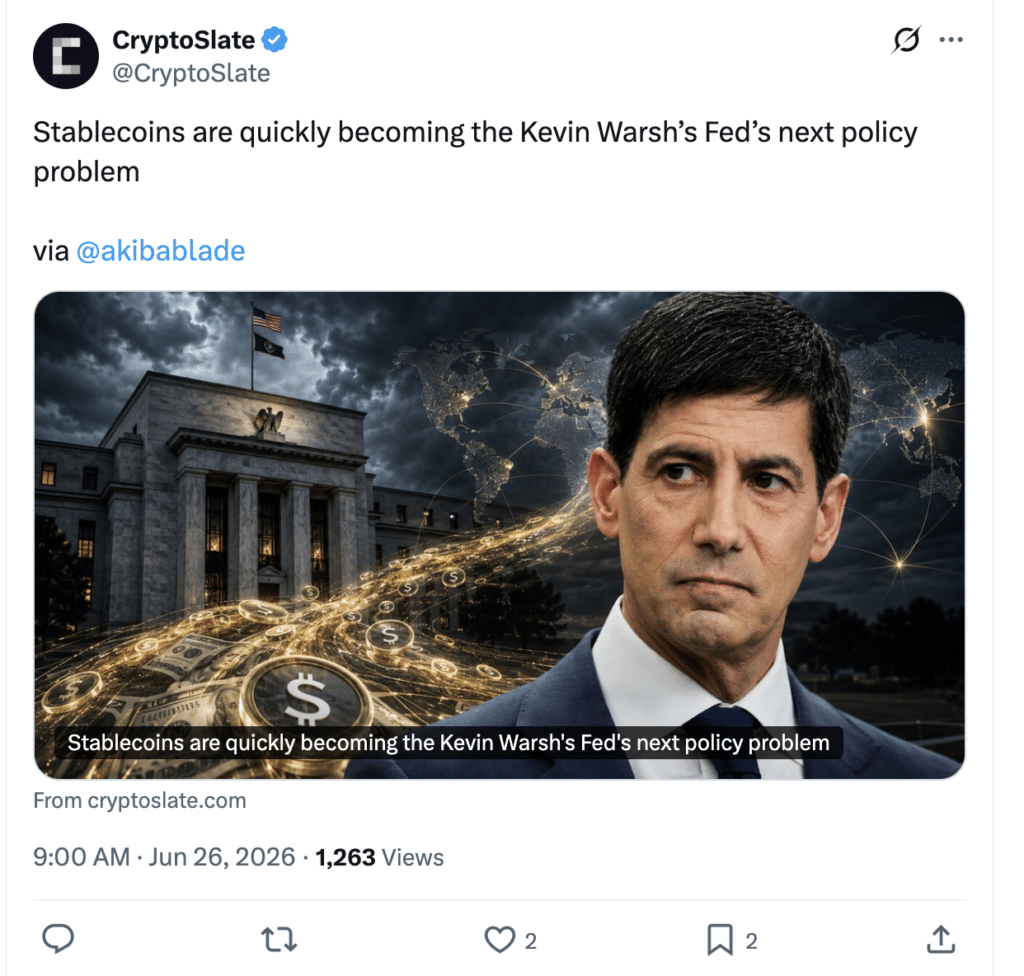
Stablecoins Could Reshape Treasury Demand
One of the biggest concerns surrounding stablecoins fed policy involves the Treasury market. Every dollar-backed stablecoin requires reserves to maintain its value. Those reserves are often invested in highly liquid assets, including short-term Treasury bills.
As USDC treasury demand continues to expand, reserve managers purchase additional government securities to support new token issuance. Circle reports that most USDC reserves are held inside the Circle Reserve Fund, managed by BlackRock and invested primarily in cash and short-term government assets. Meanwhile, Tether treasury holdings remain among the largest in the digital asset industry.
Although stablecoin issuers still represent only a small portion of overall Treasury ownership, continued expansion could gradually influence U.S. Treasury demand, particularly for short-term government debt.
Stablecoins and Traditional Banks Are Entering Direct Competition
The newest stablecoins fed policy debate also focuses on banks. Stablecoins combine payment functionality with digital savings, allowing users to move money around the clock without relying on traditional banking hours.
Federal Reserve researchers have noted that the impact on deposits depends on who adopts stablecoins. Domestic users moving savings away from commercial banks could reduce deposits, while international demand may simply introduce fresh dollar liquidity into the U.S. financial system.
Banks are already responding. Several major financial institutions have begun developing tokenized deposit systems designed to compete with stablecoins while keeping customer balances inside regulated banking networks. This race illustrates how stablecoin market growth is accelerating financial innovation across both crypto and traditional finance.
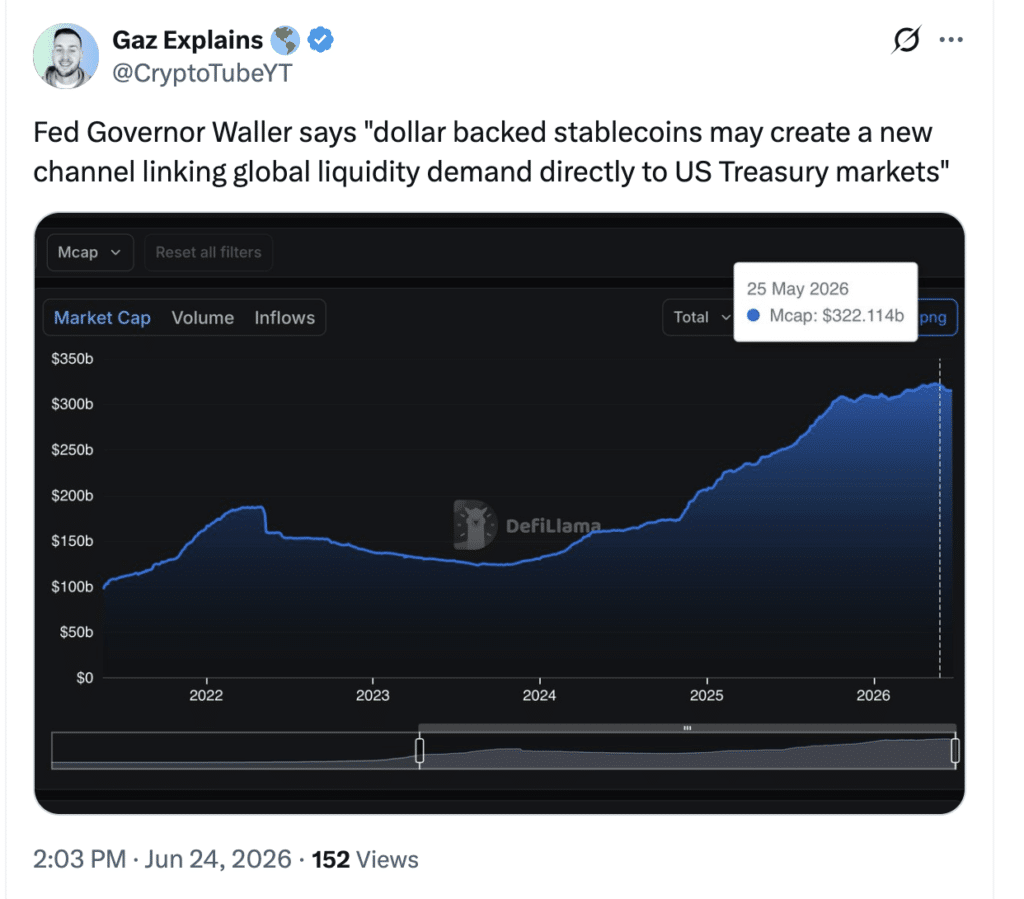
Kevin Warsh Fed Debate Highlights Dollar Dominance
The broader Kevin Warsh Fed discussion extends well beyond cryptocurrencies. Stablecoins are becoming part of the conversation surrounding America’s long-term monetary leadership.
Supporters argue that stablecoins strengthen the dollar by making it easier for international users to access digital dollars. Instead of depending on local banks, businesses and consumers can hold blockchain-based dollars almost instantly.
Critics, however, warn that excessive reliance on private issuers may introduce new systemic risks. Questions remain about reserve transparency, redemption pressure during market stress, and whether stablecoin issuers could eventually become major participants in America’s financial infrastructure. These concerns continue shaping Fed digital dollar policy discussions throughout 2026.
Stablecoin Regulation Will Define the Next Stage
Another critical aspect of stablecoins fed policy involves regulation. As adoption increases, lawmakers must determine how these digital assets should be supervised.
Current discussions surrounding stablecoin regulation focus on reserve requirements, transparency standards, redemption rights, and issuer oversight. Policymakers also continue debating Crypto regulation 2026, aiming to balance innovation with financial stability.
The challenge is finding the right balance. Overregulation could slow technological progress, while weak oversight may expose investors and the broader financial system to unnecessary risks. This balancing act explains why stablecoins are becoming the Fed’s next policy challenge and why lawmakers continue refining future regulatory frameworks.
How Stablecoins Affect Dollar Liquidity
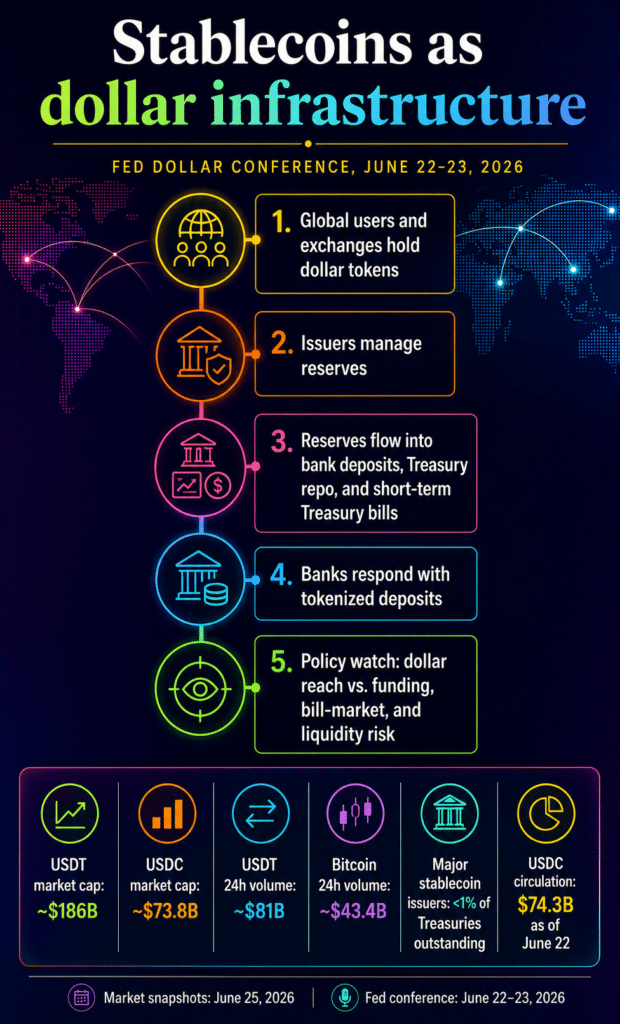
Perhaps the most important issue within stablecoins fed policy centers on Dollar liquidity. Stablecoins make U.S. dollars available almost anywhere in the world within minutes.
That accessibility reinforces global demand for dollar-denominated assets. At the same time, it introduces new channels through which liquidity can rapidly enter or leave financial markets.
Analysts continue studying How stablecoins affect U.S. Treasury demand, Federal Reserve concerns over stablecoin adoption, and Tether and USDC impact on dollar liquidity. These issues remain central as policymakers evaluate whether private stablecoins complement—or complicate—the traditional banking system.
Conclusion
The evolution of stablecoin-fed policy marks one of the biggest monetary developments of 2026. Stablecoins have expanded far beyond cryptocurrency trading and now influence discussions surrounding Treasury demand, bank funding, reserve management, and global dollar liquidity.
The Kevin Warsh stablecoin policy analysis increasingly reflects a broader reality: digital dollars are becoming part of America’s financial infrastructure rather than remaining isolated crypto products. As policymakers continue debating How the Fed views stablecoins under Kevin Warsh, the outcome will likely shape future monetary policy, financial innovation, and global dollar dominance.
Investors, institutions, and blockchain developers should continue monitoring regulatory developments, reserve transparency, and adoption trends as Stablecoins reshaping Federal Reserve policy decisions become one of the defining financial stories of 2026.
Appendix: Glossary of Key Terms
Stablecoin: A cryptocurrency designed to maintain a stable value by being backed by reserves such as U.S. dollars or Treasury securities.
Federal Reserve: The central banking system of the United States responsible for monetary policy and financial stability.
Treasury Bills: Short-term U.S. government debt securities commonly used as reserve assets.
Dollar Liquidity: The availability of U.S. dollars within domestic and international financial markets.
Tokenized Dollar: A blockchain-based digital representation of the U.S. dollar.
Frequently Asked Questions About Stablecoins Fed Policy
What is stablecoins fed policy?
Stablecoins fed policy refers to the Federal Reserve’s research and regulatory approach toward dollar-backed stablecoins and their impact on financial markets.
Why are stablecoins important to the Federal Reserve?
They influence Treasury demand, bank funding, payment systems, and global dollar liquidity.
How do stablecoins affect banks?
Stablecoins may compete with bank deposits while also changing how money moves through the financial system.
Do stablecoins support the U.S. dollar?
Many economists believe they can strengthen global dollar usage, although policymakers continue evaluating potential financial stability risks.
Will stablecoin regulation change in 2026?
Lawmakers and regulators continue developing new frameworks that aim to improve transparency, reserve management, and consumer protection.
References
Disclaimer:
Cryptocurrency prices, market capitalizations, and trading volumes are highly volatile and may change rapidly. Any market figures referenced in this article reflect publicly available information at the time of writing and should not be considered financial or investment advice. Always verify current prices using trusted market data sources before making investment decisions.