





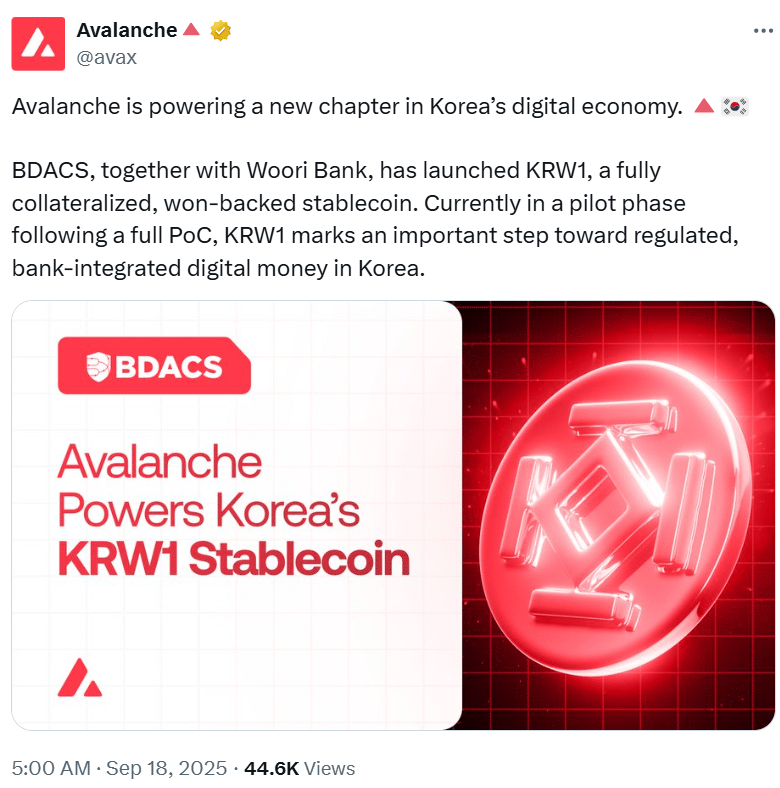
South Korean-based digital asset custodian BDACS has announced KRW1 stablecoin backed by South Korean won. The stablecoin is based on the Avalanche blockchain and entirely backed by Korean won deposits that Woori Bank keeps in custody. It is a milestone for South Korea’s digital finance industry.
KRW1 Stablecoin Backed 1:1 by Korean Won for Stability
KRW1 follows the successful completion of a proof of concept (PoC), which validated the stablecoin’s technical viability. Currently, the stablecoin is in a pilot phase. This phase will help test its capabilities before a full public rollout.
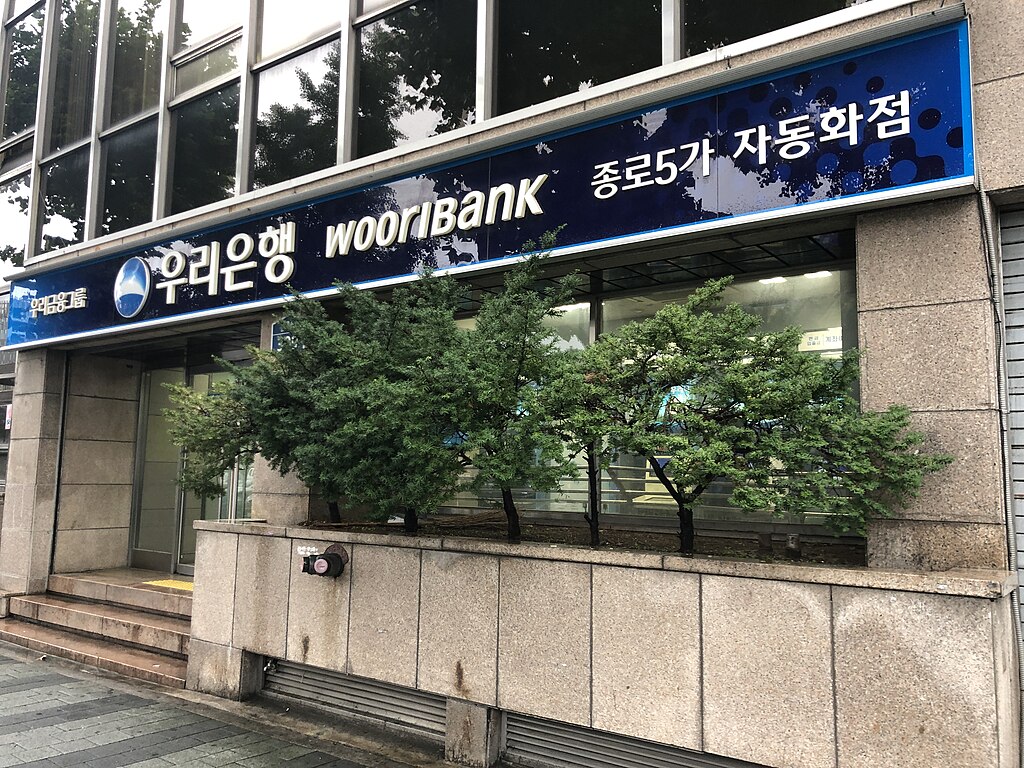
Each KRW1 stablecoin is backed 1:1 by Korean won held in escrow at Woori Bank. The backing ensures the coin’s value is stable, offering confidence to potential users and investors.
The Role of BDACS in South Korea’s Digital Economy
BDACS aims to be more than just a custodian of digital assets. The company is shaping the future of South Korea’s digital economy by offering a regulated, low-cost payment and settlement system. The firm has created a framework for managing the issuance, transaction verification, and reserves of KRW1.
Also Read: Crypto Price Prediction Today: What’s Next for XRP, Solana, and AVAX as Bulls Return?
CEO Harry Ryoo stated that BDACS is not only supporting corporate clients but also serving public-sector and institutional partners. The company sees this as an important step toward building the backbone of South Korea’s digital asset market.
KRW1’s Technological Features: Real-Time API Integration
One of the key features of KRW1 is its real-time API integration. This allows for instant verification of reserves, providing transparency and security. The integration makes KRW1 an attractive option for institutional users and public-sector organizations.
This technology ensures that every transaction is secure, fast, and reliable. It sets KRW1 apart from other digital currencies by offering trust through its operational framework.
Rising Interest in Stablecoins in South Korea
Stablecoins are increasingly becoming a fixture of South Korea’s financial system. * Leading local banks including Kakao Bank, Kookmin Bank, and the Industrial Bank of Korea are researching digital assets opening. They are even filing trademarks for their own Korean won-backed stablecoins.
The government is also considering regulating stablecoins. South Korean President Ramping Up Call for Local Stablecoin Market Citizen Belts Back South Korea’s seventh president, Jae Myung Lee endorsed the local currency-pegged stablecoins and their market.
Challenges in South Korea’s Regulatory Landscape
While a stablecoin regulation and framework are taking shape in South Korea, it has not yet been formalized. And the country’s central bank has expressed concerns about unregulated stablecoin issuance and its potential to disrupt the economy.
Avalanche’s Role in Supporting KRW1 Stablecoin
KRW1’s launch is supported by Avalanche, a blockchain known for its scalability, performance, and security. Avalanche’s technology will play a critical role in the stablecoin’s success. The blockchain’s infrastructure is well-suited to support the growing demand for secure and scalable digital assets in South Korea.
Justin Kim, Head of Asia at Ava Labs, stated that Avalanche’s ecosystem will help BDACS and Woori Bank provide a trusted solution for South Korea’s digital economy.
BDACS’ Competitive Edge in the Market
BDACS believes its combination of institutional backing and blockchain technology gives it a strong advantage. The company is positioned as a leader in the Korean stablecoin market, even as other tech firms and financial institutions prepare their own stablecoins.
BDACS sees potential competitors as collaborators. The company aims to work together with these firms to create a stable and regulated digital asset ecosystem in South Korea.
Conclusion
The KRW1 stablecoin represents a significant step for South Korea’s digital finance industry. Supported by its stable anchoring, real-time API integration and support from institutions, KRW1 is the horse that gets to open up the market for other stable coins in Korea.
KRW1 might become standard as South Korea continues to establish real laws around the country. The launch will revolutionize the digital asset scene in South Korea and add to a wave of coins looking at more global adoption in both public and private spaces.
Also Read: Avalanche TVL Soars to $1.5B: But Can AVAX Rally Without Users?
Summary
BDACS launches KRW1, South Korea’s first Korean won-backed stablecoin on Avalanche blockchain BDACS has released the first ever Korean won-backed stablecoin based on the Avalanche network. 100% collateralized by Korean won deposited at Woori Bank, KRW1 brings stability and auditability to the asset.
Having successfully completed its PoC and pilot phase, it plans to revolutionize the digital economy of South Korea, promising a wider adaption of blockchain technology across public and private sectors.
Appendix Glossary of Key Terms
Stablecoin: A digital currency pegged to a reserve asset like a fiat currency.
Avalanche Blockchain: A high-performance blockchain for decentralized applications.
PoC (Proof of Concept): A demonstration to verify the technical feasibility of a project.
Collateralized: Backed by a tangible asset or reserve.
API Integration: Technology that enables systems to communicate and verify data in real-time.
Escrow: Funds held by a third party until conditions are met.
Frequently Asked Questions about KRW1 Stablecoin
1- What makes KRW1 Stablecoin different from other stablecoins?
KRW1 is backed 1:1 by Korean won held in escrow at Woori Bank, ensuring stability and security.
2- How is KRW1 backed and secured?
Each KRW1 stablecoin is fully collateralized by Korean won deposits held in escrow at Woori Bank.
3- What is the current status of KRW1’s public release?
KRW1 is currently in its pilot phase following a successful proof of concept (PoC).
4- How does BDACS support the growth of Korea’s digital economy?
BDACS is building the foundation for South Korea’s digital asset market by offering secure, low-cost payment systems with KRW1.