



Amazon’s AWS backlog climbed to $578 billion at the end of the third quarter of 2026, an $82 billion jump in three months, while the cloud unit’s quarterly sales rose by only $3.8 billion. That mismatch, highlighted by BeInCrypto, now sits at the center of a quarter that delivered Amazon’s best-ever operating margin alongside an earnings miss and a share drop of more than 7% in after-hours trading.
Key Takeaways
- The AWS backlog reached $578 billion in Q3 2026, up from $496 billion at the end of June and about $200 billion a year earlier.
- AWS sales grew 39.3% to $46.0 billion, which Amazon called its fastest pace in nearly five years, but the sequential gain shrank to $3.8 billion from $4.6 billion in Q2.
- Earnings per share of $1.89 missed the $1.97 consensus, and trailing free cash flow swung to a $42.4 billion outflow.
- Amazon expects to spend meaningfully more on capital projects in 2027 than the roughly $220 billion planned for 2026.
What happened with the AWS backlog
Amazon reported results on October 29, 2026, for the quarter ended September 30. According to its 8-K filing with the SEC, net sales rose 12% to $201.9 billion and operating income climbed to $28.1 billion from $17.4 billion. The 13.9% operating margin was the highest the company has ever posted.
The cloud business did most of the heavy lifting. AWS operating income rose to $17.8 billion from $11.4 billion a year earlier, and the company’s earnings release puts AWS at a $184 billion annualized revenue run rate.
The order book, however, is growing much faster than sales. CEO Andy Jassy told analysts the AWS backlog is growing at a triple-digit rate year over year. Here’s how it built up, based on figures reported by Crypto Briefing and BeInCrypto:
| Quarter end | AWS backlog |
|---|---|
| Q3 2025 | About $200 billion |
| Q1 2026 | $364 billion |
| Q2 2026 (June 30) | $496 billion |
| Q3 2026 | $578 billion |
That’s nearly a tripling in twelve months, while sales grew 39.3%.
Why Amazon can’t turn orders into revenue faster
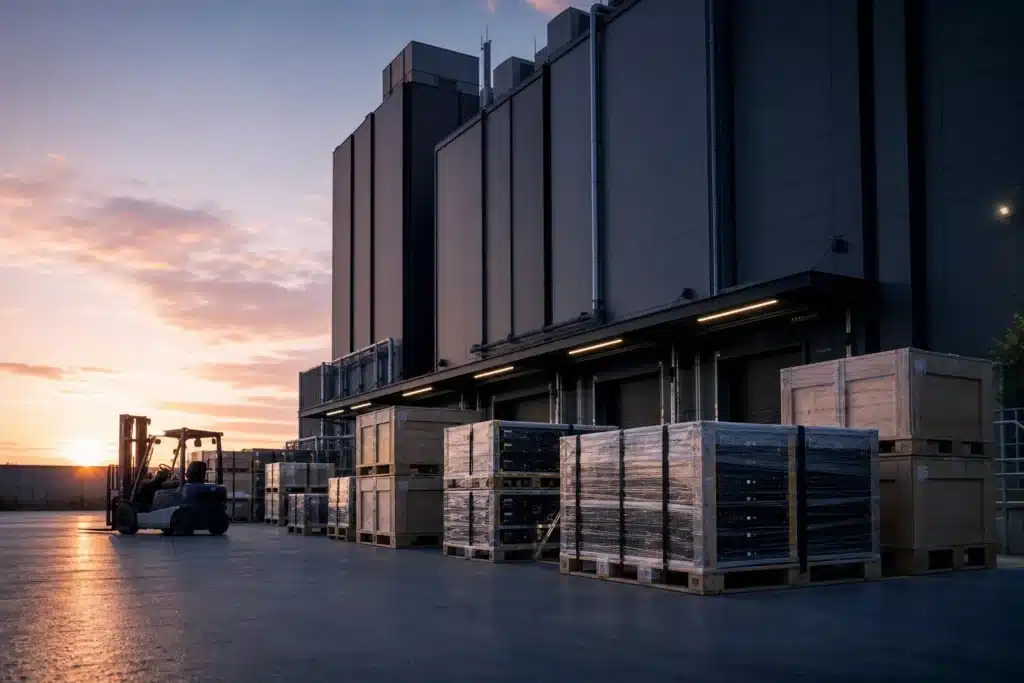
Physical capacity appears to be the constraint. Jefferies analyst Brent Thill said cloud providers can’t convert backlog into revenue as quickly as investors would like, pointing to data center and supply chain bottlenecks. Jassy had already said last quarter that Amazon lacked enough capacity for 2026 demand and expected the same problem in 2027.
Customers are also absorbing new capacity quickly. Jassy said Amazon installs an AI accelerator roughly every 14 seconds, and Axios reported his comment that clients take new capacity almost as fast as Amazon can install it.
Spending is rising sharply with the build-out. WebProNews put Q3 capital expenditures at $77.3 billion, versus $35.1 billion a year earlier and a FactSet estimate of $58.7 billion. BeInCrypto cites $75.9 billion in cash capital spending for the quarter; the reports do not explain the gap between the two figures. Last quarter, Amazon lifted its 2026 budget to about $220 billion from $200 billion, citing higher memory costs.
Amazon’s own chips are part of the plan. Revenue commitments for Graviton and Trainium rose more than 20-fold year over year, and the company intends to offer Trainium outside AWS from late 2027.
Market reaction
The stock went the other way from the backlog. Shares fell more than 7% after hours, and EPS of $1.89 came in below the $1.97 analysts expected. Net income fell to $20.7 billion because the year-earlier quarter included $9.5 billion in pre-tax gains on Amazon’s Anthropic stake.
Microsoft and Alphabet had reported a day earlier, and AI infrastructure bills were the central theme across all three big tech reports.
Crypto markets were also weak, though there’s no evidence the Amazon report drove the move. Bitcoin traded between $76,443 and $81,840 over the past 24 hours. CoinGecko data as of 07:13 UTC on October 30, 2026:
| Asset | Price (USD) | 24h change | 7d change |
|---|---|---|---|
| Bitcoin (BTC) | $78,365 | -1.80% | -3.94% |
| Ethereum (ETH) | $2,247.98 | -2.55% | -6.27% |
| BNB | $713.82 | -4.87% | -3.55% |
| Solana (SOL) | $97.95 | -1.77% | -5.88% |
The Crypto Fear & Greed Index stood at 30 (Fear) on October 30. Both tech stocks and digital assets can swing sharply on earnings and macro news, and losses can be large.

What to watch next
Amazon now projects AWS growth above 40% in both 2027 and 2028. According to BeInCrypto, AWS growth has accelerated for six straight quarters, from 20% in Q3 2025. Given the capacity constraints flagged by Jassy and Jefferies, hitting those targets may hinge as much on how fast new data centers come online as on demand.
If delivery keeps lagging orders, BeInCrypto suggests investors may start judging hyperscalers by capacity actually switched on rather than contracts signed. Faster build-outs would narrow the gap between the AWS backlog and reported revenue, and ease pressure on the spending plan. Slower ones would leave a growing pile of unbilled commitments next to rising capex.
Near-term markers include whether Amazon lands within its Q4 guidance of $240 to $247 billion in sales and any firm 2027 capex number. Free cash flow is the other figure to track after the swing to a $42.4 billion outflow.
FAQ about the AWS backlog
What is the AWS backlog?
It’s the value of contracted AWS customer commitments that have not yet turned into revenue. At the end of Q3 2026 it stood at $578 billion, according to Amazon’s CEO.
Why did Amazon stock fall after Q3 2026 earnings?
Shares fell more than 7% after hours after Amazon missed earnings estimates, with EPS of $1.89 against a $1.97 estimate. The report also showed Q3 capital spending of $77.3 billion, well above a $58.7 billion FactSet estimate, and trailing free cash flow swinging to a $42.4 billion outflow. The sources do not single out one cause for the drop.
Is the AWS backlog growing faster than revenue?
Yes. The AWS backlog added $82 billion in Q3 while quarterly AWS sales rose $3.8 billion. Jefferies’ Brent Thill blames data center and supply chain bottlenecks, and Jassy said last quarter that Amazon lacked enough capacity to meet 2026 demand.
Sources
- Amazon's $578 Billion AWS Backlog Is Growing Faster Than Its Revenue (BeInCrypto)
- AMAZON COM INC – Form 8-K – FY2026 (Exhibit 99.1) (www.sec.gov)
- Amazon.com Announces Third Quarter Results (ir.aboutamazon.com)
- Amazon earnings: Shares fall as AI spending continues (www.axios.com)
- AWS backlog hits $578 billion as Amazon CEO says it has more than doubled (cryptobriefing.com)
- Amazon's $578 Billion AWS Backlog Is Growing Faster Than Its Revenue (finance.yahoo.com)
- AWS Grows at Its Fastest Pace in Nearly Five Years, and Amazon Plans to Spend Even More in 2027 (www.webpronews.com)
- Amazon.com Q3 Earnings Call Highlights (finance.yahoo.com)
This article is for informational purposes only and does not constitute financial or investment advice. Cryptocurrencies are highly volatile; always do your own research before investing.