






This article was first published on The Bit Journal.
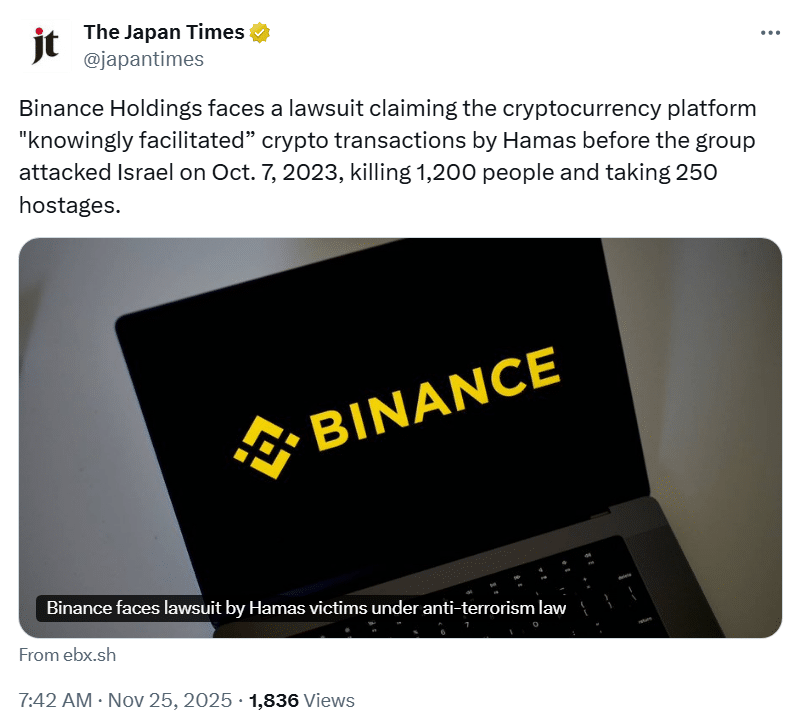
Binance, the world’s largest cryptocurrency exchange and one of the biggest names in blockchain, is facing Binance lawsuit. According to the complaint, China-based Binance and its CEO, Changpeng Zhao (CZ), enabled Hamas and other terrorist organizations to make transactions.
This is the Exchange’s most recent legal battle, following a string of other Binance lawsuits globally. It alleges that Binance had direct involvement in funding terrorist actions with crypto transactions, which will be an extremely serious accusation regarding their operations.
Binance, Blamed for Ties to Terrorists Through Crypto Payments
Changpeng Zhao and his cryptocurrency exchange company Binance, as well as its CFO Chen Guangying, are all being blamed for facilitating payments to Hamas, Hezbollah and the Iranian Revolutionary Guard Corps (IRGC). The suit, brought by U.S. citizens whose families were hit by the Oct. 7, 2023.
Also Read: Trump Pardon Twist: Could Binance Really Reinvest Its $4.3 Billion Fine In The U.S.?
Hamas attack accuses Binance of supporting millions of dollars in transactions for the groups. This case argues that Binance’s actions amounted to directly funding the attack, in which more than 1,200 were killed and some 250 taken hostage.
Binance and Accusations of Funding Terrorism
The legal action alleges that Binance had knowingly allowed terrorist groups to use its platform for performing illicit transactions. It charges that the exchange was set up to allow these groups to freely transfer money.
The plaintiffs say Binance’s lack of monitoring these transactions directly led to the financing of terrorist attacks. Binance is held responsible for allowing this behavior to happen, even though they didn’t intervene after several warnings about terrorism-linked wallets.
The $400 Million in Suspected Transactions
The suit alleges that Binance’s platform sent at least $400 million in cryptocurrency to accounts linked to terror. More than $300 million of the sum was supposed to have been moved before the attack on 7 October, with a further $115m sent after that.
The Binance lawsuit alleges that the exchange did not block these transactions, even after being alerted in the past of suspicious activity taking place. This is all part of the larger charge that Binance turned a blind eye to what amounted to criminal activity on its platform.
Binance’s Response to the Lawsuit
Binance has rejected the allegations made in the suit, asserting that it follows international anti-money laundering and sanctions directives. The exchange says it does what it can to block illegal transfers.
Binance’s statement hasn’t put to rest fears over its part, if any, in transactions that occurred. The Binance lawsuit has opened up a broader conversation on how cryptocurrency exchanges should address terrorist financing and nefarious conduct more generally.
Binance’s Internal Messages and Illegal Business
Internal exchanges between Binance employees, described in the complaint, reveal a chilling level of knowledge about criminal activity taking place on the platform. One employee even reportedly joked that Binance was the a launderer’s paradise.
Others meanwhile accepted the site was being used illegally. The Binance lawsuit has used these messages as evidence that Binance was aware of, and complicit in, allowing for these illicit activities which helped fund terrorism.
Binance Implicated in Smuggling and Criminal Networks
The Binance case also drags in the exchange into criminal activities beyond the Middle East. It describes a smuggling operation in Venezuela that saw gold being extracted and sent to Iran, purportedly to fund Hamas and Hezbollah.
The suit alleges that Binance played a role in facilitating these transactions. One high-profile instance was a Venezuelan woman accused of serving as the face for Hezbollah’s gold-smuggling network, through which millions of dollars in cryptocurrency wound up on Binance.
American Officials Alarmed by Binance
Both the U.S. Justice Department and the Treasury Department have earlier fired warning shots about Binance’s operations. These regulators have said that Binance knowingly processed transactions on behalf of Hamas and didn’t file the necessary suspicious activity reports.
The Binance lawsuit alleges the Binance was aware that Hamas was using its platform to raise money in BTC and yet did nothing to prevent it. These discoveries also emphasize the absence of monitoring on Binance’s part for illegitimate transactions.
Jurisdictional and Legal Challenges in Binance Lawsuit
Binance has countered that it is not under the jurisdiction of United States, saying that it lacks a presence in the country. But in the U.S., courts have allowed the Binance lawsuit to go forward.
A judge in New York said the plaintiffs had established a valid complaint and the case could move forward. If it brings legal ramifications, this ruling may be an important precedent for how exchanges are liable for criminal activities due to their services centered on matters like terrorism, specifically concerning the use of cryptocurrency.
The Implications of the U.S. Anti-Terrorism Laws on Binance
If Binance were found to be responsible, it could owe three times the damages in accordance with U.S. anti-terrorism laws. That would leave Binance potentially liable for hefty fines due to its part in enabling payments to terrorist organizations.
The case shows the increasing anxiety about how cryptocurrency exchanges work and tighter regulations they may require. Business Binance’s legal woes may prompt more scrutiny of the entire cryptocurrency industry, including its use in stopping terrorist financing.
Conclusion
The Binance action reveals disturbing claims about the exchange’s financing of terrorism. If the case proceeds, it could have broader implications for Binance and the cryptocurrency industry generally.
The suit also underlines, once again, the pressing need for improved oversight of digital platforms and tougher rules around what is allowed online when it comes to illegal activity – never mind that associated with terrorism.
Also Read: Binance Founder Predicts Bitcoin Will Surpass Gold as Long Term Store of Value
Appendix: Glossary of Key Terms
Binance: The world’s largest cryptocurrency exchange, based in China, which facilitates digital asset trading.
Changpeng Zhao (CZ): The CEO of Binance, accused in the lawsuit of facilitating illegal transactions.
Hamas: A Palestinian militant organization, accused of receiving funds through Binance.
Hezbollah: A Shiite militant group based in Lebanon, allegedly receiving crypto payments through Binance.
IRGC (Iranian Revolutionary Guard Corps): Iran’s elite military force, also accused of receiving funds via Binance.
Frequently Asked Questions Binance Lawsuit
1- What is the Binance lawsuit about?
The Binance lawsuit accuses the exchange and its executives, including Changpeng Zhao, of enabling millions of dollars in payments to terrorist groups like Hamas, Hezbollah, and the IRGC.
2- How much money did Binance allegedly move for terrorist groups?
The lawsuit claims that Binance transferred over $400 million in cryptocurrency to terror-linked accounts.
3- What has Binance said in response?
Binance denies the allegations, stating it follows international sanctions and anti-money laundering rules.
4- How could this case impact Binance?
If found guilty, Binance could face triple damages under U.S. anti-terrorism laws. The case could also lead to stricter regulations and greater oversight of cryptocurrency exchanges.
References