






This article was first published on The Bit Journal.
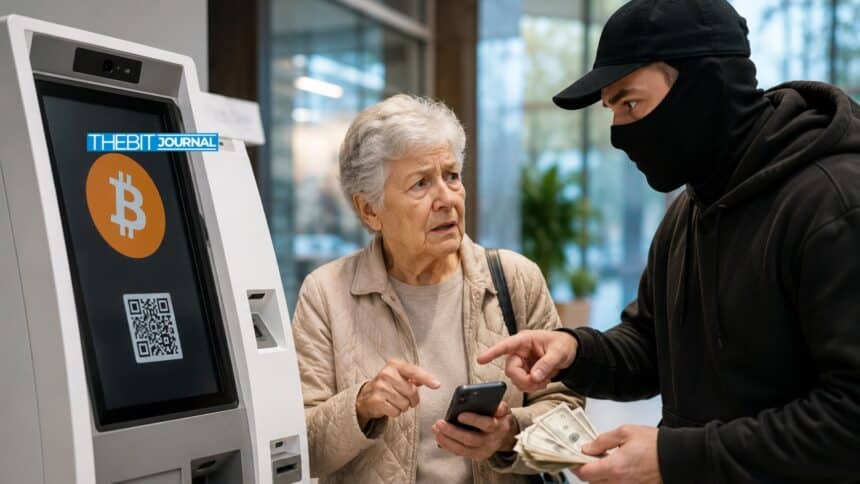
America’s crypto fraud problem keeps ending in the same place: a convenience store, supermarket or gas station Bitcoin ATM.
Theses Bitcoin ATM scams usually starts out online with a fake bank alert, a romance scheme, a cloned voice call from a “tech support” person, a government impersonation attempt or a fake tech support message from a hacker.
The final instruction is always simple: withdraw cash, drive to a crypto kiosk, scan a QR code and stay on the phone until the transaction is complete. By the time the cash has turned into cryptocurrency the scammers are long gone.
The FBI’s 2025 Internet Crime Report shares that across the US, Americans filed 181,565 complaints about crypto-related scams, which added up to more than $11 billion in losses. Looking at all cyber-crimes, total losses approached $21 billion from more than 1 million complaints. Artificial intelligence scams alone accounted for almost $893 million in damages.
Yet, one small constant is beginning to draw attention from regulators and law enforcement and that is Bitcoin ATMs.
Bitcoin ATM Scams are Growing Faster than the Wider Scam Market
The FBI’s Internet Crime Complaint Center (IC3) recorded more than 13,400 complaints involving cryptocurrency kiosks in 2025, with losses exceeding $388 million.
Those figures tally to about 23% increase in complaints and a 58% jump in losses compared to 2024. More than half of those reports involved victims over the age of 50, accounting for over $302 million in losses.
The numbers reveal the sad truth. These crypto scams might start online, but they frequently become physical crimes before the money disappears.
The scammers usually instruct the victim to visit a Bitcoin ATM located inside an everyday business and convert cash into the crypto controlled by scammers.
The whole transaction usually only takes a few minutes but recovering lost funds can take years, or often never.
Federal investigators are saying that kiosks have become the “last mile” in crypto fraud scams because they let victims move their money fast while the scammers guide them through the process in real time.
Why Scammers Prefer Bitcoin ATMs
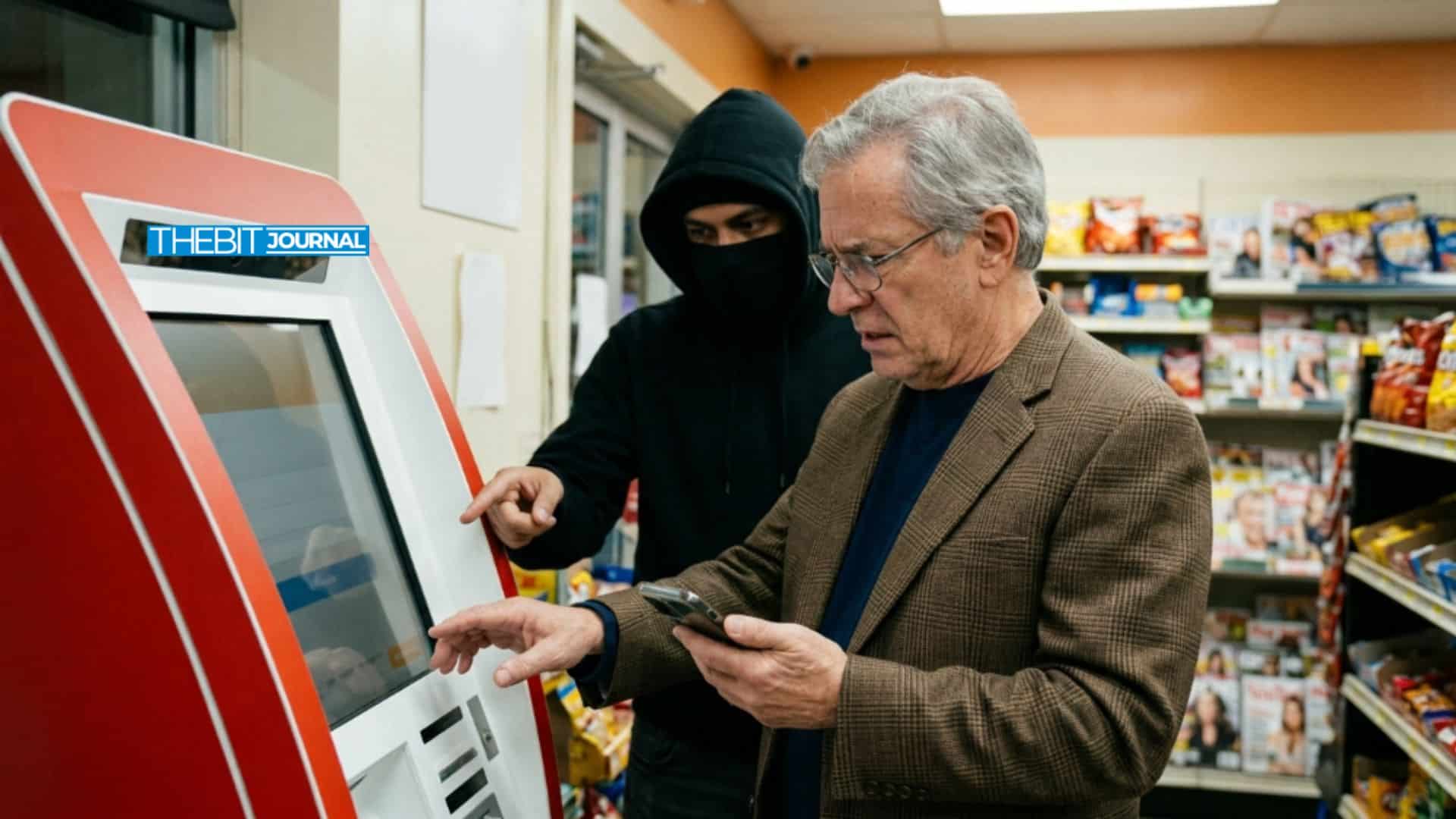
It is quite obvious why scammers like Bitcoin ATMs. Unlike wire transfers, Bitcoin ATM transactions happen fast and once they are settled on the blockchain, they can’t be undone.
The victim usually just gets a QR code from the scammer and then they scan it at the machine and the crypto lands in the wallet belonging to the scammer.
According to the FBI, the scammers will often stay on the phone the whole time, guiding the victim step by step through the whole process, even to the point that they tell the victim to split the payment across different machines or different transaction sizes so they can avoid any money safeguards that might possibly trigger.
Even the high fees that most Bitcoin ATMs charge doesn’t seem to be a big enough deterrent for scammers.
Many of these machines charge between 7% to 20% per transaction. For legitimate buyers, that is expensive. For fraudsters trying to move stolen funds quickly, it is simply another operating expense.
The Federal Trade Commission says losses involving Bitcoin ATMs increased almost tenfold between 2020 and 2023.
Fraud linked to these machines exceeded $65 million in just the first half of 2024 alone, while the median reported loss reached $10,000.
AI is Making Bitcoin ATM Scams More Convincing
Artificial intelligence is making the problem a whole lot worse.
The FBI reports that scammers are getting more sophisticated, using cloned voices, fake id’s, deepfake videos and realistic social media profiles to guilt trip victims into acting fast.
The technology creates urgency before victims even see a Bitcoin ATM.
They might be convinced they’re talking to a grandchild in trouble, a bank teller trying to save an account or a government official investigating something. By the time they get to the ATM, they’ve usually already been emotionally manipulated.
Older Americans get scammed more often than younger folks.
FTC figures show consumers aged 60 and older were more than three times as likely as younger adults to report losses involving Bitcoin ATM scams during the first half of 2024.
Banks and Operators May be the Last Line of Defense
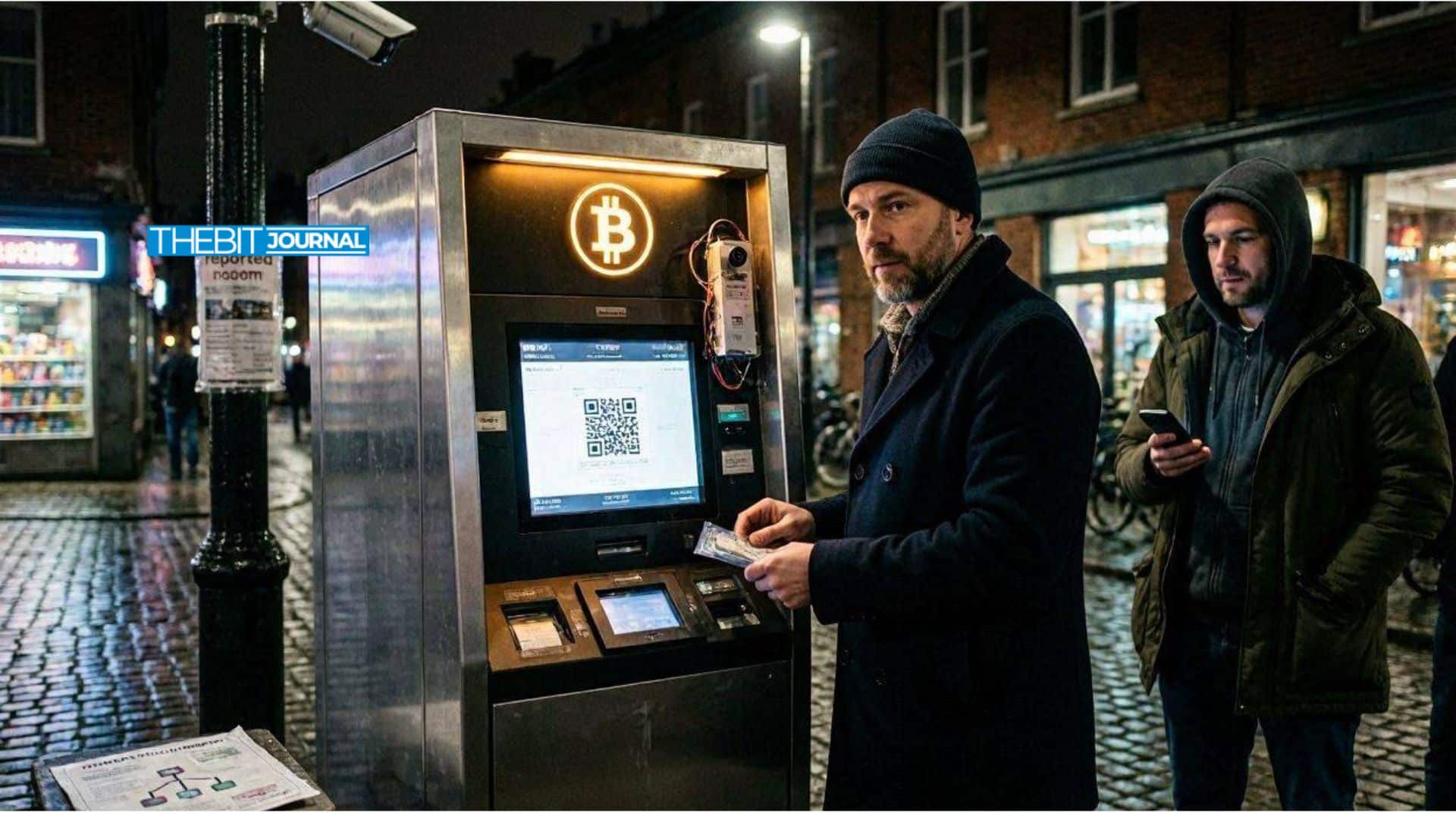
Law enforcement agencies say that the intervention needs to happen before the crypto transaction actually occurs.
A bank teller asking the right questions about a big withdrawal might just catch a scam in the act.
A kiosk operator spotting some suspicious behavior could stop the transfer.
A family member noticing that a relative remains on the phone while depositing cash might prevent financial disaster.
Several states are already experimenting with tougher rules to curb Bitcoin ATM scams.
California’s Digital Financial Assets Law limits crypto ATM transactions to $1,000 per person per day, while other states are considering transaction caps, refund provisions and mandatory consumer warnings.
Federal regulators are actually putting a lot more pressure on the people running the ATMs to keep an eye out for suspicious transactions and to follow the rules on anti-money laundering.
Conclusion
The problem is that it all happens so fast. Before blockchain settlement, there are options. After the settlement, the options are even more limited.
Funds can move through wallets, exchanges and cross-chain bridges faster than a lot of people even realize they’ve been scammed.
That is why regulators are focusing more on the ATM itself rather than the blockchain. For a lot of victims, the Bitcoin ATM is the endgame – not the start of the scam.
Glossary
Bitcoin ATM: A kiosk that allows users to buy cryptocurrency using cash.
IC3: The FBI’s Internet Crime Complaint Center.
QR code: A machine-readable code used to send cryptocurrency to a wallet address.
Deepfake: AI-generated audio or video designed to imitate real people.
Blockchain settlement: When a cryptocurrency transaction gets permanently written to the blockchain.
Frequently Asked Questions About Bitcoin ATM Scams
How much did Americans lose to crypto scams in 2025?
The FBI reported more than $11 billion in cryptocurrency-related losses from 181,565 complaints during 2025.
How much was lost to Bitcoin ATM scams?
IC3 recorded more than $388 million in losses linked to cryptocurrency kiosks in 2025.
Who are the main targets?
People over the age of 50 accounted for more than half of complaints and over $302 million in losses.
Why are Bitcoin ATM transactions attractive to scammers?
Transactions settle quickly and are difficult to reverse once cryptocurrency reaches the scammer’s wallet.
References