






This Article Was First Published on The Bit Journal.
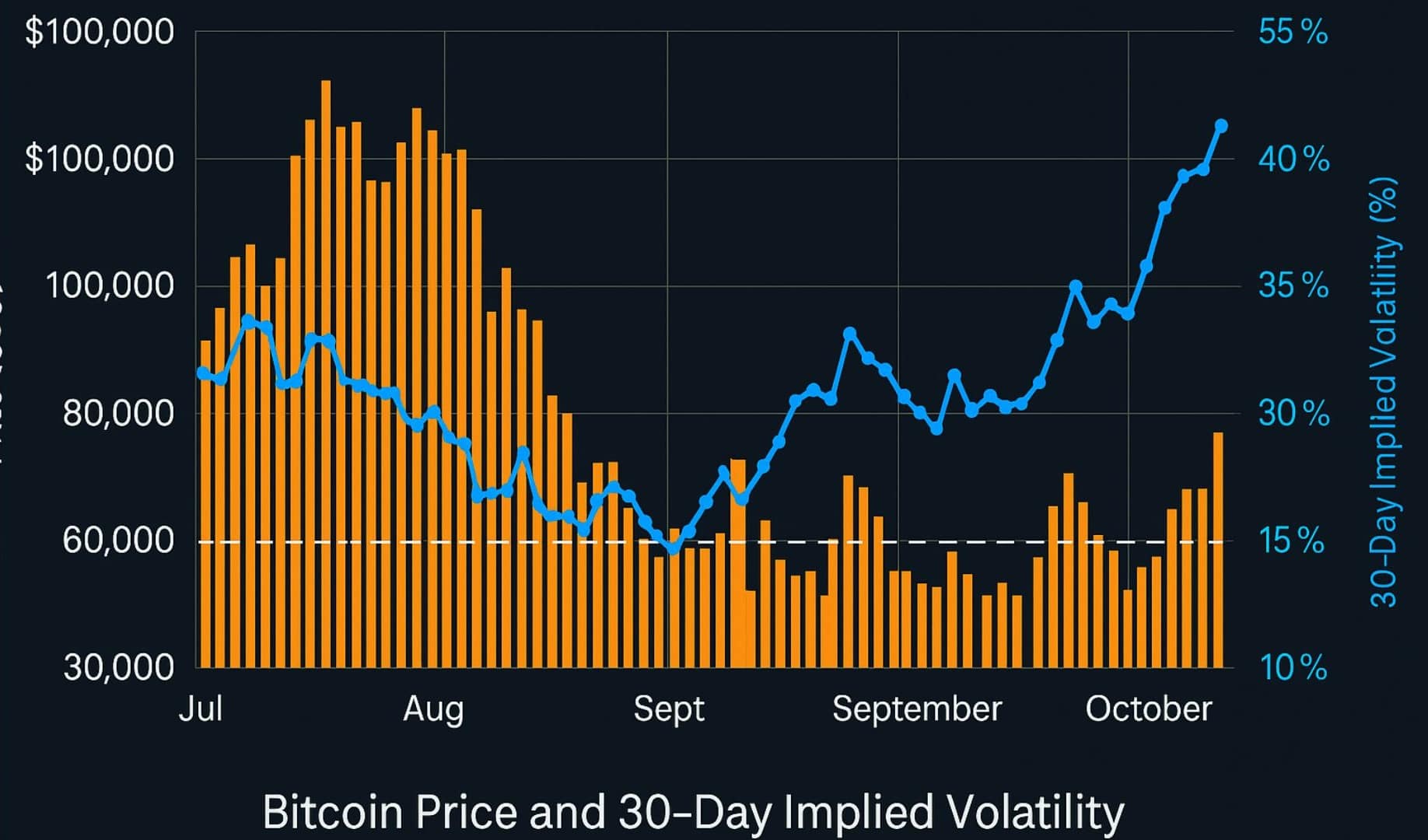
According to recent market reports, Bitcoin volatility has surged again as BTC hovers close to critical support zones. The cryptocurrency now trades near $109,000, tightly pressed between $107,000 and $110,000. A breach below that range could usher in steeper losses than what many expect.
The rise in Bitcoin volatility is matching broader unease in equities and gold, marking a period of heightened tension in global markets.
Volatility Signals Flash Across Assets
Bitcoin’s implied volatility, as tracked by Volmex’s BVIV index, recently pushed past 42%, reaching a 2.5-month high. That level reflects elevated trader expectations of sharp price moves ahead.
On the options side, short-dated puts are trading at a 5–9% premium over calls, signaling that many participants are hedging for downside risk. Futures and derivatives desks report heavier demand for protection as sentiment skews cautious.
Traditional markets are showing similar jitters. The VIX Index, Wall Street’s benchmark fear gauge, jumped to 22.9 before retreating toward 19.7, reflecting growing anxiety in the broader risk environment. The CBOE Gold Volatility Index (GVZ) climbed to 32.78, its highest level in over two years. Gold itself has reached a new record near $4,380 per ounce, reinforcing investors’ shift toward safety.
These synchronous jumps across asset classes suggest a general risk-off swing, possibly tied to signs of liquidity strain in U.S. finance.
Macro Events Add Fuel to Market Uncertainty
Market observers note that rising volatility often comes before key macro events. Traders are watching upcoming U.S. inflation data and central bank commentary for clues on liquidity shifts that could ripple into crypto. When global funding tightens, Bitcoin tends to mirror traditional risk assets, amplifying both fear and opportunity in quick succession.
Price Action and Support Areas Under Test
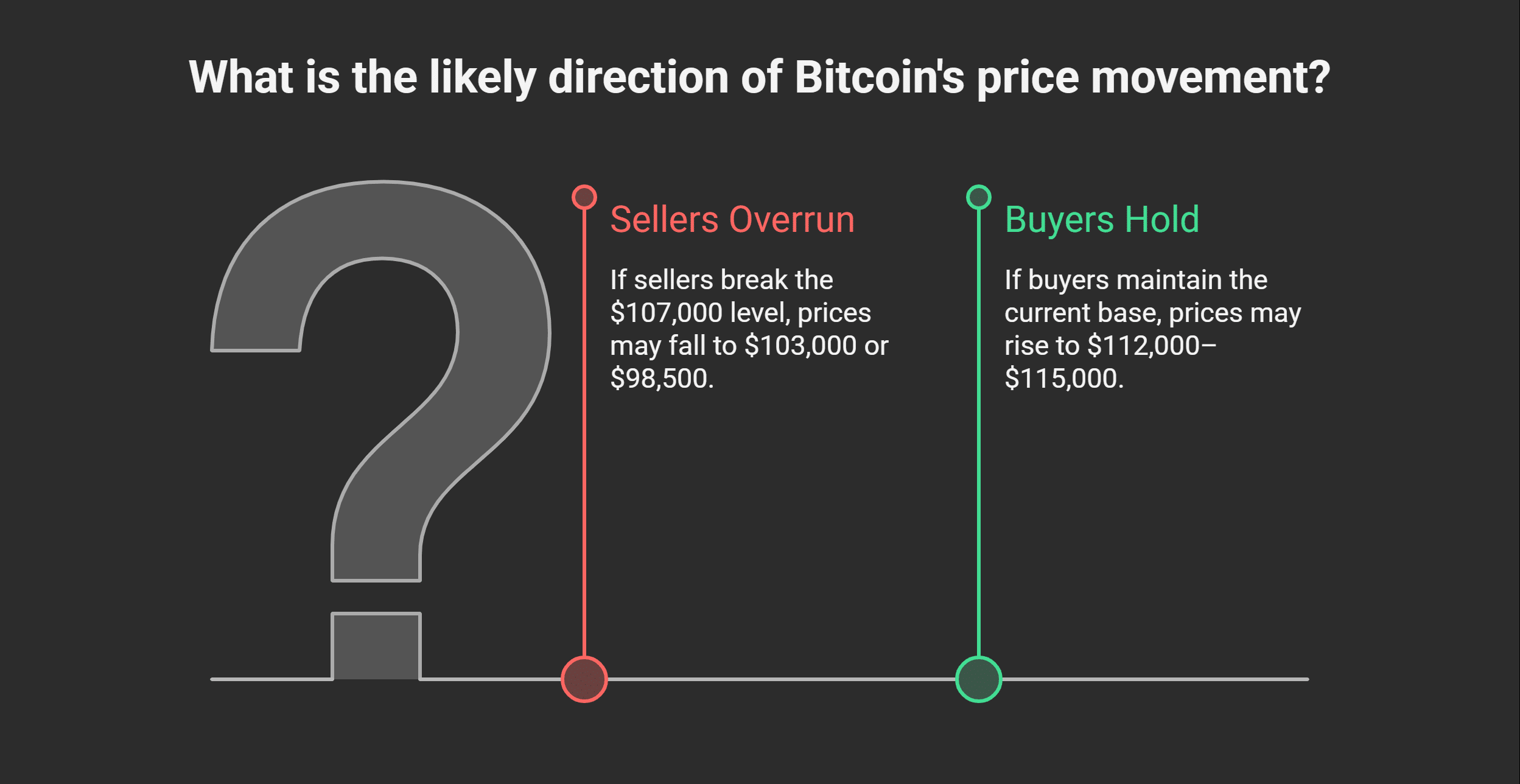
Bitcoin’s battle line is at $107,000. If sellers overrun it, the next major floors lie around $103,000 and $98,500. But defenders argue those levels likely come after deeper stress.
A trader posting on X said, “Spikes in Bitcoin volatility shake out weak hands but often reset the field for stronger rallies.” That view echoes a familiar pattern: short-term turbulence that precedes directional resolve.
Some technical analysts see upside potential if BTC can reclaim $112,000–$115,000. But for now, the focus remains on whether buyers can hold the current base.
Final Thoughts
Based on the latest research, Bitcoin volatility stands out as both a danger flag and a trading signal. It reflects collective market tension yet offers opportunity to those able to time swings. As markets wobble globally, Bitcoin’s ability to absorb external shock will tell the story. Watching how the price reacts to its support zone could make all the difference.
Summary
Bitcoin volatility has climbed sharply as prices test the $107,000 support zone. Traders are hedging against deeper losses while global fear gauges like the VIX and GVZ rise. With gold hitting record highs and risk sentiment fading, Bitcoin’s next move depends on whether buyers can steady the market or brace for another sharp correction.
Glossary of Key Terms
- Bitcoin Volatility / BVIV: Expected future price swings for BTC, derived via options pricing.
- Put Option: A contract giving its holder the right to sell at a fixed price, often used to hedge downside risk.
- VIX Index: The volatility measure for stocks, especially tied to the S&P 500.
- Liquidity Stress: A tightening in funding or cash flow across financial markets.
FAQs About Bitcoin Volatility
Q: Why is Bitcoin volatility rising now?
Because traders expect sharper price moves, and hedging is increasing amid global market tension.
Q: Does that mean big drops are ahead?
Not always. High volatility can also catalyze upward moves if sentiment shifts.
Q: What’s the most critical level to watch?
$107,000. A drop below would shift the narrative into deeper correction territory.
Q: How should traders act?
Using stop losses, sizing positions carefully, and hedging via options can help manage the risk.