




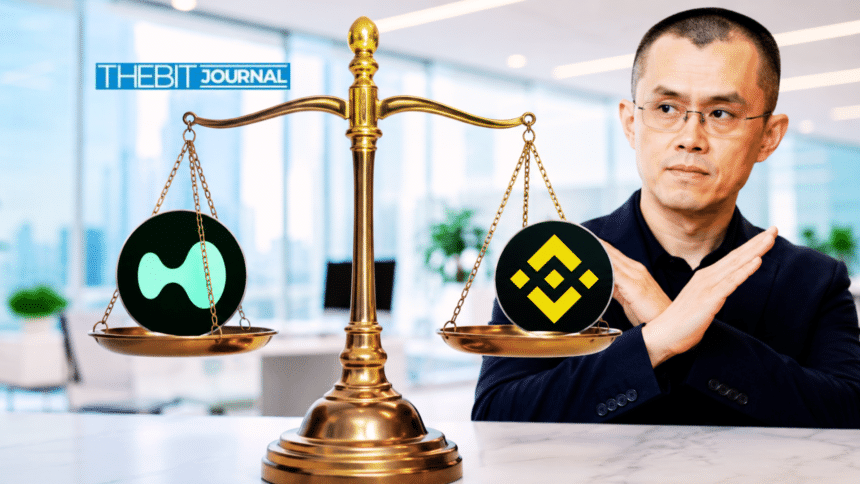

Hyperliquid no KYC model has become both a major competitive advantage and its clearest legal risk after Binance founder Changpeng Zhao praised the platform’s product while highlighting the challenges linked to its access structure. His comments placed attention on a growing market-structure question: whether on-chain perpetual futures platforms can preserve open access while regulators examine who can trade, from where, and under which checks.
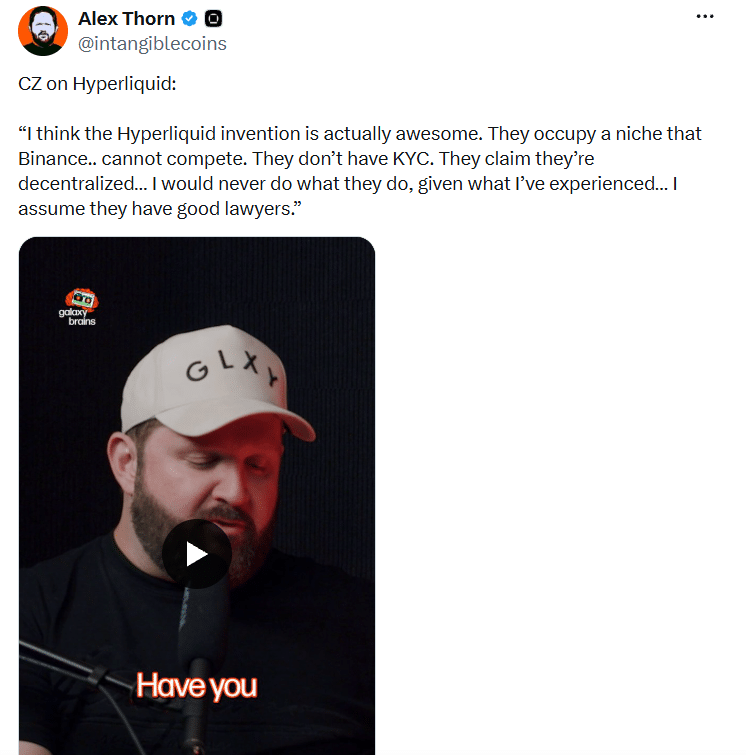
CZ discussed Hyperliquid during a Galaxy Brains episode published on June 18 with Galaxy’s Alex Thorn. The conversation covered the future of crypto markets, perpetual futures moving toward regulated venues, prediction markets and the changing relationship between decentralized platforms and traditional financial systems.
His remarks were not a regulatory judgment against Hyperliquid. Instead, CZ explained why he believes the platform has created a niche that major centralized exchanges may struggle to copy while maintaining their current compliance standards.
What does the Hyperliquid no KYC model mean for the crypto derivatives market?
Hyperliquid no KYC model describes the platform’s approach of providing access without the traditional identity verification requirements used by many centralized exchanges. CZ praised the product itself but separated that view from the operating risks connected to the model. He said Binance cannot compete directly in the same niche because the exchange follows a different regulatory and compliance structure.

Alex Thorn shared CZ’s comments from the discussion, where the Binance founder said, “I think the Hyperliquid invention is actually awesome. They occupy a niche that Binance cannot compete. They don’t have KYC. They claim they’re decentralized… I would never do what they do, given what I’ve experienced… I assume they have good lawyers.” The statement highlighted the core issue surrounding Hyperliquid.
The same access model that creates a strong market advantage may also represent the platform’s most visible legal vulnerability. The discussion goes beyond whether decentralized technology can support trading. It focuses on whether a platform offering derivatives-like products can maintain fewer access restrictions while meeting expectations around oversight and user protection.
Why is the access model both a strength and a risk?
The platform’s main distinction comes from offering perpetual futures-style markets through an on-chain structure with fewer traditional barriers. This creates a different experience compared with centralized exchanges that operate with identity checks, jurisdiction filters and compliance systems. For traders, open access can be a significant attraction. However, regulators may view the same feature differently.
The question is not only what technology powers the platform, but also who is able to use it where those users are located and what controls exist around participation. Regulatory attention may extend beyond the protocol itself. Authorities could examine front-end interfaces, promotional activity, user targeting, operator involvement and the practical level of control behind a platform’s decentralized claims.
A system can operate through decentralized technology while still raising questions about responsibility and accountability. CZ’s comments reflected this divide. Binance can compete through liquidity, infrastructure and market reach but copying the same access model would require changing the compliance approach that defines its operations.
How is regulatory scrutiny shaping the debate around Hyperliquid?
The legal discussion around Hyperliquid has become more visible as regulators examine decentralized trading platforms and financial products. The UK’s Financial Conduct Authority has issued a warning related to Hyperliquid stating that the firm may be providing or promoting financial services without permission and may be targeting users in the UK.
The warning is an active regulatory signal and has placed attention on whether Hyperliquid’s operations could be viewed similarly to those of a financial services provider. CZ’s comments added another perspective but did not represent an official finding. His remarks reflected his own assessment based on his experience operating a major crypto exchange.
The debate also connects with previous regulatory actions involving decentralized structures. In 2022 the Commodity Futures Trading Commission brought an action against bZeroX and Ooki DAO involving allegations related to leveraged and margined retail commodity transactions. That case did not involve Hyperliquid.
However it showed that regulators have previously examined whether decentralized structures can still fall within existing financial rules. The broader question is whether decentralization claims can prevent regulatory obligations when platforms provide access to products that resemble traditional derivatives.
Can regulated exchanges copy what makes on-chain perps different?
Regulated venues are working to reduce the product gap with decentralized trading platforms but the access gap remains more difficult to reproduce. Galaxy’s discussion placed CZ’s remarks alongside the development of perpetual-style crypto products moving toward regulated markets, including products connected with venues such as CME and Cboe. These regulated offerings may provide similar market exposure through traditional financial structures.
However they differ in areas such as custody, margin systems, oversight, legal responsibility and user access requirements. This creates a different competitive landscape. Regulated exchanges can improve their products and provide more crypto exposure but they are unlikely to replicate the same open-access structure without changing their compliance obligations.
Hyperliquid’s position depends heavily on whether traders continue valuing that access difference more than the regulatory certainty offered by traditional venues. The more regulated platforms close the product gap the more attention shifts toward the feature that is hardest to copy and most likely to attract scrutiny.
What factors will determine the future of the platform’s model?
Hyperliquid no KYC model now faces a test over whether its access advantage can remain sustainable as regulatory attention increases. Future developments around user eligibility, jurisdiction restrictions, interface controls and platform policies could influence how regulators and market participants evaluate the model.

The most important signals may come from how authorities define the issue. The focus could be on the product itself, the users reached the operators involved, the interface that provides access or the absence of traditional checks. The growth of regulated crypto markets will also shape competition.
As exchanges introduce more advanced products Hyperliquid may need to defend the value of its open-access approach rather than compete only on trading technology. The central question is whether the feature that helped create demand can continue operating under greater scrutiny.
Conclusion
Hyperliquid no KYC model represents the central tension facing decentralized derivatives markets. It gives the platform a distinct competitive position while also creating the clearest area of legal and regulatory attention. CZ’s comments showed why the model is difficult for major centralized exchanges to copy.
They also highlighted why regulators may focus on the same feature that attracts users. As regulated venues continue developing crypto products and authorities examine decentralized trading structures the future of Hyperliquid’s model will depend on whether open access can coexist with growing demands for oversight and accountability.
Glossary
Hyperliquid No KYC Model- Trading access without traditional identity verification.
Perpetual Futures- Futures contracts with no expiry date.
On-Chain Perps- Blockchain-based perpetual futures markets.
Decentralized Exchange- A crypto marketplace without a central operator.
FCA- The UK authority that regulates financial services.
Frequently Asked Questions About Hyperliquid No KYC Model
What did CZ say about Hyperliquid?
CZ praised Hyperliquid and said Binance cannot compete with its no-KYC trading model.
Why can Binance not copy Hyperliquid’s model?
Binance follows stricter compliance rules that make the same approach difficult to use.
What is the main advantage of Hyperliquid’s model?
The model gives traders easier access to markets with fewer entry requirements.
Why do regulators care about no-KYC access?
Regulators want platforms to verify users and maintain proper oversight controls.
Has any regulator raised concerns about Hyperliquid?
Yes the UK Financial Conduct Authority has issued a warning related to Hyperliquid.
Sources-