


Last updated: November 22, 2026
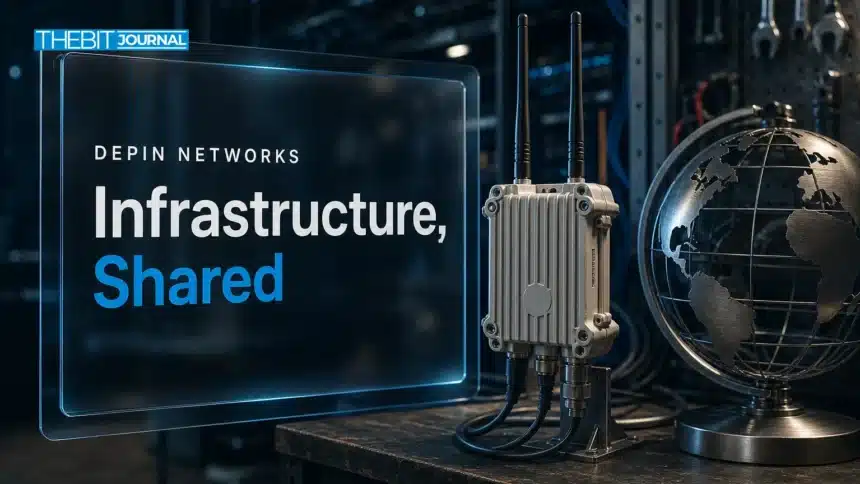
DePIN in crypto refers to networks that use blockchain-based incentives to build or operate real-world infrastructure, such as wireless connectivity, storage, or computing. Rather than relying on one company to supply everything, a network can coordinate equipment owned by many contributors.
The model connects physical devices, users, and digital payments. But a token alone doesn’t make a network useful. The service needs to work, customers need to want it, and the economics must support operators over time.
Quick answer: What is DePIN in crypto?
DePIN, short for decentralized physical infrastructure network, uses blockchain software and incentives to coordinate real-world services provided by independent contributors. They may earn tokens for useful infrastructure, while customers access services such as wireless connectivity or map data.
How DePIN in crypto works, step by step
Details vary by project, but a September 2026 survey of DePIN research describes a stack spanning physical infrastructure, blockchain, interaction, trust, incentives, and applications.
- Someone supplies equipment. A contributor operates hardware such as a wireless hotspot, mapping camera, or computing device. It must perform a service, not just record a token balance.
- The network checks its work. Software or other methods verify whether the device delivered the expected service. Weak checks can leave room for inaccurate claims or abuse.
- Users access the service. Customers or applications use connectivity, data, storage, or computing capacity. Activity driven only by rewards may not indicate lasting demand.
- Payments and rewards are settled. A project may use blockchain transactions or tokens to pay contributors and charge users. Rules differ, and rewards can change with demand, network policies, and token economics.
- The network manages its rules. Governance may decide how rewards work or which devices qualify. Contributors and users still depend on the people, software, and organizations maintaining the system.
For one category, see our explanation of how decentralized wireless networks work.

DePIN examples and how they differ
DePIN is an umbrella term, not one product or blockchain. These examples show different services and incentive designs, not a promise of returns.
| Network type | What it provides | Example or mechanism |
|---|---|---|
| Wireless | Connectivity through contributor-operated equipment | Helium reported 3.4 million daily active users in Q1 2026, up from 1.4 million in Q2 2025. It reported about 128 TB of daily data carried in May 2026, compared with about 24 TB in June 2025. |
| Mapping | Location or map data collected by contributors | Hivemapper’s HONEY rules permanently burn 75% of tokens used for map data and re-mint 25% as contributor rewards, subject to a weekly limit. |
| Storage or computing | Storage or computing capacity supplied by participants | These are recognized DePIN service categories, but rewards and verification depend on each project’s design. |
In a September 2026 announcement, Helium said community-approved HIP-150 added higher reward multipliers for certain high-traffic sites. Its stated base rate was $0.10 per GB, with a 5x multiplier equal to $0.50 per GB. These figures describe that program at the time, not a guaranteed or universal rate.
Hivemapper’s documentation sets Map Credits at $0.0075 each and limits its burn-and-mint process to 500,000 HONEY per week. These rules apply to that system; token prices and contributor outcomes can change.

What the numbers can and cannot tell you
A report by Dylan Bane and Salvador Gala, published by Blockworks on January 28, 2026, estimated DePIN’s circulating market capitalization at about $10 billion, FY2025 on-chain revenue at $72 million, and 2025 startup fundraising at about $1 billion. These broad-category estimates don’t measure the financial health of every network.
Helium’s reported activity offers one view of network demand, but doesn’t establish that all users pay or that revenue covers operating costs. For any project, distinguish service use, fees, token rewards, fundraising, and market value.
Common mistakes and risks
- Assuming decentralization means no intermediaries. Projects may depend on core developers, hardware makers, data providers, or a small number of operators.
- Assuming rewards are fixed income. Token emissions and program rates can change, and token prices can fall.
- Confusing activity with sustainable demand. Devices may be deployed for incentives even when paying customers don’t use the service enough to support it.
- Overlooking technical and physical risks. Hardware can fail, connectivity can be unreliable, and smart contracts or network software can have vulnerabilities. Scams, exchange failures, and regulation can also affect tokens and services.
- Reading legal statements too broadly. On September 29, 2025, the SEC Division of Corporation Finance said it wouldn’t recommend enforcement action over DoubleZero’s described token transfers under specified circumstances. The SEC said its position depended on the facts presented and wasn’t a legal conclusion.
DePIN combines infrastructure risk with token and software risk. A project may reduce some dependencies, but can’t remove volatility, the possibility of total loss, or the chance that a service fails to attract lasting users. Rules differ by country; consult a qualified professional about tax or legal questions.

DePIN in crypto FAQ
What does DePIN stand for in crypto?
DePIN stands for decentralized physical infrastructure network. It describes networks where contributors use their own hardware to provide real-world services and may receive rewards. A survey hosted on arXiv says Messari coined the term in 2022 and outlines the concept and its open challenges.
How does DePIN make money?
There’s no single revenue model. A network may charge for services, distribute tokens to contributors, or do both. Hivemapper documents how HONEY is used for map data and how its burn-and-mint rules allocate part of that use to contributor rewards. This doesn’t mean every contributor earns a profit.
Is DePIN in crypto safe?
There’s no blanket answer. Risks include volatile tokens, hardware or service failures, smart contract bugs, weak customer demand, scams, exchange problems, and regulatory changes. Check how a network verifies service, funds operations, and changes incentives. Rewards aren’t assured, and a token can lose substantial or all of its value.
Sources
- A Survey of Decentralized Physical Infrastructure Network, Research Directions, and Open Challenges (arxiv.org)
- State of DePIN 2025 (app.blockworks.com)
- Network Snapshot | Live Helium Network Usage Data (www.helium.com)
This article is for informational purposes only and does not constitute financial or investment advice. Cryptocurrencies are highly volatile; always do your own research before investing.