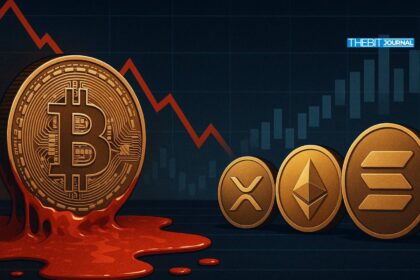







Following a turbulent 2025; Ethereum opened the following year at roughly $3,300 before plummeting to approximately $1,800 in mid-March (a 45 percent fall) before recovering.
After peaking at nearly $5,000 in August 2025; ETH is now priced around $2,000 as of April 2026. This leaves investors wondering: is it possible that Ethereum could reach new all-time highs by 2026?
Ethereum in 2026: Where Does it Stand Today?
ETH currently trades around $2K, approximately 13% higher than a year ago and well below its peak of $4,950. Part of this was driven by internal dynamics; like the recession fears that Ethereum co-founder Vitalik Buterin sold millions of dollars’ worth of ETH in early 2026.
As one of the largest cryptocurrencies, Ethereum’s market cap is around $233 billion today after Bitcoin. Its network is still the backbone of decentralized finance (DeFi) and sustainable applications (dApps). Ethereum 2.0 has gone live with staking rewards; but scaling and transaction fees continue to be issues.
Ethereum remains as the dominant platform as of 2026; but its price has really pulled back, setting up a fresh analysis for Ethereum Price Prediction 2026.
| Metric | Value (Approx.) |
| Market Cap | $248.9 billion |
| Circulating Supply | 120.7 million ETH |
| All-Time High (ETH) | $4,953.73 (achieved Aug 24, 2025) |
| 24H Trading Volume | $14.5 billion |
| DeFi TVL (Ethereum) | $54.1 billion |
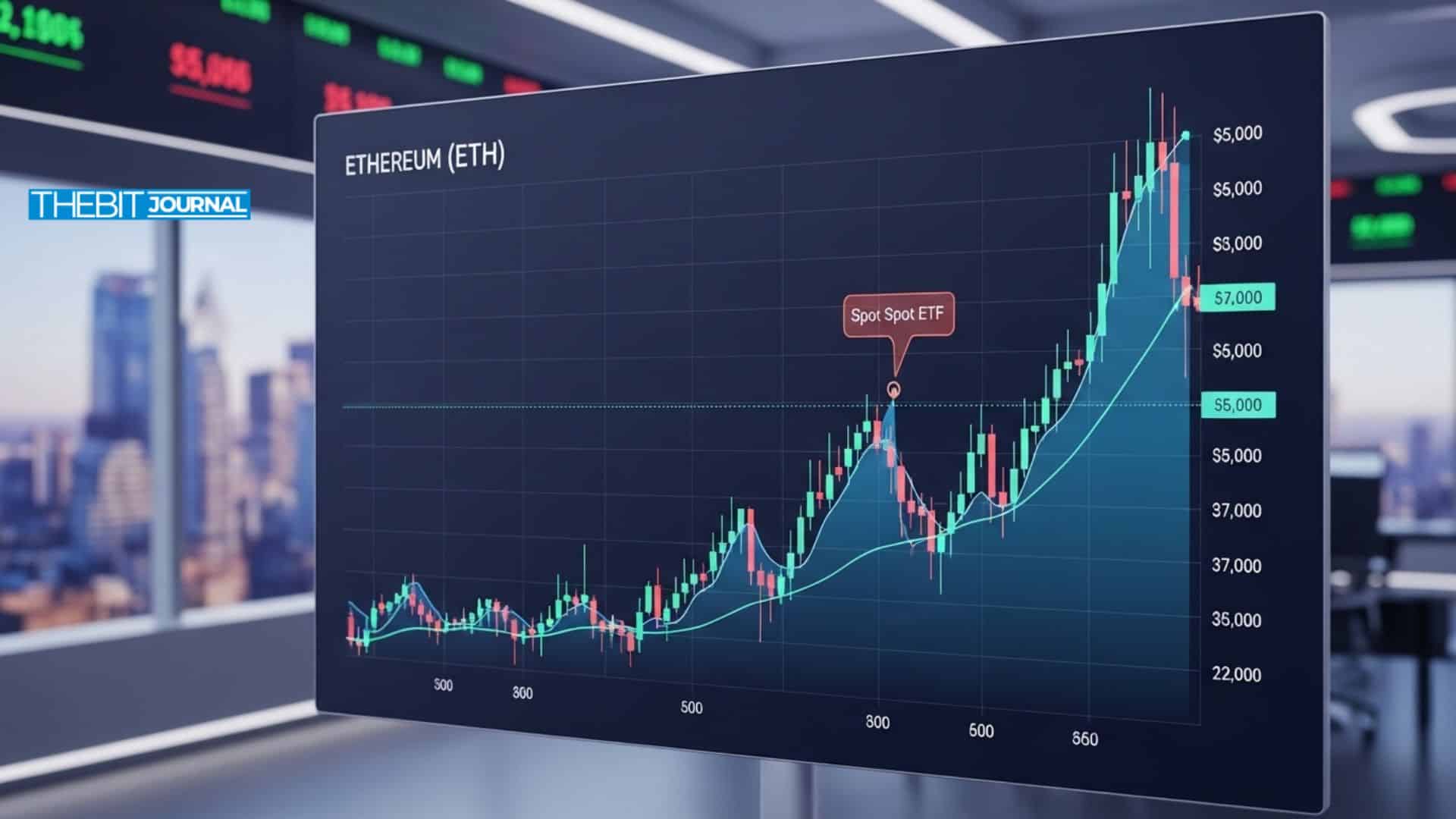
Spot ETH ETF Approval: What it Changes for Price
One of the major developments for ETH was the U.S. SEC’s approval for spot Ethereum ETFs. In May 2024, the SEC approved rule changes that allowed major issuers (BlackRock, ARK Invest, Fidelity etc.) list spot ETH ETFs. Launched later on by late 2024, it offered establishments an extra straightforward approach to purchase ETH.
The approval legitimized the market space and opened the way for new capital. Recent data indicates ETF inflows can move ETH. Just recently on March 31st, U.S. spot ETH ETFs saw a net 31.2M inflow after seven-day outflow streak. BlackRock’s ETHB and ETHA products topped the agenda with $25M on that day. These inflows came in with ETH’s price surging above $2,100.
The idea is that spot ETFs generate institutional demand. For every dollar going in through an ETF, actual ETH must be purchased. These inflows provide a backbone of demand, as institutions scoop up ETH without relying on retail sentiment. But it also means that ETH price can be sensitive to ETF flows: outflows can create pressure, inflows can create support.
So far in 2026; ETH spot EF saw choppy flows; weeks of outflow followed by inflows, correlating with volatility. In the long run; the spot ETF approval is bullish for long-term demand but ETH first needs to clear regulatory and liquidity barriers.
Staking Yields and Why Institutions Are Accumulating
Staking is a unique aspect of Ethereum. Validators stake ETH and receive rewards (similar to interest). In early 2026; staking yields were approximately 4-5% annually. This makes ETH an interest-bearing asset relative to traditional markets. By comparison, U.S. Treasuries yield around 4.2% and the Fed funds rate was at 3.5-3.75%.
So a 4-5% ETH staking yield compared to bonds looks quite good. BlackRock launched an ETF for ETH staking (ETHB/ETHA) with the principle of including staking yield for institutions, which means that they see the yield as part of the Ethereum value.
So; every ETH deposited in staking is taken out of liquid supply. Around 30-31% of all ETH (around 37.9 million ETH) is staked as of April 2026. That leaves only around 69% of ETH potentially for trading. Moreover, whales are accumulating. According to a report, there has been a 30% increase in Ethereum held in accumulation wallets since Jan 2026.
In other words, institutions are purchasing ETH even if it is for the staking yield.
Competitor Analysis: Solana, Avalanche and Cardano Threat
The main rivals of Ethereum which are smart contract platforms like Solana, Avalanche (AVAX) and Cardano (ADA) have all pulled back in 2026. Solana is down 27%; Cardano 21%, Avalanche 22%; year-to-date .
Solana: With almost $50B market cap, Solana is often known as an “Ethereum killer”. It has particularly strong DeFi activity. Monthly DEX volume on Solana has overtaken Ethereum, and it is second only to Ethereum in total DeFi TVL. New projects come to Solana because of its speed and low fees. This presents a real competitive threat; if Ethereum’s network congestion problem persists; more developers may choose Solana’s ecosystem. However; Solana doesn’t have the same institutional backing or tokenization momentum as Ethereum.
Avalanche (AVAX): Another rapidly growing platform, AVAX is down more than 90% from its all-time high (2021). It has innovations like subnetworks; but so far hasn’t been able to compete with Ethereum’s developer base. The main DeFi activity on Avalanche is much smaller than ETH. The majority of analysts view the correction in Avalanche as a sign of overvaluation; not as a failure on the protocol level.
Cardano (ADA): Also down 92% from its ATH. Cardano is a research-oriented blockchain whose ecosystem grows at a slow pace. Cardano’s DeFi platforms’ total value locked (TVL) is a fraction of Ethereum’s (hundreds of millions on Cardano vs. hundreds of billions on ETH).
Overall, Ethereum remains dominant. Not even successful L1s like Solana have reached Ethereum scale of usage in DeFi and institutional use. Most tokenization and institutional apps are being developed on Ethereum infrastructure, not Solana or Avalanche.
In this Ethereum price prediction 2026, we assume that Ethereum maintains its lead, however notable competition (most importantly Solana) threatens to limit ETH’s upside if it grows faster.
Defi TVL and Ecosystem Health Metrics
Ethereum’s strongest feature is its diverse DeFi ecosystem. Recent data have shown activity starting again. For example, Aave sported a $26.79B TVL (up 1.88%), Lido $21.29B (up 1.76%), SSV Network $16.22B (+2.92%), EigenLayer $10.27B (+2.80%) and Binance Staked ETH $8.58B (+2.29%). Every one of these major protocols received inflows that day.
This indicates capital is coming back to Ethereum’s DeFi rather than leaving. Solana’s Total Value Locked, by comparison, is only a few billion, far behind Ethereum’s tens billions.
All in all; Ethereum remains first among DeFi. Ethereum saw $8.82 billion in DEX volume over a 24-hour period. Layer-2 chains like Arbitrum and Optimism have taken off; but they still operate on top of Ethereum’s mainnet and fee mechanism. Metrics for both developers and transactions indicate that Ethereum’s share of smart contract use is still sizable.
Ethereum infrastructure is also running on institutional interest. Ethereum-based tokenized asset projects are being launched by banks and asset managers. For example, the first major bank-backed stablecoins and digital bonds have launched on ETH-chain platforms (e.g. NYDIG’s bonds, Circle’s USD Coin). This new capital creates a demand for ETH as the settlement token.
Strong TVL in major protocols and consistent development activity indicate ETH’s base use cases are intact. This supports higher valuations. It also means that if DeFi expands or institutional adoption accelerates; Ethereum’s “premium” over rivals might widen.
Technical Analysis: Major Support and Resistance Levels
Ethereum price prediction 2026 is at a make-or-break zone from a chart perspective.
Support levels: The $1,800-$2,000 region has twice proven critical; first as the January 2026 low ($1,800), then again the mid-March low ($2,062). A continued dip below $2,000 would break the short-term bullish trend. Below $2,000, the next floor is again near January 2026’s low of $1,800.
Resistance: On the upside, Ethereum meets important ceilings at $2,300-$2,400 and afterwards at $2,800. ETH was rejected for multiple months at the $2,300-$2,400 level. Moving above and holding it would clear the way for $2,800, where there are clustered buy orders (millions of ETH bought in this region). Above $2,800, trendline resistance from late 2025 is around the $2,600-$2,700 region and above that the cost-basis “wall” thins out considerably.
On a technical basis; ETH is currently trading near its 7-day moving average. A break above that, and the 30-day MA, confirmed bullish momentum. RSI (momentum) is at 62, not overbought yet. Key moving averages to follow in this regard are the 100-day and 200-day; which both sit around the $2,300-$2,400 region. A close above $2,322 on a weekly basis would convert those from resistance to support.
The levels are summarized in the table below:
| Level (USD) | Description |
| $1,800 | Major support (Jan 2026 low) |
| $2,062 | Short-term support (Mar 14, 2026 low) |
| $2,300-$2,400 | Resistance (recent swing highs; 100/200-day MA) |
| $2,622 | Resistance (Nov 2025 high cluster) |
| $2,800 | Major resistance (clustered buy orders, next target) |
| $3,300 | Bearish threshold (Jan 2026 high) |
These technical zones guide the Ethereum price prediction 2026 scenario analysis below.
The Future of ETH in 2026: Bull / Base / Bear
Because of the interaction between macro policy, ETFs and crypto fundamentals; three plausible paths for Ethereum price prediction 2026 are identified:
Bull Case: In this case, if inflation cools and the Fed points to several rate cuts, risk appetite is elevated. Spot ETH ETFs continue to attract inflows, staking demand remains elevated and institutional buyers keep buying. ETH breaks above resistance at $2,300-$2,400 with upside towards $2,500+. If the momentum continues, it may test $2,800, the next major obstacle.
If Fed cuts, continued ETF adoption, record staking levels all occur, some analysts even see a Fibonacci-looking extension to new highs of $6,300 occurring. But in all fairness, even for Ethereum price prediction 2026 to get to $3,000-$4,000 in the near term will demand sustained bullish drivers.
Base (Neutral) Case: If Fed holds rates steady, traditional markets are mixed. Here, spot ETF flows for Ethereum are close to flat or see slight inflows. Crypto has its moments of volatility, but nothing dramatic. ETH could navigate between $2,200 and $2,400 under such conditions until mid-2026. There could be occasional rallies to test $2.5k and pullbacks to retest support at $2k. However; Ethereum price prediction 2026 overall could remain directionless. DeFi activity is still flourishing, and institutional interest is there but not in explosive amounts.
Bear Case: In this case, central banks could postpone cuts or even hike if inflation goes on the upside, or geopolitics intensifies causing risk-off. In such case, crypto would probably have outflows. However, ETH could be forced to break below its $2,062 support level. A fall there would trigger a slide to $2,000, and possibly the $1,800 area. ETF and staking momentum loss could further amplify declines Market sentiment would darken, and ETH could spend much of 2026 below $2,000.
These Ethereum price prediction 2026 scenarios draw on current data and expert perspectives. Analysts point out that $2,062 needs to hold for bulls but a breach confirms the level at $2,000. Upside targets above $2,800 assume more institutional buying and a favorable environment.
Should You Buy ETH Right Now? Risk Checklist
Considering all of the above; is it worth buying ETH at this point (approximately $2,050)? The floor looks solid, but hazards remain. Here are factors to consider:
Macro Risk: Ethereum and other cryptos are sensitive to Fed policy and global macro conditions. ETH could fall under a hawkish Fed or recession. ETH has “asymmetric risk” compared to Bitcoin should risk aversion return.
Price Volatility: ETH can still swing violently even as the market leader. Over the last year, the market witnessed over 60% moves from peak to low. Traders should ensure they’re comfortable with such volatility.
Technical Risk: Watch $2,000-$2,100 level. If that zone isn’t held, more selling could ensue. On the other hand, a hold above $2,300-$2,400 is required for higher targets.
Regulatory News: Ethereum spot ETF approvals are a good sign, but any bad crypto regulation in the U.S. or globally could be negative for prices. Watch for SEC statements or new laws.
Competition: Ethereum’s dominance could be challenged by disproportionate traction gained by rival chains such as Solana or emerging L2s. Still, right now, Ethereum outshines in TVL and developer mindshare.
Fundamental Changes: On an unexpected event, (such as hard forks, network problems or large ETH dumps) market sentiment could change. Remember, Buterin’s massive sales weighed on ETH recently.
Given this Ethereum price prediction 2026, if you choose to purchase, do so carefully. Consider dollar-cost averaging and don’t invest more than you can afford to lose. This is not guaranteed investing advice, markets are still very much volatile.
Conclusion
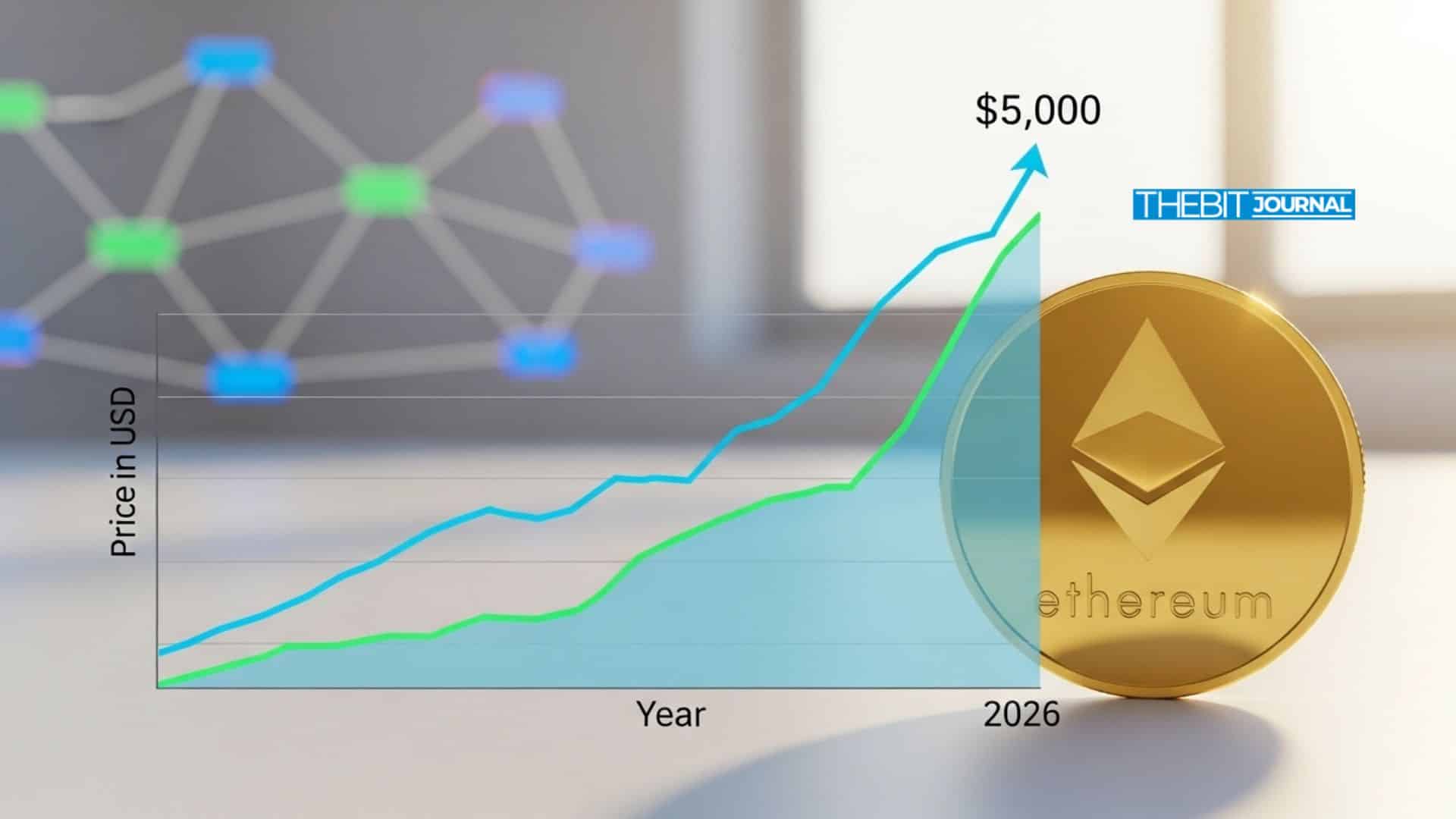
Overall, Ethereum price prediction 2026 suggests modest upside; but bullish conditions would be needed for a move to $5,000. The launch of ETFs and high staking yields mean institutional demand is real. Not to mention; 30% of ETH is now locked in staking and DeFi use continues to surge, meaning the supply side is tightening.
If macro conditions turn positive (Fed cuts, continued ETF inflow); ETH could return to higher levels ($2,500-$2,800) in 2026. On the downside, persistent rate pressures or weak risk sentiment could force ETH to stay below $2,100 or even revisit $1,800.
This Ethereum price prediction 2026 suggests that the base case is a trading range of around $2,200-$2,400 this year. Nonetheless, historical price action and the case for continued ETF adoption suggest a new all-time high greater than $4,950 is not out of the question with conditions met.
Ultimately; ETH has strong fundamentals, but the fate of Ethereum price prediction 2026 will also depend on external factors.
Glossary
Ethereum (ETH): The second biggest coin by market cap. ETH is the native token used to pay transaction fees on the network.
Spot ETF: A financial product trading on stock exchanges that holds the underlying asset (e.g. ETH)
Staking: Locking up cryptocurrency to help secure a proof-of-stake blockchain.
Total Value Locked (TVL): The total amount of assets deposited in DeFi smart contracts.
Technical Support/Resistance: Price where demand (support) or supply (resistance) is sufficient to halt movement.
Bull/Bear: A bull market refers to rising prices and optimist; a bear market to falling prices and pessimism.
Frequently Asked Questions About Ethereum Price Prediction 2026
What does a spot Ethereum (ETH) ETF mean?
A spot ETH ETF is an exchange-traded fund that directly owns real Ethereum tokens. Investors can purchase shares of the ETF to gain ETH exposure without the hassle of crypto wallets.
What potential price impact could Ethereum see from the approval of an ETF?
By establishing ETH as legitimate in the eyes of big investors; spot ETFs can attract billions of fresh investment. Every dollar invested through an ETH ETF, the fund is buying ETH in the market.
What do staking yields mean a lot to ETH?
Ethereum uses proof-of-stake. Investors who “stake” 32 ETH earn rewards (4-5% APY now) for securing the network. These yields make ETH at least partially an income-generating asset. This draws in investors seeking yield over bonds. But staking also locks up ETH (with withdrawals taking days in many cases); and so it decreases supply.
What is Defi TVL and why does it matter?
Total Value Locked (TVL) which is the total value of crypto assets, such as lending; trading or staking that are being deposited into decentralized finance protocols. Ethereum dominates DeFi with over $450B in Total Value Locked (TVL); with top projects like Aave ($26.8B) and Lido ($21.3B). A high total value locked means that many people are utilizing the financial services of the network; which is great for demand.
References
Disclaimer: This article is an analysis and does not constitute financial advice. Crypto assets are highly volatile and speculative. Always do your own research and consult a financial advisor before making investment decisions.