
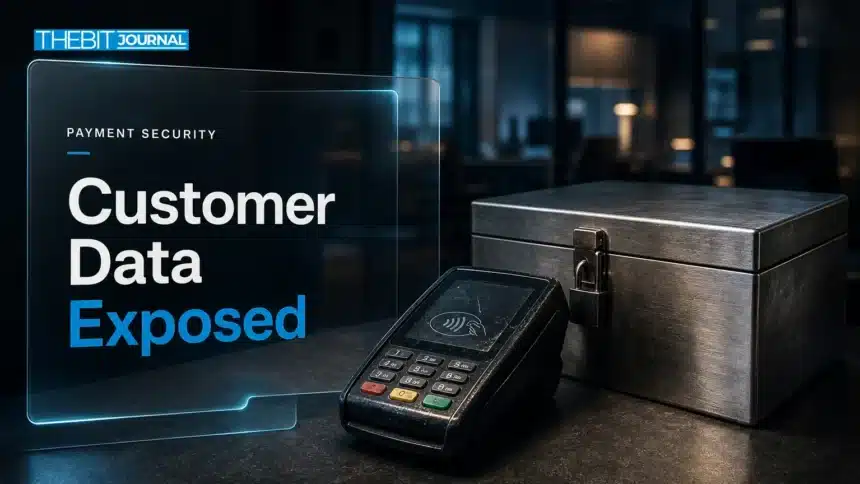

The Gnosis Pay data breach exposed customer information after unauthorized access to a legacy system for its branded consumer cards, the company said on November 6. Customer funds were not affected. The company warned that exposed information could be used in impersonation attempts.
The incident involved the consumer card system. Gnosis Pay said its enterprise platform, which powers white-label card programs, was not affected. The company said it contained access and added security measures for card payments.
Key Takeaways
- Gnosis Pay detected unauthorized access to its legacy consumer card system on November 3, 2026, and disclosed the breach on November 6.
- The company said customer funds and its enterprise platform were unaffected. It has not publicly stated how many customers were affected or published a complete list of exposed information.
- Gnosis Pay made 3D Secure verification mandatory for online card payments and warned customers about impersonation attempts.
- The consumer system was already scheduled for retirement on December 20, 2026.

What happened in the Gnosis Pay data breach
Gnosis Pay’s official disclosure says it detected unauthorized access on November 3, 2026, to the system supporting its branded business-to-consumer cards. It disclosed the incident on November 6. The Block also reported the breach in the legacy debit-card system and said customer funds were not affected.
Gnosis Pay said its security team began containment within two hours of detecting the access. The company said it replaced affected security credentials and addressed the vulnerability. It has not publicly stated how many customers were affected or published a complete inventory of exposed information. Instead, it said it emailed affected customers on November 6 with details specific to their accounts.
The company said the breach did not affect its enterprise platform, which supports white-label card programs. It apologized and said it was communicating with partners, its card issuer and applicable data-protection authorities. Gnosis Pay also said it was arranging specialist monitoring for possible misuse of the exposed information.
The company’s warning focuses on potential misuse of customer information. It told customers to distrust unexpected emails, texts, calls or letters about Gnosis Pay, even if they include real personal details or purchase information. Gnosis Pay said it would never ask for seed phrases, private keys, PINs, full card numbers or transfers of funds. Its warning applies to unexpected contact, including messages that appear credible because they contain information specific to a customer.

Background and context
The November disclosure concerns unauthorized access to the system powering Gnosis Pay-branded consumer cards. It does not describe a breach of the company’s enterprise platform. Gnosis Pay said customer funds were not affected, and its public account identifies customer information as exposed.
The company has not published a complete list of the information involved or the number of affected customers. It said it sent each affected customer an email on November 6 with account-specific details. Those individual notices are the company’s stated source for what information was exposed in a particular account. The disclosure therefore does not establish that every affected customer had the same information exposed.
Gnosis Pay said the affected consumer system had been scheduled for retirement on December 20, 2026, before the breach. Until that date, it made 3D Secure verification mandatory for all online card payments and increased monitoring of card activity and wallets. The company said the measures would remain in place until the system’s planned retirement.
This November incident is separate from a Gnosis Pay security incident in June. In a July 3 post-mortem, Gnosis said attackers extracted about $1.5 million in an earlier wallet and software exploit, while roughly $300,000 became inaccessible. Gnosis said it absorbed the losses and restored user funds. That earlier incident involved a different vulnerability, not the November customer-data breach. Gnosis’s post-mortem describes the June event.

Market context
The market figures below provide context for November 6, not evidence of a price response to the Gnosis Pay data breach. CoinGecko’s snapshot was recorded at 19:13 UTC.
| Asset | Price | 24-hour change |
|---|---|---|
| Bitcoin (BTC) | $75,691 | -0.46% |
| Ethereum (ETH) | $2,227.92 | -0.98% |
| BNB | $694.22 | +0.42% |
The Crypto Fear & Greed Index was 28, classified as Fear, on November 6, according to Alternative.me. That reading describes broader market sentiment and does not establish an effect from this company-specific incident.
What to watch next
The public disclosure does not state how many customers were affected or provide a complete list of exposed information. Gnosis Pay said it emailed affected customers with account-specific details. The company also said it was arranging specialist monitoring for possible misuse of the exposed information. Its announcement does not disclose the number of people who received notices or give a general inventory of data involved.
Gnosis Pay said increased monitoring of card activity and wallets, along with mandatory 3D Secure verification for online payments, would remain in place until the consumer system’s scheduled retirement on December 20, 2026. The company said it was communicating with its card issuer and applicable data-protection authorities.
For customers, the company’s warning is to treat unexpected contact about Gnosis Pay with caution, including messages that contain accurate personal or purchase details. It says it will never ask for a seed phrase, private key, PIN, full card number or transfer of funds. The company also advised customers to distrust unexpected contact across email, text, phone calls and letters.
Frequently asked questions
What happened in the Gnosis Pay data breach?
Gnosis Pay says unauthorized access to the legacy system supporting its branded consumer cards was detected on November 3, 2026. The company disclosed the incident on November 6 and said customer information was exposed.
Were Gnosis Pay customer funds affected?
Gnosis Pay said customer funds were not affected and its enterprise platform was not impacted. Its disclosure describes unauthorized access to the consumer card system and exposure of customer information.
What should customers watch for after the Gnosis Pay data breach?
Gnosis Pay warned that scammers could use real personal or purchase details to pose as support. The company said it would never ask users for seed phrases, private keys, PINs, full card numbers or transfers of funds.
Sources
- Post-Mortem: Gnosis Pay Vulnerability Exploit (www.gnosis.io)
- Gnosis Pay data breach exposes customer info; funds unaffected (The Block)
- Gnosis Pay Breach Exposes User Data, Triggering Immediate Phishing Alerts (U.Today)
This article is for informational purposes only and does not constitute financial or investment advice. Cryptocurrencies are highly volatile; always do your own research before investing.