






This article was first published on The Bit Journal.
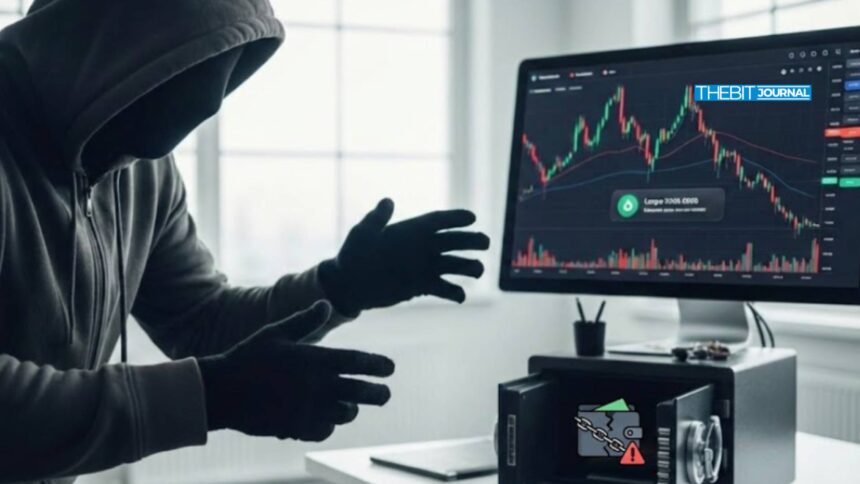
Physical violence committed against crypto holders has increased, with crypto wrench attacks becoming one of the more brutal and disturbing methods of stealing digital currency.
While social media and email scams are carried out online, wrench attacks employ real-world force involving kidnappings, home invasions, and threats that compel victims to give up the passwords to their digital wallets or authorize transactions under duress.
These violent crimes are not unique and speak to a troubling trend of criminals going after those who own crypto as the value of digital coins soars and their wealthy owners multiply.
What Are Crypto Wrench Attacks?
A crypto wrench attack is when criminals threaten or use physical violence on a digital asset holder to coerce them into giving up their access to their cryptocurrency holdings.
The phrase comes from a longstanding internet joke that has its roots in a webcomic: when encryption is strong, the criminal may use “a $5 wrench” to obtain access rather than attempt to break through the math.
In reality, an attacker could use violence, take hostages or exert ongoing pressure until a victim transfers money or discloses passwords.
These attacks evade traditional cybersecurity defenses, making it irrelevant if a victim has strong digital locks when an attacker is holding them at gunpoint or threatening violence.
For criminals, coercion can be faster and more effective than attempting to break encryption.
Real-World Incidents Highlight Violence
In a high-profile 2025 incident, Ledger co-founder David Balland and his spouse were held for ransom in France, with captors demanding a €10 million cryptocurrency ransom and cutting off one of his fingers to pressure payment before they were freed by police.
Another chilling case concerned a crypto investor who was abducted in a Paris suburb and taken captive until his partner handed over a hardware wallet and money. Police eventually stepped in and freed the victim.
Criminal gangs have also pretended to be delivery drivers or ride-share drivers to gain access to victims’ homes. In one such attack, in San Francisco toward the end of 2025, an armed robber masquerading as a delivery driver bound residents and made off with $11 million worth of cryptocurrency after gaining access to wallets.
These cases point to the fact that if assailants can physically force these individuals, walls and even encryption no longer are sufficient to protect those who hold crypto.
What makes these extortion so successful is the irreversibility of blockchain transactions; you can’t pay, and then back out of it.

Why Crypto Wrench Attacks Are Getting More Common
One basic fact is the distribution of wealth among crypto owners. With big digital currencies like Bitcoin and Ethereum having shot up in value, making their owners rich in the process over recent years, thieves see people with digital money as ideal targets.
Analysis of incident databases indicates that physical attacks against holders and owners of crypto increased with market cap, drawing a line between value of the asset, and attack volume.
The ease of identification of wealthy holders is also another factor. Posts on public profiles, social media, crypto event attendance lists and breached personal data make it easier for these criminals to zero in on a specific person.
Analysts warn that when personal information, including addresses and other identifying data, is compromised, criminals could link it with blockchain tracking to locate and stalk potential victims.
If the victim is physically coerced to unlock their hardware wallet or approve a transfer, encryption, multi-factor authentication and cold storage protections are all circumvented.
Who Is Most at Risk?
Crypto Wrench attacks are not happening to crypto users by the book. The most susceptible people are typically those whose real-life identities are revealed and who are publicly linked to crypto wealth.
These include founders, CEOs, investors, over-the-counter traders, peer-to-peer market participants, and really anyone known to hold a large amount of cryptocurrency.
There have been higher rates of crypto wrench attacks in certain geographical areas such as Western Europe and the Asia-Pacific region but there have also been cases in North America.
Some others achieve their criminal goals through proxies via threatening or kidnapping household members, friends and relatives when direct access to the holder is difficult.
This tactic of exploiting proximity to family serves to heighten the psychological pressure applied onto victims, frequently resulting in submission.
Those who publicly disclose their holdings, or show off wealth online, may unwittingly make themselves a bigger target, as attackers can use open-source intelligence (OSINT) and social media to track their lives and routines.
The Mechanics of a Crypto Wrench Attack
The usual crypto wrench attack goes through four stages: preparatory surveillance and targeting, then establishing physical proximity or contact, followed by coercion using threats or force if necessary, and rapidly siphoning off assets once access is gained.
The first level of targeting is typically sociological, with social engineering and classic surveillance. Criminals may also pretend to be acquaintances, false professionals (like a delivery driver or ride-share driver) or they might infiltrate cryptocurrency community spaces in an effort to gather first-hand intel.
The phase of coercion then begins, which can include threats to harm the victim or a relative, use of weapons, and also keeping them in captivity until they give in to requests to move.
In the majority of documented cases, by the time victims are intimidated to provide private keys or execute a transfer, it is too late as money transactions from their wallets have already been made, which cannot be reversed according to the blockchain nature.
Victims tend to report these crimes only after their money is gone, making it difficult for law enforcement to stop them or retrieve money.
Industry and Law Enforcement Responses
Industry watchers and security companies say that the number of reported incidents is just a fraction of the total number of cases as a result of underreporting.
Many victims are afraid to report violent episodes, fearing harm to their reputation, regulatory scrutiny or being targeted again. Crypto crime databases typically depend on public reports, missing attacks that never make news or are filed under generic crime categories, such as robbery or assault.
Security experts advise the possessors of large digital wealth to avoid putting themselves at personal risk, i.e., limiting public disclosures as much as possible and using multi-party authorization mechanisms, while keeping the most assets on institutional custodian accounts or super-secure non-standardized custody systems.
Security firms say the increased threats call for a new mix of physical and digital measures, beyond those used in typical cyberdefense.
Law enforcement in those affected regions is starting to acknowledge the unique nature of these crimes and to work more closely with crypto industry groups on training and investigative approaches.
In France, where most of the high-profile crypto violent crimes have been concentrated, for instance, authorities have promised tighter safety measures to safeguard innovators, executives and regular holders from harm.

What Can Individuals Do as Wrench Attacks Increase?
For individual holders of crypto, the rise of wrench attacks has changed what security means in real life.
Solid passwords and cold wallets still count for something, but recent events have made personal exposure and transaction speed matter at least equally.
The most effective means by which individuals can mitigate this kind of risk is to decouple identity from visibility. There are many reasons why victims get hacked, but attackers keep robbing people who share a similar profile.
Anyone with access to both the internet and any kind of cryptocurrency account is fair game. Public posts, conference speeches, on-chain bragging or even casual remarks about holdings can leave a trail that attackers take advantage of.
As a result, many long-term holders are taking active steps to reduce the extent their crypto activity can be extrapolated to their real-world identity.
According to Ryan Duff, an independent security researcher, attackers also depend on speed and pressure. If money can be transferred immediately by an individual acting under threat, blackmail becomes an excellent strategy.
To get around this, more users are spreading access across several wallets, or requiring time-locked approvals for large transfers. None of these steps is designed to prevent violence, but they can make it harder for criminals to extract large sums of money almost immediately.
There’s also a developing consciousness of personal habits and predictable routine. Recent law enforcement briefings reveal that attackers often surveil daily movements, home addresses and travel habits before striking. Those with obvious crypto exposure are taking inspiration from the way executives in traditional finance act, avoiding routine and being suspicious about who knows where they live or travel.
Supporting impersonation is another aspect that has now aroused concern. In many recorded instances, leaked customer information was exploited to blackmail victims into playing along with attackers they believed were service suppliers.
Both exchanges and wallet firms have repeatedly tried to hammer home that legitimate staff would never contact users or private keys, seed phrases or urgent transfers.
For individuals, recognizing this has been an indispensable defense when pressure and personal threats are added.
Finally, physical safety comes before digital valuables. Under real-life coercion, compliance may be unavoidable at the moment. The only thing that matters after that is quick reporting to law enforcement and exchanges because it increases the chances of tracing stolen funds and catching thieves.
Conclusion
The rise of crypto wrench attacks is a noted transition in the spectrum of digital asset crime. Once confined to online scams and thefts, criminal activity is now increasingly spilling over into the physical world as assailants try to force victims to cough up their digital holdings in person, often at gunpoint.
High-profile kidnappings, savage home invasions, and extortions are the latest evidence that simple digital encryption is no longer enough to protect people’s greatest vulnerabilities.
As wrench attacks continue to capture the headlines in 2026, the crypto community and law enforcement must address these new forms of threat by integrating solutions from both physical and digital ends of this spectrum while also informing holders about the dangers involved with real-world coercion.
Glossary
Crypto wrench attacks: Physical attacks in which the attacker uses threats or violence to force crypto-asset holders to give them access to their wallets, or transfer funds.
Open-Source Intelligence (OSINT): Includes public information from sources on the internet, such as social media and event attendance, used to identify or profile individuals.
Immutable blockchain nature: Transactions once confirmed on a blockchain cannot be reversed.
Physical coercion: The act of forcing, threatening or kidnapping someone to make them do something like a crypto transfer.
Multisignature: Security configurations that involve more than one approval from a unique entity before funds can be transferred, reducing single point vulnerabilities
Frequently Asked Questions About Crypto Wrench Attacks
What is a crypto wrench attack?
A crypto wrench attack occurs when criminals employ physical force or threats of violence to force a crypto holder to unlock wallets or transfer funds. The phrase originates from an old comic about getting around encryption with a physical tool.
Are these attacks increasing?
Data and expert assessment show that reported cases of physical coercion against crypto holders have been growing in recent years, oftentimes tied to surging cryptocurrency values and the greater personal visibility of these wallet holders.
Who is most at risk?
The targets are people known to have substantial crypto holdings: executives, public influencers, founders, OTC traders and in general anyone with a degree of public exposure that associates their identities with significant crypto assets.
How can holders protect themselves?
Security experts recommend that people limit how much they share publicly about their holdings, use shared custody or financial institutions as a third party, and be careful not to overshare personal information that could make them a target.
References
Cointelegraph
TRM Labs
AInvest
PANews
CryptoSlate
Bloomberg