



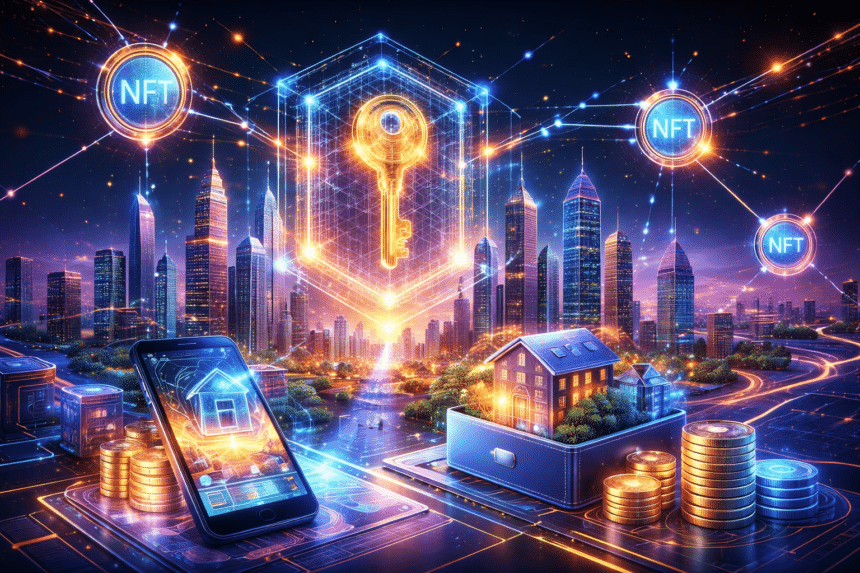

The real estate industry remains the slowest to adopt new changes throughout its entire history. Buying or selling a home, land, or building often involves many people, long wait times, and large fees for lawyers, brokers, and banks. The industry starts to experience its first major transformation in 2026. Non-fungible tokens, which people call NFTs, together with blockchain technology, are beginning to transform traditional methods of property ownership.
The tools provide three benefits, which include quicker deals, worldwide access, and different investment opportunities for business owners and residential property owners. The movement achieves gradual progress toward worldwide adoption despite its difficult nature.
What Are NFTs and How Do They Work in Real Estate
An NFT exists as a digital asset that exists on a blockchain network. A blockchain serves as an encrypted public database that maintains records. The system maintains records through a method that stops unauthorized access and permanent modification of information. NFTs serve as distinct digital tokens that users can own to their virtual items. The technology that first gained traction for digital art and music now extends its applications to real estate and property rights. An NFT for real estate is a digital certificate that links to a physical property. The digital token functions as a proof of ownership, which users can exchange and keep in their digital wallets.
The system operates as a standard property title because it uses blockchain security to track all property transfer activities from beginning to end, with verification finished within seconds. The process of tokenization converts physical properties into digital assets, which exist as multiple tokens that blockchain technology records. The complete property ownership can be represented through the tokens, while smaller tokens can show fractional ownership of the asset. Fractional ownership allows individuals to possess a portion of an asset instead of needing to acquire the entire asset.
The system permits more investors to enter the market because many individuals lack sufficient money to purchase complete properties. Blockchain technology now handles multiple tasks that required traditional banking systems, legal experts and title companies, and other entities to perform. The system executes digital ownership transfers through smart contracts, which contain blockchain code that executes the ownership transfer after both parties reach their contractual terms. The system eliminates the requirement of physical documents, which results in decreased mistakes and financial savings. The system enables businesses to finalize their transactions which used to require weeks in a few hours or minutes.
The Rise of Real Estate Tokenization Market Growth to 2026
The market for real estate tokenization is experiencing rapid expansion as it attracts interest from investors and developers, and government agencies. Experts estimate that the worldwide value of tokenized real estate assets will exceed hundreds of billions of dollars by 2026. This increase occurs because commercial and residential developers are investigating methods to utilize blockchain technology for their properties.
The total NFT market demonstrates current market movements. The global NFT industry is projected to reach around $60.8 billion by 2026 which marks a substantial increase from previous years. The expansion demonstrates that NFTs continue to find practical applications in business after the mid-2020s boom-bust period.
According to industry research the global market for NFT real estate solutions reached approximately $375 million in 2024 and is projected to experience continuous growth until it surpasses one billion dollars by 2031. The higher growth rate indicates that multiple countries and regions are showing greater interest and investment in real estate tokenization activities.
How NFTs Are Changing Property Transactions
NFTs and blockchain technology transform property transactions through three key aspects, which include increased transaction speed, better transaction visibility, and improved accessibility to the market. The process of selling property through traditional methods requires several procedures, which include conducting land title searches, obtaining title insurance and securing bank approvals, and performing manual verification. The procedures require both time and financial expenditure to complete.
The blockchain system maintains property records through its transparent and secure framework, which enables users to track property history. The system maintains a public ledger that documents each transfer and sale, and ownership change in a manner that prevents unauthorized alterations. The system delivers two main benefits because it provides buyers and sellers with complete property history information, which they can check to avoid fraudulent transactions.
Smart contracts execute multiple tasks that lawyers and agents used to complete through manual work. The contract operates through an automatic process that activates when all parties reach their established conditions. The system eliminates processing delays while it brings down operational expenses. The system achieves cost savings through lower escrow service charges together with reduced intermediary expenses, which result in faster purchase completion for buyers.
NFTs introduce a new method for property fractional ownership, which has not gained widespread adoption until now. Investors can acquire minor ownership stakes in buildings or land parcels while reaping rental income and resale value benefits without needing to possess the entire property. The shared ownership system attracts individual investors together with institutional investors who want to minimize their risks while maintaining investment flexibility.
Institutional Investors and Banks Enter the NFT Real Estate Market
The year 2026 will experience its most significant change when institutional investors begin to show increased interest. Blockchain-based property models have gained recognition from major banks and private equity companies and real estate investment trusts. The institutional market now views real estate tokenization as future infrastructure, which generates permanent value instead of treating NFTs as a temporary market trend. The property assets that use tokenization technology provide investors with quicker settlement processes and complete visibility of their transactions and seamless international investment opportunities.
Between 2025 and early 2026, multiple international banks tested blockchain technology for real estate settlement through their pilot projects. The programs aim to achieve three goals which include reducing paperwork requirements and decreasing settlement times to two days and minimizing transaction risks. Real estate funds are testing the process of creating tokenized shares, which will represent their ownership of commercial buildings and residential properties. The method enables institutions to fundraise at higher speeds while establishing worldwide rights for their investors to participate in investments.
Tokenization enables organizations to manage their investment portfolios with greater effectiveness. The institutions use blockchain ledgers to monitor ownership of assets which they previously managed through physical property documents and centralized title systems. Smart contracts enable the automatic handling of three tasks which include rental income distribution and dividend payments and compliance reporting. The system decreases operational expenses while it provides investors with better visibility of all financial activities.
Large scale adoption depends on regulatory clarity, but institutional momentum is clear. Analysts report that over 15 percent of real estate-focused financial firms globally are either testing or actively researching blockchain based asset models in 2026. This signals that NFT real estate is moving from experimental technology into structured financial planning.
Legal and Regulatory Trends in 2026
Legal recognition stands as the primary requirement that must be fulfilled before people will start using NFTs for their real estate transactions. The worldwide community still needs to reach a conclusion about the legal status of digital property records. Property rights and ownership laws have existed for hundreds of years. Blockchain technology challenges these systems to adapt. The digital nature of NFTs creates difficulties that prevent them from being categorized as property according to traditional legal definitions.
This reality compels lawmakers and courts worldwide to establish new regulations that govern digital ownership under official law. Some governments are taking steps to integrate blockchain technology into land registries. The testing for property title registration on public blockchains has been conducted through several pilot programs. The pilot programs are designed to improve security during title transfers while decreasing associated expenses. The current obstacles that prevent legal adoption require organizations to develop clear regulations about taxation, inheritance matters and dispute resolution procedures.
China announced its new regulations for real-world asset tokenization which includes real estate assets in early 2026. The new regulations have resulted in greater investor dedication to blockchain companies, while they demonstrate that major economies are starting to develop their regulatory frameworks.
How NFT Real Estate Impacts Developing Economies
Developing economies will experience major changes because of NFT-based property systems. Unclear land titles combined with fraud and slow government processes and limited financial access, create problems for many countries. The use of blockchain technology for land registries provides a solution that addresses some of these persistent issues. Governments can establish ownership through a digital transparent digital system, which helps to decrease property market disputes while enhancing market trust.
Blockchain technology enables creation of unalterable records that establish land ownership in areas where official land documentation is insufficient or susceptible to manipulation. The system provides enhanced legal transparency, which leads to higher foreign direct investment. Investors show greater interest in markets that maintain proper documentation of property rights which can be easily verified. NFT-based records enable quick due diligence processes which help decrease uncertainty.
Developing economies can benefit from fractional ownership models which enable more people to participate in their real estate markets. Investors can purchase smaller portions of residential or commercial projects because the system eliminates the need for whole project funding. The system enables local developers and infrastructure projects to access different funding sources. Global digital marketplaces enable property assets to draw investment from international investors.
However, implementation challenges remain. Reliable internet access, digital literacy, and regulatory readiness are essential. Governments must build secure digital identity systems to ensure property NFTs are linked to verified individuals. Without proper oversight, blockchain adoption could create confusion rather than clarity.
Risks and Challenges for NFT Property Ownership
Real estate NFTs offer potential advantages to users but also create dangerous hazards. The first obstacle to overcome in this process involves establishing lawful regulations. Digital tokens have not yet achieved complete recognition as valid property ownership documentation in various jurisdictions. The situation creates problems because two individuals claim ownership rights while one person inherits property and others need to resolve their rights claims. Security systems face multiple dangers.
The blockchain technology provides strong protection; however, NFT marketplaces and wallet systems which operate together with NFTs, present security risks that hackers can exploit. The process of reclaiming ownership rights becomes challenging when an NFT gets lost or stolen or damaged because of inadequate security measures.
NFT market values experience fluctuations. The NFT market experiences extreme price fluctuations which result in significant value changes. The market demonstrates documented price fluctuations when art and collectibles exist in NFT form. The real estate sector faces greater risks because properties serve as high-value assets that require protection.
Case Studies of NFT Real Estate Projects
Multiple international projects have studied NFT-based real estate systems. Real estate developers utilize NFTs to create tradable property shares through digital marketplaces. Virtual real estate markets in the metaverse allow users to purchase virtual land and digital buildings at prices that match actual market value.
The initial projects demonstrate that NFTs create opportunities for investors to develop new investment methods while handling properties through innovative management approaches. Investors can build property portfolios that include both physical assets and virtual assets without needing to follow conventional restrictions.
The Future Outlook for NFTs and Property Ownership
Experts believe that NFTs and blockchain technology will continue to influence property ownership trends until 2026 and throughout the next ten years. According to analysts, tokenized assets will become a major component of global real estate investment markets by the year 2030. Some forecasts estimate that global tokenized real estate values could run into trillions of dollars by the end of the decade.
Institutional investors, which include banks and real estate investment groups, are now investigating tokenization as a method to control their assets while minimizing expenses and accessing international investors. The use of NFT-based ownership will increase as legal systems develop and technology advances.
Conclusion
NFTs in real estate are transforming the property market in 2026. They create three main advantages, which include faster property transfers, transparent ownership records, and expanded global investment opportunities.
The extent of system adoption depends on the understanding of legal and regulatory requirements, according to existing research. The future of NFTs in real estate markets appears bright, according to current market conditions. The future of property transactions and ownership will develop through ongoing technological progress and legal advancements and international adoption patterns.
Frequently Asked Questions About NFTs in Real Estate and Property Ownership
1. What does an NFT represent in real estate?
The real estate industry uses non-fungible tokens to create digital ownership records which exist on a blockchain. The NFT can show complete property ownership or divide ownership into several shares. The NFT functions as a link between the actual property and its legal ownership documents which contain all related ownership rights. The blockchain ledger tracks each ownership transfer and system modification which establishes a complete ownership record that anyone can access. The existence of legal recognition depends on particular state and national legal systems.
2. Is NFT property ownership legally recognized in 2026?
The legal recognition status of any specific country determines its recognition of rights. Some regions are running pilot programs that test blockchain based land registries. Digital asset regulations remain under review while various regions establish their regulatory frameworks. NFT real estate operates in most regions through traditional property systems which remain in use together with new digital asset processes. Government agencies need to establish precise rules which show digital tokens relationship with official land rights and actual property ownership rights before society will adopt digital tokens.
3. How does fractional ownership through NFTs work?
Fractional ownership means that a property is divided into multiple digital tokens. The tokens serve as ownership links for the entire property. Investors can buy these tokens instead of purchasing the entire property. Owners may receive rental income or profit from appreciation based on the percentage they hold. This model enables international investors to access premium real estate markets with reduced capital needs.
4. What are the main risks of NFT real estate?
The primary dangers of this situation stem from three sources which include unpredictable regulatory environments and weaknesses in smart contracts and unpredictable changes in the market. The absence of legal recognition for digital ownership rights leads to complex ownership disputes between parties. Security risks arise from technical flaws that exist in blockchain systems and digital wallet technologies. The NFT market experiences price fluctuations which impact both token liquidity and investor trust.
Summary
The future of NFTs in real estate and property ownership will become evident in 2026. The real estate market sees rising market activity because developers, investors, and financial institutions investigate blockchain-based ownership systems. Market research indicates the continuous expansion of tokenized property platforms while institutional investors show increasing interest. The new system gains support from improvements in smart contract technology, digital identity systems, and artificial intelligence systems.
The use of NFT-based property ownership brings multiple benefits. The system allows people to make faster transactions while providing transparent ownership records and enabling investors to access worldwide markets through fractional investment opportunities. Developing economies may benefit from more secure land registries while institutional investors see potential in automated portfolio management. Legal clarity holds vital importance during this period. The absence of effective regulatory systems will hinder widespread adoption.
The future of NFT real estate shows that it will take time to substitute traditional property systems. The new technology will transform how people document ownership, transfer property and arrange financing. Blockchain technology will become more widely used in real estate during the next ten years because of government regulations and technological advancements. The property market changes slowly, but its big economic changes will create major consequences for the property market.