





This article was first published on The Bit Journal.
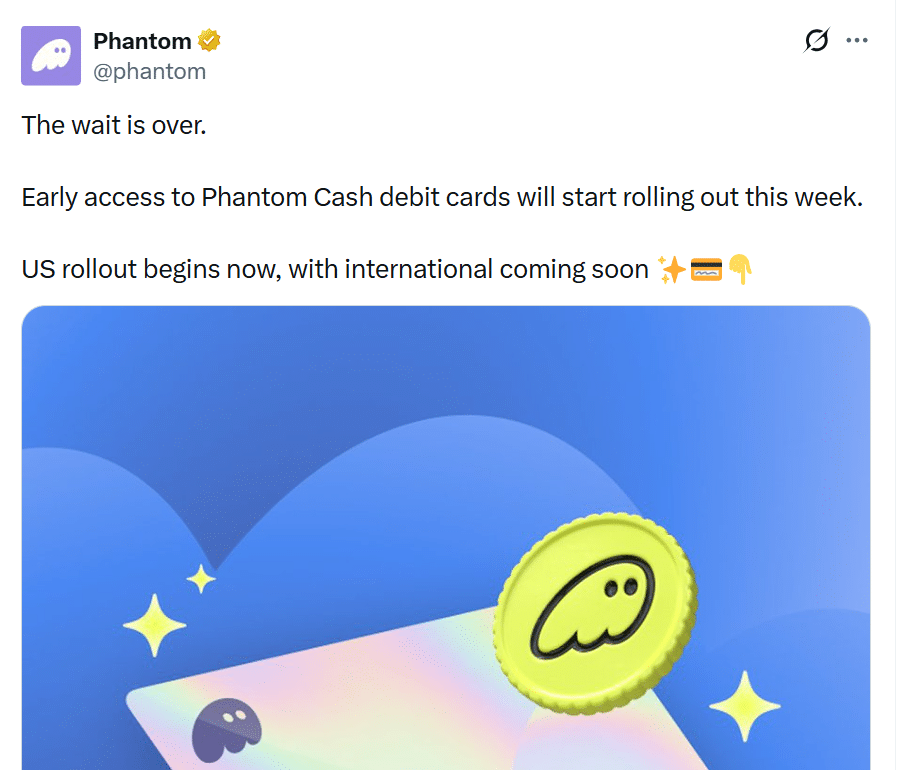
Phantom wallet has started rolling out access in the United States to a virtual prepaid debit card that can be added to Apple Pay and Google Pay, with the aim of making stablecoin balances work for everyday purchases without merchants changing anything at checkout, because the app converts the balance into U.S. dollars at purchase time and routes the payment through card acceptance. In other words, Phantom wallet is trying to make spending feel normal even when the funding starts on-chain.
How the Cash experience turns into a card
Inside the Phantom wallet, the debit card lives in the Cash experience and follows a regulated onboarding path: identity verification first, then card terms, then activation, with access opening in waves through a waitlist. The card launches as a virtual card, meaning it can be added to Apple Pay and Google Pay without waiting for plastic, and it is designed to work anywhere Visa is accepted, so spending feels routine.
Phantom wallet also spells out the structure behind the scenes. The prepaid Visa card is issued by Lead Bank pursuant to Visa licensing. Bridge Ventures is listed as the program manager, and Phantom is the platform provider for application, access, and management, a split that clarifies responsibility across the bank layer and the software layer.
Why this matters beyond one feature update
Payment products get judged on basics, not slogans, so the indicators that matter here are repeat usage, cost clarity, approval reliability, and support quality, because a declined tap feels worse than a slow swap. Phantom wallet is betting that stablecoin utility becomes real only when spending is uneventful, which puts pressure on fees, security, and customer experience at the same time.
What makes this model attractive right now
The appeal is that it compresses steps as instead of bridging, swapping, and off-ramping before a purchase, the complexity is pushed into one flow, while the checkout stays familiar. That is also where the tradeoffs live: fees may apply, disputes follow card rules, and a user should treat the cardholder agreement as essential reading when money is involved.
Limits, availability, and the tradeoffs users will notice
Phantom wallet says the debit card is currently available only in the United States, excluding New York and Alaska, and identity verification is required before the card can be created and activated. The published daily spending limit is $2,000, with an option to request an increase to $5,000 after review, and fees may apply under the cardholder agreement, so adoption will depend on whether the experience stays predictable over time.
What to watch next as access widens
For Phantom wallet, the next proof point is retention: how many people keep a balance for spending and return for repeat purchases after the first tap. Phantom has said international access is expected after the U.S. rollout, so timeline and execution will be closely watched.
Conclusion
If Phantom wallet executes this rollout with steady approvals, transparent costs, and responsive dispute handling, stablecoins can start to feel less like a trading chip and more like everyday money with modern settlement under the hood.
Frequently Asked Questions
What is being rolled out?
A virtual prepaid debit card linked to a stablecoin balance, usable via Apple Pay and Google Pay.
Where is it available?
United States only for now, excluding NY and AK.
What limits apply?
$2,000 daily spending, with review-based increases up to $5,000.
Glossary of key terms
Stablecoin: A crypto asset designed to track a fiat currency such as the U.S. dollar.
KYC: Identity checks used to verify customers for regulated financial services.
Program manager: A partner that runs card operations on behalf of an issuing bank.
Sources