





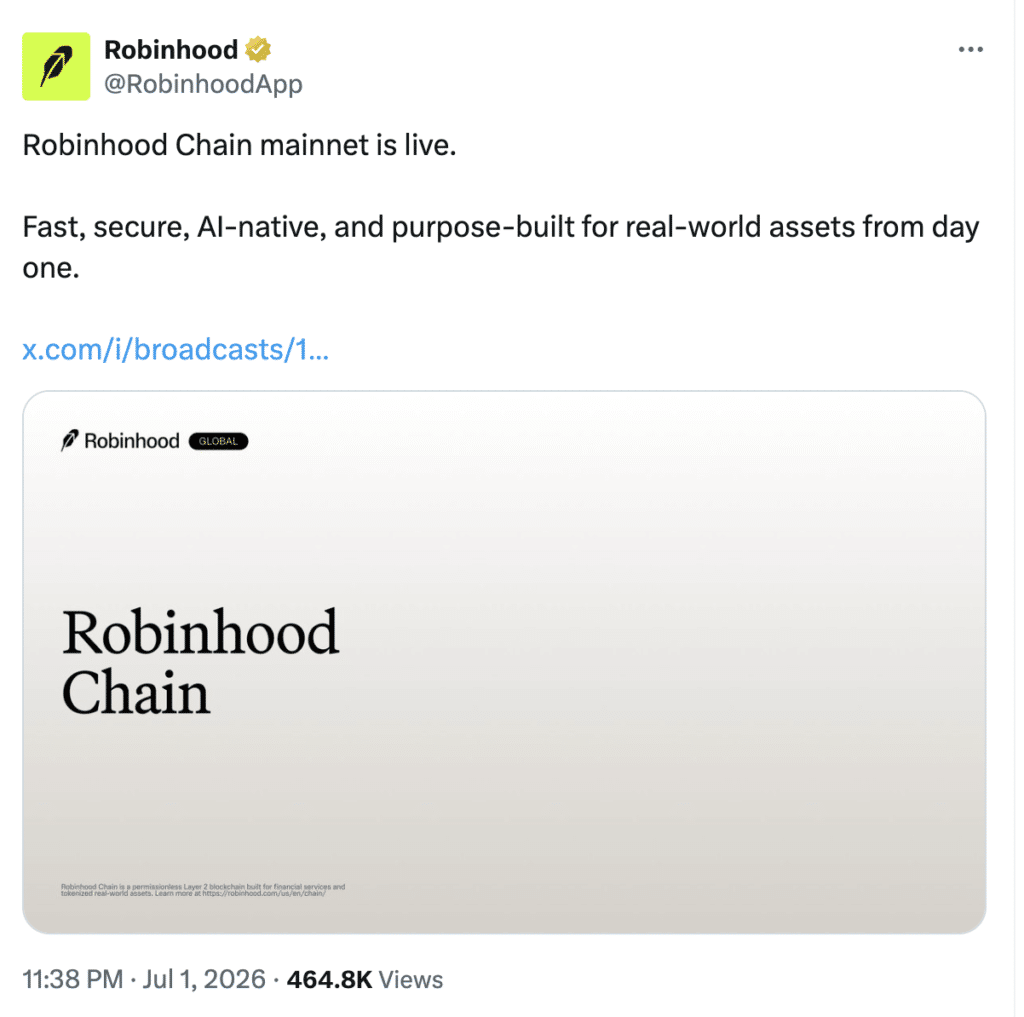
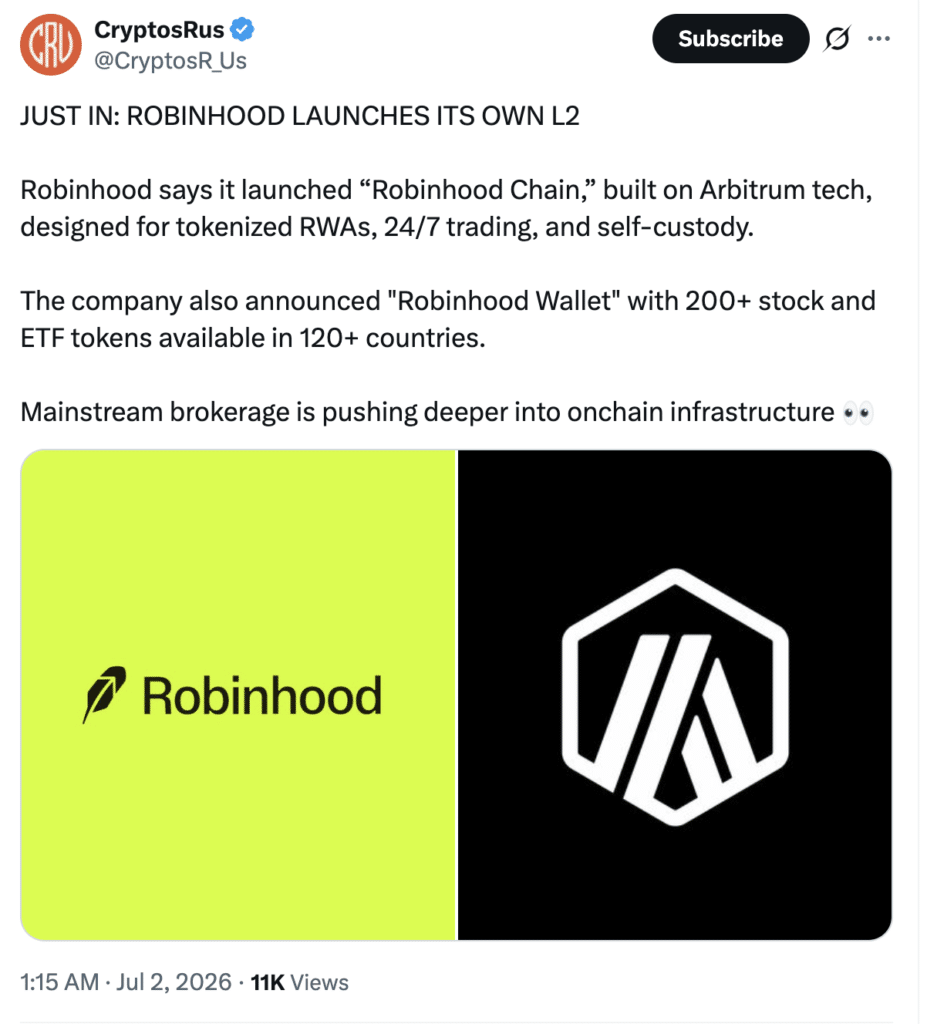
Robinhood Layer 2 Mainnet is a clear indication that a new era of innovations is about to begin as Robinhood rolls out its own layer 2 mainnet and adds to its tokenized investment portfolio. Robinhood Layer 2 mainnet is a network that has built-in blockchain technologies that are meant for RWAs with the capability of offering Robinhood tokenized stocks, decentralized finance, and perpetual futures through one single network.
Being built on Arbitrum Layer 2, the new network is a clear indication of the company’s strategy towards combining traditional finance with blockchain-enabled investments. With faster transactions, reduced costs, and better scalability using Ethereum Layer 2, the company will be able to boost the trading of tokenized stocks while opening up new markets for investors.
Robinhood Layer 2 Mainnet Is a Significant Leap Beyond Conventional Investments
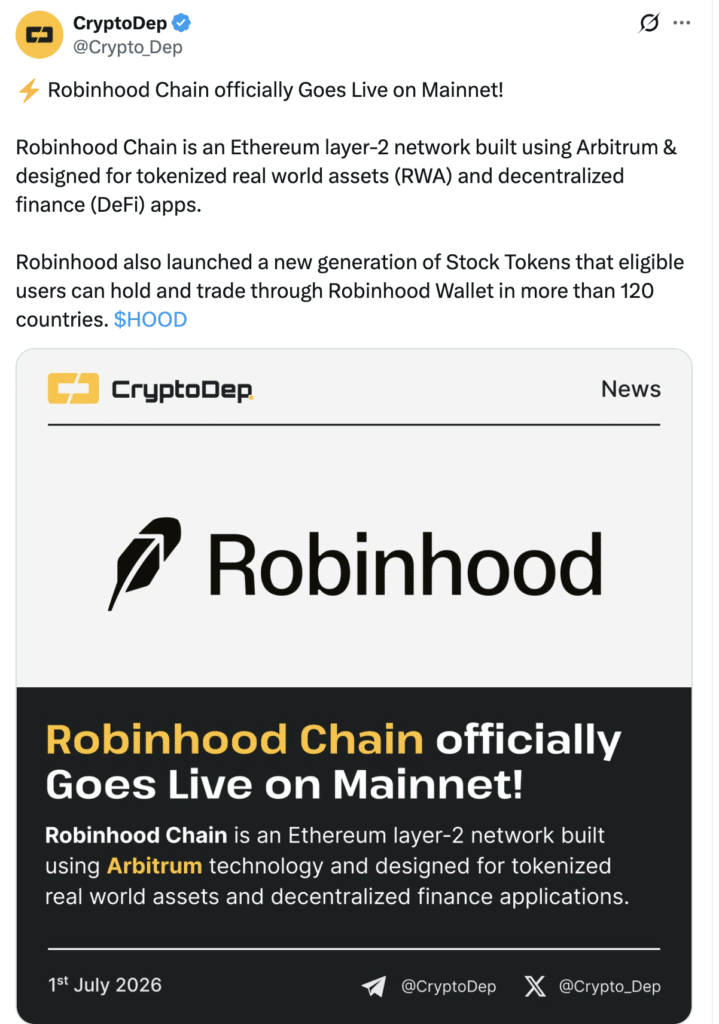
Robinhood layer 2 mainnet converts the blockchain plans of the company into a viable financial ecosystem. The company no longer depends only on its central brokerage platform but provides a solution in the form of a Layer 2 network of Ethereum that caters to RWAs and DApps.
The network supports fast transaction speeds and reduced fees along with improved scalability and security through connection to Ethereum. Such a step showcases how conventional financial institutions are using blockchain technology to revolutionize the financial markets.
Tokenized Stocks by Robinhood Brings On-Chain Stocks To The Rest of the World
One of the most exciting things about the release is that Robinhood is now offering tokenized stocks, giving eligible users in more than 120 countries the ability to trade their equities through tokenization on supported decentralized exchanges.
While conventional markets operate only at certain times, tokenized stocks offer traders the flexibility of trading at all times.On-chain stocks can further be used as collateral in DeFi platforms, providing an extra use case aside from just trading them.
How Robinhood Layer 2 Mainnet Works through Arbitrum Technology
Investors still keep wondering about the How Robinhood Layer 2 mainnet works? It all starts with its structure. Robinhood chain operates with help of the Arbitrum Layer 2, a scaling technology for Ethereum that boosts performance yet keeps Ethereum compatibility.
Such companies as Alchemy, BitGo, Chainlink, and Uniswap serve as industry partners and provide the infrastructure, custody, oracle, and liquidity. With this structure, developers and investors will be able to enjoy more affordable options without compromising security and decentralization of blockchain.
Robinhood Blockchain Expands Beyond Tokenized Equities
The Robinhood blockchain launch extends well beyond tokenized equities. Alongside Robinhood launches Layer 2 mainnet for tokenized stock trading, the company introduced perpetual futures through Robinhood Wallet and expanded decentralized finance capabilities, including lending and borrowing.
The ecosystem is designed to make blockchain investing more practical by combining digital assets, derivatives, and financial services within a single platform. This diversified strategy positions Robinhood as a stronger competitor among crypto-native financial service providers while accelerating institutional blockchain adoption.
Robinhood Chain vs Traditional Stock Trading
The Robinhood layer 2 mainnet introduces a modern alternative to conventional equity markets. Traditional exchanges operate during limited business hours and often involve multiple intermediaries that increase settlement times and transaction costs. In contrast, Robinhood Chain enables 24/7 tokenized stock trading, giving eligible users continuous market access through blockchain infrastructure.
This shift reduces operational friction while improving transparency and efficiency. As digital finance evolves, blockchain-powered trading is becoming an increasingly attractive option for investors seeking faster and more flexible market participation.

Why Tokenized Stocks Could Reshape Financial Markets
The growth of tokenized stock trading reflects a broader trend toward digital ownership of financial assets. By converting traditional securities into blockchain-based tokens, investors gain faster settlement, improved accessibility, and greater interoperability with decentralized finance. Robinhood tokenized stocks on Ethereum illustrate how real-world assets (RWAs) can move seamlessly across blockchain ecosystems.
Analysts continue to view tokenization as one of the most promising developments in financial technology because it has the potential to improve liquidity while reducing operational inefficiencies across global capital markets.
Robinhood Expands Its Blockchain Ecosystem for Investors
The Robinhood layer 2 mainnet represents more than a network upgrade. It establishes a comprehensive blockchain ecosystem designed to support digital assets, tokenized equities, and decentralized financial services. Through the Robinhood blockchain ecosystem for investors, eligible users can access perpetual futures, decentralized applications, and tokenized investments within a single infrastructure.
Robinhood launches perpetual futures alongside Layer 2, demonstrating a strategy focused on expanding blockchain utility rather than limiting innovation to cryptocurrency trading alone. This approach strengthens Robinhood’s position in the rapidly evolving digital asset industry.
How Robinhood Compares With Other Blockchain Platforms
Several blockchain projects are pursuing real-world asset tokenization, yet Robinhood enters the market with one significant advantage: an established global user base. While platforms such as Coinbase’s Base, Ethereum-native DeFi protocols, and institutional tokenization projects focus on infrastructure, Robinhood expands into tokenized stock trading through a familiar consumer platform.
The combination of Robinhood crypto, Ethereum Layer 2, and regulated financial services creates a unique value proposition that blends traditional investing with decentralized technology, potentially accelerating mainstream adoption of blockchain-based financial products.
Conclusion
The launch of the Robinhood layer 2 mainnet marks an important milestone in the evolution of blockchain-powered finance. By combining Robinhood tokenized stocks, perpetual futures, decentralized finance, and Arbitrum Layer 2 technology, the company is building a platform that connects traditional investing with the future of digital assets.
As tokenization continues gaining momentum, Robinhood’s blockchain strategy could reshape how investors access equities and real-world assets. Investors should continue monitoring platform developments and regulatory updates while evaluating how tokenized financial products fit within their long-term investment strategies.
Appendix: Glossary of Key Terms
Robinhood Layer 2 Mainnet: Robinhood’s blockchain network built to support tokenized assets and decentralized financial services.
Robinhood Chain: The blockchain infrastructure powering Robinhood’s Layer 2 ecosystem.
Ethereum Layer 2: A scaling solution that improves Ethereum’s speed while reducing transaction costs.
Arbitrum Layer 2: An Ethereum scaling technology that enables faster and more affordable blockchain transactions.
Tokenized Stock Trading: Trading blockchain-based digital representations of publicly listed company shares.
Real-World Assets (RWAs): Physical or traditional financial assets represented on a blockchain.
Perpetual Futures: Crypto derivatives that allow traders to speculate on asset prices without an expiration date.
On-Chain Stocks: Tokenized equities that exist and can be transferred on a blockchain network.
Frequently Asked Questions About Robinhood Layer 2 Mainnet
What is Robinhood Layer 2 Mainnet?
Robinhood Layer 2 Mainnet is Robinhood’s blockchain network built on Arbitrum technology, designed to support tokenized stocks, decentralized finance, and blockchain-based financial services.
What is Robinhood Chain?
Robinhood Chain is the blockchain infrastructure that powers Robinhood’s Layer 2 ecosystem and enables tokenized asset transactions.
How does Robinhood tokenized stock trading work?
Robinhood converts eligible stocks into blockchain-based tokens, allowing investors to trade tokenized equities through supported blockchain infrastructure with enhanced accessibility.
Why did Robinhood build on Arbitrum?
Arbitrum provides lower fees, faster transaction speeds, and Ethereum compatibility, making it an efficient foundation for blockchain financial applications.
Can Robinhood Layer 2 support more than stocks?
Yes. The ecosystem also supports perpetual futures, decentralized finance applications, and future real-world asset tokenization initiatives.
References