





This article was first published on The Bit Journal. The Solana stablecoin ecosystem is rapidly emerging as one of the blockchain’s strongest competitive advantages, with on-chain data showing total liquidity at approximately $14 billion as of press time. This puts Solana above more prominent competitors like Base, Arbitrum (ARB), and Optimism (OP), but is placed in the third spot on stablecoin “dry powder” below only Ethereum (ETH) and TRON (TRX).
Solana Stablecoin Growth Outpaces Ethereum Supply
Although the Solana stablecoin market remains lagging to the huge supply of stablecoins by Ethereum, which stands at 167 billion, its quarter-to-quarter (QoQ) results paint an epic development story. Solana experienced 140% increase in Q1 and 40% in Q3, which greatly exceeds the 14% and 24% gains experienced in Ethereum during the same periods.
This rapid growth indicates that Solana stablecoin liquidity is not only growing it is turning into a structural advantage. The speed of the network to stablecoin capital attraction and subsequent conversion into on-chain activity provides it with a definitive benefit during fluctuating market cycles.
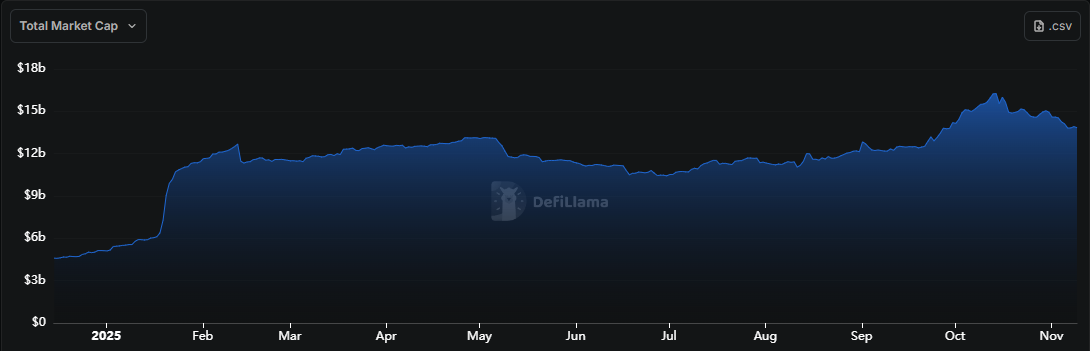
Quarterly Surge Highlights Solana Stablecoin Momentum
The best example of this is the launch of memecoins on the Solana network. Due to the ability to increase the inflows of the Solana stablecoin rapidly, trading volumes tend to explode in a few hours, and capital flows rapidly through decentralized finance (DeFi) environments. Conversely, networks such as Ethereum revolve slower and more gradual capital.
This liquidity loop has also turned Solana into a more and more appealing destination of new projects and investors, essentially turning its stablecoin market into a significant engine of expansion in the ecosystem.
One of the key parts of this growth narrative is USDC, issued by Circle. As the total supply of USDC is approximately 75B, roughly 65% of this is held on Ethereum. Nevertheless, the stablecoin market of Ethereum remains dominated by Tether (USDT), that occupies 58 percent of the market, and Circle room can develop in other areas.
Circle Strengthens Solana Liquidity Ecosystem
This growth seems to be happening via the Solana stablecoin network. The blockchain currently has 11.62 percentage of the total supply of USDC, which is equivalent to 8.74 billion. Amazingly, around 60% of the market in the Solana stablecoin has become USDC-based, which means that Circle has become a central strategic force in the process of control of the liquidity environment on the blockchain.
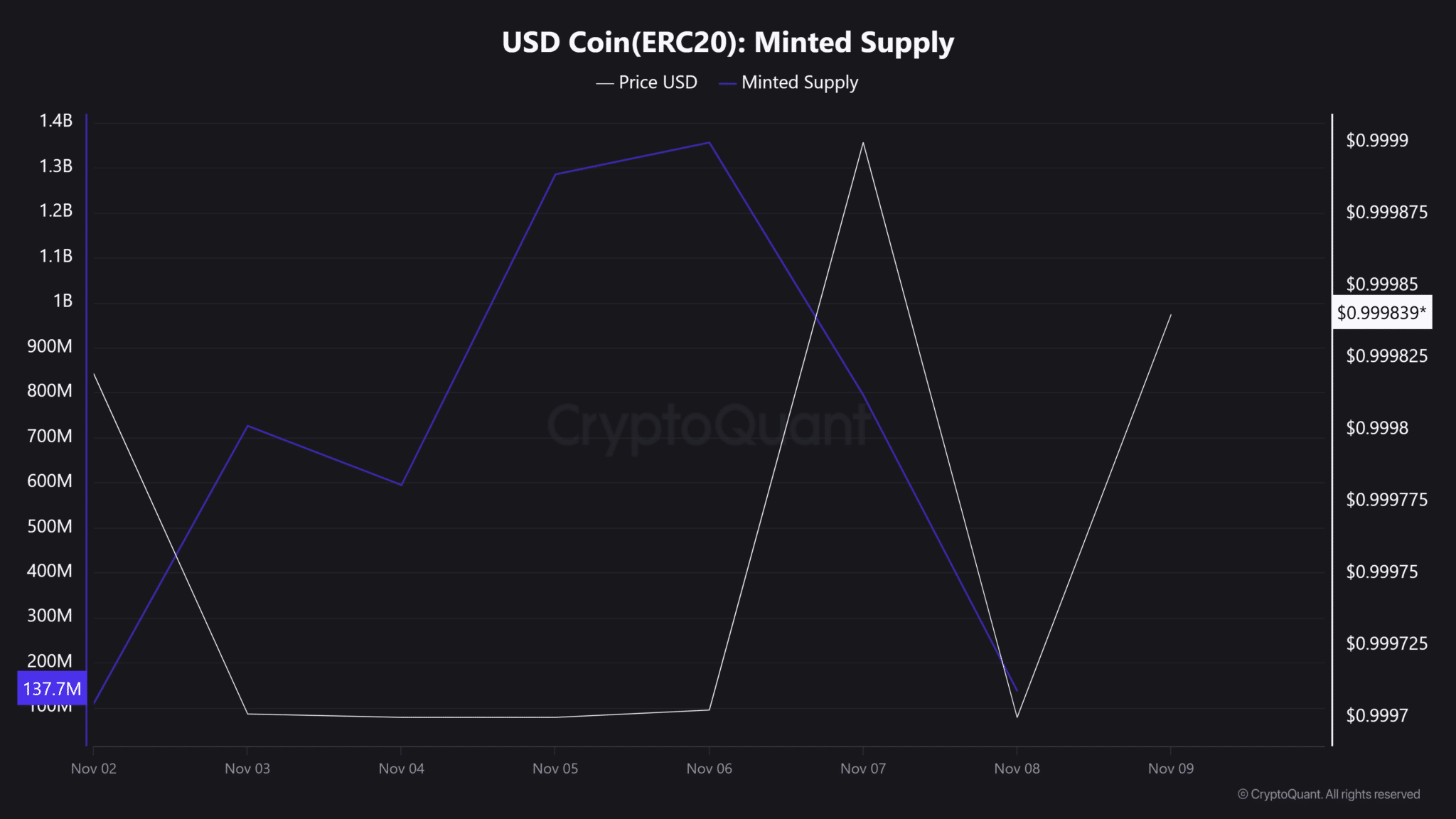
This growing confidence is reflected by the recent $1.25 billion USDC mint by Circle that was listed as high as $1.35 billion on November 6. Approximately 93% of the freshly minted USDC was deposited directly onto the Solana stablecoin ecosystem a clear demonstration of the commitment that Circle had towards the network in the long term.
📊DATA: @Circle has minted a total of ~1.25B $USDC on @Solana in the last 24 hours. pic.twitter.com/9qNbkcCgsC
— SolanaFloor (@SolanaFloor) November 7, 2025
Solana Stablecoin Inflows Outpace Ethereum Quarterly
As Solana inflows of stablecoins increased again faster than even Ethereum in the last few quarters, the liquidity base of the network keeps gaining strength to provide good grounds to generalize the expansion of DeFi and long-term SOL demand.
Within a market that is defining itself more and more by speed, interoperability, and capital efficiency, the Solana dynamic of the stablecoin can easily mark the next era of blockchain dominance.
Conclusion
The accelerating growth of the Solana stablecoin ecosystem underscores its rising influence in the DeFi landscape. With expanding liquidity, strong USDC integration, and faster capital movement than rivals, Solana is positioning itself as a key driver of next-generation blockchain innovation and decentralized finance expansion.
Follow us on Twitter and LinkedIn, and join our Telegram channel to be instantly informed about breaking news!
Summary
- Rapid Growth: Solana stablecoin liquidity hits $14B, outpacing Base, Arbitrum, and Optimism.
- Quarterly Gains: Solana grows 140% in Q1 and 40% in Q3, surpassing Ethereum.
- USDC Dominance: Circle’s USDC makes up 60% of Solana’s stablecoin market.
- DeFi Momentum: Fast liquidity attracts projects, boosting Solana’s DeFi and SOL demand.
Glossary of Key Terms
Solana (SOL): A fast, low-cost blockchain for DeFi and Web3 apps.
Stablecoin: A cryptocurrency pegged to a stable asset like the U.S. dollar.
Solana Stablecoin: Stablecoins circulating on the Solana network, mainly USDC.
USDC (USD Coin): A U.S. dollar–backed stablecoin issued by Circle.
Circle: The company behind USDC, expanding liquidity on Solana.
Tether (USDT): The largest stablecoin by market share, dominant on Ethereum.
DeFi (Decentralized Finance): Blockchain-based finance without banks or intermediaries.
QoQ (Quarter-on-Quarter): A growth measure comparing one quarter to the next.
TRON (TRX): A high-throughput blockchain with strong stablecoin activity.
Frequently Asked Questions about Solana Stablecoin
1. Why is Solana’s stablecoin flow important?
It boosts liquidity speed and trading efficiency, giving Solana an edge in DeFi activity.
2. How does Solana compare to Ethereum?
Solana’s stablecoin market is smaller but growing faster, with 140% and 40% QoQ gains.
3. What’s Circle’s role in Solana’s growth?
Circle’s USDC makes up about 60% of Solana’s stablecoin market, driving major liquidity.
4. How does liquidity benefit SOL?
More stablecoin inflows fuel DeFi growth and increase long-term SOL demand.