





This article was first published on The Bit Journal.
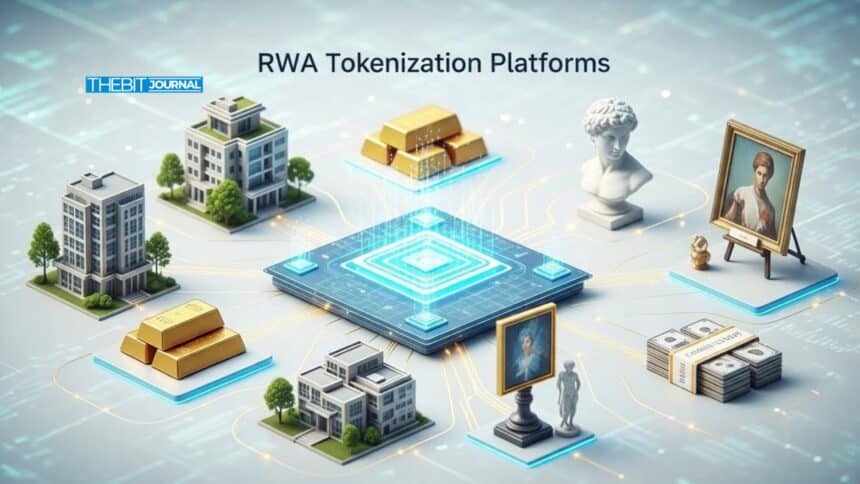
Real-world assets (RWA) Tokenization platforms are revolutionizing finance by digitizing physical assets, such as bonds, loans, real estate and stocks through blockchain based tokens. This market has jumped in 2025-2026.
On-chain tokenized cash and treasuries, for example, reached approximately $36B in 2025 according to Silicon Valley Bank reports, while some analysts expect the market for RWAs to reach up to $2T by 2028.
Leading institutions are behind the growth: JPMorgan Chase arranged a $50 million Solana-based issuance of commercial paper, which is settling in USDC, and Chinese companies like Seazen Group have established new units to explore tokenizing real estate and intellectual property.
With this background at hand, some top RWA tokenization platforms have developed to become market leaders. They dominate by providing trusted issuance, liquidity and compliance around RWAs.
Leading RWA Tokenization Platforms
As of January 2026, the RWA tokenization space intersects between crypto-native projects and those led by institutions. The following are some of the leading solutions and platforms:
Ondo Finance (OUSG, USDY): A DeFi platform specializing in tokenized U.S. government debt. Ondo’s flagship funds such as the OUSG short term treasury fund have attracted hundreds of millions of dollars.
Data from RWA analytics reveals that Ondo’s treasury fund capital was about $770million on-chain by mid-2024.
Ondo issues ERC-20 “security tokens” backed 1:1 by real treasuries and money-market assets, offering institutional-grade custody (partners include Copper, Komainu, etc.).
Its USDY fund similarly tokenizes cash management funds.
Ondo is rooted in strict adherence (KYC/AML) and deep backing of regulated assets. It caters primarily to institutions and accredited investors, although experienced retail users can also take part.
In sum, what Ondo does is that it tokenizes US government debt; offering institutional grade custody, with high capital requirements for investors.
Securitize Markets (with BlackRock BUIDL, etc.): This is a regulated securities tokenization platform.
Securitize provides an end-to-end issuance and trading system (broker-dealer, ATS, transfer agent) for tokenized funds and equities.
Notable clients are fund managers and issuers of asset. Token issuances via Securitize include BlackRock USD Institutional Digital Liquidity Fund (BUIDL) which is a money market fund on-chain, and Apollo’s ACRED credit fund.
BlackRock’s BUIDL sailed past $500 million post-launch, indicating strong institutional reception. Securitize also facilitated VBILL treasury ETF for VanEck and other products. Because Securitize is a fully regulated securities operator, all of their tokens come with compliance built-in (restricted transfers, KYC), including a regulated secondary market solution.
However, Securitize’s professional-grade model means minimum investments are large and trading fees (around 1%) apply.
Maple Finance: Decentralized institutional lending protocol. Maple is the bridge between licensed crypto lenders and major borrowers (such as hedge funds, crypto companies, and some TradFi entities) interested in loans outside of the digital world.
Institutions are able to lend USD or stablecoins to borrowers through permissioned “Syrup” pools in return for yield. Maple employs on-chain underwriting: community delegates vet borrowers and capital is routed via smart contract.
In 2025, Maple had originated billions in loans (the platform claims to have over $12bn borrowed in corporate loans.
Its users include big names like Brevan Howard, GSR Markets, and integrations with decentralized credit platforms.
Maple is appealing in the way it blends DeFi transparency with institutional rigor. It enables custody by trusted parties (Anchorage, BitGo) and on-chain accounting of loans.
Centrifuge: established structured RWA financing. Centrifuge allows companies to turn receivables (like invoices, leases, mortgages or consumer loans) into on-chain assets. The assets are tokenized via proper legal structures (SPVs), as NFTs and then pooled and securitized into DROP and TIN tranche tokens.
Centrifuge’s protocol (Tinlake) supports tokenized credit pools. As a good example, Janus Henderson launched a treasury fund (JAAA) on Centrifuge and another fund (JTRSY) was issued through the network.
Centrifuge boasts full legal structures (off-chain SPVs), on-chain NAV oracles, and compliance wrappers for asset quality. It integrates with Ethereum at a deep level and has even bridged to other chains.
Its TVL has expanded into the low billions (1.3B+ according to its site).
Backed Finance: Swiss-based tokenized stocks and ETFs platform. Backed issues “bTokens” that represent 1:1 holdings in regulated assets such as shares of the S&P500, Tesla stock or bond funds.
These tokens exist on Ethereum and Solana (SPL), so traditional stocks can be traded 24/7. Custody is retained with a Swiss fiduciary and, after minting, no issuer whitelist is in place, tokens freely circulate as any other crypto-based asset.
Backed offers an on-chain way for retail investors to own global equity. The asset is secured using Chainlink oracles and insurance. Securitize and others tokenize stocks, but Backed is focused on simplicity for individual investors.
Tokeny Solutions: an on-chain issuance platform for traditional financial market players. Tokeny is a provider of white-label software, which enables banks, asset managers or companies to issue securities legally via security tokens.
It bakes regulatory rules into each token using the T-REX (ERC-3643) standard (only approved wallets can hold them). Tokeny has issued funds, securities in real estate and private equity, etc., Clients include Apex Group, SkyBridge Capital and others.
The platform manages KYC, transfers and cap tables under the hood. As Tokeny tokens are permissioned, they aren’t freely traded upon DeFi markets, all issuance is vetted. This makes Tokeny attractive to the kind of large issuers that want a safe, turnkey solution much less visible to retail buyers.
Plume Network: A crypto native, Layer 1 blockchain designed for RWA compliance. Plume natively supports KYC/AML at the protocol level which allows RWA issuers to enforce regulations on transfers of their token.
It also has cross-chain liquidity (SkyLink bridges) so that RWA tokens can earn yield across chains. Apollo, CRED and other Wall Street firms are using Plume for private credit funds and tokenized treasuries. It has grown an enormous ecosystem (180+ projects) fairly rapidly as a new chain launched 2023 and is still very much maturing.
Money Market/Stablecoins Platforms (Ondo, Matrixdock, Ethena): while not exactly “platforms” in the same corporate sense, there are a few token standards that have been dominating RWA use cases; stablecoins backed by treasuries and funds.
Ondo (USDY) and Matrixdock (STBT) issue stablecoins collateralized by U.S. Treasury bills with transparency via Chainlink Proof-of-Reserve.
Ethena’s USD₿ and USDe are similar, offering additional yield backed by regulated funds. E.g Matrixdock’s STBT is a 1:1 token that is pegged to dollar and backed by T-bills and can bridge straight across EVM chains. These tokens are essential for institutions.
Comparison of Top Platforms
Each top platform has a unique niche. Ondo, Matrixdock and Ethena target money-market assets; Centrifuge and Maple handle credit; Securitize and Tokeny aim at institutional funds and securities; Backed puts stocks on-chain.
All are also security- and compliance-focused, relying on regulated custodians and KYC. Platforms that open global markets (Cross-chain compatibility, or non-whitelisted models) are likely to attract more retail and international investors.
Success in 2026 will have as much to do with the user experience, asset diversity and aligning with regulation.
The table below summarizes key features of these leading platforms:
| Platform | Assets Tokenized | Notable Issuances |
| Ondo Finance | U.S. Treasuries, Money Funds | OUSG and USDY funds ($770M AUM) |
| Securitize Markets | Funds, Bonds, Equities | BlackRock BUIDL ($500M+), Apollo ACRED, etc. |
| Maple Finance | Institutional Credit / Loans | $12B+ lent via Syrup pools (USDC, USDT) |
| Centrifuge | Structured Credit (invoices, mortgages) | Janus Henderson Treasury Funds (JAAA, JTRSY) |
| Backed Finance | Stocks and ETFs | Tokenized shares (e.g. Tesla, S&P500 ETF) |
| Tokeny Solutions | Institutional Securities (funds, RE, PE) | Used by Apex, SkyBridge, etc. |
| Plume Network | Multi-class RWAs (credit, treasuries, carbon) | Apollo credit fund, carbon token projects |
Why RWA Tokenization Is Accelerating
Tokenization platforms are going out of pilot and into real products. 2025 saw major advances as traditional fund managers (BlackRock, Franklin Templeton, WisdomTree, etc.) launched multi-hundred-million-dollar on-chain funds; and even crypto-native markets did record volumes (like prediction markets).
Regulators are also clarifying the rules. For instance, Hong Kong and Dubai have passed RWA-friendly guidelines and the US is lightening crypto regulations, allowing JPMorgan to integrate blockchain for bond deals.
The attraction of greater liquidity and speed for settlement is strong: assets that once traded slowly (like real estate or corporate loans) can now be fractionalized into tokens that benefit from fast trade.
As reports say, tokenized RWAs democratize access to high-end assets ( art, property) by making fractional ownership possible at lower minimums.
These platforms are getting shaped by institutional demand. Larry Fink, the chief executive of BlackRock, foresees a digital wallet that will enable people to invest, spend and save “all in one.”
In fact, mainstream finance is eating up RWA tokens fast. Silicon Valley Bank has projected $36.5B in short term instruments tokenized on-chain by 2025 and projects like Coinbase Echo are digitizing private equity rounds.
In short, blockchain is moving from experiments to production: RWA tokens now drive money markets, treasury funds and tokenized securities that bridge TradFi with DeFi.
Current Trends and Outlook
Based on recent data and expert analysis, the market of the RWA platform is in a time of rapid growth. 2022 to 2025 saw a fivefold increase in total tokenized assets (from $5B to $24B+).
Regulatory clarity and institutional backing shows ongoing growth. Already, some banks are predicting a $2trillion RWA market in 2028, according to reports. This new year can only be expected to bring more tokenized bond and equity products, improved cross-chain liquidity solutions, and deeper RWAs into the fold of mainstream investment portfolios.
Conclusion
RWA tokenization platforms are fast becoming part of the global financial infrastructure. Big leads like Ondo Finance, Securitize Markets, Maple Finance and Centrifuge, now support billions in real-world assets on-chain.
Tokenization has been adopted by institutional players, from JPMorgan’s bond deals on blockchain to BlackRock and Franklin Templeton’s mutual funds on-chain, demonstrating the viability of these platforms.
Going fully into 2026, there are more products than ever for investors to use in order to gain access to fractionalized real estate, credit and securities through crypto.
However, tokenized assets still come with risks like regulatory unpredictability, liquidity constraints, etc. Readers should do their own due diligence and consult with a professional who knows their objectives.
Glossary
Real-World Asset (RWA): A physical or financial asset such as real estate, debt, equity and commodities etc. that can be tokenized by a blockchain.
Tokenization: The act of representing ownership of an asset as a digital token on the blockchain. Each token is backed by the asset.
Stablecoin: A cryptocurrency that is pegged to the value of a stable asset (commonly the US dollar or commodities).
Fractional Ownership: The division of an asset into fractions so that more than one investor can own a piece of it. Tokenization allows for fractional ownership of expensive assets (such as a house or artwork).
Custodian: A regulated financial institution that holds and safeguards the real-world asset (or its cash) that backs a token.
KYC/AML: Know-Your-Customer and Anti-Money-Laundering checks. These are checks that seek to validate the identity of investors and restrict illegal sources of funding.
SPV (Special Purpose Vehicle): A legal entity created by a company to insulate risk.
Frequently Asked Questions About Top RWA Tokenization Platforms
What are RWA tokenization platforms?
RWA (Real-World Asset) tokenization platforms are softwares that transform real-world physical or financial assets ( bonds, loans, real estate and stocks) into digital tokens on a blockchain. These systems manage issuance, custody and compliance allowing owners to trade fractional ownership of assets on-chain.
Why the growing popularity of RWA tokenization platforms?
They serve to add liquidity and access to traditionally illiquid assets. They enable small investors to buy in by breaking up large assets into tokens. They also achieve faster settlement (24/7 markets) and transparency. Institutional interest and more clarity in regulation has helped to drive adoption.
What kinds of assets are supported by these platforms?
Typical classes are fixed income (like government and corporate bonds), loans and credit pools, real estate, commodities like gold) and stocks. Ondo focuses on U.S. Treasuries; Centrifuge, loans and invoices; Backed Finance on stocks; and stablecoin issuers on money-market funds.
How do these platforms maintain security and compliance?
The leading RWA platforms have regulated custodians (Copper, Anchorage, Brinks), execute KYC/AML on their investors and adhere to securities laws. Many tokens are “permissioned” so that only qualified investors can hold them. They frequently perform reserve audits (proof of reserves or on-chain oracles) to make sure that every token is backed by real-world assets.
What are the key risks of tokenizing RWAs?
Risks include regulatory risk (laws may change state-by-state, country-by-country), custody risk and market liquidity (some tokens might be difficult to sell in a tight spot). Asset valuation and legal structure need to be sound. Also, even though blockchain adds transparency, investors continue to depend on off-chain entities (like fund managers) to actually hold the real assets behind tokens.
What blockchains can be used for RWA tokenization?
Many are built on Ethereum, in particular through Layer-2 chains, or on Solana but also newer, purpose-built ones. Ondo, for example produces ERC-20 assets on Ethereum and Polygon, Securitize employs both Ethereum and multichain bridges while Plume is building its own Layer-1 with EVM compatibility.
The decision depends on scalability, cost and where investors flock.
References