











Blockchains are growing fast. Every day, more people use them for sending money, trading coins, gaming, and even buying digital art. Ethereum is one of the most popular blockchains, but it also has a big problem. It gets very crowded. When too many people try to use it at the same time, the network slows down and the fees go up. Sometimes you may pay more in fees than the actual transaction you are doing.
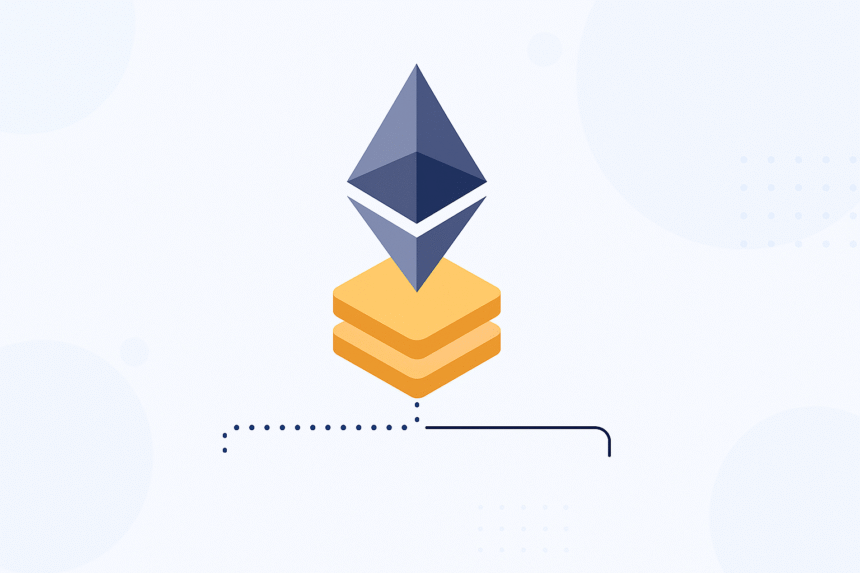
This is where layer-2 rollups come in. Rollups are like extra roads built on top of the main highway. The main highway here is Ethereum, and the rollups are smaller roads that carry some of the traffic. By moving transactions off the main chain and then sending them back in a safe way, rollups make things faster and cheaper.
For normal users, this means lower costs and quicker payments. For developers, it means they can build apps that people will actually use without worrying about huge fees. Rollups are becoming a very important part of Ethereum’s future. Many experts even say that rollups are the best short-term and maybe long-term solution for scaling blockchains.

What Are Layer-2 Rollups?
Before we learn about rollups, we should consider how Ethereum works first. All transactions of Ethereum are kept in the main chain, or the Layer-1. The Layer-1, however, can only process a certain number of transactions in a second. Ethereum is currently capable of processing a range of 15 to 30 transactions per second. This is compared to Visa or Mastercard, with the capability of handling thousands per second, and the problem is evident.
A rollup is a kind of helper system that is constructed over Ethereum. The rollup instead of capturing each little transaction directly on Ethereum, instead captures a batch of transactions, bundles them and then posts a single summary back to the main chain. In this way the Ethereum network will not be overcrowded. The rollup performs all the work; however, the Ethereum security maintains everything secure.
The name “rollup” comes from the idea of rolling up many small transactions into one bigger package. You can think of it like going to the post office. Instead of mailing 100 letters one by one, you put them all inside a big envelope and mail that one envelope. It is faster, cheaper, and still reaches the right place.
By using rollups, fees go down a lot. Transactions are confirmed quickly. And people can still trust the security of Ethereum because the rollup always connects back to it. This balance of speed, cost, and security is the reason rollups are such a big deal in blockchain.
Here is a quick table to show the difference between the Ethereum mainnet and Layer-2 rollups:
| Feature | Ethereum Mainnet (Layer-1) | Layer-2 Rollups |
| Transactions per second | 15–30 | 1,000+ |
| Average fee per transaction | $5 – $50 | Less than $1 |
| Confirmation time | 1–5 minutes | Few seconds |
| Security level | Very high (Ethereum itself) | High (inherits Ethereum security) |
Optimistic Rollups Explained
Optimistic rollups are one of the most popular types of layer-2 rollups. The word “optimistic” here means they assume everything is fine unless someone shows proof that it is not. In simple words, the system trusts that transactions are valid by default. Only when someone challenges a transaction, the rollup has to check it deeply.
This way, optimistic rollups can handle many transactions without slowing down. Instead of verifying each transaction one by one on the Ethereum main chain, they bundle them together and post them as a batch. If no one complains, those transactions are final after a short period. If there is a problem, a fraud proof process starts to catch the bad transaction.
This design makes optimistic rollups much cheaper and faster than using Ethereum directly. But it also brings some challenges, especially around how long you need to wait before you can be 100% sure your funds are safe.
Key Benefits of Optimistic Rollups
One of the biggest benefits is lower fees. Since the rollup groups many transactions together, users do not have to pay as much gas as they would on Ethereum. This is why DeFi apps and games are moving to optimistic rollups.
Another benefit is compatibility. Optimistic rollups are built in a way that works very closely with Ethereum’s existing tools and apps. Developers do not need to learn everything from scratch. They can use the same smart contracts and programming languages they used on Ethereum Layer-1.
Also, optimistic rollups are already live and widely used. Projects like Arbitrum and Optimism are proof that this solution works in real life, not just theory.
Common Challenges and Risks
Even though they are useful, optimistic rollups are not perfect. One problem is the withdrawal time. To move money from an optimistic rollup back to Ethereum, you usually need to wait about 7 days. This long wait happens because the system must give enough time for people to challenge a bad transaction if they see one.
Another issue is security during that waiting time. If not enough people watch the network, a bad transaction could go unchecked. This is why fraud proof systems are very important but also tricky to manage.
Finally, while fees are lower, they are not always the lowest compared to some other scaling methods. If the rollup gets too busy, the fees can still rise.
Popular Optimistic Rollup Projects
The two leading optimistic rollup projects are:
- Optimism – A project focused on scaling Ethereum while keeping it simple for developers. Many DeFi apps have already joined Optimism.
- Arbitrum – Another major optimistic rollup. It is known for its strong ecosystem and being one of the first to attract many users.
Both Optimism and Arbitrum are competing strongly, and they show how important this technology is becoming.
Pros and Cons of Optimistic Rollups
| Feature | Pros (Good Side) | Cons (Weak Side) |
| Transaction Fees | Much lower than Ethereum | Can still rise when network is busy |
| Speed | Faster than Ethereum mainnet | Withdrawals take up to 7 days |
| Compatibility | Works easily with Ethereum tools | Still less advanced than zk-rollups |
| Security | Inherits Ethereum security | Relies on people to check fraud proofs |
| Adoption | Already live with big projects | Still in early growth phase |
Optimistic rollups are like a big step forward for Ethereum. They are not perfect, but they make blockchain usable for normal people who do not want to pay crazy fees or wait forever for a transaction.
Zero-Knowledge Rollups (ZK-Rollups)
Zero-Knowledge rollups, also called ZK-rollups, are another big type of layer-2 solution. They work in a different way than optimistic rollups. Instead of assuming everything is fine, ZK-rollups prove every transaction is correct from the start. They use something called validity proofs to do this.
The word “zero-knowledge” sounds confusing, but it just means you can prove something is true without showing all the details. In blockchain, this means the rollup proves that transactions are valid without needing to send every piece of data to Ethereum. Only the proof is sent back, and Ethereum can check it quickly.
This makes ZK-rollups very fast and very secure. Once the proof is accepted by Ethereum, the transactions are final. You don’t have to wait days like in optimistic rollups.
Benefits of Zero-Knowledge Rollups
One of the best benefits is speed. Transactions on ZK-rollups are confirmed almost instantly once the proof is submitted. You can withdraw funds back to Ethereum quickly, sometimes within minutes.
Another benefit is lower data usage. Since only the proof is sent back to Ethereum, ZK-rollups use less space on the chain. This helps keep fees low even when the network is busy.
Also, ZK-rollups offer stronger security. Because every batch of transactions has a validity proof, there is no need to trust people to check for fraud. The math itself proves everything is right.
Limitations and Challenges
Even though they sound perfect, ZK-rollups still face problems. One big issue is that creating zero-knowledge proofs takes a lot of computing power. It is complex and expensive for the rollup operators.
Another challenge is developer experience. Building apps on ZK-rollups is not always as easy as with optimistic rollups. Developers often need to use new tools and languages, which slows adoption.
Also, ZK-rollups are newer compared to optimistic rollups. While they are growing fast, they are still not as widely used.
Popular ZK-Rollup Projects
Some of the most popular ZK-rollups are:
- zkSync – A rollup built for fast payments and transfers. It focuses on being user-friendly.
- StarkNet – A powerful ZK-rollup that uses advanced math called STARK proofs.
- Polygon zkEVM – A rollup that is Ethereum-compatible but uses ZK proofs for better scaling.
These projects are showing how strong zero-knowledge tech can be. Many experts believe ZK-rollups will be the future of Ethereum scaling.
Optimistic vs. Zero-Knowledge Rollups: Direct Comparison
Let’s compare optimistic rollups and zero-knowledge rollups side by side. They are both layer-2 solutions, but they take very different paths to scaling Ethereum.
Optimistic rollups are cheaper to operate and easier for developers, but they have long withdrawal times. Zero-Knowledge rollups are faster and more secure, but they are harder to build and cost more to run.
Here is a clear table that shows the main differences between the two:
| Feature | Optimistic Rollups | Zero-Knowledge Rollups (ZK) |
| Transaction Validation | Assumes valid, checked only if challenged | Every transaction proven with validity proof |
| Withdrawal Speed | Slow (up to 7 days) | Fast (minutes to hours) |
| Fees | Lower than Ethereum, but can rise | Very low, efficient with data |
| Developer Experience | Easy, works well with Ethereum tools | Harder, needs new tools sometimes |
| Security | Relies on fraud proofs and watchers | Strong, math-backed from the start |
| Adoption Today | Widely used (Optimism, Arbitrum) | Growing (zkSync, StarkNet, Polygon zkEVM) |
| Future Potential | Good for short-term adoption | Seen as long-term “end game” |
Both rollups play an important role in Ethereum scaling. It is not about one being better than the other. Instead, they solve different needs. Layer-2 Rollups give us a working solution right now, while ZK-rollups show where things are going in the future.
Use Cases of Layer-2 Rollups in Real Life
Layer-2 Rollups are not just theory anymore. They are already being used in real life across different industries in blockchain. Both optimistic and ZK-rollups are powering apps that people use every day.
DeFi and Faster Trading
In DeFi (decentralized finance), rollups make trading faster and cheaper. On Ethereum mainnet, you might pay $20 just to swap two tokens. On a rollup, that same swap can cost less than $1. This makes DeFi accessible for normal users who cannot afford high fees. Platforms like Uniswap and Aave already support rollups.
Gaming and NFTs
Gaming and NFTs also need quick and cheap transactions. No gamer wants to wait five minutes to buy a skin or pay $50 in gas for a $5 item. Rollups solve this by giving almost instant confirmation and low costs. Some NFT marketplaces are already moving to rollups so that users can mint, buy, and sell without stress.
Payments and Microtransactions
Rollups are also good for payments and microtransactions. Sending $1 on Ethereum is almost impossible when fees are $10. With rollups, sending small amounts becomes practical. This opens the door for new apps like pay-per-use services, small tips, or subscription models.
Rollups are showing that blockchain can move beyond just speculation and into daily life use.
Which Rollup Is Better for the Future?
This is a big question. Many people wonder if optimistic rollups or zero-knowledge rollups will “win.” The truth is that both are important, and they will likely exist together for some time.
Optimistic rollups are ahead right now. They are easier for developers, cheaper to launch, and already have strong adoption. Projects like Arbitrum and Optimism have billions of dollars locked in them. This shows real trust from users.
But ZK-rollups are growing fast. They are more secure and have faster withdrawal times, which makes them very attractive for the future. Many experts believe that as technology improves, ZK-rollups will slowly become the dominant solution.
In the next 2–3 years, people might see optimistic rollups being used heavily for DeFi and apps that need Ethereum compatibility. At the same time, ZK-rollups will expand for payments, scaling dApps, and global adoption.
So the answer is not one or the other. Both will shape the future of Ethereum. They are not enemies, they are partners working toward the same goal: making blockchain faster, cheaper, and easier for everyone.
Challenges Ahead for Layer-2 Scaling
Even though rollups sound like the perfect fix, they still have challenges to face. These problems must be solved if Layer-2 Rollups want to support millions of users in the future.
User Experience and Wallet Support
One big challenge is user experience. Many people still find it hard to use rollups. Moving money between Ethereum and a rollup can feel confusing. You need bridges, special wallets, and extra steps. For normal users, this is not simple. Wallet providers are trying to make this easier, but it will take time.
Security Concerns
Layer-2 Rollups depend on Ethereum for security, but they also have their own risks. For optimistic rollups, the risk comes from the fraud-proof system. If people are not watching closely, a bad transaction could sneak through. For ZK-rollups, the risk is in the complexity of the math proofs. If the system has bugs, it could be dangerous.
Developer Adoption and Costs
Another challenge is developer adoption. While optimistic rollups are easier, ZK-rollups need new tools and knowledge. Developers need time to learn. On top of that, running a ZK-rollup can be expensive because generating proofs requires strong computers and advanced software.
All these challenges mean that rollups are not perfect yet. But step by step, the technology is improving. Every year, more apps, wallets, and services are moving to rollups.
Conclusion: The Role of Rollups in Blockchain Growth
Layer-2 Rollups are one of the most important upgrades for Ethereum. They help solve the biggest problems of blockchain: slow speed and high fees. By moving transactions off-chain and posting them back safely, rollups allow millions of people to use Ethereum in a cheaper and faster way.
Optimistic rollups give us practical solutions today. They are live, used, and trusted. Zero-Knowledge rollups give us a look at the future, where transactions are faster and more secure. Both have strengths, both have weaknesses, but together they are shaping the future of Ethereum.
If Ethereum wants to become the global platform for finance, gaming, NFTs, and daily payments, rollups will play a central role. For users, this means cheaper and faster transactions. For developers, it means more freedom to build. For blockchain itself, it means growth without limits.
Frequently Asked Questions for Layer-2 Rollups
- What is the difference between optimistic rollups and zk-rollups?
Optimistic rollups assume transactions are valid unless proven wrong. ZK-rollups prove every transaction correct from the start using math proofs. - Are Layer-2 Rollups safe to use?
Yes, both types are safe because they connect back to Ethereum security. Optimistic rollups depend on fraud proofs, while ZK-rollups depend on validity proofs. - Will Ethereum 2.0 replace rollups?
No. Even after Ethereum 2.0, rollups are still needed. They work together to make the network scale better. - Which is cheaper, optimistic or zk-rollups?
Both are cheaper than the Ethereum mainnet. ZK-rollups can often be cheaper because they use less data, but they are more costly to operate. - Can I use rollups today for DeFi or NFTs?
Yes. Projects like Optimism, Arbitrum, zkSync, and StarkNet already support DeFi apps and NFT platforms.
Glossary
- Rollup – A system that groups many transactions together and sends them as one to Ethereum.
- Layer-2 – A network built on top of Ethereum to make transactions faster and cheaper.
- Fraud Proof – A check used in optimistic rollups to catch bad transactions.
- Validity Proof – A math proof used in ZK-rollups to show transactions are correct.
- Ethereum Mainnet – The main Ethereum blockchain where all final transactions are recorded.
Summary
Layer-2 rollups are the backbone of Ethereum scaling. Optimistic rollups help today with easy developer tools and strong adoption. ZK-rollups bring faster withdrawals and stronger security for the future.
They are not competing against each other but working together to grow blockchain. The more apps move to rollups, the more people can use Ethereum without worrying about high costs and slow speed. Rollups are not just a trend; they are the road to Ethereum’s success.