



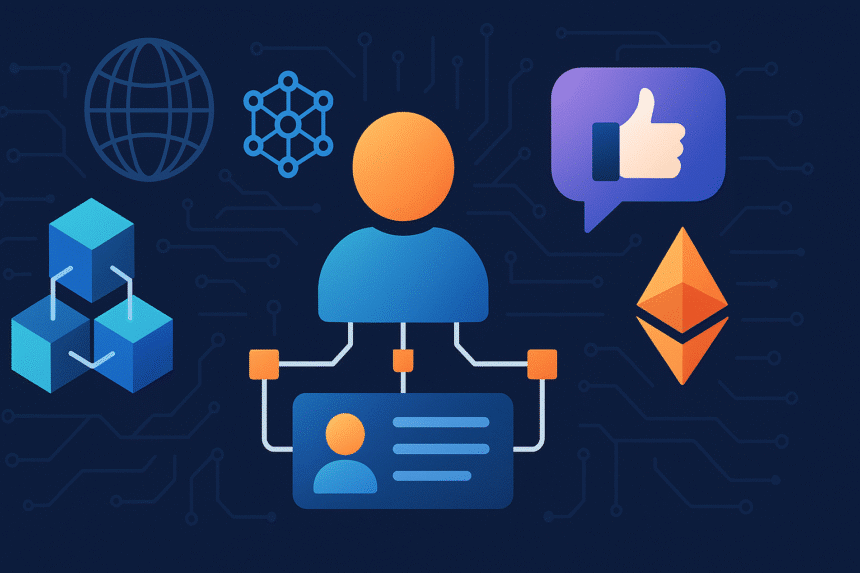

Web3 social media is a new type of online platform built on blockchain. Unlike old social networks, where a company owns the servers and the data, Web3 runs on decentralized technology. This means the users have more power and more control.
Old-fashioned social media is referred to as Web2. The Web has people posting pictures, posts, and messages, yet all of that is the property of the platform. Advertisements and algorithms determine the things that people watch. There are numerous occasions when the user does not feel that one is in control.
Social media Web3 is different. It is related to the notion of decentralization. A single company does not store the data, which is distributed between many computers. It is also connected to the notion of decentralized ownership of identity. It implies that it is not the platform, but the user who owns the online identity.
This new idea is growing because people are tired of privacy issues, fake news, censorship, and the lack of reward for their content. Web3 wants to fix these problems and give users a fairer space.
The Problem with Traditional Social Media Platforms
Social media has become very large, but also full of issues. In the existing model, the majority of the platforms are controlled by large firms. They retain all the information, monitor user actions, and even sell the information to advertisers. This brings about a lot of privacy.
Centralized control is one of the great problems. When a platform chooses to block an account, then the user will not recover it. Production of content is deprived of revenue. Normal users lose friends and memories. The company retains all the control.
Another problem is the way data is used. Every like, share, and post gets tracked. The company can sell this information to advertisers who make money from it. Users do not get paid, even though it is their activity that creates value.
Censorship is another area. A platform can choose what to allow and what not. Sometimes posts are removed without warning. This creates unfair systems and a lack of trust.
To make it clear, here is a simple table:
| Feature | Web2 Social Media | Web3 Social Media |
| Data Control | Owned by platform | Owned by user |
| Privacy | Weak | Strong with blockchain |
| Monetization | Ads only | Tokens, NFTs, tipping |
| Identity | Username/email | Decentralized identity (DID) |
This table shows why many users are looking for a change.
What is Decentralized Identity Ownership?
Decentralized Identity Ownership, often called DID, is the idea that a user controls their own online identity. In simple words, it means the profile, name, and data belong to the person and not to the company running the app.
The system uses blockchain technology. Each identity is stored in a secure way, often connected to a digital wallet. This wallet is like an online key that proves who owns the identity. No one else can take it away, not even the platform.
In old systems, identity is built using email or a username. If the company blocks the account, the identity is lost. In Web3, the identity is tied to blockchain. This gives more safety and more freedom.
Owning identity also means users can move it across apps. For example, the same DID can be used in one social media platform and then also in another without creating a new account. This creates a new type of internet where users carry their online self everywhere.
Decentralized identity is important because it protects from data theft, privacy invasion, and unfair bans. It also creates new ways to make money and build reputation online without middlemen.
How Web3 Social Media Works with Decentralized Identity
Web3 social media is built on blockchain. This makes it work in a different way from the social media people are used to. The heart of the system is decentralized identity ownership, or DID. Let’s break it down in simple parts.
Blockchain as the Base Layer
All accounts are connected to blockchain. Instead of email and password, users have wallets or DIDs. This means the account belongs to the person holding the wallet, not the company. Data is transparent and safe. Hackers cannot easily change it because blockchain is hard to break.
Tokens and Rewards for Users
Web3 platforms often have tokens. Users get rewards for posting, liking, sharing, or creating content. Instead of all money going to the platform, users can earn directly. Tokens can be traded for real money, or used inside the app. This creates a fairer system.
NFT Profiles and Digital Assets
Some platforms even let profiles become NFTs. This means a profile is like a digital asset that belongs only to the user. Users can own their posts, pictures, or even usernames as NFTs. These assets can be traded, sold, or carried across apps.
| Platform | Type of Identity | Example Use |
| Lens Protocol | NFT-based profile | Posts, comments, follows |
| ENS (Ethereum Name Service) | Human-readable wallet | Replace long wallet address |
| CyberConnect | DID for social graphs | Identity across many apps |
This table shows how Web3 platforms are testing new ways to give users control over identity.
Benefits of Web3 Social Media and Identity Ownership
Web3 social media is not just new, it also has many benefits. These benefits are for normal users and also for content creators.
One of the biggest benefits is privacy. In Web2, data is taken and sold. In Web3, users decide what to share and what to keep private. Blockchain adds extra safety because it is hard to hack.
Another benefit is ownership. A profile or identity is not owned by the company. It is fully owned by the user. Even if a platform shuts down, the identity can move to another. This gives people freedom online.
Content creators also benefit because they earn directly. Instead of waiting for ads, they can earn tokens, tips, or NFT sales. This creates more ways to make money without losing a big cut to the platform.
Finally, Web3 social media gives freedom from censorship. A company cannot easily block a user because identity is not in their hands. This gives more trust to the system.
| Benefit | Users | Content Creators |
| Privacy | Control over own data | Safer audience connection |
| Monetization | Earn tokens for activity | Keep more revenue |
| Freedom | No sudden bans | No unfair demonetization |
| Portability | Carry identity across apps | Build brand across platforms |
This makes Web3 social media very attractive for the future.
Challenges of Web3 Social Media
Even with all the good sides, Web3 social media is not perfect. There are many challenges that stop it from being as big as Facebook, Instagram, or Twitter.
One challenge is slow adoption. Most people are still using Web2 apps because they are easy and popular. Web3 apps are new and still growing.
Another issue is user experience. For many, using a wallet or paying gas fees is confusing. Setting up DIDs and handling blockchain steps can feel hard for someone who is not tech savvy.
https://www.youtube.com/watch?v=0uqg-tL5y-0
Scalability is also a problem. Some blockchains cannot handle millions of users posting at once. High transaction costs also make it expensive to use at times.
Regulation is another challenge. Governments are still figuring out how to deal with Web3 social media. Rules about identity, privacy, and tokens may change how these platforms can grow.
These challenges show that while Web3 has strong ideas, it still needs time to become mainstream.
Real Examples of Web3 Social Media Platforms
Web3 social media is not only an idea, it is already working on some platforms. These projects show how decentralized identity ownership and blockchain can be used in real life. Some are very new, while others have been around for some years.
Lens Protocol
Lens Protocol is built on the Polygon blockchain. It uses NFT-based profiles. Each user’s profile is an NFT stored on the blockchain. This means a profile is not owned by the company but by the person. Posts, comments, and followers all connect to the NFT. Users can carry their identity from one app to another built on Lens. This gives strong control and freedom.
Steemit
Steemit is one of the earliest blockchain social media platforms. It was launched in 2016. On Steemit, users write blog posts and earn tokens when other people upvote them. The tokens are called STEEM. The more votes a post gets, the more tokens the writer earns. This was the first big example of content monetization on blockchain social media.
Mastodon and Farcaster
Mastodon is not fully blockchain-based, but it is decentralized. It runs on different servers instead of one central company. Each server has its own rules, and people can join or leave freely. While it is not Web3 in the full sense, it shows the move away from centralized control.
Farcaster is another Web3 project. It is built on Optimism, which is part of Ethereum. It focuses on decentralized social graphs. This means identity and connections are portable across apps. It is newer than Steemit but growing fast.
| Platform | Blockchain Used | Unique Feature | Active Users (approx.) |
| Lens Protocol | Polygon | NFT-based profiles | Growing community |
| Steemit | Steem | Earn tokens for posts | Hundreds of thousands |
| Mastodon | Not blockchain | Decentralized servers | Millions |
| Farcaster | Optimism | Decentralized social graphs | Growing fast |
This table shows that Web3 social media is not just one style. Some focus on NFT identity, some on tokens, and some on decentralized hosting. All share the same goal: giving users more power and ownership.
How Decentralized Identity Can Change Online Communities
Decentralized identity is not only about one person owning their data. It can change how whole online communities work. When users have full control, the internet starts to look very different.
One change is safer digital reputation. In Web2, reputation is locked inside each platform. A user can be popular on one app, but if that app deletes the account, the reputation is gone. In Web3, reputation is tied to the decentralized identity. It stays with the user no matter which app they use. This creates stronger trust between users and communities.
Another change is cross-platform login. Right now, people create new accounts on every app they join. They also give emails, passwords, and personal data again and again. With decentralized identity, one DID can be used across many platforms. It is like a universal key. Users log in with their blockchain identity and do not need to give away private data each time.
Decentralized identity also works like a digital passport. It carries proof of ownership, history of activity, and sometimes even credentials. This can be used in social apps, games, workplaces, or metaverse platforms. It gives more freedom to move across the digital world without losing identity.
Communities also benefit because they become harder to control by one company. A group of users can build their own rules on a blockchain social platform. Decisions are transparent, and members have a voice. This makes communities fairer and stronger.
Decentralized identity ownership may also reduce fake accounts and bots. Since every identity is linked to blockchain, it is harder to create fake profiles. This creates cleaner communities where trust is higher and spam is lower.
In the future, online groups may fully depend on decentralized identity. Whether it is a fan club, a workplace chat, or a large social network, DID can create safer, fairer, and more open spaces.
Future of Web3 Social Media and Identity Ownership
The future of Web3 social media looks very different from what people use today. Right now, only a small number of users know about these platforms. But in the next 5 to 10 years, many things can change.
One big change will be mainstream adoption. As more people learn about decentralized identity, they will start to use it daily. Instead of making new accounts with email and password, users will connect with a DID or wallet. This will make online life smoother and safer.
AI will also play a role. Artificial intelligence can mix with Web3 social media to create smarter apps. For example, AI could help filter harmful content while blockchain keeps the process transparent. This will avoid the hidden algorithms that control Web2 apps.
The metaverse is another area where Web3 and decentralized identity will grow. In the metaverse, users need one identity that works across games, social spaces, and workplaces. DID can become that single passport. It will let people carry their avatars, assets, and history everywhere.
Web3 also points to a future where creators have more power. Instead of waiting for companies to pay them, creators will use NFTs, tokens, and smart contracts to earn directly from their fans. This could replace the ad-based model that dominates social media today.
At the same time, there will still be challenges. Governments may create new rules for identity and data. Some platforms may fail to handle millions of users. But with better technology, these problems may slowly be solved.
The big idea is that Web3 social media and decentralized identity ownership can create a fairer internet. Users will own their data, creators will own their work, and communities will own their spaces. This is very different from the current world, where companies own almost everything.
The future may not arrive overnight, but step by step these systems will grow. In the end, the internet could become more open, safer, and user-owned.
Frequently Asked Questions About Web3 Social Media
1. What is Web3 social media in simple words?
Web3 social media is a new type of platform built on blockchain. It lets users own their profiles, data, and even posts. Unlike old social media, the company does not control everything. Users have more freedom and privacy.
2. Why is decentralized identity important in Web3?
Decentralized identity means the user owns their online identity, not the platform. This makes it harder to lose accounts or be censored. It also keeps personal data safer because the user decides what to share. DID can be used across many apps without starting over.
3. Can users make money on Web3 social media platforms?
Yes, many Web3 platforms allow users to earn money. They can get tokens for posting, sharing, or being active. Creators can also sell NFTs or receive tips directly from fans. This is very different from Web2, where most money goes to the company.
4. Is Web3 social media safe and private?
Web3 social media is safer than traditional platforms because it uses blockchain. Data is encrypted and not controlled by one company. Privacy is stronger since users own their information. Still, people need to be careful with wallets and keys.
5. What are examples of decentralized social media platforms?
Some examples include Lens Protocol, Steemit, and Farcaster. Lens uses NFT profiles, Steemit rewards users with tokens, and Farcaster builds decentralized social graphs. Mastodon is another option, though it is more about decentralized servers than blockchain.
Glossary
Web2: The current internet where companies like Facebook, Instagram, and Twitter control platforms and data.
Web3: The next stage of the internet that uses blockchain to give users more ownership and control.
Blockchain: A digital ledger where data is stored in a secure and decentralized way.
Decentralized Identity (DID): A system where users own their identity on the internet using blockchain and wallets.
NFT (Non-Fungible Token): A digital asset stored on blockchain that can be owned, sold, or traded.
Token: A digital coin or currency used inside Web3 platforms for payments, rewards, or trading.
Smart Contract: A program on blockchain that runs automatically when certain rules are met.
Metaverse: A digital world made of social apps, games, and spaces where people interact using avatars.
Summary
Web3 social media is the new internet trend where users control their data and identity. Old platforms like Facebook or Instagram keep all the power, but Web3 uses blockchain to give it back to the people. With decentralized identity, profiles belong to users, not to companies. This protects privacy, builds trust, and creates more ways to earn money online.
Real platforms like Lens Protocol, Steemit, and Farcaster show how this future works. There are still challenges like rules and technology limits, but the idea is strong. In the next years, Web3 social media and decentralized identity ownership can make the internet safer, freer, and user-owned.