







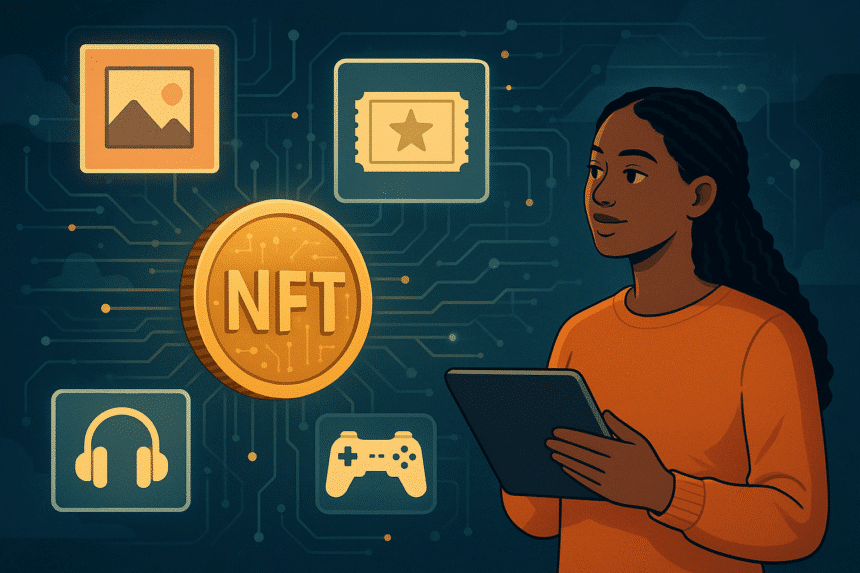

Digital ownership means users hold a verified claim to a digital item and can transfer it when they choose. Non-fungible tokens give a clear claim to a digital asset that lives on a public ledger. That claim can move across apps and markets. It can tie to perks. It can prove that a file, a ticket, or a skin is the real one. This is why NFTs digital ownership keeps drawing builders and brands. It turns files into property with history, rules, and transfer.
This article explains how NFTs are changing ownership online in plain language. It looks at the benefits and the tradeoffs. It shows where the model works today and where it still needs work. It also covers the Security and Regulatory context, with real cases and numbers. The goal is simple. Help a general reader understand why NFTs and digital property rights matter, and what comes next.
What Digital Ownership Means in Practice
Digital Ownership means control over a specific asset that apps can verify on a shared database. On blockchains, that record is open to all. A buyer can see when the item was minted, who owned it, and what rights it grants. A creator can set rules for resale. A game can read those rules and let the owner use the item at once.
This is different from a normal account in one app. If an app shuts down, assets tied to that app often vanish. With NFTs, the asset record lives outside any one product. That makes transfer easier and gives owners more options.
NFTs and digital property rights work best when the token points to clear terms. Those terms say what the owner can do. They may allow display, access, or use inside a service. They may block commercial use. They may include future perks. A strong project writes the rules in human language and, when possible, codes parts of them into the smart contract.
Non-Fungible Tokens Explained, Briefly
A non-fungible token is a unique unit on a blockchain. It can link to art, music, tickets, IDs, in-game goods, and more. It can carry traits and prove scarcity. It can also carry logic, like who gets paid a royalty on resale.
Fungible tokens are like dollars. Each is the same. NFTs are like deeds. Each is distinct and traceable. That is why NFTs matter for digital assets. They add structure to online items that once behaved like loose files.
Where NFTs Work Today
Creators use NFTs for editions, memberships, and community perks. Brands use them for loyalty and ticketing. Games use them for skins and items that move across titles. Museums test them for proof of ownership over digital media. In all these cases, the appeal is the same. Clear, portable rights that any app can read.
Gaming and metaverse use cases show this most. The global games market serves billions of players. Industry research places players in the billions and market revenues in the hundreds of billions, which means even small changes in item ownership can touch huge groups of users. Newzoo’s 2024 market review highlights how player bases keep growing across regions, which expands the addressable base for NFTs in gaming and metaverse worlds.
Why NFTs Matter for Digital Assets
Value comes from more than scarcity. It comes from access and utility. NFTs let developers tie access to the token. A token can unlock a chat, a stream, or a discount. It can also unlock a game move or a new level. This is how NFTs are changing ownership online. They treat access as something a person can own and move, not rent.
They also split value among more people. A creator can earn at mint and again at resale if the market honors royalties. A brand can reward holders with drops. A fan can back an artist early and keep the proof of that support.
A Quick Comparison of Ownership Models
| Ownership Model | Control | Transfer | Royalties | Legal Clarity | Portability | Common Use |
| Account-based in one app | App controls items | Limited to that app | No resale royalty | Clear terms of service | Low | Skins locked to one game |
| File download | User holds file | Easy to copy, weak rights | None | Weak unless licensed | Medium | MP3, JPG without rights |
| NFTs digital ownership | Owner controls token on-chain | Simple transfer between wallets | Programmable, market-dependent | Evolving by region | High across apps that integrate | Art, tickets, game items, memberships |
NFTs for Artists and Creators
Artists want reach and control. NFTs help with both. A token can bundle a digital piece with a license. It can add a utility, like access to behind-the-scenes notes or a vote on future drops. It can offer a limited run that fans can resell later.
Creators also gain direct links to buyers. They can reward long-term holders. They can airdrop extras or grant early access. This cuts middle steps and builds trust. It also brings duty. Clear terms and ongoing delivery matter. Buyers now expect service, not just a file.
NFTs in Gaming and Metaverse
In games, players spend on items they do not own in a legal sense. NFTs change that. They add a right to transfer or trade outside the game, if the studio allows it. They can also let items move across titles. A skin might work in two games from the same publisher. A badge might unlock a level in a partner world.
It is a design choice with real tradeoffs. A studio that enables open markets must plan for balance, fraud, and user support. But the upside is clear. Items with real ownership drive engagement. They also allow new business lines, such as secondary marketplaces and cross-title passes.
NFTs and Intellectual Property
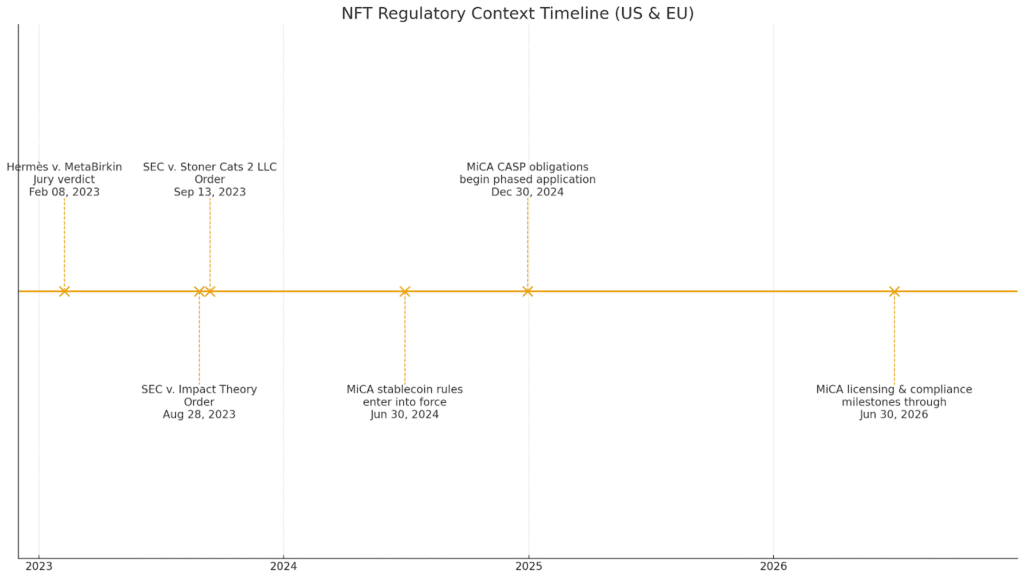
NFTs and intellectual property go hand in hand. A token can grant rights. It can also infringe rights if misused. The first major trademark trial over NFT art involved Hermès and the MetaBirkin NFTs. A New York jury found that the NFTs infringed Hermès’s marks, and the artist appealed. The case shows that trademarks apply online, and courts test the line between art and deception.
Creators should state how their NFTs may be used. They should avoid using marks or images that they do not own. They should make licenses clear at mint. Buyers should read those licenses before purchase.
Security Realities: Hacks, Scams, and Safer Habits
Security is the hardest part of Digital Ownership. Wallets can be phished. Smart contracts can break. Drainers and fake mints target new users. Chainalysis reports show that funds stolen in crypto hacks reached into the billions in 2024, with hundreds of incidents. Some categories fell in 2023, but attack types shifted, and scam revenue surged in 2024. This risk landscape affects NFT users as well as DeFi users.
Risk reduces when users apply simple steps. Cold wallets protect keys. Verified links reduce phishing. Revoke approvals after mints. Use allow-lists and hardware signers for high-value items. Builders can add allow-listing, rate limits, and on-chain monitors to stop exploits before they spread. Security firms report progress in early threat flags, including models that detect risky flows tied to exploits.
Regulatory Context: What Recent Actions Signal
Rules shape how far NFTs can go. In the United States, the Securities and Exchange Commission brought two early NFT cases. One involved Impact Theory, which raised about $30 million with NFTs that the agency said were marketed like investments. The other involved Stoner Cats, which raised about $8 million to fund a web series. In both matters, the agency said the NFTs were unregistered crypto asset securities under the Howey test.)
Courts also set boundaries for branding and art. The MetaBirkin case shows that trademark law applies when NFTs use famous marks in ways that confuse buyers. Appeals continue, and the line between art and commerce is still under review.
In the European Union, MiCA builds a broad framework for crypto-assets and service providers. Some guidance notes that many art and collectible NFTs were not the main target scope, yet the EU and its agencies keep working on how to classify tokens that behave like financial instruments. Full rules began to phase in at the end of 2024, with licensing and compliance milestones running into 2026. Creators and platforms serving EU users should track those dates.
The net effect is clear. NFTs digital ownership can fit within existing law. But projects must match claims to substance. If a team markets tokens as investments with profit promises, they move into securities territory in the U.S. If a team uses famous marks, they risk trademark claims. Simple, accurate language and careful design lower these risks.
Market Pulse: Adoption and Volume
The NFT market changes fast. Trading volumes move with broader crypto cycles and new mints. Data firms reported more than $2.8 billion in global NFT sales in the first half of 2025, with brisk activity early in the year. Sales counts rose even as value dipped, which hints at more buyers at lower prices. This shift may favor utility NFTs for tickets, games, and loyalty.
Gaming is a major driver of volume and engagement. As the global player base grows, more studios test portable items and token-gated passes. That ties Digital Ownership to a giant market where users already value skins, passes, and progress.
How NFTs Change the Economics for Creators and Platforms
Creators once sold files and hoped fans would not copy them. Now they can sell access and proof. They can set clear supply and add perks over time. They can price in tiers and reward early supporters. Platforms gain from this too. They can take fees on mints and resales. They can launch cross-app identity and new ad models tied to owned items.
The hard part is delivery. Buyers expect the roadmap to ship. If a drop promises perks, those perks should arrive. If a game lists cross-title use, the game should honor it on time. Markets punish projects that over-promise. That is healthy. It pushes the space toward real value.
Design Patterns That Work
The best projects keep rules simple. They mint clear editions. They avoid vague claims about investment value. They explain what the owner can do with the item. They build for portability from day one. They publish contract addresses and audits. They use standard metadata so wallets and apps display items the same way.
This design helps search too. When terms are clear, buyers can find and compare items. Articles about the Future of NFTs in digital ownership should point readers to basic checks a user can do in minutes. Confirm the contract. Read the license. Check the team’s track record. This simple routine protects buyers and pushes the market toward better practice.
Interop: The Next Phase
Interoperability is the big unlock. When a ticket works across venues, or a skin works across games, value rises. The same holds for enterprise use. An equipment token that moves between a vendor, an insurer, and a bank removes friction. This is where NFTs and digital property rights meet real process change. Standards from open source groups and large ecosystems will drive this. The winners will be the projects that make interop feel invisible.
Where This Leaves the Reader
Digital Ownership is now part of the web. It will not replace every model. It does not need to. It adds one more tool for creators, brands, and users who want clear, portable rights. The model will grow where it reduces risk and adds utility. Art and culture led the way. Games and memberships are next. Tickets and loyalty will follow. Enterprise pilots will continue to move from labs to operations.
The readers who do well in this shift do one thing right. They focus on clear rights and useful access. They ask simple questions. What do I own? What can I do with it? Where can I use it? If the answers are strong, the token likely has a place in the future.
Security and Regulatory Context, With Real-World Stats
Security incidents and scams continue to shape the space. Reports from leading analytics firms show billions lost to hacks in 2024, with hundreds of incidents tracked across the year. Scam revenue also surged, led by social engineering and fake investment schemes. This backdrop makes basic hygiene more important than ever for NFT users and platforms.
On the regulatory side, early U.S. cases show that promises of profit can turn an NFT sale into a securities issue. The Impact Theory order found the project marketed tokens like an investment. The Stoner Cats case found the same for a fund-raising sale tied to a show. In Europe, MiCA’s phased rules place clear duties on service providers and push for uniform practices across the bloc, while guidance continues on how to treat NFTs that behave like financial instruments.
Conclusion: The Takeaway on NFTs
Digital ownership gives people a way to own online goods with clear rules and history. NFTs make that possible at scale. They turn files and access into property that moves. They help creators reach fans and reward loyalty. They give gamers a way to take value from one world to another. They challenge platforms to support open standards and safer UX.
The shift will not happen all at once. It will grow where it solves real problems. It will grow where rights are clear, security is strong, and rules are known. Readers should expect steady progress, not a single moment of change. That is how the web evolves. One clear right at a time.
FAQs About NFTs
What is Digital Ownership in plain terms?
It is control over a specific online asset that apps can verify on a shared ledger. The owner can prove it and transfer it.
Are NFTs always better than regular downloads?
Not always. They help when you need clear rights, transfer, and portability. Simple files still work for casual use.
Do NFTs make buyers money by default?
No. NFTs are not guaranteed investments. Value depends on utility, demand, and delivery. Read the terms before you buy.
How do NFTs tie to intellectual property?
A token can grant a license. It can also infringe on a brand if misused. Courts have treated famous marks as protected in NFT cases.
Are NFTs legal in Europe under MiCA?
MiCA regulates crypto-assets and service providers. How some NFTs fit depends on their features. Timelines and guidance continue to roll out.
Glossary
- Non-Fungible Token: A unique token on a blockchain that can prove ownership of a specific item or right.
- Smart Contract: Code on a blockchain that runs rules for tokens and apps without a central server.
- Mint: The act of creating a new token on a blockchain.
- Metadata: Traits that describe an NFT, like image links, attributes, or license type.
- Royalty: A share of resale sent to the creator when a token trades, if the market enforces it.
- Wallet: Software or hardware that holds keys to control blockchain assets.
- Allow-List: A list of approved addresses that can mint or buy first.
- Interoperability: The ability for assets to work across different apps, games, or chains.
- Howey Test: A U.S. legal test for whether something is an investment contract and thus a security.
- MiCA: An EU framework that sets rules for crypto-assets and providers across member states.
Summary
This feature explains Digital Ownership and how NFTs reshape rights for online goods. It defines non-fungible tokens in simple terms and shows how they add clear, portable ownership to art, gaming, and media. It compares account-based items, loose files, and NFTs in a table, showing why on-chain records unlock transfer and utility. It covers risks and provides current context on hacks, scams, and security practices, citing recent reports. It reviews key legal signals from U.S. SEC enforcement against Impact Theory and Stoner Cats, and outlines how EU MiCA rules phase in for crypto service providers. It also discusses trademarks after the MetaBirkin case and why clear licenses matter. The conclusion stresses steady growth where NFTs solve real problems with clear rights, security, and compliance.