



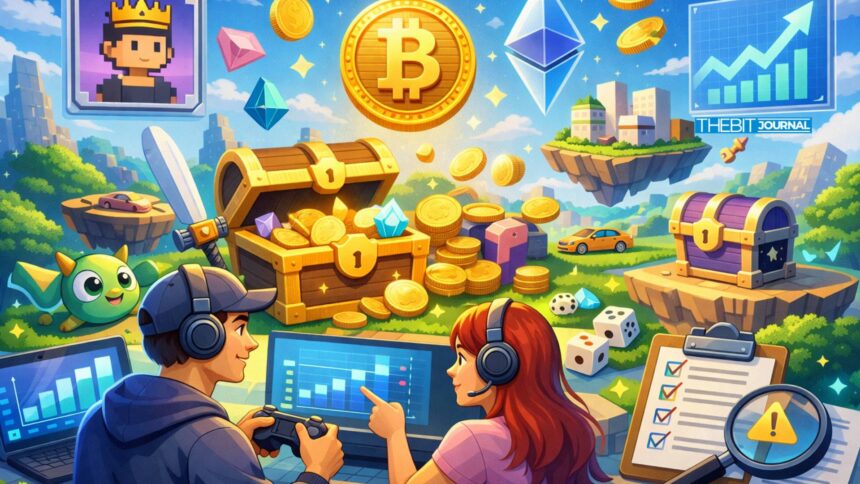

Gaming has always had an economy. Players grind for a rare sword, a skin, or a new character, and the value feels real because time and effort were spent. Crypto gaming adds one new ingredient: some rewards can be owned as blockchain assets instead of living only on a publisher’s servers. In a Play-to-Earn crypto Game, items or rewards may be minted as tokens or NFTs and held in a wallet, which means they can often be traded outside the game.
When money enters a game loop, incentives change as players optimize, developers tune reward rates, and outside market conditions start to influence behavior inside the game. This guide explains what a Play-to-Earn crypto Game is, how players earn, what to look for in the data, and where the model can break.
Play-to-Earn Games Explained: Earn While You Play
Most play-to-earn systems pay players in blockchain-based assets. The first bucket is fungible tokens, similar to in-game currency but transferable on-chain. The second bucket is NFTs that represent unique items like characters, weapons, land, or cosmetics. NFTs are “non-fungible,” meaning each token is unique, unlike fungible coins where each unit is interchangeable.
In many traditional online games, items are controlled by the publisher and can disappear with an account ban or a server shutdown. In blockchain gaming, tokenized assets are designed to be portable and verifiable.
Why the model surged, and why it cooled off
The surge was fueled by bull-market psychology and a simple pitch: earning something for time spent playing. Projects such as Axie Infinity helped popularize the idea by tying battles and progression to token rewards and NFT trading.
The cool-off exposed an economic weakness. Many early games paid out faster than they created reasons to hold or spend, so rewards were sold quickly. Research on P2E sustainability has highlighted token velocity as a recurring failure mode, where tokens rush out instead of circulating with meaningful utility.
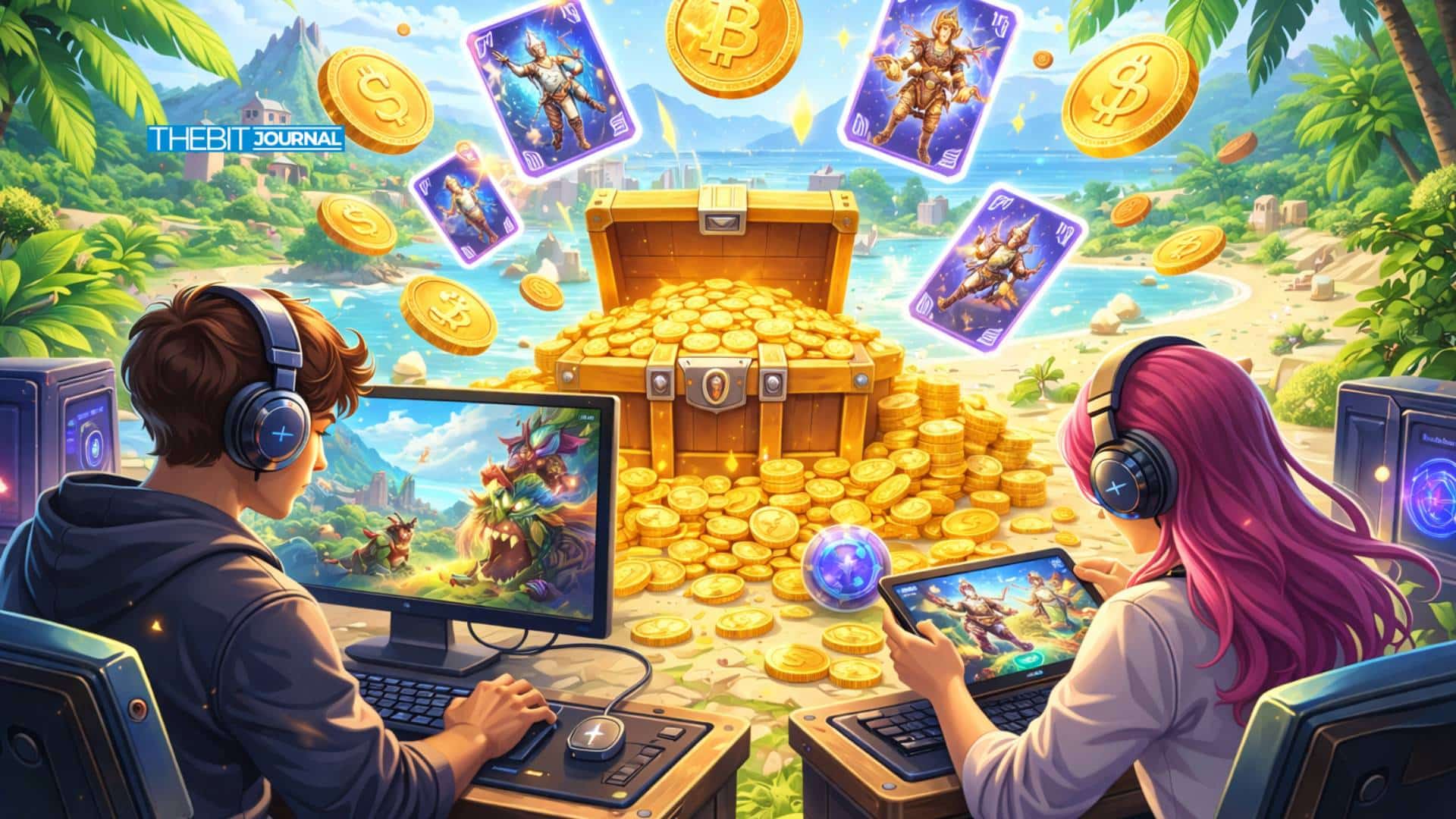
How a Play to Earn crypto Game pays players
Assets can include a utility token for crafting, upgrades, entry fees, or governance, plus NFTs for characters and items. Rewards are tied to actions such as quests, ranked wins, tournaments, or building content other players value. Distribution can happen via smart contracts, servers, or a hybrid. The marketplace layer is where players sell tokens or NFTs, and it is also where the game’s economy meets the outside world.
The make-or-break concept is the sink as a sink is any mechanic that pulls tokens back into the system, such as crafting that consumes tokens, upgrades that burn tokens, tournaments with entry fees, or staking that locks tokens. Without sinks, a Play-to-Earn crypto Game often ends up paying everyone in an asset that nobody needs.
How players earn cryptocurrency while gaming
Most players earn through a mix of performance, scarcity, and market demand. One path is direct token rewards for wins, progression, or seasonal objectives. Another path is NFT value: a rare item, a leveled character, or a limited cosmetic can be sold to a player who wants it for gameplay or status. A third path is economic participation, such as renting assets, staking tokens, or trading on marketplaces.
The value comes from other players spending inside the game, or buyers purchasing tokens and items on open markets. A healthier Play-to-Earn crypto Game is honest about that loop and builds reasons to spend, not only reasons to cash out.
Crypto indicators that matter most
The health of a Play-to-Earn crypto Game is usually visible in a few indicators. Token emissions matter because aggressive reward schedules create constant selling pressure. Sinks and utility matter because they create demand beyond speculation. Liquidity matters because thin liquidity can turn routine selling into a steep price drop.
On the NFT side, ownership concentration matters. If a small group controls most productive assets, new players can face high costs. If trading dries up, it can signal that items have limited utility or that the player base is shrinking.
Risks people underestimate
Sustainability is the first risk. If the economy depends on a steady stream of newcomers buying NFTs so earlier players can cash out, the structure can resemble a recruitment-driven loop. Mainstream reporting on P2E booms and busts has described how fast reward value can fall when token prices drop and incentives break.
Regulatory uncertainty is the second risk. Token and NFT sales can raise legal questions depending on how they are marketed and structured. In the United States, the U.S. Securities and Exchange Commission has emphasized investor protection in crypto markets, and public reporting has noted plans to develop clearer token rules while NFT treatment remains unsettled.
Personal security is the third risk. Phishing links, fake marketplace pages, and malicious approvals can drain wallets quickly. A Play-to-Earn crypto Game can feel casual, but the consequences of one wrong click can be financial.
What “sustainable” looks like in 2026
Projects that last tend to feel like games first. The loop stays fun without payouts, and the economy encourages spending for progression or status rather than constant cashing out. Industry analysis has noted that gaming guilds grew from the play-to-earn wave but had to evolve as pure P2E economics proved hard to sustain at scale.
How to evaluate a Play to Earn crypto Game without hype
Evaluation starts with gameplay, then moves to the economy, and only after that touches price. Before buying anything, a Play-to-Earn crypto Game should still look enjoyable if the token price is $0, because fun is the only demand source that does not vanish overnight.
Token design should be explainable in plain language, including supply schedule, sinks, and utility. Marketplace activity should look organic, with real buyers and sellers rather than mostly insiders. The team’s ability to ship matters, and basic security hygiene matters too.
Conclusion
Play-to-earn blends entertainment and digital ownership, letting gameplay produce assets that can live beyond a single game client. When it fails, the earnings story overwhelms the game, token supply outpaces demand, and players discover that market cycles do not care how many quests were completed.
A practical approach is simple: treat earnings as variable, and judge quality by design choices that are visible long before a token chart makes headlines. A Play-to-Earn crypto Game can reward players, but it still has to earn its fun, one session at a time.
Frequently Asked Questions (FAQs)
What makes play-to-earn different from free-to-play?
Free-to-play often means no upfront cost, but items remain inside the publisher’s system. In a Play-to-Earn crypto Game, rewards can be blockchain assets, so players can often transfer them to a wallet and trade them outside the game.
Can players reliably earn money every month?
Reliability is not guaranteed. Earnings depend on game balance, token price, liquidity, fees, and demand for NFTs.
What is the biggest red flag to watch for?
An economy where rewards are the product and gameplay is secondary. If most value comes from new players paying in so earlier players can cash out, sustainability is fragile.
Are play-to-earn tokens always securities?
Not always. The legal analysis depends on facts and on how a project is marketed and structured, so players should be wary of profit promises.
What costs should players expect before starting?
Costs vary. Some titles offer free entry with optional NFTs, while others require starter assets, plus network and marketplace fees.
Glossary of key terms
Tokenomics
The rules of token supply, distribution, incentives, and governance, including how rewards are emitted and how tokens are removed through sinks.
NFT
A non-fungible token, meaning a unique blockchain token that can represent ownership or proof of authenticity for a specific item.
Utility token
A token designed for use inside a product or ecosystem, such as paying fees, crafting items, or participating in governance.
Governance
A decision-making system, often token-based, that lets stakeholders vote on changes such as reward rates, treasury spending, or new feature priorities.
Token sink
A mechanic that consumes, burns, or locks tokens so they do not endlessly accumulate, supporting a more balanced economy.
Liquidity
How easily an asset can be bought or sold without significantly moving the price, influenced by trading volume and market depth.
References