
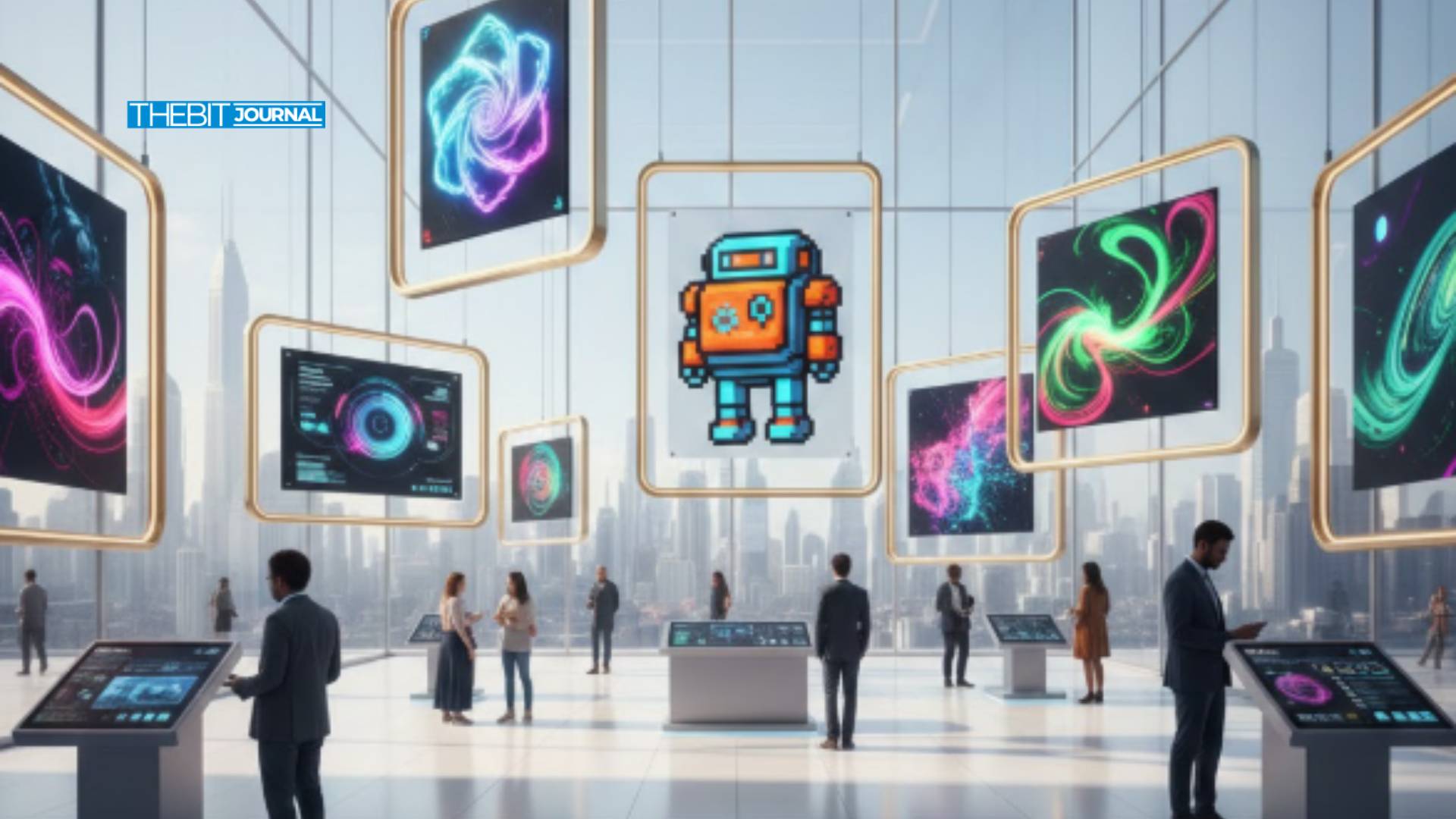
Digital art used to live on hard drives, social feeds, and private folders. Now it can be owned, resold, and verified in public, more like a signed print than a screenshot. That shift is what pulls artists and collectors into an NFT marketplace in the first place, because it turns “I made this” and “I own this” into claims that can be checked on-chain instead of argued about in comments.
At the same time, the NFT economy has matured in a slightly humbling way. The market has produced far more tokens than buyers can realistically absorb, and total annual sales in 2025 were widely tracked at about $5.63B, down roughly 37% year over year, with supply rising above 1.34B tokens.
That backdrop matters because it pushes creators toward better strategy and pushes collectors toward better discipline. The days of buying anything with a flashy profile picture and hoping it doubles by dinner have been replaced by something closer to shopping for art at a busy weekend fair: plenty of options, uneven quality, and value that depends on taste, scarcity, and credibility.
What an NFT marketplace is
An NFT is a unique token recorded on a blockchain that points to a digital item and its ownership history. The marketplace is the venue where that token can be listed, priced, discovered, purchased, and resold.
A typical marketplace does 4 jobs at once. It shows listings and collection pages, it connects to wallets so transactions can be signed, it routes payments in crypto, and it writes the ownership change on-chain. The listing page might look like a normal e-commerce product card, but the important work happens when the buyer signs a transaction and the token moves to the buyer’s wallet.
This is also why “ownership” feels different here. The buyer is not receiving a cardboard box in the mail. The buyer is receiving a token that proves ownership and a link to the media, plus whatever rights the creator attached. That last piece is where many first-time collectors get tripped up, because owning an NFT does not automatically mean owning the copyright.
How the plumbing works behind the scenes
Most NFT trading follows a familiar flow:
A creator “mints” an NFT by deploying or using a smart contract that issues tokens. The token stores metadata, like a name, attributes, and a link to where the media file lives. Then the creator lists it. A listing can be a fixed price, an auction, or an offer-based setup where buyers place bids. When a buyer purchases, the smart contract transfers the token, and funds move to the seller, minus fees.
Because everything is public, the basics can be verified. Token contract address, token ID, historical sales, and wallet activity are all visible. That transparency is a gift, but it also creates new games, like wash trading, where activity is manufactured to make a collection look hotter than it is. Research and enforcement commentary continue to track market manipulation patterns in crypto broadly, including suspected wash trading in certain segments.
Choosing an NFT marketplace that fits the buyer and the artist
Picking the right NFT marketplace is less about hype and more about fit, because different venues lean toward different chains, communities, pricing norms, and creator tools.
For artists, the key questions tend to be practical. Which chain’s collectors show up reliably. Whether the platform supports the kind of drop they want, like open editions, auctions, or limited runs. How royalties are handled, and whether creator fees are enforced, optional, or effectively “best effort.” Royalties have been one of the most controversial design choices in NFTs, and industry trackers continue to report that optional royalty models can boost buyer activity while cutting creator revenue.
For collectors, the “fit” is about liquidity and trust. A venue with lots of real buyers makes it easier to resell without slashing the price. A venue that highlights contract verification, collection metadata, and suspicious activity warnings reduces the odds of buying a fake.
How buying works, step by step, without the headaches
A first purchase usually goes wrong in one of three places: the wallet, the token contract, or the fees. A clean process keeps attention on those points.
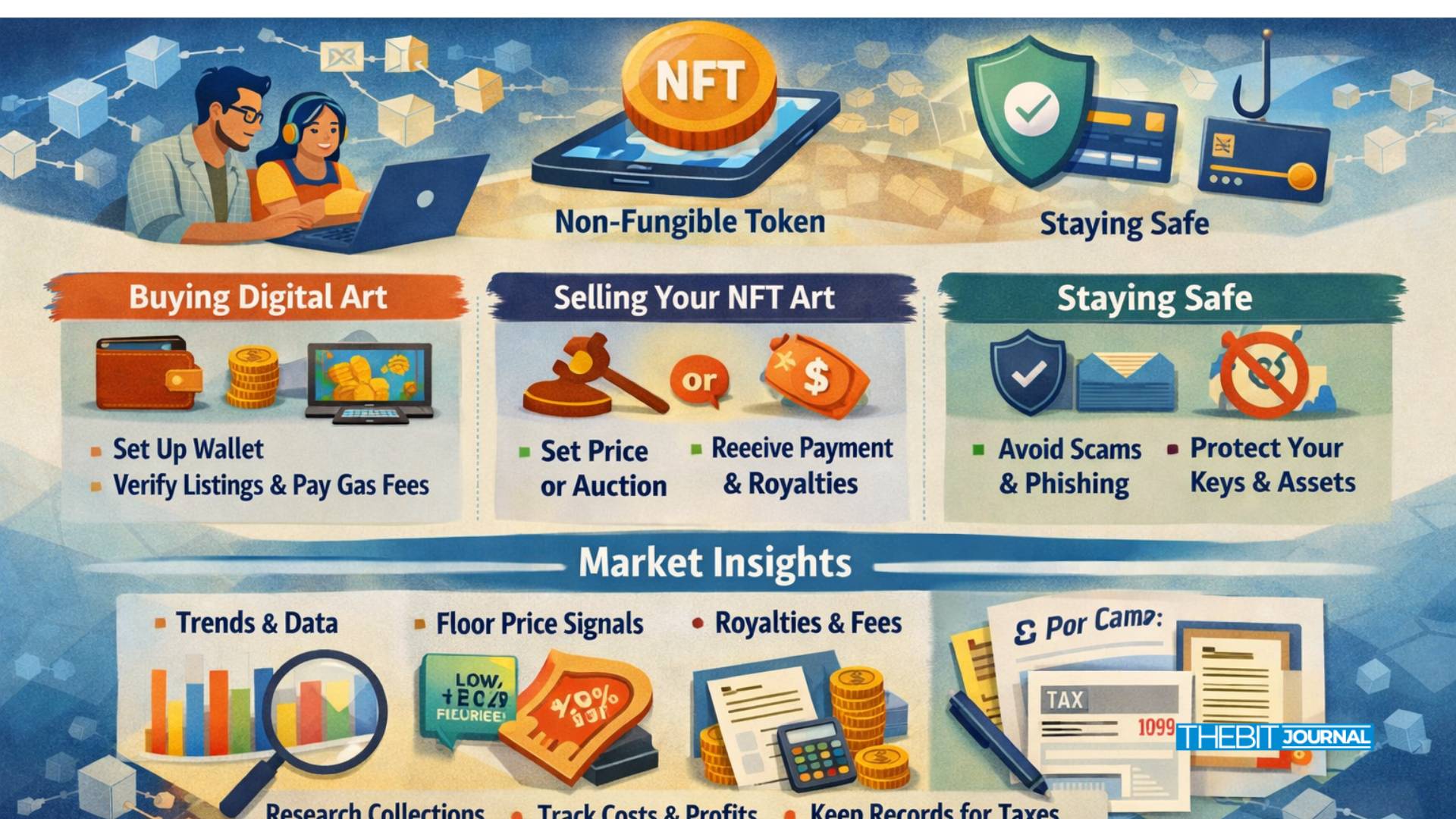
A buyer starts by setting up a self-custody wallet and securing the seed phrase offline, because that phrase is the master key. Then the buyer acquires the chain’s native token for network fees plus enough crypto for the purchase price. Fees matter because even a $25 NFT can become a $60 decision if the network is congested.
Inside an NFT marketplace, the buyer should treat the listing page like a receipt plus a background check. The buyer verifies the collection contract address, checks whether the seller is the creator or a secondary owner, and scans the trade history for red flags like repeated back-and-forth sales between the same wallets. If everything checks out, the buyer hits buy, reviews the wallet prompt carefully, and signs.
After purchase, the NFT should appear in the wallet or in a “collected” tab. If it does not, it often means the wallet UI is not displaying that token yet, not that the token disappeared. On-chain explorers confirm the truth.
How selling works without accidentally sabotaging the price
Selling is not only “list and wait.” The seller is setting terms that shape demand.
Inside the NFT marketplace, the seller chooses a fixed price, an auction, or a floor-matching strategy. Fixed price works when the piece has clear value. Auctions work when the artist has an audience and can drive attention in a narrow window. Floor-matching is common in collections, but it can turn into a race to the bottom when too many owners panic-list at once.
A smart seller watches spread and liquidity. If there are many listings and few bids, lowering price might not help, because the problem is demand, not the number. If there are bids close to the floor, accepting an offer can sometimes be cleaner than undercutting every listing.
Sellers also need to plan for taxes and recordkeeping, because each sale can create a taxable event. Tax agencies explicitly remind filers that digital asset transactions, including NFTs, may need to be reported.
Fees, gas, and the real cost of “cheap” NFTs
The sticker price is not the full price. A buyer pays the listing price plus network fees, and sometimes a platform fee. A seller receives proceeds minus platform fees and, in some setups, creator royalties.
This is where timing becomes a real strategy. When networks are busy, fees rise. When activity cools off, fees often drop. A collector who plans purchases around calmer periods can effectively get a discount without negotiating anything.
In an NFT marketplace, fee transparency is a signal of quality. If the platform makes it hard to understand total cost before signing, it increases error risk. Wallet prompts should always be read like a contract, because that is what they are.
Security habits that prevent the most common disasters
Most NFT losses are not “hacks” in the movie sense. They are approvals and signatures given to the wrong site.
A collector should separate funds. A “hot” wallet for small trades, a “cold” wallet for long-term holds, and minimal balances sitting in the wallet used for browsing. Hardware wallets add a strong layer of protection by keeping keys offline.
Inside the NFT marketplace, the riskiest moment is when a user is asked to “approve” a token or sign a transaction that is not clearly a purchase. Approvals can grant a smart contract the right to move tokens later. That is why revoking unused approvals regularly is a sane routine, not paranoia.
Also, “support” scams stay popular. Impersonators pretend to be customer service, then ask for a seed phrase. No legitimate support needs that phrase. Not ever.
The market is changing: what the latest data suggests
NFT activity now looks like a wide mall instead of a single packed store. One large dataset view of market stats can show a global NFT market cap near $2.61B on a given day, with daily sales volumes shifting quickly. That type of snapshot moves fast, but it reinforces a bigger point: liquidity is selective. Attention concentrates in a few places, while most NFTs trade rarely.
The 2025 story, tracked across multiple data summaries, was more supply and less spending. Supply rose above 1.34B while sales fell sharply, and average prices slid year over year.
A modern NFT marketplace has responded by improving discovery, surfacing rarity traits, warning about duplicates, and experimenting with better price tools. The technology evolves, but the buyer psychology stays familiar: people pay for trust, story, and status, and they hesitate when those ingredients feel thin.
Regulation and taxes: the “boring” part that decides outcomes
The legal environment is still a patchwork, but some trends are clearer now than they were during the hype cycle.
In the United States, court activity around NFTs continues to shape expectations about what counts as wrongdoing versus merely unethical behavior, including a notable appellate decision that overturned an early NFT-related insider-trading conviction due to jury-instruction issues. That matters because it highlights how these cases can hinge on precise definitions, not vibes.
Tax reporting is also getting more structured. The IRS has expanded guidance and finalized rules around broker reporting for digital assets, including Form 1099-DA, and it reminds taxpayers that NFT transactions may be reportable. Even when a platform reports gross proceeds, cost basis can still fall on the individual to track, at least in the near term.
The practical takeaway is simple: anyone buying and selling through an NFT marketplace should keep records of purchase price, fees, sale price, and dates. That paperwork is not fun, but it prevents the worst surprise, which is realizing the profit was smaller than the tax bill.
Key indicators collectors watch before buying
NFTs sit inside crypto, so the same “market health” signals still matter. Network fees signal congestion. High fees often mean heavy activity, but they also raise the break-even point for flipping. Wallet activity and unique buyers signal demand quality better than raw volume. Trade history and holder distribution help spot concentration risk, where a few wallets can crash the floor if they sell.
On the NFT side, collectors watch floor price, bid depth, and spread. A tight spread, where bids sit close to the floor, usually indicates healthier liquidity than a wide gap. They also look at contract verification and metadata consistency, because fake collections often have sloppy details.
All of this applies whether the asset is a 1-of-1 artwork, a generative collection, or a gaming item. The venue is only the stage. The signals come from behavior.
Where NFT marketplaces are heading next
The near future is less about giant profile-picture mania and more about utility and better distribution. Gaming assets, ticketing experiments, loyalty passes, and creator membership models keep pushing NFTs into everyday use cases. Forecast firms keep projecting growth in gaming-related NFT segments over the coming decade, even if near-term trading stays choppy.
Meanwhile, royalty design remains an unresolved tug-of-war. Creators want predictable income. Traders want lower friction. Platforms experiment, communities argue, and the market slowly decides what it rewards.
In that environment, the best NFT marketplace experiences will likely feel more like polished fintech: clearer fees, stronger identity signals for creators, smarter warnings for scams, and better tools for taxes and compliance.
Conclusion
NFTs are no longer a novelty, and that is a good thing. When supply expands and buyers become selective, quality rises, scams get easier to spot, and serious creators build real careers instead of chasing a one-week spike.
The practical path is straightforward: pick a trustworthy NFT marketplace, verify contracts like a habit, understand fees before signing, and treat records and security like part of the craft. The result is a calmer, more professional market where digital ownership can actually mean something.
Frequently Asked Questions (FAQs)
What is an NFT marketplace?
An NFT marketplace is a platform where NFTs are listed, bought, sold, and transferred on-chain through wallet-signed transactions.
Does buying an NFT mean owning copyright?
Usually not. The buyer owns the token and whatever license the creator provides, while copyright often stays with the creator unless explicitly transferred.
Why do gas fees change so much?
Gas fees rise when a blockchain is busy and fall when it is quieter, because users compete to get transactions processed.
Are NFT sales taxable?
In many jurisdictions, NFT transactions can be taxable, and tax agencies state that digital asset activity, including NFTs, may need to be reported.
Glossary of Key Terms
Blockchain: A public ledger that records transactions and ownership changes, making NFT transfers verifiable.
Crypto wallet: Software or hardware that holds private keys and signs transactions, proving control of assets.
Gas fee: The network fee paid to process transactions on a blockchain, often variable based on congestion.
Minting: The act of creating an NFT by issuing a token through a smart contract and recording it on-chain.
Smart contract: Code deployed on a blockchain that executes rules automatically, such as transferring an NFT after payment.
Floor price: The lowest current listing price within a collection, often used as a rough market reference.
Royalties: A percentage of resale value that may be routed to the creator, depending on marketplace policy and contract design.
Wash trading: Artificial trading activity, often between related wallets, intended to inflate volume or create misleading price signals.
References