

Last updated: November 19, 2026
What is Algorand? It’s a public blockchain for transactions and applications, with ALGO as its native token. Its consensus design, token economics and network activity help explain how it works, but don’t remove the risks of using or holding crypto.
TL;DR
- Algorand uses Pure Proof-of-Stake, letting ALGO holders participate without locking or delegating tokens.
- ALGO pays network fees and supports transfers, DeFi and network participation. Its maximum supply is 10 billion.
- Algorand has added post-quantum account support, but adoption, token value and future technical delivery remain uncertain.
What is Algorand and what does it do?
Algorand is a layer-1 blockchain, a base network where users can send value and applications can execute transactions. It supports payments and smart contracts, which are programs that run when specified conditions are met.
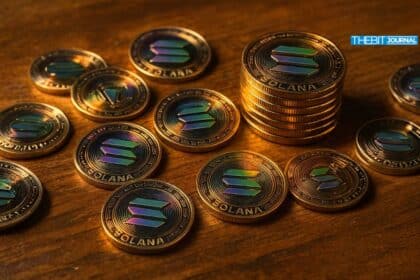
“Algorand” usually refers to the network, while “ALGO” is its token. The network processes activity; ALGO pays transaction fees and is used to interact with applications. The Algorand Foundation lists transfers, DeFi and network participation among the token’s uses.
How does Algorand work?
What is Algorand’s Pure Proof-of-Stake?
Algorand uses Pure Proof-of-Stake, or PPoS, to agree on transactions. According to Algorand’s explanation of PPoS, ALGO holders can participate in consensus without locking tokens or delegating them. This differs from systems that require a lock-up or delegation.
The Foundation says blocks reach finality in under three seconds and describes capacity as approximately 10,000 transactions per second. These are the organization’s figures, not a guarantee of identical performance in every application or network condition.
Consensus lets blockchain participants agree on valid transactions and their order. ALGO pays transaction fees, but the token’s role in the network doesn’t mean its market price will track technical performance predictably.
What is ALGO used for?
According to the Algorand Foundation’s token overview, ALGO pays transaction fees, transfers value, supports DeFi activity and enables network participation. The experience depends on the wallet, application and service, each of which can carry technical or custody risks.
ALGO has a maximum supply of 10 billion. The Foundation says circulating supply grows as treasury-held tokens enter circulation, so the maximum doesn’t mean all tokens are already circulating. In a November 6, 2026 community update, Algorand said raising the cap through inflation-based incentives was no longer under consideration at that time. The update also said staking rewards were committed through January 2028. Reward policies can change, and this isn’t a promise of fixed returns.
CoinGecko listed ALGO at $0.078428 at 13:19 UTC on November 19, 2026, with about 9.08 billion tokens circulating and a market capitalization near $712 million. This dated snapshot isn’t a forecast. Crypto prices can move sharply, and buyers can lose some or all of their money.

What is Algorand being used for?
Activity figures can offer clues about use, but address counts and transaction totals don’t prove lasting demand. Blockworks Advisory’s Q3 2026 report recorded 518,000 monthly active addresses at the end of September, up from 140,000 at the end of June. It also reported 104.9 million transactions in Q3, down 13.8% from Q2.
The report said x402 payments through GoPlausible completed 1.04 million settlements, with $319,000 in settled Q3 volume. It also reported that HesabPay had more than 1 million users and moved about $183 million per month on Algorand, attributing those figures to the company. These examples show reported activity, not independent proof of long-term adoption.
Availability and rules vary by location and provider, and exchanges or wallets can fail or be compromised.
Recent upgrades and the post-quantum roadmap
Algorand’s v5.0.0 upgrade passed its 90% support threshold on August 15, 2026, according to the Algorand Foundation. It introduced native Falcon-1024 post-quantum accounts, resource-based fees and a doubled smart-contract size limit.
The Foundation’s roadmap targets broad quantum resilience by the end of 2027. It says native post-quantum multisignature support for institutional and treasury operations is planned by the end of 2026. These are future targets, not completed features or guarantees against security threats.
Technical progress is only part of a blockchain’s prospects. Developers, users, regulation and market conditions matter too. Smart contracts can have vulnerabilities, and application use can expose people to losses beyond price volatility.

Algorand pros and cons
| Potential advantages | Limitations and risks |
|---|---|
| PPoS participation doesn’t require locking or delegating ALGO, according to the Foundation. | Foundation performance figures may not describe every real-world use case. |
| ALGO has defined network uses and a maximum supply of 10 billion. | Treasury tokens can enter circulation, and the token price can be highly volatile. |
| Recent releases include native post-quantum accounts. | Roadmap delivery, application security and adoption remain uncertain; exchanges and wallets carry separate risks. |
Who Algorand may be for, and who it may not be for
Algorand may interest people studying blockchain design, transaction networks or smart-contract applications. Its PPoS system and post-quantum work are technical topics to compare with other networks. Developers can assess whether its tools and fee design fit a project.
It may not suit someone seeking a stable store of value, predictable rewards or risk-free access to digital assets. ALGO can lose value, while faulty contracts, compromised accounts, exchange failures, scams or changing regulation can also cause losses. Legal and tax treatment varies by country; consult a qualified professional about your circumstances.
Bottom line
In practical terms, Algorand is a blockchain using Pure Proof-of-Stake, with ALGO as its fee and participation token. The network has reported application activity and introduced post-quantum account features, but neither technical claims nor usage figures guarantee future adoption or token performance.
Understanding the network can explain ALGO’s role, but it can’t remove market, technical, custody or regulatory risk.
Sources
- Pure Proof-of-Stake – how Algorand's consensus mechanism works (algorand.co)
- Algorand price and market data (CoinGecko)
- The Algo (algorand.co)
This article is for informational purposes only and does not constitute financial or investment advice. Cryptocurrencies are highly volatile; always do your own research before investing.