





This article was first published on The Bit Journal.
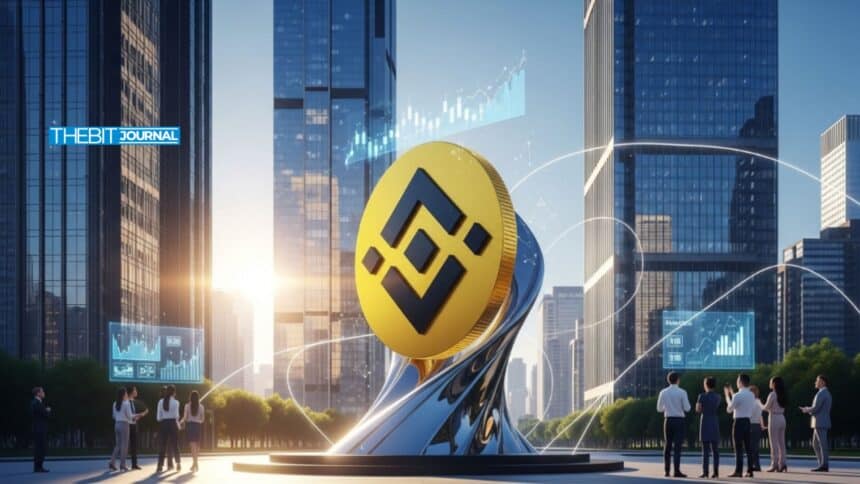
Binance Coin (BNB) is the cryptocurrency that keeps the Binance ecosystem running, powering all of Binance’s blockchains; exchanges and DeFi applications. As of June 2026, BNB is worth about $600, and the market cap is sitting at around $80 billion.
There are roughly 134.8 million BNB in circulation at the moment. BNB was first introduced in 2017 and has since become one of the top cryptocurrencies by market value.
What Is Binance Coin (BNB)?
Binance Coin (BNB) was created back in 2017 by Binance as a utility token on the Ethereum network (it’s an ERC-20 token). At the time; its main job was to give users cheaper trading fees on the Binance exchange. But that’s not the case any more.
Today, BNB is the native coin of the BNB Chain (used to be Binance Smart Chain and Binance Chain); used to pay for block transaction fees on Binance’s blockchains, to stake and vote in governance, and even for paying for things outside Binance.
Origins and Evolution: BNB was first launched in a July 2017 ICO; with a fixed maximum supply of 200 million tokens. After its launch, BNB moved off of Ethereum: first to Binance’s own Binance Chain (2019), and then Binance Smart Chain (later renamed to BNB Chain) in 2020.
Then between 2022 and 2024 Binance rolled out a big upgrade where they unified their chains under the BNB Chain banner. The older Binance (Beacon) Chain was “merged” (the term Fusion was used for this); so now BNB Smart Chain is the single network.
Network and Use Cases: BNB powers two main blockchains (although now it is just one unified BNB Chain). All BNB Chain network fees (or “gas fees”) are paid using BNB. BNB holders get the right to vote on network governance and can also use their BNB to help secure the network (right now about 20 million BNB is staked by around 20,000 delegators).
Outside of the BNB Chain, BNB can be used to pay for travel bookings; entertainment, loans, financial services and even participate in token sales on Binance Launchpad.
The Binance Coin (BNB) is the “fuel” that keeps the BNB Chain ecosystem going. The original concept was to be a discount for trading fees; but its role has expanded to become a main part of Binance’s entire network of blockchains and services.

Features and Latest Updates
BNB Chain Upgrades and Performance
BNB Chain has seen rapid upgrades to make it faster and more efficient. Their 2025-2026 roadmap has managed to cut block times down from 3 seconds in 2023 to as little as 0.75s in 2025 and even 0.45s by early 2026.
The finality ( time it takes to confirm a block) was reduced to 1-2 seconds; and this was done via new consensus rules that were put in place. These upgrades aim for tens of thousands of transactions per second (TPS) and fees as low as $0.01 per transaction.
- BNB Chain Statistics: The network now claims to handle over 12.4 million transactions per day on average with a daily volume of $9.3 billion. This high throughput comes at a cost of roughly $0.01 per transaction after the latest upgrades. For comparison; Ethereum in 2026 still has higher fees, making BNB Chain a cheaper alternative for many applications.
- New Additions: BNB Chain has also added new options like opBNB (a Layer-2 optimistic rollup) and BNB Greenfield (decentralized storage). This is expanding use cases beyond finance; into areas like gaming, NFTs and data storage. The ecosystem has also focused on Liquid Staking Derivatives (LSD) and restaking; supported by over 20 million BNB staked on the network.
Consensus and Validators
BNB Chain uses the Proof-of-Staked-Authority (PoSA) consensus model, where 45 validators take turns producing blocks. Every 1,000 blocks; or about 12.5 minutes, an active “cabinet” of 21 top stakers steps up to produce blocks, one after the other.
This hybrid system which blends elements of Delegated Proof of Stake (dPoS) and Proof-of-Authority (PoA) is a compromise between decentralization and speedy block times. Validators that misbehave can be slashed (penalized) to keep the network secure.
Decentralization Efforts
Despite its origins with Binance; BNB Chain has been working hard to decentralize. The 2024 “Fusion” upgrade was supposed to be the push towards a single, unified chain. As of 2025, dozens of independent validators participate (and anyone can apply to become one too).
According to on-chain data, however, the top 11 BNB addresses still hold about 55% of all the tokens and a lot of those belong to Binance itself or major investors. That points to the ongoing risk of centralization even as the chain improves its infrastructure.
Tokenomics: Supply, Burns, and Deflation
Binance Coin kicked off its life with a fixed supply of 200M BNB, never to be increased. Importantly, BNB is deflationary meaning that tokens are regularly “burned” (permanently destroyed) to reduce supply.
Coin Burn Mechanisms: Every quarter, Binance uses 20% of its trading profits to buy back BNB from the market and burn them. In addition to that, the BNB Chain protocol, (BEP-95 upgrade) automatically burns a portion of the gas fees in real-time as they’re being paid. There’s also a third mechanism, the Pioneer Burn Program, which helps recoup some of the losses from hackings or thefts by burning those equivalent tokens.
Recent Burn Data (2026): As of mid 2026, there had been 35 quarters of burns to have occurred . The latest burn (Q1 2026) destroyed 1,569,307 BNB, bringing the total supply down to 134,786,916 BNB. This is about 32.6% lower than the original 200 million supply. BNB’s auto-burn calculates burns based on price and network usage, so recent high network activity has accelerated supply reduction.
Supply Outlook: Binance has a long-term plan to burn half the original supply, that is 100M BNB. If things keep going at this rate, they should be able to hit that target in a few years. A shrinking supply (alongside steady demand for all the usual transaction fees and staking) creates a deflationary pressure on BNB’s price.
Table: Key BNB Tokenomics (as of June 2026)
| Metric | Value |
| Initial Supply | 200,000,000 BNB |
| Current Supply | 134,786,916 BNB |
| Circulating Supply | 134.78 million BNB |
| Burned to Date | 65 million BNB |
| Burn Rate (Latest) | 1,569,307 BNB (Q1 2026) |
Uses of Binance Coin (BNB) Today
Binance coins purpose has gone past getting a discount on exchange fees:
Transaction Fees (Gas): BNB is the required gas token on the BNB Chain. Every transaction; smart contract deployment, or smart contract call on BNB Chain pays fees in BNB. With current fee rates around $0.01, BNB still holds value for covering billions in daily on-chain activity.
Exchange Fees and Discounts: If you trade on Binance exchange platforms (Spot or futures) paying fees in BNB gets you up to a 25% discount. Many traders still hold BNB to reduce costs when trading.
Staking and Earning: You can stake BNB, or put it into Binance or DeFi platforms to earn interest. Binance’s own products like BNB Vault (staking pools) and many BNB Chain DeFi protocols offer interest on locked BNB. As of 2026; over 20 million BNB is locked in staking contracts.
Governance: BNB holders can vote on BNB Chain governance proposals (via the BNB DAO) affecting network upgrades, gas parameters, etc. Holding BNB thus confers a voice in the protocol’s future.
Payments & Services: Outside of blockchain infrastructure, BNB is accepted for travel bookings (e.g., on Travala), online services, gaming rewards, loans, and more. Binance has forged partnerships allowing BNB use for merchant payments and visa gift cards.
Launchpad Participation: BNB is used in Binance Launchpad token sales. Holding BNB can give investors the chance to purchase new crypto projects early.
All these different uses keep demand for BNB going strong across different sectors, making it so much more than just an “exchange token”.
How to Buy and Store Binance Coin (BNB)
Choose the Right Exchange: BNB is available on most big exchanges (Binance, Kraken, OKX to name a few). To buy BNB with fiat; you can use a regulated platform like Binance or Coinbase. Crypto-to-crypto traders can swap Bitcoin or stablecoins for BNB on any popular DEX. Always verify exchange reputation.
Set up a Wallet: Once you’ve bought BNB, move it into a wallet that you actually have control over, for safety. You can use a hardware wallet like Ledger or Trezor; or a software wallet like MetaMask or Trust Wallet that supports BNB Chain. Keep in mind BNB works on both BNB Chain (BEP-20) and Binance Chain (BEP-2), so pick a wallet that can handle the right format.
Enable Security Measures: Switch on 2FA for any exchange accounts. Be cautious of phishing sites. Only use official links to Binance or wallet apps.
Stake or Use BNB: If holding long-term, consider staking BNB in a Vault or liquidity pool to earn yield. You can also use BNB to participate in Binance Launchpad token sales or pay for transaction fees on BNB Chain DApps.
Keep an Eye on Burns & News: Keep an eye on the quarterly burn events ( check bnbburn.info or Binance’s official channels). Stay on top of regulatory news as these can also affect the price of BNB.
Conclusion
Binance Coin (BNB) remains a major cryptocurrency with a unique position as the core token of Binance’s blockchain ecosystem.
Launched in 2017 and continually upgraded, BNB powers the high-throughput BNB Chain, enjoys multiple real-world uses, and has a deflationary supply due to periodic burns.
Experts reckon that the ongoing token burns, new use cases (including RWA and staking), and even an upcoming ETF could all support BNB’s long-term value. That being said, investors need to keep an eye out for regulatory developments affecting Binance and keep their investments diversified.
Glossary
BNB (Binance Coin): The native cryptocurrency of the Binance ecosystem, used for transaction fees, staking, and more on Binance’s blockchains.
BNB Chain: This is Binance’s unified blockchain network, which is what powers their ecosystem (formerly Binance Smart Chain). It’s EVM-compatible and uses BNB as its gas token.
Proof of Staked Authority (PoSA): This is the consensus mechanism that BNB Chain uses, which is a hybrid between Delegated Proof of Stake and Proof of Authority to get blocks confirmed fast.
Token Burn: This is the process where Binance permanently removes BNB from circulation, to reduce the supply. They do this regularly.
Validator: These are the nodes that actually produce and validate the blocks on a proof-of-stake blockchain. On BNB Chain, there are 21 active validators at a time, and they rotate in every epoch.
BNB Vault: A Binance service allowing users to stake BNB and other tokens to earn a yield. The vault automatically stakes tokens in multiple products.
Frequently Asked Questions About Binance Coin
What can Binance Coin (BNB) be used for?
BNB has a few primary uses: you can use it to pay fees on the Binance/BNB blockchains, and get discounts on fees when you trade on Binance. It also has other uses like staking, governance, DeFi (for collateral and liquidity), travel bookings, payments and even getting in on token sales.
How many BNB are there still left to be burned?
Binance’s plan is to burn BNB until only 100 million remain, and as of April 2026, the total supply was around 134.8 million. So, that’s about 34.8 million BNB still left to be burned. Burns take place every quarter, so that number decreases over time.
Can I stake my BNB and how?
Yes, on the BNB Chain you can stake BNB either by delegating it to one of the 20,000+ validators/delegators that already have a combined 20 million BNB staked, or by using one of Binance’s staking products. Binance’s “BNB Vault” and several third-party DeFi protocols also offer staking yields.
Does Binance Coin (BNB) get affected by Binance exchange regulations?
To some extent. Regulatory actions against Binance (such as the 2023 AML case) can impact market sentiment around BNB. However, BNB’s value is also driven by its blockchain usage. As of 2026, Binance has resolved major penalties and continues operations, but investors should monitor regulatory news.
References
Disclaimer: This article is for informational purposes only. Cryptocurrency investments are risky, and readers should conduct their own research or consult a financial advisor.