

Updated on 14th March, 2026
Digital identity has become one of the internet’s biggest weak spots. Most people sign in, click accept, and hand over pieces of themselves without thinking twice. A name here, an email there, a payment trail somewhere else. Over time, those fragments pile up inside platforms they do not control. That is where Web3 Identity starts to matter as it offers a different model, one where the user holds the keys, decides what to share, and carries a portable identity across apps instead of starting from scratch every time.
What Is Web3 Identity? Control Your Digital Presence
For years, online identity has lived inside closed systems as a person opens an account on a social app, a game, an exchange, or a shopping platform, and that platform becomes the gatekeeper. It stores the profile, manages permissions, tracks behavior, and often turns user data into part of its business model. It is convenient on the surface, but the trade-off is plain enough. The user rents access while the platform owns the rails.
Web3 Identity pushes in the other direction, it refers to a digital identity framework built around user ownership, cryptographic proof, and portability. Instead of letting a central company define who a person is online, this model lets users hold identifiers, credentials, wallet links, usernames, and reputation signals that can move with them. In practical terms, it means a person can prove something about themselves without always exposing everything.
That shift matters because identity on the internet is no longer a side issue. It sits at the center of payments, security, reputation, gaming, creator economies, tokenized communities, and even compliance. In crypto, where wallets already act as the first layer of access, identity has become the next puzzle piece. The space has learned the hard way that pure anonymity solves some problems but creates others. Bots, fake users, phishing, sybil attacks, and fragmented profiles have all made trust harder to build.
Why Web3 Identity Matters More Than Ever
At its core, this model is about replacing platform-owned identity with user-controlled identity. The main idea is simple, though the machinery underneath can get technical. A user may have a wallet address, a decentralized identifier, a human-readable name, and a set of verifiable credentials.
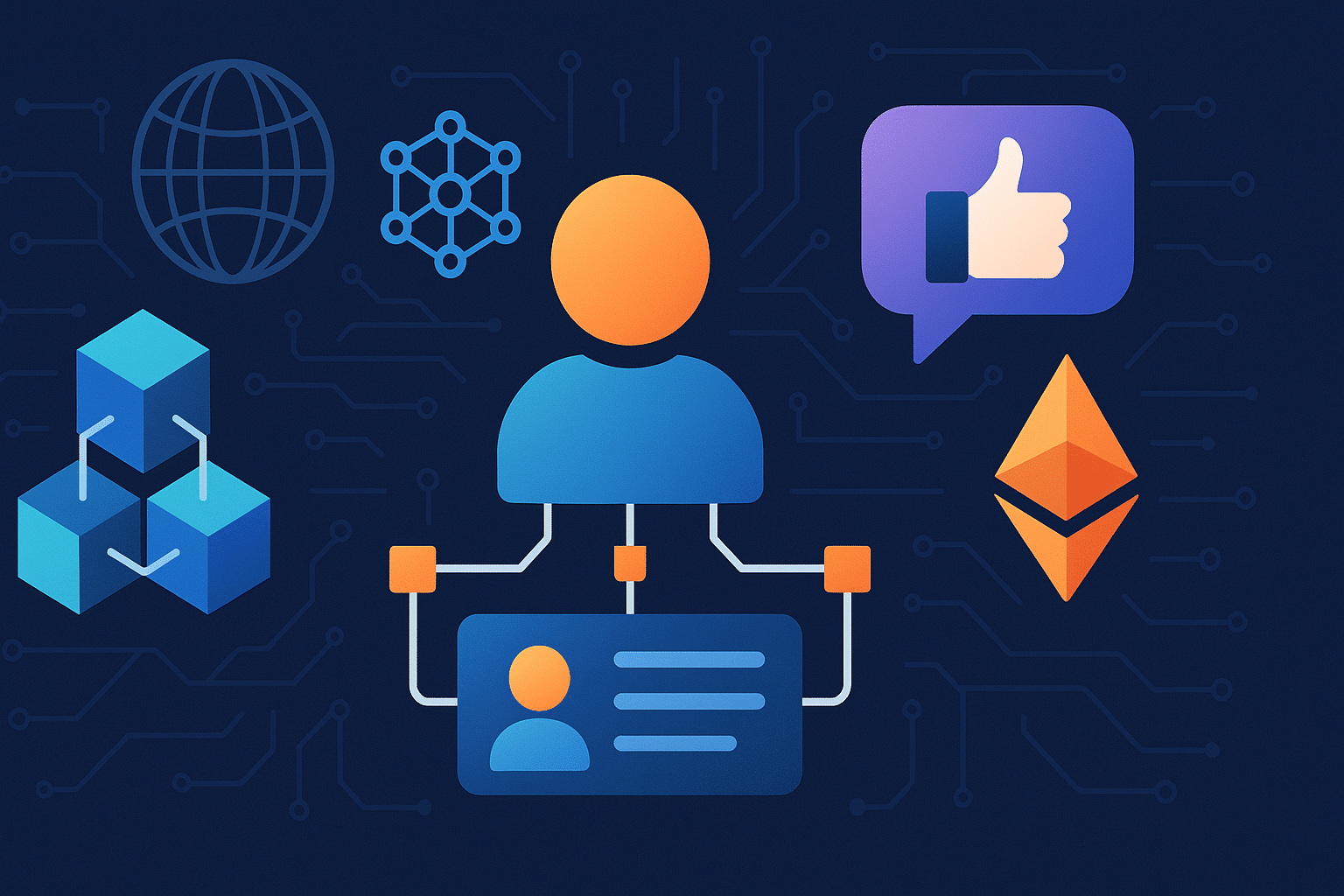
Together, these pieces can create a more flexible online identity stack. Standards for decentralized identifiers describe a DID as an identifier designed to be independent from centralized registries or identity providers, while verifiable credentials describe a tamper-evident way to express claims between issuers, holders, and verifiers.
That matters in the real world because most users are tired of living in silos. A person might build a reputation in one app, verify an achievement in another, and still have no clean way to carry those signals elsewhere. Traditional logins solved convenience, but they also trapped identity inside corporate walls. By contrast, Web3 Identity aims to make identity composable. One credential can unlock access in different places. One verified proof can serve many use cases. One user can appear online with more continuity and less repetition.
There is also a privacy angle that often gets lost in the noise as a better identity system is not just about proving more. It is about revealing less. Someone may need to prove they are over 18, live in a certain region, or have completed a compliance step without handing over an entire folder of personal data. That kind of selective disclosure is one of the more promising aspects of the new identity stack.
How It Works Behind the Scenes
A useful way to picture it is to compare it with a passport wallet rather than a social media login. In a traditional setup, the platform stores the user file and decides what is valid. In a decentralized setup, the user can hold credentials issued by trusted parties and present only the proof needed for a given action.
This is where Web3 Identity becomes more than a slogan. A wallet may anchor ownership. A decentralized identifier may represent a persistent identity layer. A naming system may replace unreadable wallet strings with something human. A credential can confirm facts such as membership, qualification, region, or account status. A verifier checks the proof, and the process moves on without the same level of data leakage users have come to accept.
Human-readable naming has been especially important in crypto because long wallet addresses are a breeding ground for mistakes. Naming systems make it easier to resolve readable names to blockchain addresses, and design guidance around primary names emphasizes that display names should match forward and reverse resolution to reduce confusion and spoofing risk.
Still, a wallet alone is not Web3 Identity, that is one of the biggest misconceptions in the market. A wallet proves control over keys. It does not automatically prove reputation, humanity, professional status, trustworthiness, or legal eligibility. Identity grows when a wallet connects with credentials, attestations, names, and context. Without that added layer, the user is often just a string of characters with transaction history attached.

Where It Shows Up in Everyday Crypto Use
The concept can sound abstract until it is tied to things people already do. In decentralized finance, identity can help separate real users from farming bots or repeat attackers. In gaming, it can connect in-game achievements, assets, and reputation across ecosystems. In social applications, it can let creators carry audience signals and verified profiles between platforms instead of rebuilding from zero.
For exchanges and payment tools, Web3 Identity can also help bridge the awkward gap between privacy and regulation. The industry has spent years bouncing between two extremes. On one side sits full exposure, where platforms ask for too much data and hold it forever. On the other sits total opacity, where abuse is easier to hide. A credential-based model offers a middle path. The user can prove the needed fact rather than surrender a full dossier.
This is one reason many builders now talk about identity as infrastructure, not a niche add-on. Once a person can prove who they are, what they can access, or what they have earned without repeating the same onboarding steps, the whole user experience improves. Less friction tends to mean more participation, and more reliable participation tends to mean healthier networks.
The Real Benefits for Users
The case for Web3 Identity rests on ownership, portability, privacy, and resilience.
Ownership matters because users can hold important parts of their digital presence instead of leasing them from a platform. Portability matters because identity can travel across applications. Privacy matters because users may disclose only what is necessary. Resilience matters because a single corporate shutdown does not have to wipe out the profile, access history, and credentials tied to years of activity.
There is also a business case. Better identity can reduce fraud, make onboarding smoother, and improve trust in digital communities. Projects that know whether a user is unique, verified, or credentialed can design fairer reward systems and cleaner governance processes. That does not mean every app needs a heavy identity layer, but it does mean blind anonymity is no longer treated as a cure-all.
In crypto markets, trust has always been expensive. Users pay for weak identity systems through scams, fake communities, impersonation, and endless verification loops. A stronger model does not remove risk, but it can shrink some of the mess.
The Risks, Trade-Offs, and Hard Questions
For all the promise, Web3 Identity is not magic. It can go wrong in familiar ways.
The first risk is complexity. Most mainstream users still struggle with seed phrases, wallet recovery, and signing requests. If identity tools pile more jargon onto that experience, adoption will stall. Good design matters here more than many technical teams admit.
The second risk is surveillance by another route. A transparent blockchain history tied too neatly to a public identity can create a privacy nightmare. The goal should not be to pin every action to one visible persona forever. It should be to let users choose when to link signals and when not to.
The third issue is fragmentation. Too many projects still build identity systems that do not talk well to each other. Standards are improving, and the emergence of formal credential issuance specifications should help interoperability, but the market is still finding its feet. OpenID’s final specification for verifiable credential issuance, approved in September 2025, is one sign that digital credential flows are becoming more mature and easier to implement across ecosystems.
Then there is governance: Who issues credentials? Who decides which proofs count? Who handles disputes, mistakes, or revoked status? Identity always sounds technical until power enters the room. Then it becomes political, legal, and social in a hurry.
Why It Matters Beyond Crypto
The bigger story is that Web3 Identity is not only about token holders or early adopters. It touches education, employment, travel, creator work, healthcare records, online communities, and AI-driven services. Anywhere the internet asks people to prove something about themselves, identity architecture matters.
That is why the topic is gaining traction just as the web enters a new phase shaped by automation and synthetic content. When bots can imitate style, fake engagement, and scale deception cheaply, proving personhood and trusted credentials becomes more valuable. In that sense, identity is not a side narrative to the next internet. It is one of the load-bearing beams.
The future of Web3 Identity will likely belong to systems that feel almost invisible. Users will not want to read protocol papers before signing in. They will want smooth recovery options, clean privacy controls, readable names, and clear consent. The winners will be the tools that hide the plumbing while preserving user control.
Conclusion
In the end, Web3 Identity is about shifting digital power back toward the user without pretending trust can exist on hope alone. It tries to solve a problem the internet has carried for decades: people move across the web, but their identity stays trapped inside separate gates. A better model lets them carry proof, reputation, and access with more control and less exposure. That will not fix every weakness online, but it gives the web a fighting chance to become a place where identity works for the user instead of against them.
Frequently Asked Questions
What is Web3 Identity in simple terms?
It is a user-controlled digital identity model that lets people manage identifiers, names, credentials, and proofs without depending entirely on one platform to define or store who they are.
Is it the same thing as a crypto wallet?
No. A wallet is usually the starting point because it proves control over keys, but identity becomes much richer when it includes names, credentials, attestations, and reputation.
Why does it matter for privacy?
It can let a person prove a fact without exposing all personal data behind that fact. That creates a more balanced relationship between access and disclosure.
Can it help reduce scams and fake accounts?
It can help, especially when apps need proof of uniqueness, humanity, or verified status. Still, it is not a perfect shield, and poor design can create new risks.
Will mainstream users adopt it?
They might, but only if the experience becomes simple. The technology has promise, yet user experience, recovery, and trust design will decide whether it stays niche or goes broad.
Glossary of Key Terms
Decentralized Identifier
A persistent digital identifier that is designed to work without reliance on a central identity provider.
Verifiable Credential
A tamper-evident digital credential that can prove a claim, such as membership, qualification, or account status.
Wallet
A tool that allows a user to control cryptographic keys, sign transactions, and interact with blockchain-based applications.
Selective Disclosure
A method that allows a user to reveal only the specific information needed for verification.
Human-Readable Name
A readable identity label linked to a blockchain address or profile, making digital interactions easier and safer.
Attestation
A signed statement that confirms something about a user, account, or action.
Sources
Disclaimer: This article is for educational and informational purposes only and should not be treated as financial, legal, investment, or compliance advice.