





This article was first published on The Bit Journal.
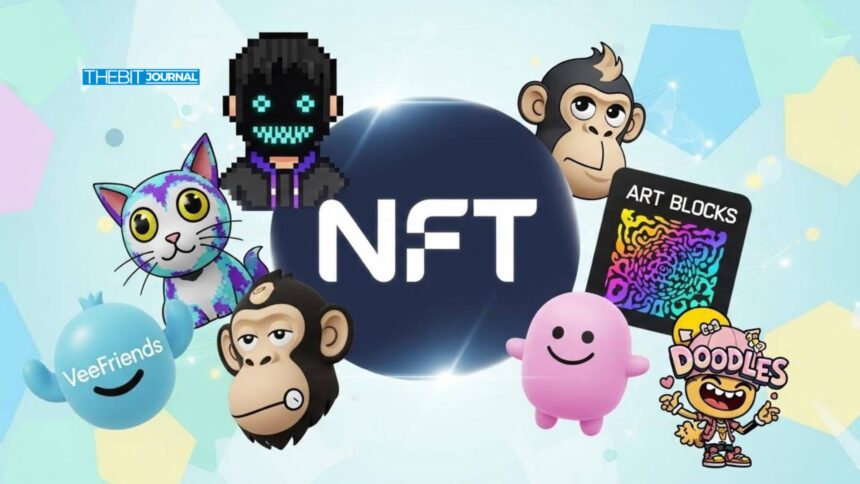
NFTs have been through several market cycles but a handful of top NFT collections still continue to define the sector’s long-term legacy. Although many projects have sunk, these noteworthy collections established baseline standards and advanced mainstream acceptance, revolutionizing the way value is attributed to digital assets.
From early blockchain art and gaming economies to redefining digital identity, these collections together have helped build today’s NFT ecosystem.
The First-Ever NFT Trading Card Game: Spells of Genesis (2015)
Spells of Genesis came out in 2015 and was the first blockchain-based trading card game. It issued crypto cards on the Bitcoin’s Counterparty platform, each card featuring unique artwork of historic crypto moments.
The project was the first to bring true digital ownership in gaming, where players held genuine NFT cards that were completely controlled and stored securely in their wallets, rather than by a central custodian or the game developer.
Spells of Genesis blazed a trail for the future of GameFi (gaming + DeFi) projects, demonstrating that NFTs and can be fused with play and culture.
Rare Pepe (2016): The Original Crypto Meme Art
The Rare Pepe collection is a set of stylized “Pepe the Frog” meme cards, deployed on top of Bitcoin’s Counterparty protocol. It was among the NFT’s original experiments.
There were 36 sets of 50 images each (total set size:1,800 cards) with unique art. Rare Pepes were literally labeled “rare” because by design, they were limited and numbered, creating artificial scarcity for digital memes.
Certain Rare Pepes fetched thousands of dollars from collectors. According to reports, those were the first art experiments on the blockchain and the crypto-art movement owes its strength to it.
Rare Pepes are in fact among the earliest NFT collections in history, as they demonstrated that internet culture could be tokenized on-chain.
CryptoPunks (2017): OG NFT Profile Pictures
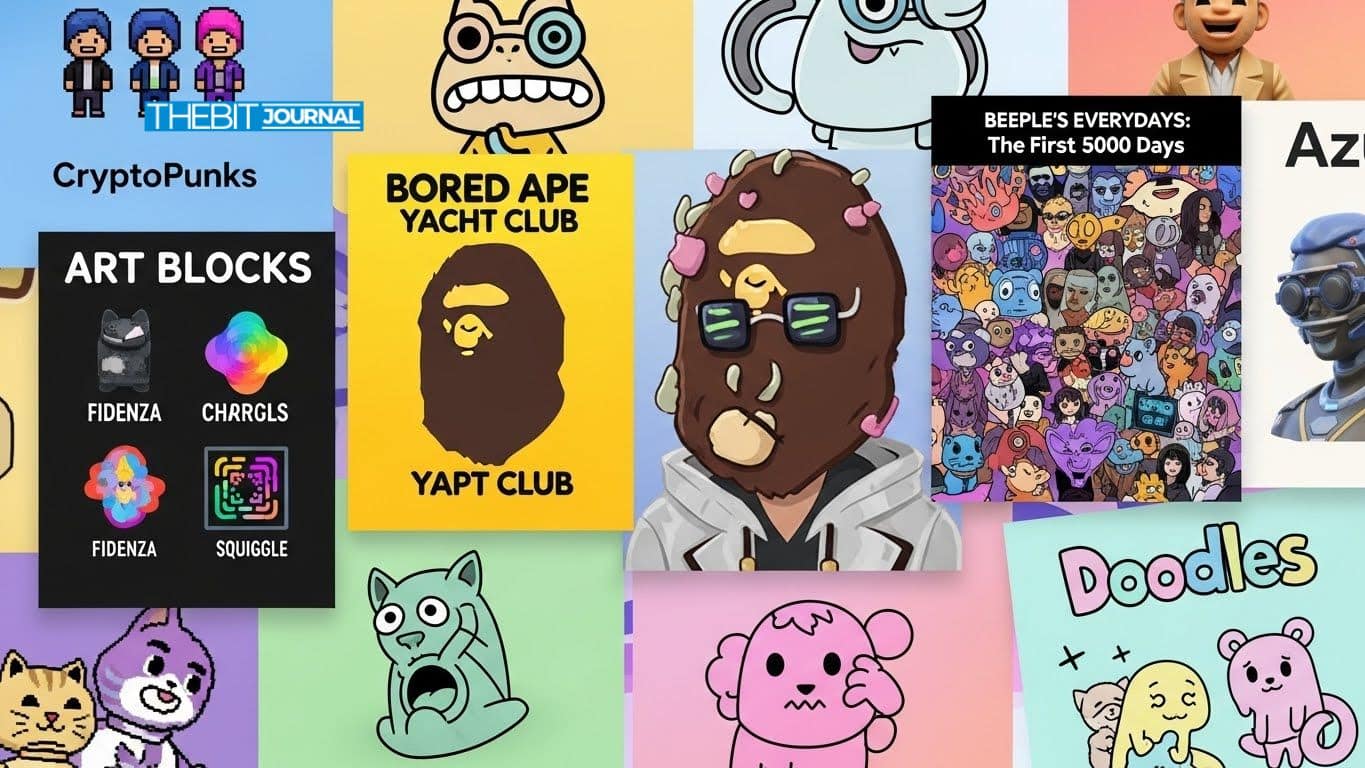
CryptoPunks is a 10,000 Ethereum-based collection of pixel art avatars released in 2017. Each Punk is algorithmically created with distinct attributes. As one of the original NFT profile picture (PFP) projects, CryptoPunks “injected life into the growth of generative PFP” collections.
Every Punk is both a collectible and an artwork, and the volume of trading has been massive. Notably, CryptoPunk #5822 (a blue alien punk) sold for 8,000 ETH ($23.7M) in Feb 2022, setting a CryptoPunk record.
Today CryptoPunks still hold the realms of NFT market cap (roughly 29% of top collections on CoinGecko and are considered an OG NFT status symbol.
They inspired endless spinoffs and showed that on-chain art could compete in value with fine art.
CryptoKitties (2017): Ethereum’s Viral NFT Game
CryptoKitties (Dapper Labs, 2017) was the first blockchain game to go viral. Users in this Ethereum-based project could buy, collect, breed and trade digital cats, with each represented by an NFT.
It became so popular that it congested the Ethereum Network (gas fees skyrocketed) shortly after launch. Most importantly, CryptoKitties brought the ERC-721 token standard for NFTs, that powers nearly all NFTs on Ethereum today.
Blending NFTs with gameplay, CryptoKitties took NFTs to the next level and captured a broad audience, validating the concept of digital scarcity. At one point, the most rare virtual kittens sold for hundreds of thousands of dollars. CryptoKitties is a flagship success and one of the most successful top NFT collections in history.
Decentraland (LAND) (2017): Metaverse NFT
Decentraland is one of the earliest blockchain metaverses, and 90,000 parcels of virtual land (referred to as LAND) were sold as NFTs.
Decentraland, in a 2017 I.C.O. raised nearly $26 million worth of parcels for LAND through an auction. There, owners can construct 3D worlds, games or shops on their NFT land. This was among the first large-scale applications of NFTs for virtual real estate.
Decentraland demonstrated the ability of NFTs to create a digital space (“Metaverse”); it is one of the earliest metaverse projects (followed by The Sandbox etc.).
By tokenizing land, Decentraland helped establish NFTs as something more than just images, they could represent valuable property.
Today Decentraland is still the gold standard of NFT virtual worlds.
Sorare(2019): NFTs for Fantasy Soccer Cards
Sorare (2019) is a fantasy sports game where officially licensed cards of soccer players are issued as NFTs. Players accumulate and trade cards to participate in fantasy leagues.
Sorare helped pioneer NFTs in sports fandom. At the time of the 2022 crypto slump, Sorare had remained on a strong footing and tallied over $318m in card sales volume.
Its success is a proof point that blockchain sports collectibles can be as competitive as their traditional counterparts in sports memorabilia. Now, many fans of football or soccer own rare NFTs of such stars. Sorare is thus among the top NFT collections by popularity, fusing gaming with collectibles.
NBA Top Shot (2020): Iconic Basketball Highlights on the Blockchain
NBA Top Shot was introduced in 2020 as a partnership between the NBA and Dapper Labs (the developers behind CryptoKitties). It allows fans to buy, sell and trade NFT “Moments”, video clips of memorable NBA highlights on the Flow blockchain.
Top Shot became all the rage in culture during 2021. As of March 2021, more than 800,000 accounts surpassed $500 million in sales. Packs of Moments frequently sell out in seconds. A single dunk clip of LeBron James even sold for $208,000.
Top Shot showed that NFTs could attract a large, mainstream audience with an easy-to-use marketplace. It is the most historically significant NFT collection as it paved the way for NFT adoption among sports fans and was able to set user-number records.
Art Blocks (2020): On-chain generative art platform
Art Blocks is a refined collection of cryptographically curated Generative ART, focusing on the collaboration between human and computer; it hopes to be considered as an important work of CH. Arsenal.
Art Blocks (launched 2020) is an on-chain generative art platform. Artists upload code that creates a distinct piece for each mint, so every Art Blocks NFT is unique.
It was this model that turned Art Blocks into a worthwhile innovator in the NFT art landscape. Art Blocks came in as a very prominent player for digital art NFTs, according to Southern Methodist University.
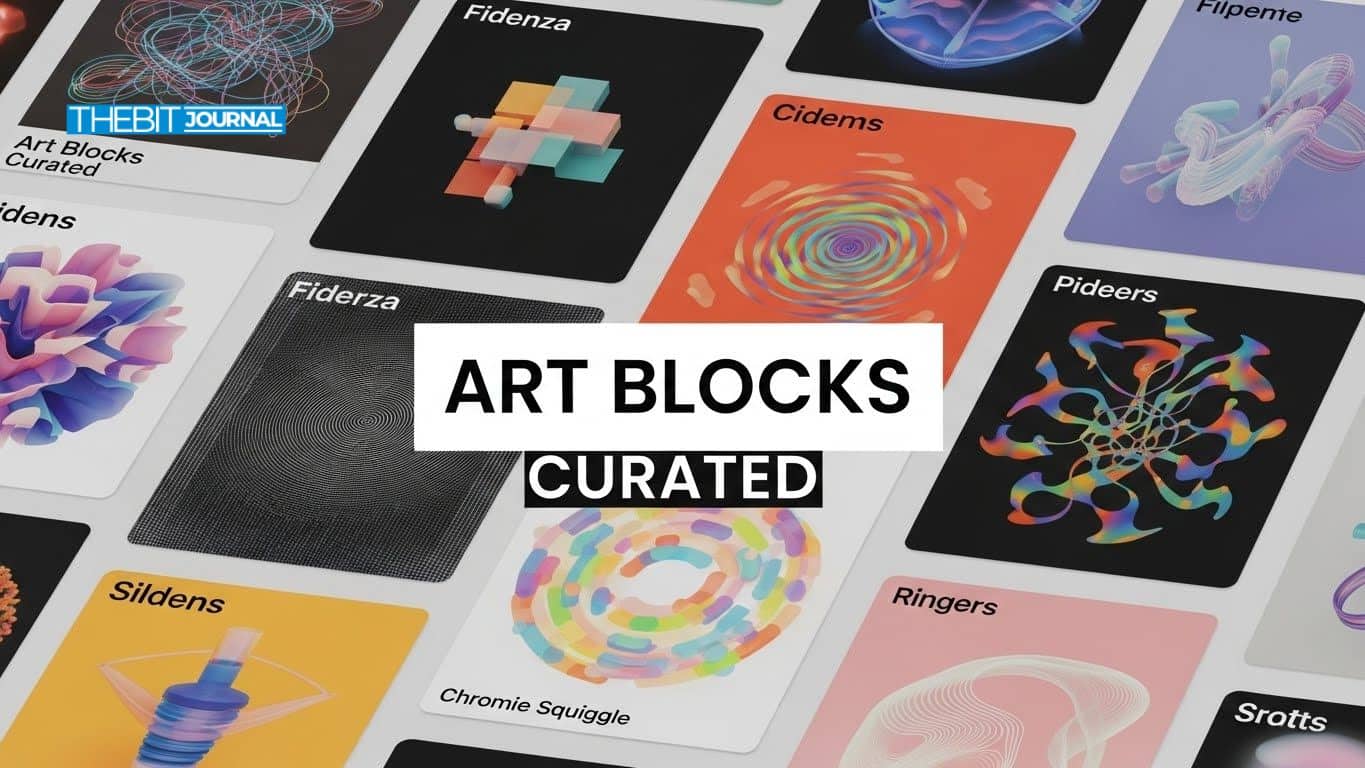
Collections such as Chromie Squiggles, Fidenza and Ringers on Art Blocks have resulted in tens of millions of dollars in sales. A single piece went for 885 ETH ($3.3M).
In focusing exclusively on generative, algorithmic art, Art Blocks opened the way for a whole new vein of creativity. It demonstrated how NFTs could be artfully driven and collectible at once, and it influenced many subsequent art projects.
Axie Infinity (2018): Play-to-Earn NFT Gaming
Axie Infinity (Sky Mavis, 2018) is a Pokémon-themed blockchain video game. Players collect, breed and fight with creatures called Axies (all NFTs). Axie broke history in the 2021 boom, too. Millions of players from all over the world flocked to its play-to-earn model game.
As of early 2022, Axie’s NFT marketplace had seen total trading surpassing $4 billion, more than any other collection at the time. A co-founder even tweeted it was “the most traded NFT collection ever”.
This huge volume helped prove that NFTs could be at the heart of a self-sustaining gaming economy, in which players really own their in-game items. The success of Axie Infinity inspired a legion of follow-on “GameFi” titles and demonstrated how top NFT collections can be gaming-first franchises.
Bored Ape Yacht Club (2021): Celebrity Ape Profile Pictures
Bored Ape Yacht Club (BAYC) launched in 2021 as a collection of 10,000 unique cartoon apes on Ethereum.
An image of each ape can be used as a profile picture, so BAYC is a PFP project too. It became quite the sensation. Yuga Labs sold out at the minting price of 0.08 ETH each. Within one year, BAYC floor price had skyrocketed, by October 2022, the least expensive ape for sale was going for about 76 ETH ($100,000).
Celebrities like Steph Curry, Jimmy Fallon, Eminem, bought Apes, making BAYC a mainstream status symbol. Owners get perks, like private events and full IP rights to their ape.
BAYC’s ascendancy helped solidify NFTs as pop culture. In one such event, Sotheby’s auctions 101 Bored Apes for $24.4M, demonstrating institutional validation.
Today, BAYC remains one of the most valuable NFT collections. It is worth noting that Yuga Labs , the maker of BAYC, acquired CryptoPunks and Meebits brands in 2022, merging two top NFT collections under one roof
| NFT Collection | Launch Year | Blockchain | Notable Impact |
| Spells of Genesis | 2015 | Bitcoin (Counterparty) | First NFT trading card game |
| Rare Pepe | 2016 | Bitcoin (Counterparty) | First crypto-meme art; 1,774 scarce cards |
| CryptoPunks | 2017 | Ethereum | Pioneer PFP NFTs; record 8,000 ETH ($23.7M) sale |
| CryptoKitties | 2017 | Ethereum | First viral NFT game; introduced ERC-721 |
| Decentraland (LAND) | 2017 | Ethereum | NFT land metaverse; raised $26M ICO |
| Sorare | 2019 | Ethereum | Fantasy soccer cards; $318M traded in 2022 |
| NBA Top Shot | 2020 | Flow | NFT basketball highlights; $500M+ sales (2021) |
| Art Blocks | 2020 | Ethereum | Generative art platform; million-dollar pieces |
| Axie Infinity | 2018 | Ethereum | Play-to-earn NFT game; >$4B total sales |
| Bored Ape Yacht Club | 2021 | Ethereum | Celebrity ape PFPs; floor price hit 76 ETH (Oct 2022) |
Conclusion
Top NFT collections such as CryptoPunks, CryptoKitties, and Bored Ape Yacht Club have really transformed Web3 history. Each of the series listed above established important “firsts” (the first game, the first generative artwork, etc.) or records (highest sale price, highest volume size).
They demonstrate the range of NFTs from art and memes to gaming, sports and virtual worlds.
Although market prices can be fickle, these collections have shown that digital assets can carry real value as well as cultural weight.
Future NFT trends, whether in gaming, AI art, “phygital” tokens, and so on, will be built on the legacies of these trailblazers.
Glossary
NFT (Non-Fungible Token): A token on a blockchain that represents a unique object (artwork, video and the like). Each NFT contains special data (metadata) that makes it different from any other token, and they can’t be swapped for another.
Blockchain: A decentralized, distributed ledger that records transactions in connected “blocks. Blockchains (for example, Ethereum, Bitcoin, and Flow) securely record ownership and the history of NFTs.
ERC-721: Ethereum token standard for NFTs. It guarantees that every token is distinct and not interchangeable. CryptoKitties popularized this standard.
Profile-Picture (PFP) NFT: A type of NFT designed to be an online avatar. They are typically released in large sets, each with unique characteristics (e.g. CryptoPunks; Bored Ape Yacht Club).
Metaverse: An online world where people can meet and interact in virtual space. NFT-inspired metaverses (such as Decentraland) where digital land and items are sold as NFTs
Smart Contract: Self-executing code on blockchain that enforces the rules. NFTs are created and operated by smart contracts.
Frequently Asked Questions About the Top NFT Collections in History
What is an NFT?
An NFT (non-fungible token) is a distinctive digital token on a blockchain that identifies who owns something specific, in this case some form of digital-based creation or content product. Each individual NFT has a particular identifier.
What was the first NFT ever?
The notion of NFTs dates back to early experiments (Quantum on Namecoin in 2014, for example), but one early well-known collection was Rare Pepe (2016) on Bitcoin’s Counterparty platformm. On Ethereum, CryptoPunks (mid-2017) was one of the earliest significant projects using the ERC-721 standard for NFTs.
Which NFT collection sold for the highest price?
Record NFT sales have resulted from various collections. A CryptoPunk (#5822) has also sold in one of the highest sales at approximately $23.7M. Some Beeple works have sold for even more (in the case of a single NFT, not collections). In the realm of profile-picture collections, it’s been BAYC apes and Cryptopunks atop the charts in terms of price. Overall Sales volume, Axie Infinity is the top of the list (greater than $4B)
Why are CryptoPunks and BAYC so popular?
CryptoPunks and BAYC were early entrants in the NFT craze. They all built strong social community and added fun utility (profile pictures, events, etc.) They have even been championed by celebrities and influencers, enhancing their status. Their designs are classic, and their scarcity makes them enviable. They became, in essence, digital status symbols that helped their value soar to the moon.
Are NFTs a good investment?
NFTs can be purely speculative and are extremely volatile. And while some early collections have skyrocketed in price, prices can crash as well. There are countless factors that influence the value of an NFT: rarity, community, utility, market sentiment. This article is not advice, and should not be treated as such. Always do your own research and be careful; never risk more than you can afford to lose investing in NFTs or crypto assets.
References