






A new market reading has sharpened a debate that never really goes away in crypto. Is deep pain a sign to step back in altcoins market, or the first clue that value is starting to build? Fresh on-chain research shows that more than 40% of altcoins are now at or dangerously close to record lows, above the previous bear-market peak near 38%. That does not prove a rebound is around the corner, but it does show unusual stress in the riskier end of the market, even while Bitcoin holds a far larger share of crypto value than many smaller tokens.
Why altcoins near all-time lows matter now
The altcoins near all-time lows market matters because it compresses several market signals into one ugly picture. It points to weak demand, poor liquidity, and a market structure where capital keeps rotating toward safety instead of spreading across the broader field. Bitcoin dominance sits around 56%, while the total crypto market cap is roughly $2.4 trillion, which suggests capital is still clustering around the largest asset rather than hunting aggressively for speculative upside.
That backdrop helps explain why altcoins near all-time lows is not just a scary headline. It is also a measure of selectivity. In healthier phases, money moves outward. It reaches mid-caps, newer narratives, and higher-beta trades. In defensive phases, that flow dries up. The result looks a bit like an empty mall parking lot after closing time. The lights are on, but very few people are buying. The current fear reading across crypto sentiment tools supports that view, with market mood still firmly in fear territory.
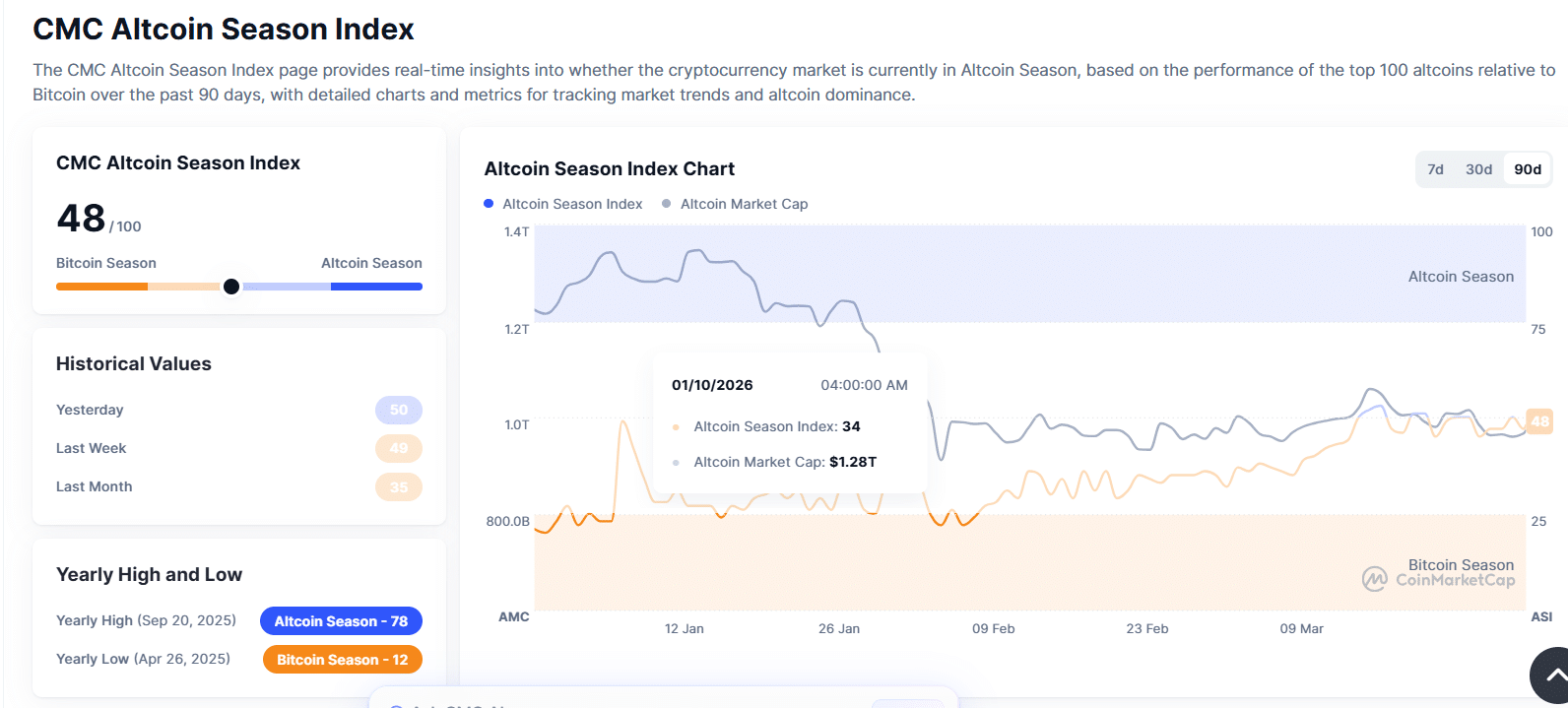
When altcoins near all-time lows, they can create an opportunity
This is where the analysis gets more nuanced, as historically, extreme underperformance can mark late-stage damage rather than early-stage damage. The same analyst behind the latest reading argues that once this type of washout appears, the setup can become attractive for selective long-term buyers. That does not mean every broken chart becomes a bargain. Far from it. Some tokens never recover because price was the only story they had. But when altcoins near all-time lows shows up at scale, it often forces a sharper distinction between empty narratives and projects still building through the downturn.
That distinction matters more now because this cycle is not suffering from one single collapse alone. It looks more like a slow bleed. Earlier data from the same research stream showed 38.8% of altcoins near their lows in early March, already worse than the 37.8% level seen after the 2022 exchange crisis. The latest move above 40% suggests pressure has not eased. It has widened.
Which indicators matter when altcoins near all-time lows
When altcoins near all-time lows becomes the dominant theme, traders and analysts usually watch 4 indicators first, even if they do not treat them as magic answers. Price structure comes first. A token that keeps making lower lows with weak volume is still in a downtrend, no matter how cheap it looks.
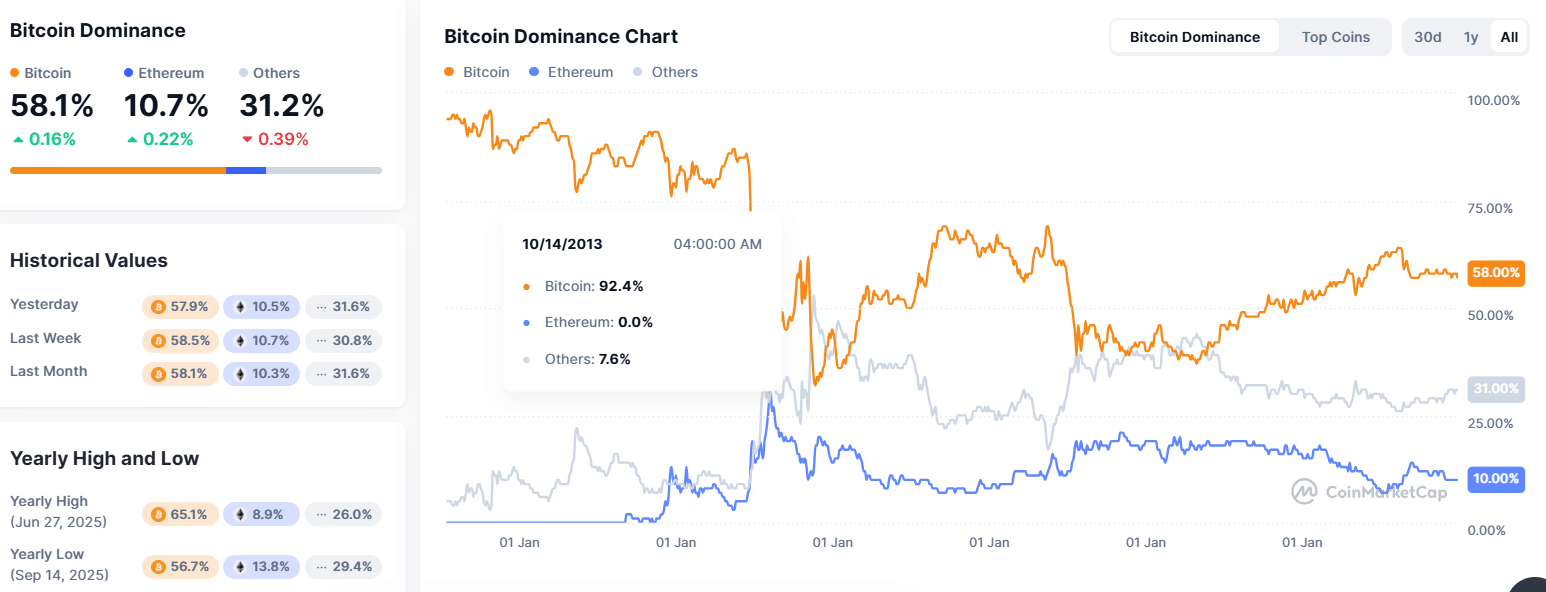
Relative strength against Bitcoin comes next because it shows whether capital is returning to that asset or still avoiding it. Market dominance also matters because rising Bitcoin dominance usually means the broader market is still defensive. Finally, sentiment helps frame timing. Fear alone is not a buy signal, but extreme pessimism often appears near exhaustion rather than euphoria.
The practical takeaway is simple enough. Altcoins near all-time lows is a real stress signal, but not all stress signals mean the same thing. Some mark structural decay. Others mark forced selling near the end of a long unwind. The difference usually shows up in liquidity, development activity, user traction, and whether buyers return on rebounds instead of disappearing after one green day. In other words, the chart matters, but the business of the token matters too.
Conclusion
For now, altcoins near all-time lows describe a market still short on confidence and heavy on caution. Yet that same condition can become fertile ground for the next rotation once risk appetite returns. The smarter read is neither blind optimism nor blanket despair.
It is a disciplined selection if Bitcoin remains dominant, sentiment stays fearful, and broad liquidity stays tight, many altcoins may keep drifting. But if capital begins to spread again, the coins that held up in activity, developer commitment, and user relevance may recover first and hardest. That is usually how crypto resets itself after the crowd has already looked away.
FAQs
Why are altcoins falling harder than Bitcoin?
Because capital is acting defensively. In risk-off phases, larger assets usually attract more trust and liquidity than smaller tokens.
Does this mean altcoin season is dead?
Not necessarily. It means broad participation is weak right now, but sharp recoveries can still emerge once liquidity and sentiment improve.
What should investors watch first?
Price structure, relative strength versus Bitcoin, trading volume, dominance trends, and sentiment. Those indicators help separate weakness from true capitulation.
Glossary of Key Terms
All-time low: The lowest price a token has reached in its trading history.
Bitcoin dominance: Bitcoin’s share of the total crypto market cap.
Liquidity: How easily an asset can be bought or sold without moving price sharply.
Capitulation: A period when selling becomes intense as confidence breaks down.
Relative strength: How one asset performs compared with another, often compared with Bitcoin.
Sources
Disclaimer: This article is for informational purposes only and does not constitute investment advice.