

Bitcoin is stuck near $64,000, and it has failed three separate times to punch through that ceiling with any real conviction. While traders argue over what comes next, a quieter signal is playing out behind the scenes. Bitcoin miners, the operators who secure the network and often sell coins to fund their operations, are doing something that runs against the grain of their own stock performance. Their equities are bleeding red, yet their wallets are filling up. That gap between mining company stock charts and what the miners are actually doing deserves a closer look.
Mining Stocks Take a Beating
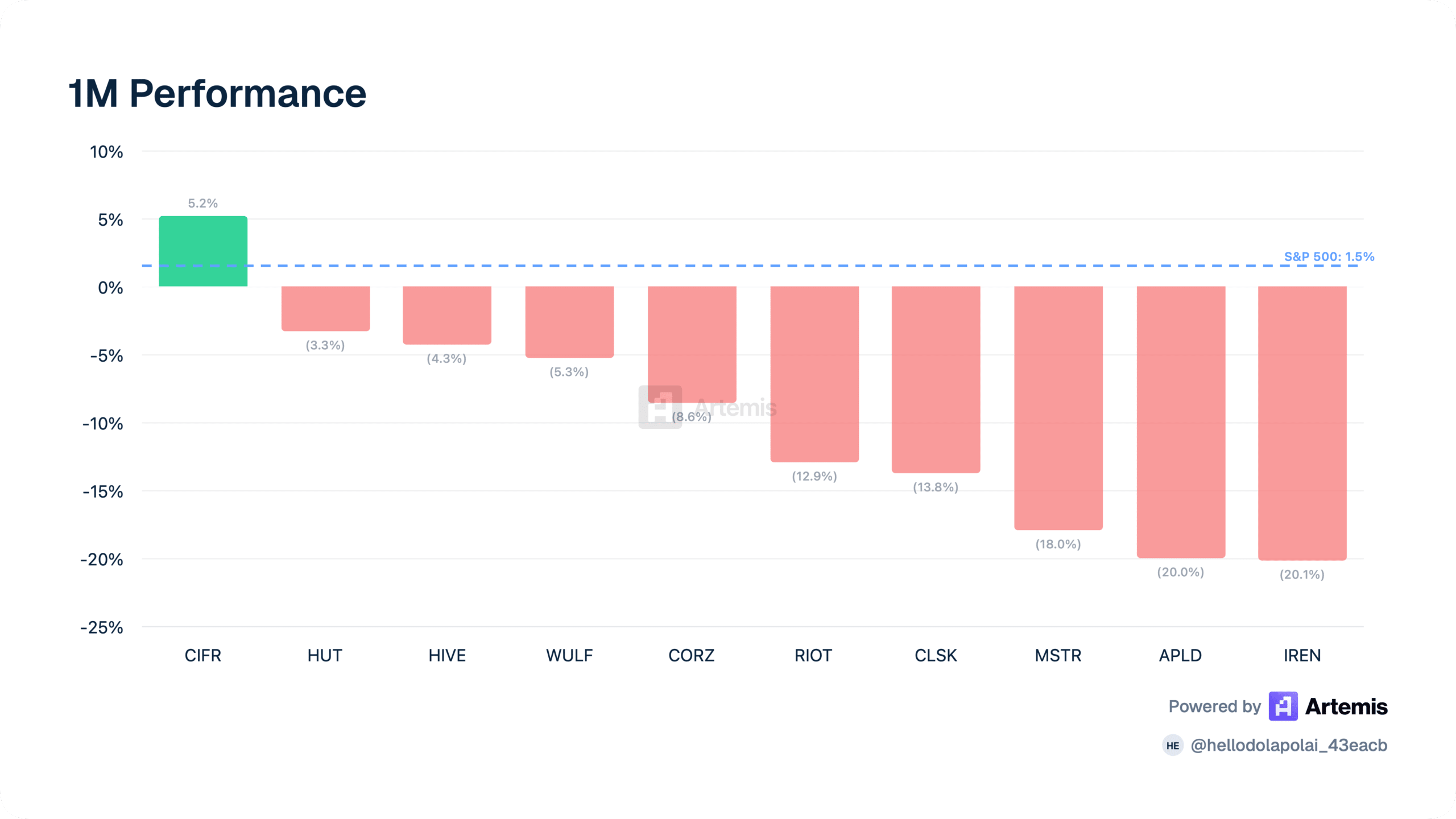
The numbers on the equity side are not pretty as over the past month, the Artemis Theme Tracker, which follows eleven publicly listed mining firms worth a combined $102.9 billion, recorded a 10% decline. Iris Energy and Applied Digital took the worst of it, both down roughly 20%, while Hut 8 Mining and Hive Digital Technologies slipped by smaller but still notable margins of 3.3% and 4.3%.
Cipher Mining stood alone as the one name that finished in the green, up 5.2%, beating the S&P 500’s 1.5% gain over the same period. So while one company swam against the tide, the broader group is clearly underwater, and rising costs are not making things easier for shareholders. It is worth noting that Bitcoin miners as a group have faced margin squeezes before, and how they respond this time says a lot about where conviction in the asset actually stands.
Bitcoin Miners Keep Accumulating Despite the Pressure
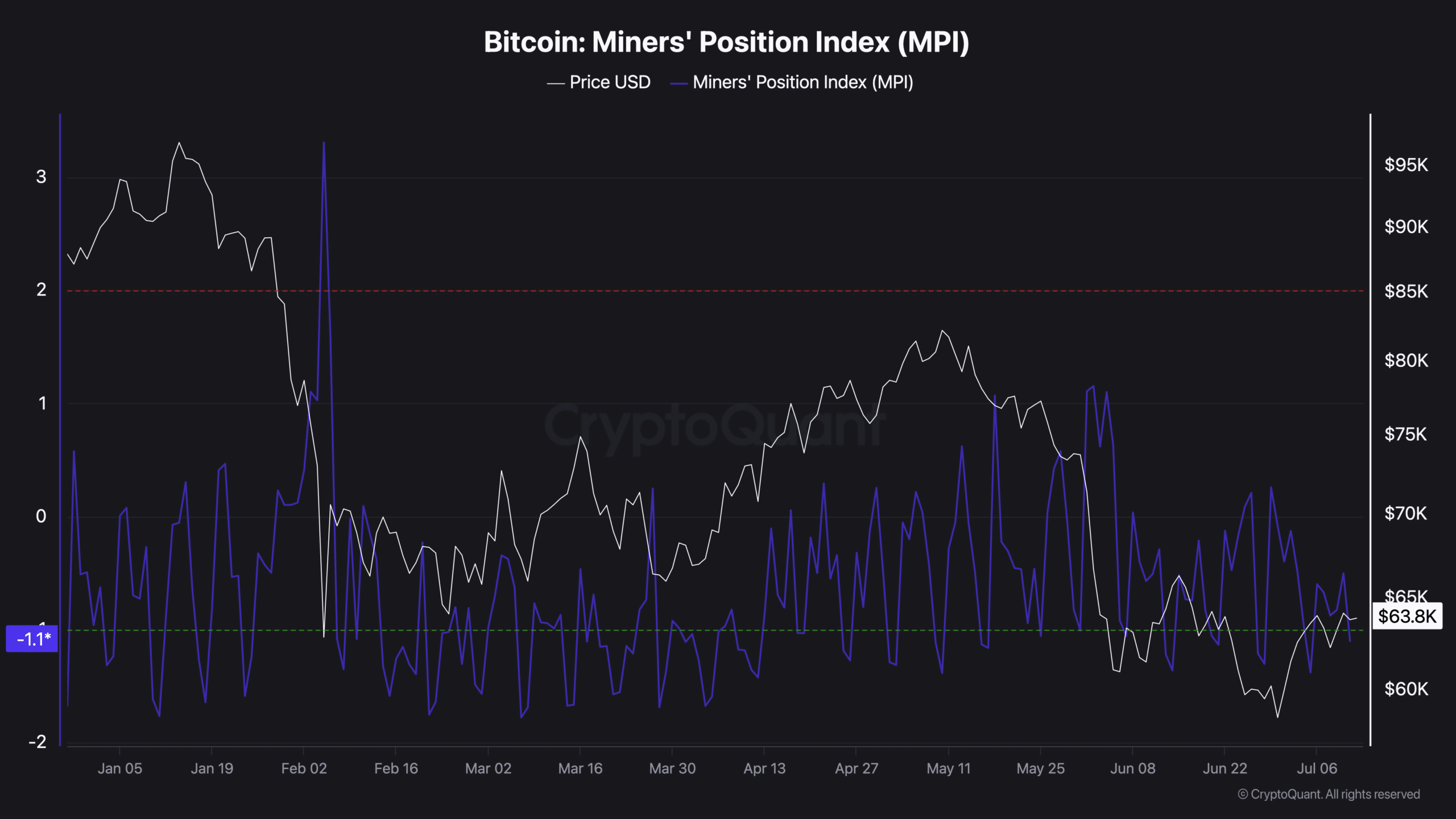
Here is where things get interesting, Bitcoin miners have every reason to sell right now. Costs are climbing, mining revenue has grown tighter, and stock prices are punishing the sector. Instead, the data shows the opposite behavior. The Miners’ Position Index, a metric that compares total miner outflows against their one year moving average, currently reads -1.1. A negative reading like that typically means bitcoin miners are choosing to hold rather than offload coins into a weak market.
The Miner Supply Ratio backs this up. This metric tracks how much of bitcoin’s total circulating supply sits in miner wallets, and it has been climbing steadily since July 8th, reaching 0.05951 at the time of writing. A rising supply ratio is generally read as a bullish signal, since it means coins are being pulled off the market rather than dumped onto exchanges where they could add selling pressure.
Reserves Near Multi-Month Highs
Put the two metrics together and a clear picture starts to form as Bitcoin miners as a group currently hold around 1.1938 million BTC, just over 5% of the entire supply that will ever exist. That figure sits near the highest level recorded since early May, meaning miners have grown their stockpile even as bitcoin’s price has struggled to hold its ground. It is a bit like a farmer storing grain in the silo during a rough harvest instead of rushing it to market at a discount, and it shows that Bitcoin miners are willing to absorb short-term pain for a longer-term outcome. The bet is that patience pays off better than a fire sale.
Why This Matters for Bitcoin’s Price
Bitcoin miners occupy a unique seat at the table as unlike ordinary holders, they generate new supply constantly through block rewards, and how they manage that supply carries real weight on price action. When bitcoin miners sell in bulk, it tends to weigh on the market, since fresh coins hitting exchanges can outpace buyer demand. When they hold instead, it removes a source of consistent selling pressure and can act as a quiet form of support underneath the price.
Right now, that support looks intact. With bitcoin failing repeatedly at $64,000, the willingness of Bitcoin miners to sit on their reserves rather than cash out may be one of the few genuinely bullish threads holding the broader setup together. If mining costs keep rising and miners eventually need liquidity, that calculus could shift. For now, though, conviction is winning out over short-term financial strain.
Conclusion
The contrast between falling mining stocks and rising bitcoin reserves paints a picture of patience under pressure. Bitcoin miners are choosing to weather losses on the equity side rather than add to selling pressure on the asset they are built to produce. Whether that discipline holds if costs keep climbing remains an open question, but for now, it stands as one of the more telling signals in a market searching for direction.
Frequently Asked Questions
What is the Miners’ Position Index?
It measures miner outflows against their one year average. A negative reading suggests miners are holding coins rather than selling.
Why are mining stocks falling while bitcoin holdings rise?
Rising operational costs and weak sector sentiment have hit share prices, but miners appear to view holding bitcoin as a better long-term bet than selling into weakness.
How much bitcoin do miners currently hold?
Bitcoin miners hold roughly 1.1938 million BTC, just over 5% of total supply, near the highest level since early May.
Does miner accumulation guarantee a price rally?
No, it removes one source of selling pressure, but price still depends on broader demand, macro conditions, and overall market sentiment.
Glossary of Key Terms
Miners’ Position Index: A ratio comparing miner outflows to their historical average to gauge selling behavior.
Miner Supply Ratio: The percentage of bitcoin’s circulating supply held in miner wallets.
Block Reward: New bitcoin issued to miners for validating transactions and securing the network.
Accumulation: A pattern where holders add to their reserves instead of selling.
Distribution: A pattern where holders sell off reserves, often adding downward price pressure.
Disclaimer: This article is for informational purposes only and should not be taken as financial or investment advice.