



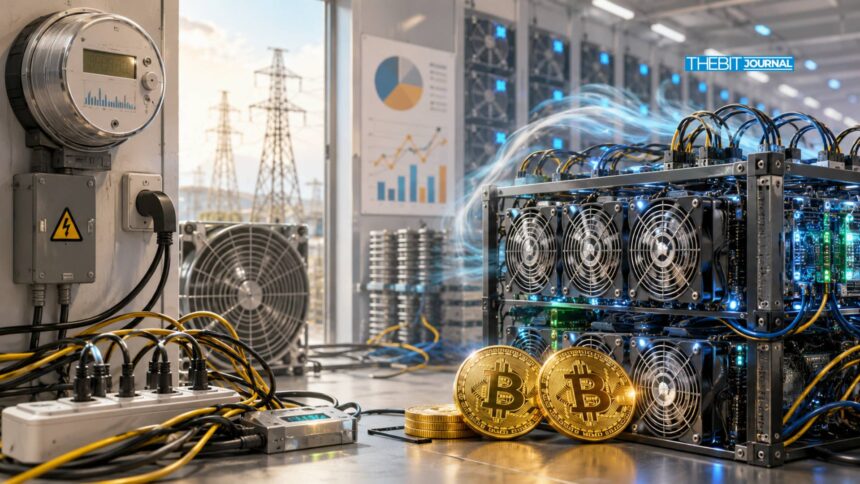

For anyone who has spent time around the crypto space, the words “cryptocurrency mining” tend to spark a particular kind of curiosity. Some people picture a digital gold rush. Others imagine rows of humming machines in a warehouse somewhere in Texas or Kazakhstan. The reality sits somewhere between both of those images, and it is far more nuanced than most beginner guides let on.
Cryptocurrency mining is, at its core, a competitive computational process that keeps certain blockchain networks secure, honest, and functional without relying on any central authority to manage the books. Understanding how it works, what it costs, and where the real risks hide is not just useful knowledge for those who want to mine. It is foundational literacy for anyone serious about participating in the crypto economy in 2026.
What Cryptocurrency Mining Actually Does for a Blockchain
Cryptocurrency mining serves a purpose that goes beyond simply generating new coins. When someone sends Bitcoin from one wallet to another, that transaction does not instantly settle. It sits in a queue called the mempool, waiting to be verified and bundled into a block.
Miners are the ones doing that bundling. They collect pending transactions, assemble them into a candidate block, and then race to solve a cryptographic puzzle that requires enormous computing power to crack but takes almost no effort for the rest of the network to verify.
This asymmetry is deliberate and elegant as the network’s proof-of-work design makes it so expensive to produce a valid block that nobody can cheaply rewrite transaction history. A bad actor would need to redo all the computational work that came after any block they wanted to change, and by the time they got close, the chain would have moved on. Cryptocurrency mining, in this sense, is not really about the coins at all. It is about creating a trustworthy, tamper-resistant record that no single party controls.
How the Block Reward System Works in Practice
When a miner finds the valid hash that solves the puzzle, the network checks it, accepts the block, and issues a reward. That reward has 2 components: a block subsidy of newly created coins and the transaction fees attached to every transaction bundled inside that block. On Bitcoin, the block subsidy was 3.125 BTC per block following the April 2024 halving, which reduced it from 6.25 BTC. Halvings occur roughly every 4 years, and they systematically reduce how many new coins enter circulation through cryptocurrency mining.
The reward is not the same thing as profit, and that distinction trips up a lot of newcomers. Every dollar or dirham earned from a mined block has to be weighed against the electricity consumed, the hardware purchased, the cooling required, the pool fees deducted, and the taxes owed. Those costs are real and ongoing, while the rewards fluctuate with coin price, network difficulty, and how much competition exists on the network at any given moment.
Cryptocurrency Mining Hardware: ASICs, GPUs, and Why the Choice Matters
Not all hardware is built equal, and in cryptocurrency mining, the choice of machine often determines whether an operation is viable before a single block is ever found. Application-specific integrated circuits, known as ASICs, dominate Bitcoin mining today. They are purpose-built for one algorithm, which makes them extraordinarily efficient at that task and completely useless for anything else.
Leading manufacturers like Bitmain and MicroBT regularly release new models that push the efficiency envelope, often measured in joules per terahash. A newer ASIC can produce significantly more hashes per watt than a machine just 2 years older, which means older equipment becomes economically marginal whenever electricity costs rise or difficulty spikes.
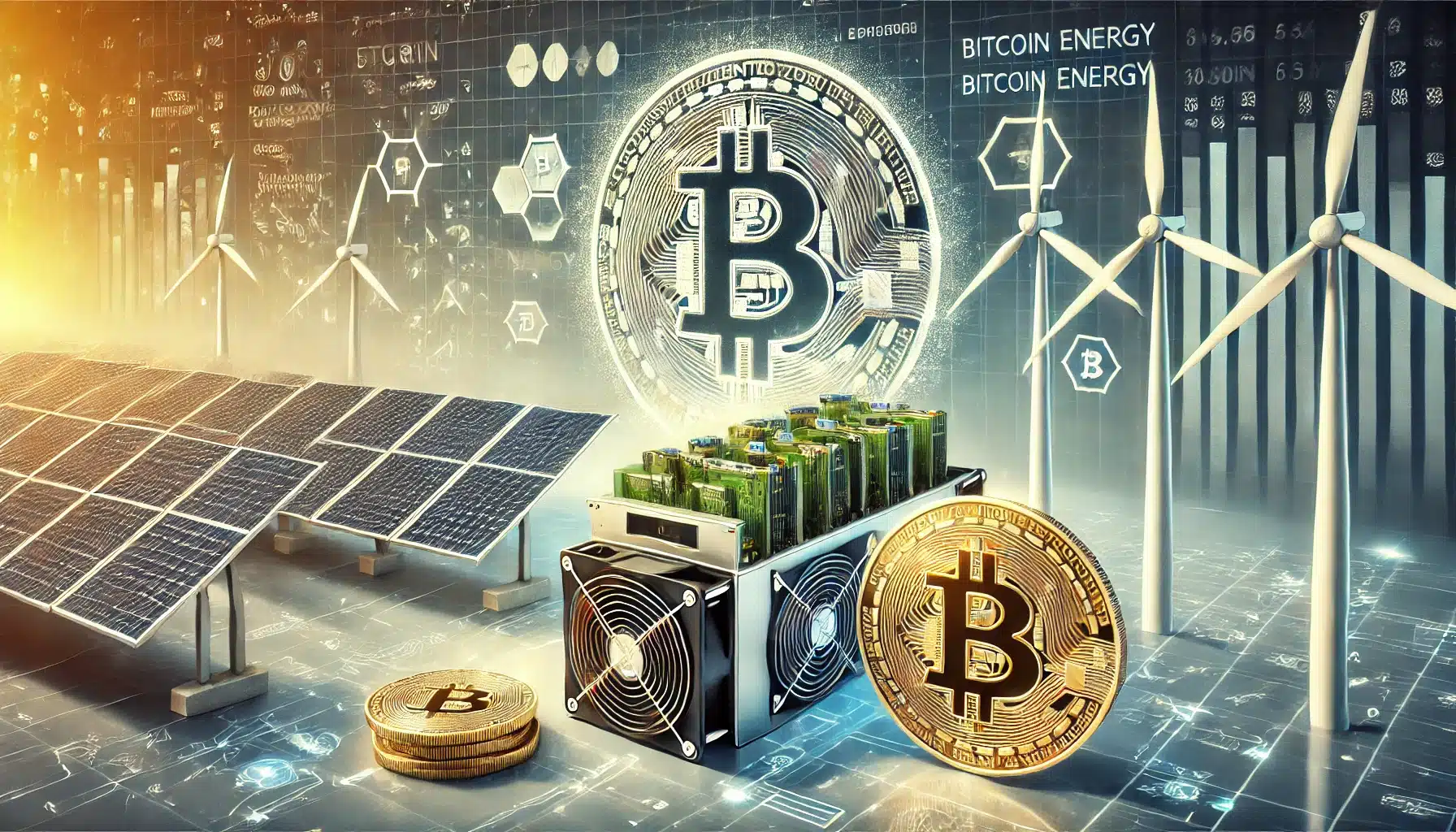
Graphics processing units still have a role in cryptocurrency mining, particularly for networks that use algorithms resistant to ASIC specialization. Monero is the most prominent example, deliberately designed so that CPUs and mid-range consumer GPUs can participate without being outcompeted by industrial rigs. This reflects a philosophical difference between networks. Some prioritize maximum security through concentrated hash power. Others prioritize decentralization by keeping the barrier to entry low enough for individuals to participate meaningfully.
Mining Pools and Why Solo Mining Is Rarely Practical
Solo cryptocurrency mining on a major network like Bitcoin is, for most individual operators, a long shot. The probability of a single machine finding a valid block before the combined hash rate of massive industrial farms is statistically similar to winning a lottery. Mining pools exist to smooth out that variance. Participants contribute their hash rate to a collective effort, and when the pool wins a block, the reward is distributed proportionally based on each miner’s contribution.
Pool fees typically run between 1% and 3% of earnings, and different pools carry different reputations for reliability, payout frequency, and transparency. Choosing a pool without reading its payout rules thoroughly is a mistake that costs real money. Some pools have minimum withdrawal thresholds that can leave a small miner waiting weeks or months before receiving anything. The pool structure does not change the long-run expected earnings from cryptocurrency mining significantly, but it dramatically reduces the variance and makes cash flow planning more predictable.
Which Cryptocurrencies Can Still Be Mined Profitably in 2026
The landscape of mineable cryptocurrencies has shifted considerably over the past several years. Ethereum, once the dominant network for GPU miners, completed its transition to proof of stake in 2022. That single event wiped out a significant portion of GPU mining profitability almost overnight, and any guide still recommending GPU Ethereum mining is dangerously out of date.
Bitcoin remains the most prominent proof-of-work asset and accounts for the vast majority of global cryptocurrency mining activity by hash rate. Litecoin and Dogecoin, which share a merged-mining relationship, remain active. Ethereum Classic continues operating on proof of work and attracts miners who remember the pre-Merge GPU ecosystem. Monero maintains a loyal community of CPU and GPU miners who value its privacy-first design and ASIC-resistance.
That a coin can be mined does not mean it should be, at least not without running the numbers. Liquidity, exchange access, pool availability, electricity rates, hardware resale value, and local tax treatment all shape the real outcome. Mineable is not a synonym for profitable.

The Real Economics: What Makes Cryptocurrency Mining Earn or Lose Money
Electricity is the variable that determines the floor of profitability in cryptocurrency mining. A miner paying $0.04 per kilowatt-hour in a jurisdiction with cheap industrial power is operating in a fundamentally different economic reality than someone paying $0.18 per kilowatt-hour on a residential tariff. The difference between those 2 numbers can flip an operation from consistently profitable to chronically loss-making without any change in coin price or difficulty.
Network difficulty adjusts automatically. On Bitcoin, it recalibrates every 2,016 blocks to keep block times close to 10 minutes on average. When more hash rate joins the network, difficulty rises and each individual miner earns a smaller share of the same expected output. When price drops or older hardware becomes unprofitable and miners shut down, difficulty falls, improving conditions for those who remain. This self-correcting mechanism is one of the more elegant features of cryptocurrency mining, though it offers cold comfort to someone who bought expensive hardware during a peak and is now watching margins compress.
Beyond electricity and difficulty, hardware depreciation deserves serious attention. An ASIC that costs $3,000 today may be worth $800 in 18 months if a more efficient model arrives and difficulty has risen significantly. Capital recovery timelines matter as much as monthly cash flow when evaluating whether to enter cryptocurrency mining at any scale.
Risks That Beginners Consistently Underestimate
Heat and noise are not trivial concerns. Industrial-grade ASICs generate heat comparable to space heaters running continuously and produce noise levels that make them unsuitable for residential spaces without proper ventilation and acoustic treatment. Wiring that was never designed for continuous high-amperage loads is a fire risk, and this is not a theoretical concern. Several residential mining fires have been documented in recent years.
Cloud mining contracts deserve particular scrutiny as the model, which involves paying a provider for access to remote hash power without owning any physical hardware, sounds convenient.
In practice, the user surrenders visibility into hardware specifications, actual power costs, withdrawal terms, and what happens when the provider decides the contract is no longer economical. Guaranteed-return claims in cloud mining contexts are almost universally a warning sign. Legitimate operations do not promise fixed yields in a market where every input variable changes constantly.
Tax obligations from cryptocurrency mining catch many participants off guard. In most major jurisdictions, mined coins are treated as income at the time of receipt and valued at fair market price on that date. A subsequent sale then creates a capital gains event on top of the income already recognized. Keeping records from the first day of operation, not retroactively, is the only way to manage this cleanly.
Cryptocurrency Mining vs. Staking: Understanding the Real Difference
Proof-of-work cryptocurrency mining and proof-of-stake validation are often lumped together under the umbrella of “earning crypto passively,” and that framing obscures meaningful differences. In cryptocurrency mining, the cost of participation is electricity and hardware. The process is competitive, anonymous, and does not require holding the asset being mined. In staking, validators commit tokens to the network, run validator software, and face slashing penalties if they violate protocol rules or go offline at the wrong moment.
Neither model is inherently superior. Mining can fail because operating costs outpace rewards. Staking can fail because token prices fall, lockup periods prevent timely exits, or validator errors trigger penalties. The honest comparison depends entirely on the specific network, the user’s capital, their technical tolerance, and their time horizon.
Conclusion
Cryptocurrency mining occupies a genuinely important place in the architecture of decentralized finance, but it is not a passive income button that anyone can press. It is a capital-intensive, operationally demanding activity that rewards preparation, careful cost analysis, and ongoing management attention.
For those who approach it with clear eyes, reasonable expectations, and a genuine understanding of how proof-of-work networks function, it can be a meaningful way to participate in and contribute to blockchain ecosystems.
For those who treat it as a shortcut to easy returns, the electricity bill and the depreciation schedule tend to deliver an expensive education quickly. The smartest move any prospective miner can make in 2026 is to run the numbers honestly before a single machine is ever ordered.
Frequently Asked Questions
What is cryptocurrency mining in simple terms?
Cryptocurrency mining is the process by which computers compete to verify transactions and add new blocks to a proof-of-work blockchain. The winning machine earns a reward in newly issued coins and transaction fees.
Can a beginner start cryptocurrency mining at home in 2026?
A beginner can start mining at home, but profitable Bitcoin mining requires cheap electricity, efficient ASIC hardware, adequate ventilation, and a realistic understanding of costs. Many beginners start with smaller altcoins to learn the process before committing significant capital.
Is cryptocurrency mining still profitable?
It depends on electricity cost, hardware efficiency, network difficulty, coin price, pool fees, taxes, and hardware depreciation. Operators with electricity rates below $0.06 per kilowatt-hour and modern, efficient ASICs often find it viable. Those on standard residential rates frequently do not.
What happened to Ethereum cryptocurrency mining?
Ethereum completed its transition from proof of work to proof of stake in September 2022, known as the Merge. Ethereum can no longer be mined. Any guides or services still referencing GPU Ethereum mining are working from outdated information.
Glossary of Key Terms
Proof of Work: The consensus mechanism used by Bitcoin and other networks where miners compete to solve computational puzzles to validate transactions and produce blocks.
Hash Rate: The total computing power applied to solving proof-of-work puzzles on a given network, measured in terahashes per second (TH/s) or exahashes per second (EH/s).
ASIC: Application-Specific Integrated Circuit. Hardware engineered exclusively for one algorithm, offering far greater efficiency than general-purpose chips for that specific task.
Nonce: A number used only once that miners adjust repeatedly when searching for a valid block hash below the network’s difficulty target.
Mempool: The waiting area where unconfirmed transactions sit until a miner selects them for inclusion in a candidate block.
Block Subsidy: The newly created coins awarded to the winning miner for each accepted block. On Bitcoin, this amount halves approximately every 4 years.
Halving: A scheduled reduction in Bitcoin’s block subsidy that cuts the new coin issuance rate in half, designed to enforce a fixed supply cap of 21 million coins.
Mining Pool: A group of miners who combine their hash rate and share block rewards proportionally, reducing income variance compared to solo mining.
Difficulty Adjustment: An automatic recalibration of the proof-of-work puzzle’s complexity to maintain consistent block production times as total hash rate rises or falls.
Slashing: A penalty mechanism in proof-of-stake systems where a validator loses a portion of their staked tokens for rule violations or extended downtime.
Sources
Disclaimer:
This article is intended for educational and informational purposes only and does not constitute financial, investment, or legal advice.