






This article was first published on The Bit Journal.
Robinhood’s new blockchain might have been launched with tokenized stocks and real world assets on its mind, but meme coins are now putting it through its first real test.
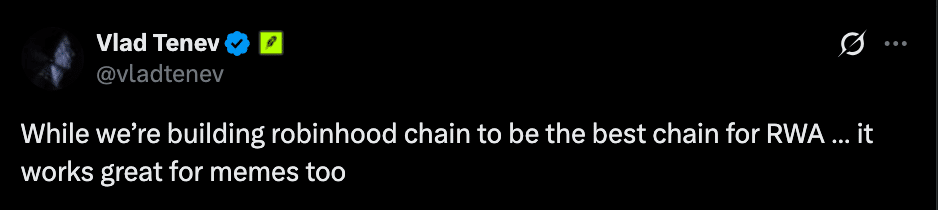
Robinhood CEO Vlad Tenev publicly stated recently that while Robinhood Chain was built to be the leading network for tokenized assets, it also happens to work well for trading meme tokens. The comment triggered criticism from parts of the crypto industry that questioned whether another Ethereum Layer-2 network was necessary.
The reaction was swift because Robinhood had been going on about tokenized equities and real world assets as the blockchain’s main purpose just a few weeks before. But now, its first major activity appears to be speculative trading instead.
Robinhood Appears to be Following the Solana Blueprint
The strategy may be controversial, but it has worked before.
Much of Solana’s rise over the current market cycle was largely driven by meme token speculation, particularly through launchpads like Pump.fun. The explosion in retail trading activity helped drag users, liquidity and developers towards the network long before institutional apps took off.
Market observers say Robinhood might be going down a similar route.
Meme tokens make up around 40-50% of trading activity across both Solana and BNB Chain, making this sector one of the biggest traffic generators in crypto outside stablecoins and DeFi.
Even Coinbase’s Base network got a push from meme token activity during its growth phase, despite them publicly focusing on infrastructure and developer tools.
For a newly launched chain competing against established ecosystems, attracting users quickly often matters more than attracting perfect users.
CASHCAT and 4663 Ignite Trading Activity
The market reacted quickly to Tenev’s comments.
CASHCAT and 4663, two of the first meme tokens to get real traction on Robinhood Chain, surged by around 1100% and 800% respectively within 24 hours as traders poured into the network. One reason why CASHCAT was particularly notable is because the name references Robinhood’s original internal mascot.
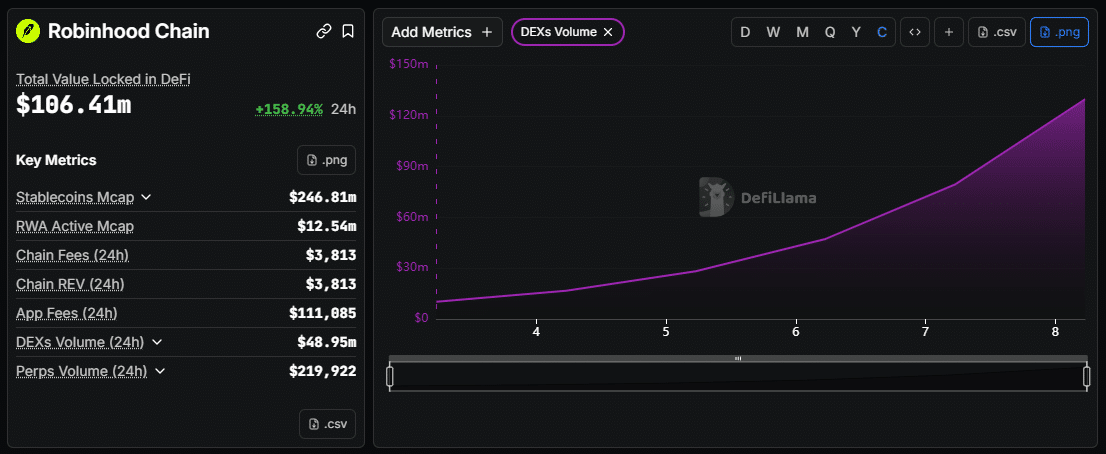
This rush has pushed Robinhood Chain’s total value locked up to around $106 million in less than a week, which is up tenfold from its original $10 million.
Decentralized exchange volume also climbed to around $52 million during the same period. As of July 8, daily DEX volume was recorded at $563.9 million while active addresses had climbed to over 193,000 as traders continued to bring funds over to the network.
All these numbers suggest that whatever Robinhood’s original pitch was, meme coins have become its first successful way of getting people on board.
Critics Warn the Playbook Comes with Baggage
The push by Robinhood Chain into meme tokens hasn’t been universally welcome.
Moonrock Capital boss Simon Dedic criticized the move, arguing that the market doesn’t need another Ethereum Layer-2 chain that offers little differentiation from existing ones.
Others pointed out the damage left behind by previous meme cycles. Solana got a strong push from meme activity but many retail traders lost money. Scams and rug pulls became common too. Critics argue that launching another meme-heavy ecosystem risks repeating those mistakes.
The criticism is interesting because Tenev himself recently said that tokenized assets were the long-term future of crypto, not meme tokens.
His latest comments imply that Robinhood is willing to see if memes can help set the ball rolling on adoption until tokenized finance really takes off.
Conclusion: Can Robinhood Challenge Base and Solana?
Robinhood Chain launched in public view on July 1, with tokenized stocks available to trade in more than 120 countries, and now lending products and perpetual trading infrastructure are on the scene too.
But as usual, the company’s long-term focus is on the bigger ecosystem. The question is whether the current surge survives once speculative traders move on to the next opportunity.
Solana turned meme speculation into a durable ecosystem. Base successfully converted viral trading activity into developer growth and liquidity.
Robinhood is now attempting the same transition. The first week reveals traders are interested. The next few months will determine whether they stay.
Glossary
TVL: Total value locked across applications on a blockchain.
Layer 2: a new network built on top of another blockchain to improve speed and cut costs
DEX: a decentralized exchange where people trade with each other directly
Meme coin: a cryptocurrency mostly driven by internet culture and speculation.
RWA: Real-world assets represented on blockchain networks.
Tokenized Stocks: Blockchain representations of traditional equities.
Frequently Asked Questions About Robinhood Chain
What is Robinhood Chain about?
Robinhood Chain is Robinhood’s Ethereum Layer-2 blockchain focused on tokenized assets and decentralized finance.
Why is Robinhood supporting meme coins?
The company believes meme trading can help attract liquidity and users while its tokenized asset ecosystem develops.
How much did Robinhood Chain TVL grow?
TVL rose from about $10 million to $105 million within a week.
Which meme coins drove the rally?
CASHCAT and 4663 generated the largest gains and trading activity.
References