


Bitcoin ETF flows remain one of the strongest indicators of institutional activity in the cryptocurrency market. The latest data shows investors taking different paths, with Bitcoin seeing capital leave regulated investment products while Ethereum continued attracting fresh funds. The contrasting trend has drawn attention because ETF movements often reveal how large investors respond to changing market conditions.
According to the latest ETF market data, U.S. spot Bitcoin ETF flows recorded $84.86 million in net outflows on July 8, while Ethereum ETF inflows reached $70.48 million. Ethereum ETFs also extended their streak to five consecutive trading days of positive inflows, highlighting continued institutional demand despite broader market uncertainty.
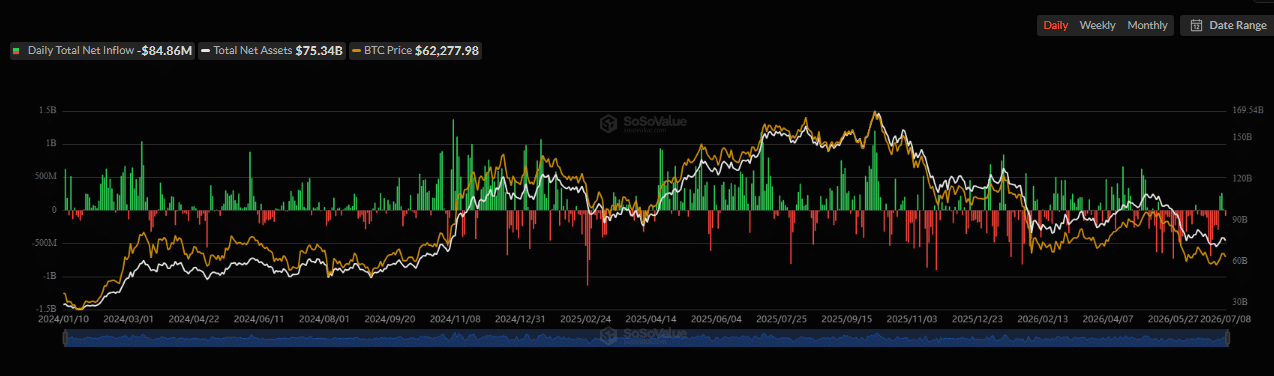
Bitcoin ETF Flows Reflect Short-Term Portfolio Adjustments
The latest Bitcoin ETF flows showed investors reducing exposure during the July 8 trading session after two days of positive inflows earlier in the week. The withdrawals appear to reflect short-term profit-taking or portfolio rebalancing rather than a broader shift in institutional sentiment.
The mixed ETF activity comes as investors continue navigating broader market uncertainty. As a result, some institutions appear to be adjusting their exposure while maintaining a cautious approach. Even so, a single day of Bitcoin ETF flows turning negative does not necessarily signal weakening institutional demand or a lasting market trend.
Market analysts generally recommend viewing daily ETF flows alongside broader market trends rather than treating a single trading session as a definitive signal of future market direction.
Bitcoin ETF Flows Contrast With Strong Ethereum ETF Inflows
While Bitcoin ETF flows moved into negative territory, Ethereum ETF inflows continued their positive momentum. The latest figures marked the fifth consecutive trading day of net inflows, reinforcing one of Ethereum’s strongest periods of institutional buying in recent weeks.
The diverging ETF activity highlights different institutional strategies. While some investors reduced Bitcoin exposure after recent gains, others continued allocating capital to Ethereum. The steady Ethereum ETF inflows also suggest growing confidence in regulated ETH investment products, giving institutions a familiar and regulated way to gain exposure to the second-largest cryptocurrency.
Ethereum’s expanding ecosystem, including decentralized finance and smart contract applications, continues to support its long-term investment appeal. That broader utility may help explain why Ethereum ETF inflows remained resilient even as Bitcoin ETF flows weakened during the same trading session.
Why ETF Data Matters to Institutional Investors
ETF flows remain one of the most closely watched indicators of institutional demand because they show how much capital moves into or out of regulated cryptocurrency investment products. Strong Bitcoin ETF flows often indicate fresh institutional interest, while outflows can reflect temporary portfolio adjustments rather than lasting bearish sentiment.
Although the latest Bitcoin ETF flows ended with net outflows, the broader picture remains balanced after recent sessions of positive demand. Meanwhile, Ethereum ETF inflows have continued without interruption, reinforcing growing institutional interest in Ethereum as a long-term digital asset.

Conclusion
The latest Bitcoin ETF flows show that institutional demand can change from one trading session to the next without altering the broader market outlook. A single day of outflows rarely defines long-term investor sentiment, particularly when recent inflows remain part of the bigger picture.
At the same time, Ethereum ETF inflows continue to demonstrate steady institutional confidence and sustained interest in regulated ETH investment products. Market participants will closely monitor upcoming ETF reports to see whether Bitcoin ETF flows return to positive territory and whether Ethereum ETF inflows can extend their five-day winning streak.
Glossary
Bitcoin ETF: A regulated exchange-traded fund that provides investors with exposure to Bitcoin.
Ethereum ETF: A regulated investment fund that tracks the price of Ethereum.
Net Inflows: The amount of new capital entering an investment fund.
Net Outflows: The amount of capital withdrawn from an investment fund.
Institutional Investors: Large organizations, including asset managers, pension funds, and hedge funds, that invest significant amounts of capital.
FAQs About Bitcoin ETF Flows
Why did Bitcoin ETF flows record outflows on July 8?
Spot Bitcoin ETFs recorded $84.86 million in net outflows during the July 8 trading session, likely due to short-term profit-taking or portfolio rebalancing rather than a major change in institutional sentiment.
How much did Ethereum ETF inflows reach?
Spot Ethereum ETF inflows totaled $70.48 million, marking five consecutive trading days of positive inflows.
Why are ETF flows important in crypto markets?
ETF flows help measure institutional demand by showing whether professional investors are adding or withdrawing capital from regulated cryptocurrency investment products.
What do Bitcoin ETF flows indicate?
They show whether institutional investors are adding or withdrawing capital from regulated Bitcoin investment products.
Sources