


Bitcoin ETF flows sparked fresh debate across the crypto market after U.S. spot Bitcoin ETFs recorded a net outflow of $64 million on Monday. At first glance, the headline appeared straightforward: investors were pulling money from Bitcoin while pouring capital into alternative digital assets. Yet a closer look at the data reveals a more complicated picture, one that challenges the idea of broad weakness in Bitcoin investment demand.
According to the source, spot ETFs tied to Ether, XRP, Solana, and Hyperliquid all attracted fresh inflows during the same session. While that fueled speculation about a growing shift toward altcoins, the underlying numbers suggest the market may be witnessing portfolio reshuffling rather than a meaningful exodus from Bitcoin.
The Bitcoin ETF Flows Headline Hides a Different Reality
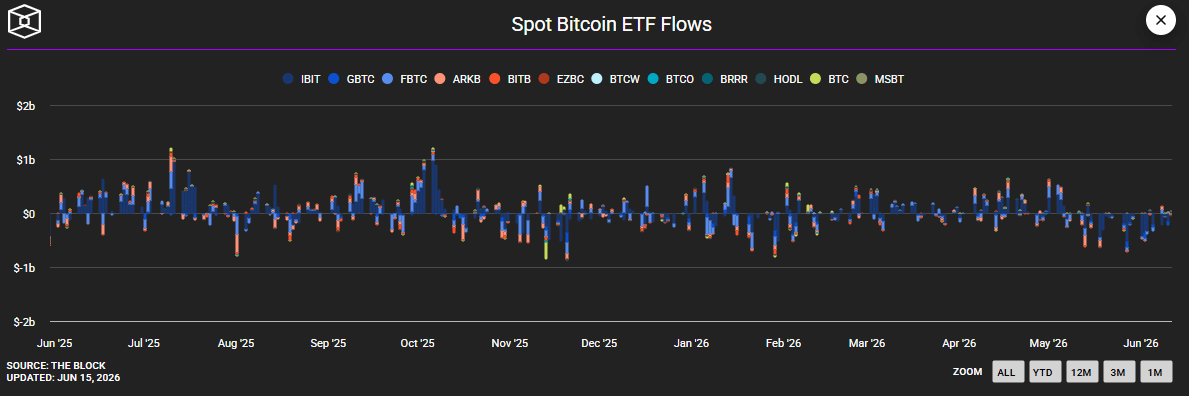
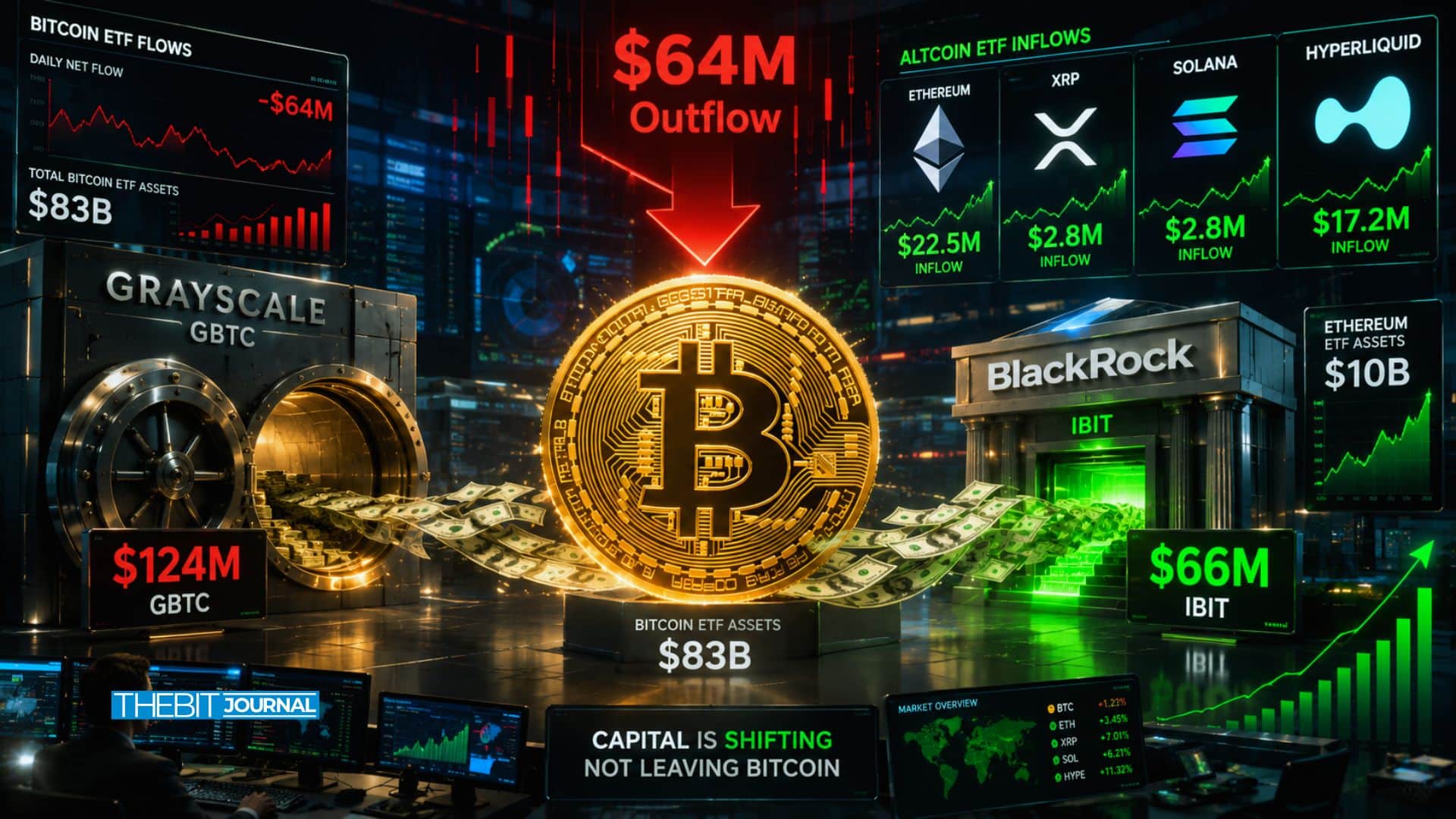
The latest Bitcoin ETF flows data showed a net outflow of $64 million. However, the decline was not spread evenly across the market. Grayscale’s GBTC alone accounted for approximately $124 million in outflows, making it the primary driver behind the negative headline.
At the same time, BlackRock’s IBIT, the largest spot Bitcoin ETF, attracted around $66 million in fresh capital. That distinction is critical because it suggests investors are still actively seeking Bitcoin exposure.
As the report noted, “Strip out GBTC and bitcoin ETFs had an ordinary session.” This observation changes the interpretation of Monday’s data entirely. Rather than signaling broad investor concern, the market experienced continued movement from higher-fee legacy products into lower-cost alternatives.
Bitcoin was not losing investor interest. Investors were largely changing vehicles. The contrast between GBTC’s $124 million outflow and BlackRock IBIT’s $66 million inflow suggests that many investors remained committed to Bitcoin exposure while seeking more cost-effective investment products.
GBTC has been shedding assets since spot Bitcoin ETFs launched. Investors have consistently migrated toward funds offering lower fees and greater efficiency, making Monday’s activity part of an ongoing trend rather than a new development.
ETF Flow Snapshot
| ETF Category | Net Flow |
|---|---|
| Bitcoin ETFs | -$64 million |
| Ether ETFs | +$22.5 million |
| Hyperliquid ETFs | +$17.2 million |
| XRP ETFs | +$2.8 million |
| Solana ETFs | +$2.8 million |
Why Bitcoin ETF Flows Followed Market Momentum
Understanding Bitcoin ETF flows requires examining market performance alongside fund activity. On Monday, XRP gained roughly 7%, Solana rose around 6%, and Hyperliquid surged nearly 11%, outperforming Bitcoin by a wide margin.
Market participants often describe this behavior by saying “the flows followed the tape.” In simple terms, investors directed money toward assets already showing strength. As altcoins rallied, ETF buyers increased exposure to those assets in hopes of benefiting from continued momentum.
This pattern is common in financial markets. Strong performance attracts attention, and attention often attracts capital.
Ether Led the Charge While Hyperliquid Turned Heads
Among all non-Bitcoin products, Ether emerged as the clear leader, attracting approximately $22.5 million in inflows. That figure exceeded every other altcoin ETF category and suggests institutional investors still view Ethereum as the most established alternative to Bitcoin.
However, Hyperliquid’s performance may have been even more intriguing. Despite being significantly smaller than Ethereum, XRP, and Solana, Hyperliquid funds attracted $17.2 million. That total comfortably surpassed inflows into both XRP and Solana products.
The growing interest hints that investors are becoming more willing to explore emerging blockchain ecosystems. As the broader crypto ETF market evolves, products tied to newer digital assets may continue gaining attention alongside more established names.
Is a Crypto ETF Rotation Really Taking Shape?
The biggest question surrounding recent Bitcoin ETF flows is whether institutional capital is genuinely rotating into altcoins.
The growing crypto ETF sector provides some evidence supporting that view. Ether, XRP, Solana, and Hyperliquid all attracted inflows during the same trading session. Yet analysts frequently caution against drawing conclusions from a single day of activity.
Scale remains important. Bitcoin ETFs still control approximately $83 billion in assets under management. Ether ETFs hold roughly $10 billion, while XRP, Solana, and Hyperliquid products each manage around $1 billion.
Despite Monday’s attention-grabbing inflows into altcoins, Bitcoin ETFs still control more than seven times the assets held by Ether funds and vastly exceed every other crypto ETF category. That reality serves as a reminder that Bitcoin remains the dominant force in institutional crypto investing.
What Bitcoin ETF Flows Teach Investors
For financial students, analysts, and blockchain developers, Bitcoin ETF flows offer valuable insight into market sentiment. ETF inflows often signal rising demand, while outflows may indicate portfolio adjustments, profit-taking, or movement into competing products.
The latest Bitcoin ETF flows also demonstrate why investors should look beyond headline figures. A negative number does not always indicate weakening demand. Sometimes it simply reflects capital shifting between funds that offer similar exposure.
Conclusion
The latest Bitcoin ETF flows reveal a market that may be diversifying rather than abandoning Bitcoin. While Bitcoin ETFs recorded a net outflow, most of the decline stemmed from GBTC’s continuing asset migration. Meanwhile, Ether led all altcoin inflows, and Hyperliquid delivered one of the day’s most surprising performances.
The broader crypto ETF market is clearly attracting growing attention, but the key issue remains durability. If altcoin ETFs continue drawing inflows after GBTC’s drag fades, the rotation argument becomes much stronger. If not, Monday may prove to be little more than a blip dressed up as a trend. Until inflows persist beyond a single trading session, investors should view the latest Bitcoin ETF flows and crypto ETF activity as a potential signal rather than confirmation of a lasting market shift.
Glossary of Key Terms
Bitcoin ETF Flows: The movement of money into or out of Bitcoin exchange-traded funds.
Crypto ETF: An exchange-traded fund that provides exposure to digital assets.
GBTC: Grayscale Bitcoin Trust, one of the oldest Bitcoin investment vehicles.
IBIT: BlackRock’s spot Bitcoin ETF.
Assets Under Management (AUM): The total value of assets managed by an investment fund.
FAQs About Bitcoin ETF Flows
What are Bitcoin ETF flows?
They measure how much money enters or exits Bitcoin ETFs over a specific period.
Why were Bitcoin ETF flows negative on Monday?
Most of the outflow came from Grayscale’s GBTC rather than the broader Bitcoin ETF market.
Why did Ether attract the largest altcoin inflow?
Ethereum remains the most established alternative to Bitcoin among institutional investors.
Does Monday’s data confirm a rotation into altcoins?
Not yet. Investors need to see consistent inflows over multiple sessions before confirming a long-term trend.
Sources/References