





































This article was first published on The Bit Journal.
Blockchain losses have become the most unsettling crypto story of 2025. The old belief that more hacks always mean more damage no longer fits. This year revealed a sharp shift. Fewer attacks occurred, yet financial damage climbed to record levels. That reversal forced the industry to question how digital assets are protected and what security truly means for crypto’s future.
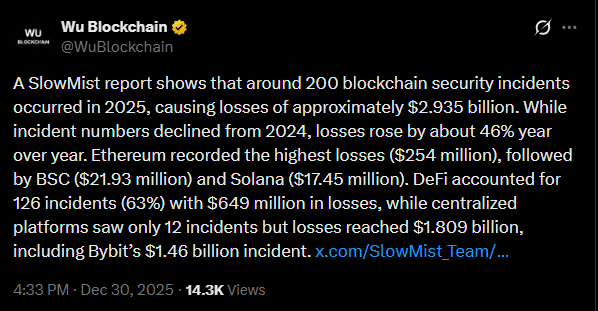
According to the source, total damage across blockchain networks and platforms reached roughly 2.935 billion dollars in 2025, even though reported incidents declined from the prior year. Losses jumped 46% year over year, indicating that attackers shifted their focus from quantity to scale. A handful of failures now shape the entire risk picture.
When One Breach Does The Damage Of Many
Early in the year, a massive exploit struck the crypto exchange Bybit, draining about 1.46 billion dollars in digital assets within hours. That single event made up nearly half of all Blockchain losses recorded in 2025.
Centralized platforms faced only a dozen incidents overall, yet their combined damage far exceeded losses seen elsewhere. When custody fails, the impact spreads instantly.
Why DeFi Still Attracts Relentless Pressure
Decentralized finance remained the most targeted sector by count. Roughly 126 DeFi protocols were attacked during the year, resulting in around $649 million in losses.
DeFi removes intermediaries but adds complexity. Smart contracts run openly and connect across systems, meaning one flaw can cascade into another.
Ethereum Shows Where Value Attracts Risk
Ethereum recorded the highest chain-level losses, totaling about 254 million dollars. Binance Smart Chain and Solana followed, though at lower levels. Security researchers say attackers chase liquidity and activity. As networks grow, incentives rise. Popularity turns blockchains into financial magnets for skilled threats.
Why 2025 Marks A Structural Shift
The key lesson of 2025 is simple. Blockchain losses no longer track incident counts alone. A few high-impact failures can outweigh hundreds of small attacks. Analysts now urge better custody design, stricter internal controls, and stronger operational discipline. Code audits matter, but human processes matter just as much.
What This Means For Students And Builders
Financial students gain a clear case study in risk concentration. Developers see why architecture choices shape outcomes. Analysts learn that surface calm can hide deep fragility. Security spending must follow value, not headlines.
Training teams to manage keys, permissions, and emergency response now matters as much as writing clean code. These lessons shape the next generation of Blockchain builders and investors navigating higher-stakes environments.
Clear accountability, transparent governance, and realistic stress testing help limit cascading failure. Without them, future growth will amplify losses faster than adoption can justify.
A Warning For The Next Cycle
As the industry moves toward 2026, the message is clear. Innovation without resilience invites loss. Blockchain losses will stay elevated unless security keeps pace with growth. The next phase will reward systems built to absorb shocks, not just chase speed.
Conclusion
Blockchain losses in 2025 delivered a blunt warning. Fewer hacks no longer mean lower risk. As single breaches now cause billion-dollar damage, security must scale with growth. Platforms that fail to adapt will pay the price.
Glossary of Key Terms
Blockchain losses: Total financial value lost due to hacks, exploits, or breaches in crypto systems.
DeFi: Decentralized Finance; financial services run by smart contracts without traditional intermediaries.
Centralized platforms: Crypto exchanges or services holding user assets under a central authority.
Smart contract: Code on a blockchain that automates transactions and conditions.
FAQs About Blockchain Losses
Why did blockchain losses rise despite fewer hacks?
A few massive breaches caused greater financial damage than many smaller attacks.
Was DeFi or a centralized exchange more costly?
Centralized platforms incurred higher monetary losses due to mega-breaches.
Which blockchain suffered the most loss?
Ethereum recorded the highest individual chain losses.
Can security improvements reduce future blockchain losses?
Yes, better key management, custody design, and auditing practices can help.
Sources / References
























Great information shared.. really enjoyed reading this post thank you author for sharing this post .. appreciated