
This article was first published on The Bit Journal.
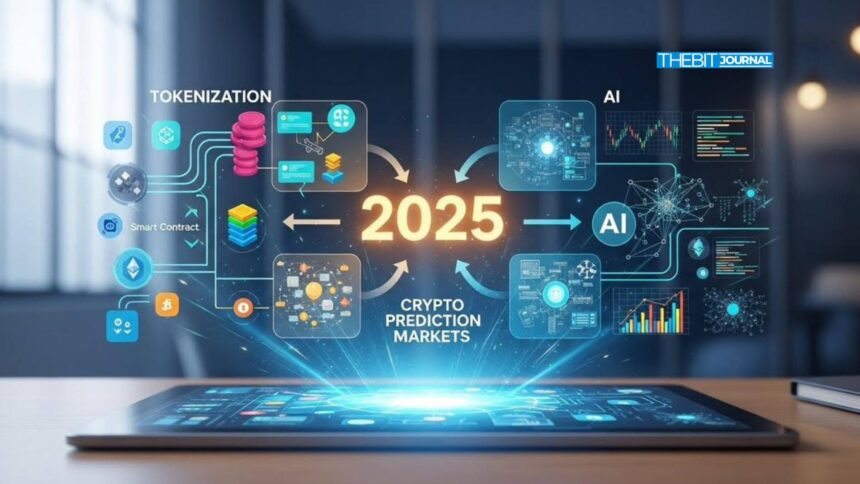
In the just concluded year, tokenization and AI transformed sports betting and prediction markets from static to interactive real-time services enabled by blockchain, edge cloud computing and machine intelligence.
The international tokenization market expanded at a rapid pace of $1.24 trillion, with the boost coming from clarity in regulatory framework across leading segments.
These technologies have not simply made betting and prediction markets accessible nationwide; they eliminated the distinction between how events are bet on and resolved, building a new infrastructure that re-molded the existing economic and technological structures in the industry.
Sports Betting Becomes Real-Time and Interactive
Advancements in edge cloud streaming and AI analytics moved sports betting from a passive to a proactive data-crunched experience. Low latency streaming with dynamic, AI-generated statistics allowed in-play micro- bets on granular game events, such as the result of a single play or real-time player stats.
This new turn became reality by Including blockchain empowered smart contracts, that automatically act out wagers when requirements are met, programmable betting mechanisms can now be played with minimal human assistance.
According to U.S. regulatory data, 31 states and the District of Columbia lifted restrictions on mobile sports betting in 2025. Meanwhile, stepped-up attention by federal law enforcement officials such as the FBI showed a rising amount of concern about fraud and rigging in sports betting activities, with FBI Director Kash Patel characterizing widespread schemes as akin to insider trading because they are so large and sophisticated.
AI has not only sped up the pace of odds updating and accuracy, it has helped to provide a more personalized betting experience for users. AI models are believed to make the bets more accurate and also provide personalized betting suggestions, encouraging participants wagers and trust.
Crypto Rails Take Prediction Markets Nationwide
One of the defining transformations of 2025 was that federally-regulated predictions markets were established across US states including those where traditional sports betting remains illegal.
However, because of oversight by the Commodity Futures Trading Commission (CFTC), platforms like Kalshi, DraftKings, FanDuel, Crypto. com andPolymarket, have started offering contracts on events in a way similar to wagers on sports, political events or economic outcomes. These platforms tend to settle using stablecoins and blockchains, sidestepping state-specific legal challenges.
For instance, Kalshi’s contracts act as federally regulated derivatives, making it possible to trade based on sports games and other events with more liquidity and regulatory robustness than traditional state betting markets.
The options to be deposited and withdrawn in stable currencies like USDT and USDC also make accessibility better and speedier as well as depending less on fiat conversions.
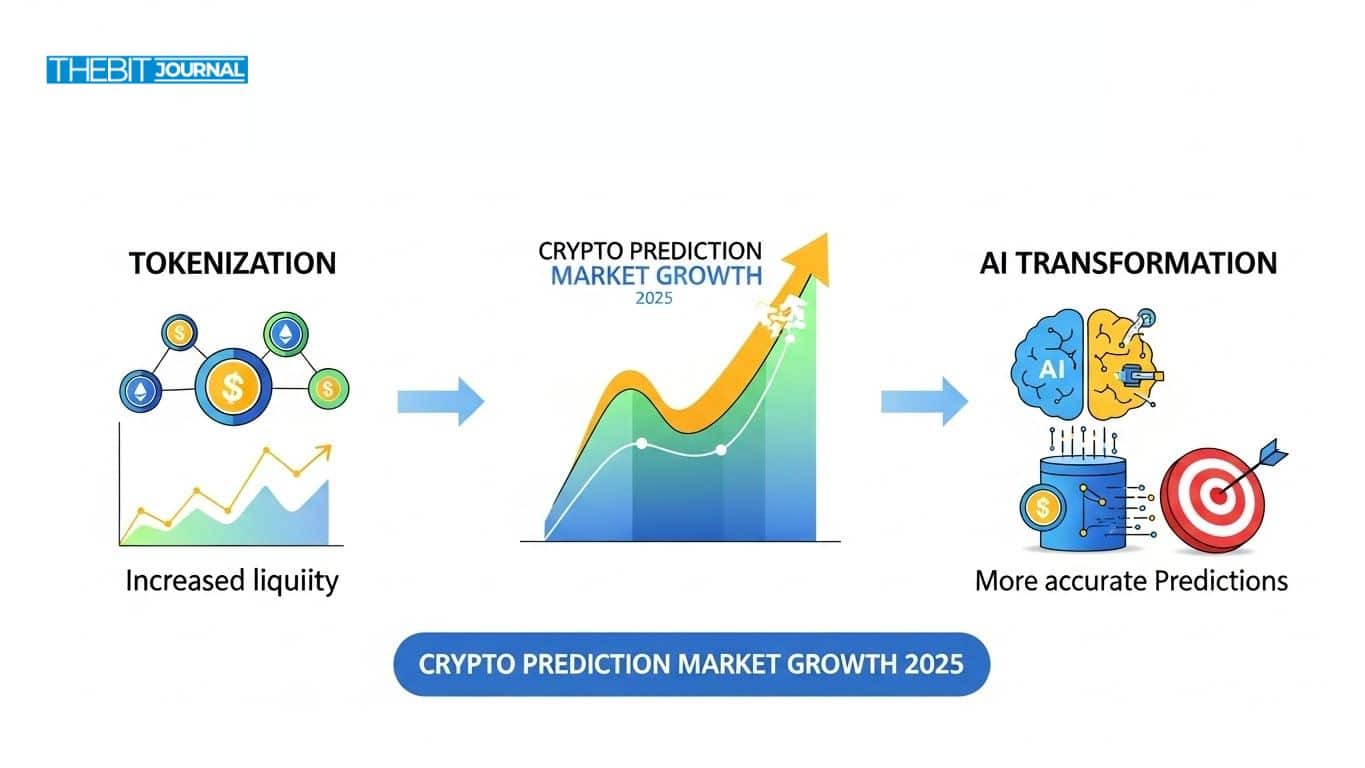
Prediction markets also experienced explosive growth in trading volume, with options largely concentrated on platforms like Kalshi and Polymarket collectively processing billions of dollars’ worth of wagers by the end of 2025.
Blockchain Partnerships, New Platforms, and Network Innovation
Throughout 2025, Various well-known sports betting operators and blockchain infrastructure platforms announced projects aimed at further driving the prediction market transformation.
In October, the parent company of Truth Social, Trump Media & Technology Group (TMTG ), announced it would create a prediction market called Truth Predict in partnership with Crypto.com which will permit betting on politics, economics, sports results etc.
Meanwhile, the Chicago Mercantile Exchange (CME), the largest derivatives market in the world also teamed up with major operators like Fanatics, DraftKings and FanDuel to open federally regulated markets that allows bets even in states where old-wave sports betting remains illegal.
Blockchain-based prediction platforms such as Polymarket, which had pulled out of the U.S. market previously then returned asserting their intention to become competitors with Wall Street-backed fintech companies entering the fray as they zero in on sports betting.
There was progress on the technical layer, too. Kalshi’s prediction markets became tokenized on Solana, opening up full on-chain trading and the aggregation of liquidity.
It paved the way for developers to create composable financial markets using existing blockchain infrastructure, adding even more support behind real-time event trading technology.
Taxation, Legal Changes, and Policy Recommendations
The rapidly morphing combination of streaming, token betting and A.I. has introduced complex legal and tax questions.
The U.S. “One Big Beautiful Bill Act,” passed in 2025, introduced new tax rules affecting gamblers and bettors, including the controversial “phantom income” tax starting January 1, 2026.
Under this provision, bettors can only take up to 90 percent of their losses against winnings, meaning even a break-even bettor could owe taxes on a notional $1,000 profit.
Federal tax regulators also sought to make it clear that bets placed in crypto are considered taxable events, with the IRS identifying digital currencies as property.
In other words, betting with crypto generates capital gain or loss that needs to be reported and taxed even in the event of a return. Further, crypto-based winnings are considered ordinary income at the time of receipt.
These developments have added some form of complexity to the emerging betting ecosystem as both gamblers and sportsbetting platforms themselves must now keep careful records of digital wagers, then report them accurately on tax filings .
Conclusion
A mixture of tokenization, AI and real-time edge cloud streaming in 2025 transformed sports betting and prediction markets in the US and around the world.
These forces drove the prediction market transformation, allowing contracts to become interoperable and instantly executable and enabling platforms to function federally on blockchain and stablecoin rails.
By introducing markets to every state, embedding AI-powered analytics and linking contemporary cloud infrastructure with programmable financial contracts, the industry transitioned from a fragmented patchwork of localized rules into a national scale system.
And with the start of 2026, this transformation is defining how bets are made, processed and settled.
Glossary
Tokenization: the conversion of real-world assets or betting contracts into a digital token on a blockchain.
Edge Cloud Streaming: A form of cloud computing that processes data close to the source to reduce latency and enable real-time interactions.
Stablecoin: A form of cryptocurrency whose value is pegged to a source of value, such as the dollar, and that has been adopted by some automated financial systems for transactions.
CFTC: The United States Commodity Futures Trading Commission, a federal body that regulates derivatives markets (including some tokenized prediction contracts).
Frequently Asked Questions About Prediction Markets Transformation
What caused the prediction markets to flourish in 2025?
The combination of tokenization, federally regulated CFTC-governed contracts and AI enhanced real-time data led to rapid adoption, opening markets in every state, and outside of the constraints established by traditional sports betting law.
What was the impact of blockchain on prediction markets?
Blockchain provided programmable, trustless execution of contracts and also gave stablecoin settlement and full on-chain liquidity like with tokenized Kalshi markets on Solana.
Are prediction markets legal in all the US states?
Yes. Under the CFTC, platforms can operate in all 50 states enabling them to side step local gaming restrictions that would otherwise constrain traditional sports betting.
What are the tax repercussions related to crypto betting?
Crypto bets are taxable events, placing a bet triggers a capital gain/loss realization and the winnings are considered ordinary income. New rules under U.S. tax law brought in “phantom income” tax and limiting loss deductions.
Will AI continue impacting prediction markets?
Yes. AI models improve accuracy, personalize the user interaction and encourage proactive real-time odd adjustments to boost operator efficiency and bettor excitement.
References
cryptonews
AInvest
MEXC
Financialcontent
Reddit