





This article was first published on The Bit Journal. Cardano is laying the groundwork for a strategic transformation that could redefine how the blockchain is judged by markets, enterprises, and institutions over the next decade. The most recent Cardano roadmap is an indication of a decisive break with the academic-first brand of the network, indicating instead a commercial-oriented paradigm in which the blockchain is viewed as fundamental digital infrastructure.
Vision 2030 Updates Cardano Roadmap

On Dec 17, the Intersect Product Committee released a report named Vision 2030 which is in effect a follow-up on the long-term Cardano roadmap, but with an elaborated structure that focuses on quantifiable performance results. The network is stewarded by the member-based organization known as Intersect, which said that the strategy would make Cardano not only a cryptocurrency but a trusted operating system that can support decentralized applications and financial services.
The core of the Cardano roadmap will be a stringent set of key performance indicators that will transform the way the market measures the network. By 2030, the ecosystem will be expected to handle 324 million transactions in a year, one million active wallets per month, and achieve an approximate value locked of about 3 billion dollars. The roadmap does not depend on the empty pledges of adoptions but pledges the network to any benchmarks that can be tracked by institutional investors and enterprise clients.
Cardano Shifts From Research to Operations
This change is a definite turning point. In the past, Cardano made peer-reviewed studies and formal verification to be its chief differentiators. Though the principles are unchanged, the new Cardano roadmap shifts focus to metrics of operation like uptime, capital efficiency, and revenue sustainability indicators that typically would belong to mature infrastructure solutions as opposed to experimental blockchains.
One of the pillars of the Vision 2030 plan is reliability. As indicated in the Cardano roadmap, the network is aiming at 99.98% uptime, which is calculated with the help of a statistical Poisson model with a monthly block production interval of 20 seconds. Any five-minute absence of a block is considered to be a meaningful failure event, a criterion developed to satisfy the requirements of institutions like banks and government agencies to release capital.
Governance Reforms Reshape Cardano Treasury Management
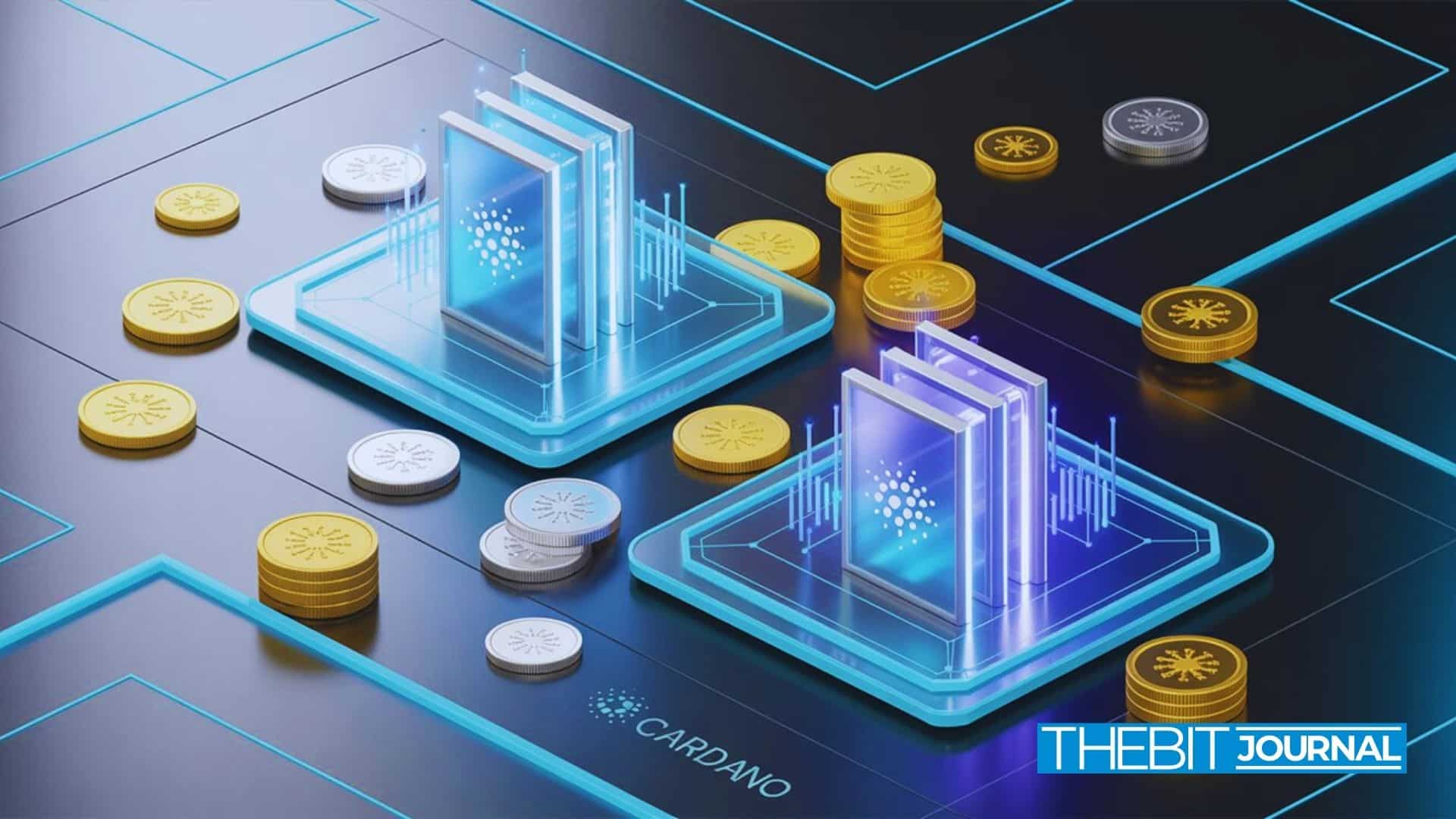
Capacity planning, as described in the Cardano roadmap, is also affected by this philosophy of reliability-first. The base layer, in turn, will serve about 27 million transactions a month, and the mainnet will be used by high-value settlement and governance activity. The high-frequency applications, such as gaming and trading, will move to Cardano-based layer-2 networks that will base their security on Layer 1.
In addition to technical goals, the Cardano roadmap proposes a substantial change in governance and treasury management. The proposal covers the Treasury seasons, which is a systematic method of funds that will substitute the unrestricted grants with finite budgetary periods. Investments would be based on the adoption metrics, directly depending on transaction growth, active wallets, and total value locked.
Cardano Roadmap Faces Revenue Sustainability Challenge
The roadmap also provides a bleak economic outlook. The protocol revenue due to transaction fees is assumed to be at least 16 million ADA each year by 2030. In spite of how the illustrative scenarios indicate that higher revenue is achieved with optimistic price assumptions, the Cardano roadmap has recognized financial sustainability as a requirement based on active use of network, and not on the speculative appreciation of tokens.
To sum it up, the Vision 2030 document positions the restructured Cardano roadmap as an open letter to the market to assess the network by its performance, rather than its philosophy. In setting ambitious reliability, adoption, and revenue goals, Cardano is sending signals that it wants to professionalize its ecosystem despite having to contend with blockchain competitors who are growing faster and increasing revenues.
Conclusion
Finally, the Vision 2030 places Cardano at an iconic crossroads. The network is demanding to be evaluated on adoption, rather than ideology, by focusing on reliability, quantifiable adoption, and financial discipline. This operating system-style approach will be narrowed by delivery in the coming years, whether it can bridge the gap with faster-growing rivals.
Follow us on Twitter and LinkedIn, and join our Telegram channel to be instantly informed about breaking news!
Summary
- Cardano shifts focus from academic research to a commercial “operating system” model.
- Vision 2030 sets KPIs: 324M yearly transactions, 1M active wallets, $3B TVL.
- Roadmap emphasizes 99.98% uptime, high-value Layer 1 settlements, and Layer 2 scaling.
- Treasury Seasons and financial reforms aim for sustainable revenue and accountable governance.
Glossary Of Key Terms
Intersect Product Committee: Organization guiding Cardano’s continuity and strategic direction.
KPI: Metrics measuring network performance: transactions, active wallets, TVL.
Treasury Seasons: Structured funding framework replacing open-ended grants.
Financial Sustainability: Revenue from fees covering costs without relying on token price.
High-Value Settlement: Secure transactions for enterprises and institutional clients.
Adoption Metrics: Indicators of network usage: transaction volume and wallet growth.
Operating System Model: Blockchain as stable, reliable infrastructure, not experimental.
Frequently Asked Questions about Cardano Roadmap
1. What is Cardano Vision 2030?
An update to the Cardano roadmap, setting KPIs to transform the network into a reliable operating system.
2. What are the key targets?
324M annual transactions, 1M monthly active wallets, $3B TVL, and 99.98% uptime by 2030.
3. How does it affect governance?
Introduces Treasury Seasons and performance-based metrics for disciplined, accountable funding.
4. What are the main risks?
Dependency on Layer 2, user experience improvements, and reliance on ADA price growth.
Reference