




Simple daily payments which are fast, cheap, and reliable are what people want most in the modern world. Stablecoins for everyday transactions are stepping in as a practical solution. Their values are kept near those of traditional money, such as the U.S. dollar, resulting in these digital tokens being easier to trust. They do not fluctuate in price as wildly on a day-to-day basis as Bitcoin or Ethereum.
In this article, the author describes how stablecoins operate, how they are already being used by people in everyday life, and how the future of this novel type of digital money might look.
What Are Stablecoins and Why They Matter
Clear Definition
A stablecoin is a cryptocurrency pegged to the value of a stable asset like dollars, euros or gold. They are created to be both faster and safer than traditional money.
There are three main models:
- Fiat-backed stablecoins such as USDC or USDT were stored in a one-to-one, US-dollar reserve.
- Stablecoins (such as DAI) that have some tokens as collateral.
- Algorithmic stablecoins which adjust supply and demand through code to keep their value steady.
Why Everyday Payments Benefit
When it comes to spending money daily, stability is important. A coffee buyer is not interested in having the price of his or her token go down before the payment is made. Stablecoins solve this. They are quick, cheaper than most payment cards, and can be used anywhere there is access to the internet.
Rising Use of Stablecoins Globally
Volume and Growth of Transactions
It has been reported that stablecoins have already processed over $27.6 trillion in 2024, which is more than Visa and Mastercard combined. The volumes increased by 66 by Q1 2025 with continued demand in trading and payments.
Adoption of Wallets and Base
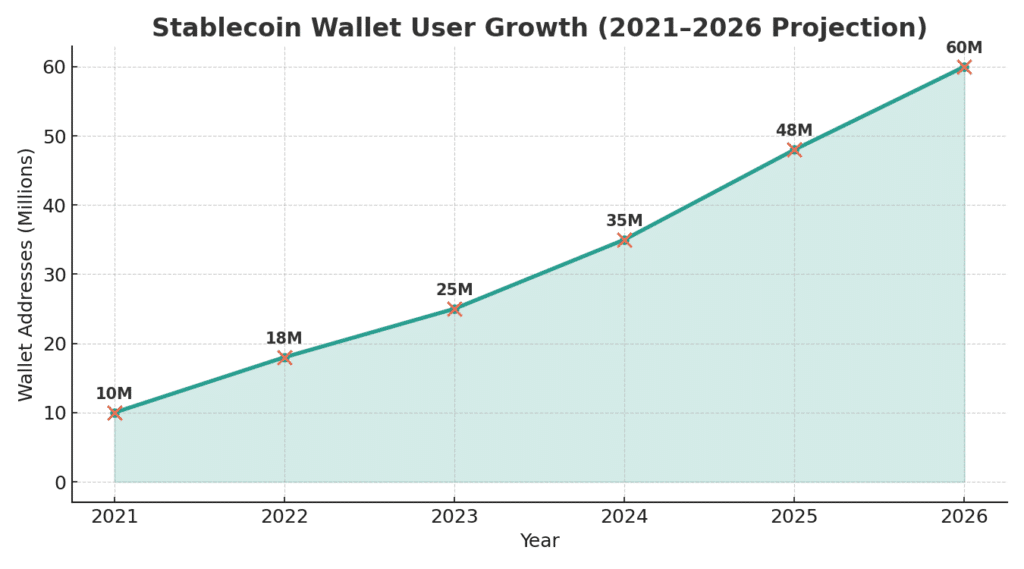
There were over 35 million stablecoin wallet addresses as of 2024, and these are increasing by 50 percent every year. By the middle of 2025, Ethereum alone had 750,000 weekly stablecoin users, the highest number recorded.
Emerging Market Stablecoins
There is heavy usage in countries such as Nigeria, Argentina and Turkey. USDT or USDC is commonly used by residents to hedge savings against inflation and currency devaluation. Stablecoins are digital dollars in weak banks.
Stablecoin Market Overview
| Metric | Data (2024–2025) | Source |
| Transactions (annual) | $5.7 trillion (66% rise in Q1 2025) | CoinLaw.io |
| Total stablecoin transfers | $27.6 trillion | World Economic Forum |
| Unique addresses | 35 million (+50% YoY) | Thunes |
| Weekly Ethereum users | 750,000 | The Block |
| Gen Z salary openness | 75% payment acceptance | AInvest |
| Emerging market adoption | High (inflation hedge) | Brookings |
Who Uses Stablecoins and for What
Banks and Cross-Border Payments
Banks and fintech firms now test stablecoins for cross-border settlements. They cut transaction times from days to minutes and lowered fees for remittances.
Retail Expenditure and Wages
Gen Z and millennials now receive salaries in stablecoins. In a poll, more than half responded that they would take a portion of their paycheck in tokens. Part of the freelancers already chooses this approach to not spend much time waiting in line and pay high prices.
Business-to-Business Transactions
Companies that make payments abroad to their suppliers use stablecoins to avoid expensive bank transfers. A company in Singapore that is paying a partner in Brazil might, as an example, have a better experience with USDC instead of dollar bank wires.
Everyday Scenarios of Stablecoin Payments
Paying Bills and Subscriptions
Some digital service providers now accept USDC and USDT for monthly bills. Telecoms in Latin America and Asia let users top up data plans with stablecoins.
Shopping Online and In-Store
Crypto-friendly merchants accept stablecoins for groceries, electronics, and even coffee. In El Salvador, where Bitcoin is legal tender, many shops now also take stablecoins because customers find them easier to trust.
Sending Money to Family Abroad
Remittances are one of the strongest real-world uses. Migrant workers send USDC to relatives back home in minutes, avoiding high remittance fees that average 6% through traditional services.
Graph: Stablecoin User Growth Over Time
Key Benefits of Stablecoins for Daily Use
Speed and Lower Fees
The conventional method of paying with cards might require days to complete in the background. Transfers of stablecoins take a few seconds, and charges are less than one dollar.
Financial Inclusion and Access
Stablecoins can enable individuals without bank accounts to store and transmit value over a smartphone. This provides access to finance to the 1.4 billion unbanked adults in the world.
Insurance of Inflation
In nations where inflation is in excess of 50 per annum, individuals utilize USDT as a secure digital dollar. To them, stablecoins become not speculation but survival.
What Challenges Remain
Regulation and Consumer Protection
Governments are cautious. In the United States, the GENIUS Act of 2025 sets new rules on reserves and licensing. In Europe, MiCA now regulates issuers to ensure coins are backed properly.
Trust and Reserve Transparency
Users demand proof that stablecoins like USDT are fully backed. Audits and real-time reserve reports are becoming standard. Without trust, adoption slows.
Market Limits on Real-World Usage
Despite trillions in transfers, only about 6% of stablecoin demand is for payments. The rest remains tied to trading and DeFi. For true mainstream use, this share must rise.
Regional Outlook
Stablecoins in the United States
The U.S. treats stablecoins as both opportunity and risk. Banks test USDC for instant settlements, while the Federal Reserve studies digital dollar options.
Europe’s Approach with MiCA Rules
The EU’s MiCA framework requires clear reserves and limits issuers’ market share to protect stability. This gives European users safer access to payment tokens.
Adoption Across Asia, Africa, and Latin America
In Asia, countries like Singapore and Japan welcome regulated stablecoins as payment tools. Africa sees strong use in Nigeria and Kenya for remittances. In Latin America, Argentina and Venezuela rely heavily on stablecoins to escape inflation.
Future of Stablecoins in Payments
Integration with Traditional Finance
Visa and Mastercard now test stablecoin settlement layers. This could blend stablecoins into credit and debit systems consumers already use daily.
Role in Digital Dollar and CBDCs
Central banks explore Central Bank Digital Currencies (CBDCs). Stablecoins may coexist with them, offering private-sector alternatives tied to the same fiat money.
Predictions for 2030
McKinsey projects $250 billion in daily stablecoin payments within three years, surpassing today’s card networks. By 2030, stablecoins may be as common as PayPal or credit cards for online payments.
Conclusion
Stablecoins for everyday transactions are no longer a theory. They move trillions, serve millions, and help both banks and consumers. Their growth proves people want money that is digital, stable, and simple. Yet, only a small share of current use is true retail spending.
For stablecoins to become a global payment standard, regulation, transparency, and integration with existing finance are crucial. With steady growth, they could soon be part of daily life alongside cash, cards, and digital wallets.
Glossary
- Stablecoin
A cryptocurrency designed to stay at a fixed value, often $1. - Fiat-backed
Stablecoins backed by real-world currency reserves like U.S. dollars. - Crypto-backed
Stablecoins backed by other cryptocurrencies as collateral. - Algorithmic stablecoin
Tokens that use code and supply rules to keep value steady. - Peg
The fixed value link between a stablecoin and its asset, usually $1. - Wallet address
A digital ID for storing and sending crypto, like a bank account number. - CEX / DEX
Centralized (CEX) or decentralized (DEX) platforms for trading crypto. - Reserve
Assets held to support a stablecoin’s value and peg. - Payment rails
The network that moves money between people or institutions. - Run
Mass withdrawals when users fear a stablecoin is not fully backed.
Frequently Asked Questions For Stablecoins for Everyday Transactions
What are stablecoins for everyday transactions?
They are tokens pegged to assets like USD, used for payments and savings.
Why are they useful?
They are stable, fast, and low-cost.
Who uses them most?
Younger generations, unbanked populations, and cross-border businesses.
How widespread is use?
Over 35 million addresses, $27.6 trillion in transfers, and rapid growth in emerging markets.
Are there risks?
Yes. Risks include lack of transparency, weak regulation, and reserve doubts.
Will they replace traditional money?
Unlikely soon. They complement, not replace, fiat money.
What does the future hold?
Stronger regulation, wider retail adoption, and integration with banks and card networks.
Summary
This article explores stablecoins for everyday transactions, showing how they work and why adoption is rising. In 2024, stablecoins processed $27.6 trillion, surpassing Visa and Mastercard. Wallet users reached 35 million, with 750,000 weekly Ethereum stablecoin users. They are popular in emerging markets as inflation hedges, in cross-border payments, and among younger workers open to salaries in USDC or USDT. Benefits include speed, lower fees, and access for the unbanked. Challenges include regulation, reserve transparency, and limited real-world use (only 6% of demand). The U.S., EU, Asia, and Latin America each take different regulatory paths. By 2030, stablecoins may rival card networks as everyday payment tools.