












This article was first published on The Bit Journal.
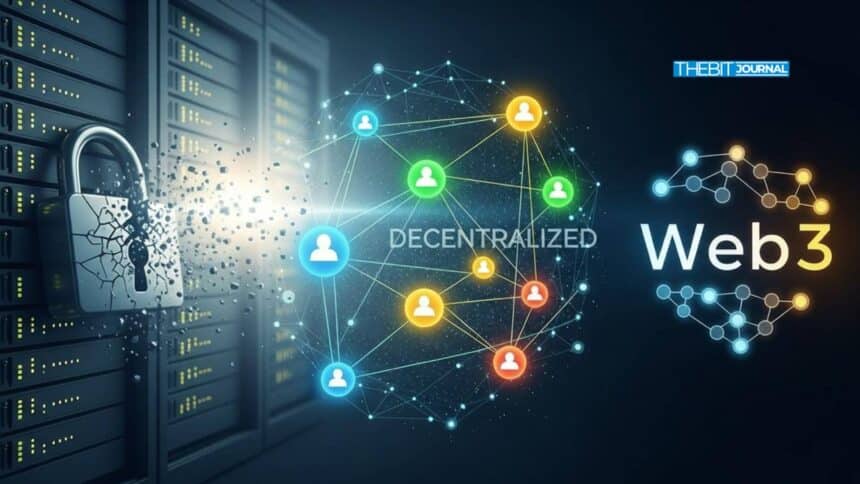
Web3 technology refers to new internet tools like blockchains and peer-to-peer networks; that decentralize the internet by giving users control of their data and services. Today’s web (Web2) is run by big companies that own users’ data and control platforms.
In contrast; Web3 technology also called the decentralized web, shifts power to users. Blockchains copy and spread data across many computers; so no single company owns it.

What Is Web3 Technology?
Web3 is often called the decentralized web. It uses technologies like blockchain (distributed ledgers); to remove central authorities from internet services. In Web2; companies like Google or Facebook reportedly own and manage users’ data.
In Web3; users themselves own data through cryptographic keys and networks. Sources describe Web3 as an umbrella term for technologies like blockchain; that decentralize data ownership and control on the internet.
This means apps are run by networks of computers, not one server. End users can control their data, sell it, or set policies without a company deciding for them.
In Web3, power is distributed. It avoid single points of control because data and decision-making are spread across many nodes.
In real-world applications, Web3 digital assets rely on smart contracts similar to self-executing algorithms on distributed ledgers, coupled with decentralized data storage solutions such as IPFS/Filecoin, and the establishment of decentralized autonomous organizations (DAOs) to govern and trust through technology.
The utilization of these means the presence of a central authority for data management or rules enforcement is not required.
How Web3 Decentralizes Data and Services
Web3 technology decentralizes by changing how data and services are hosted:
Blockchain networks: Blockchains (such as Ethereum; Bitcoin) document their transactions and information across numerous computers (nodes).. A transaction on blockchain doesn’t go through a single server; but is validated by consensus among nodes. This peer-to-peer design means no single company controls the data.
As one analysis explains; Blockchain does not store information centrally; it copies and spreads information across every computer.
Decentralized storage (IPFS, Filecoin): Instead of uploading data to one cloud server; Web3 uses networks like IPFS. IPFS splits files into pieces and stores them across user nodes. Reports say IPFS enables censorship-resistant; distributed storage; without centralized data centers.
Filecoin creates a marketplace where anyone can offer storage space; clients pay storage providers directly; no central host.
Decentralized apps (DApps): DApps run on blockchains or peer networks not private servers. For example; social media or finance apps built as DApps let users trade, share content or vote with no single owner.
A DApp’s backend code lives on a public ledger and its front-end often reads from it. So even if one node goes down; the app keeps running from other nodes, no total shutdown or censorship.
Self-sovereign identity: Web3 identity systems where users hold their credentials on their devices or wallets; not on a central login service. Users can log in to different services with cryptographic keys not usernames; so one company can’t own or sell identity.
Comparing Web2 (centralized) and Web3 (decentralized) internet features:
| Aspect | Centralized Web (Web2) | Decentralized Web (Web3) |
| Data Ownership | Platforms (Google, Facebook) control user data | Users control and own their data via wallets/accounts |
| Data Storage | Stored on company servers or clouds (single-point) | Distributed across many nodes (no single point) |
| Governance | Decisions by centralized companies | Community or DAO-driven consensus |
| Single Points of Failure | Vulnerable to outages or censorship by authorities | More resilient; no single provider controls network |
| Trust Model | Trust is placed in corporate intermediaries | Trustless: secured by cryptography and consensus |
| Monetization | Advertising-based; companies profit from user data | Tokenized incentives; users earn directly (e.g. via NFTs, crypto rewards) |
| Transparency | Proprietary; opaque systems (no public audit trail) | Transparent blockchains (auditable by anyone) |
Decentralized Internet Benefits
Web3’s decentralized internet has many advantages:
User Data Control: Users own their data. Web3 lets end users control data and decide how it’s used. Users can sell parts of their data in a marketplace instead of giving it for free to big platforms. Surveys show over 80% think Big Tech have too much power and one report found 33% think internet decentralization could improve social networks by giving users more control.
Privacy and Security: In Web3; personal data is encrypted on user devices and only shared when consented via smart contracts. Internet decentralization reduces the big data pools hackers target. The individual user determines who has access to their data.
Censorship Resistance: No one can easily remove or block content on a fully decentralized platform. With data spread across nodes; governments or companies can’t take down information by asking one server. Web is free from draconian third-party censorship.
Fair Participation (Token Incentives): Web3 aligns incentives for participants. For example; content creators can earn crypto from fans instead of ad revenue. Blockchain can compensate individuals for their time, data and input.
Hence; users become stakeholders. Decentralized Autonomous Organizations (DAOs) let everyone vote on rules if they hold tokens; so power is shared more widely than corporate platforms.
Innovation and Interoperability: With open protocols and standards; anyone can build on Web3. Data is portable so users can switch services and keep their profiles and assets. Blockchains and smart contracts create interoperable building blocks. For example; NFTs or tokens can move between apps. This open ecosystem encourages new ideas and collaboration without corporate gatekeepers.
Transparency and Trust: All transactions on a public blockchain are transparent and tamper proof. Everyone can audit the code and data. This transparency makes operations auditable and fair; unlike corporate algorithms
Expert Perspectives on Web3 Decentralization
Industry analysts and experts emphasize that Web3 technology is indeed steering the internet toward decentralization. According to PwC, Web3 is a “fundamental shift” yielding “a truly decentralized ecosystem where users have ownership and control of their assets”. In other words, big platforms may yield to networks owned by users. The World Economic Forum similarly calls Web3 “a decentralized internet, owned by builders and users”.
HFS Research also explains the technical basis: because blockchain copies and spreads information across every computer on the network; it supports a decentralized network.
An expert wrote; DAOs are an example of this; decisions are made collectively by the community rather than a central authority.
Notably; recent analyses report growing real world impact. One industry review observes that Web3, the decentralized internet built on blockchain, is gaining traction in 2025. Content creators are earning directly from fans using NFTs and DAOs are making governance more democratic”.
In other words; the switch to a user owned internet is a growing movement.
Challenges and Criticisms
Even as Web3 technology promises decentralization, experts warn about real world hurdles. In practice; some blockchains still concentrate power. Reports claim mining pools and validators can dominate networks.
A few mining pools allegedly control most of Bitcoin’s hash power and staking services like Lido hold over 30% of Ethereum’s stake. This creates risks of censorship or collusion. True decentralization requires active efforts like splitting control or capping stakes to prevent this concentration.
Web3 tools are complex for average users. Managing private keys, wallets and smart contracts has a learning curve. As long as the user interfaces are not as smooth as those of the Web2 applications; there will be a limitation to the popularization of the technology.
Comparatively, decentralized networks are slower than their centralized counterparts. Several companies developing blockchain technology are looking at layer 2 solutions along with sharding to improve scalability; however, as a result, users may still face slow transactional processing or high costs (gas fees) during peak times.
Due to the fact that Web3 has no geographical borders and no point of control; there are governments that are trying to come up with clear regulations. Uncertainty or crackdown around cryptocurrencies and tokens is affecting development. Issues like fraud; misinformation or money laundering in unregulated networks are concerns.
Decentralization doesn’t mean 100% safe. Smart contract bugs or exploits have caused losses. Once encrypted on blockchain; transactions are irreversible. Mistakes in sending funds or data can’t be undone.
Overall Web3’s vision is great but not yet fully realized. Users and developers need to keep working on these challenges to move to a truly decentralized Web3.
Conclusion
Analysis points to Web3 technology paving the way for a more open, decentralized internet by shifting control from the hands of big companies to individual users.
With blockchains and peer-to-peer networks spreading data and governance across a network of many users, users are finally able to take control of their own data and make important decisions using things tokens and DAOs. This allows more privacy, more resistance to censorship and new ways to reward users for their contributions.
However; experts are quick to point out that there are still some hurdles to overcome; some networks are still quite centralized, and adoption has been tough.
As the technology gets better, observers can expect to see a lot more innovation and careful design needed to actually make the decentralized vision a reality.
Glossary
Web3: term that refers to the decentralized web that’s powered by blockchain technology.
Blockchain: an immutable; distributed ledger that logs transactions concurrently on many different computers (nodes); in order to guarantee that data is unchangeable and everlasting.
Smart Contract: a blockchain-embedded code that activates upon the satisfaction of specific conditions. It functions like a contract that guarantees the abiding of certain rules; in the case of smart contracts; users are free from relying on intermediaries for the whole process.
Decentralized Application: a program that operates on a blockchain or a peer-to-peer network; instead of depending on one main server.
Decentralized Autonomous Organization (DAO): a digitally governed community that functions according to rules that are fully recorded in smart contracts..
InterPlanetary File System (IPFS): a peer-to-peer file system that makes the web a more decentralized place.
Token: digital unit that represents value, rights or membership on a blockchain. They are used in web 3 for all sorts of things like voting rights, access to certain areas or currencies, and even to incentivize people to get involved in the community.
Frequently Asked Questions About Web3 Technology
What is Web3 and how is it different from Web2 ?
Web3 is the next stage of the internet; built on blockchain and all the other decentralized tech. Unlike how things are now (Web2), where data and services are controlled by massive companies, Web3 spreads data and services across loads of different nodes. That means users get to own their own data.
How does Web3 technology make the internet more decentralized ?
Web3 decentralizes the internet by using blockchains and peer networks. For example; blockchains replicate data on thousands of computers; so no one single server holds it. Decentralized apps (DApps) run on these networks. So there’s no central authority in charge of the service as it’s all run by open protocols and community consensus.
What are some examples of Web3 technologies ?
Some of the notable Web3 tech includes blockchain platforms (like Ethereum or Solana); smart contracts (self-executing code on the blockchain) cryptocurrency wallets (for when users want complete control over their own crypto and identity); decentralized storage networks (IPFS, Filecoin) and DAOs (organizations that are run by their community).
Social networks or finance apps that are built as DApps are also examples of Web3. All these different tools work together to create a more open web.
What are the benefits of a decentralized internet ?
A decentralized internet aims to give users more control, more security and more privacy. Users’ data isn’t locked up by some tech giant; users get to decide who sees it. Transactions and content become resistant to censorship.
Users can also earn tokens or crypto directly for their contributions (like earning cash for the things you create). Basically, decentralization can help reduce single points of failure and gets rid of middlemen, which helps service creators and users work together more easily.
What are the challenges for Web3 decentralization ?
Some of the challenges include scalability which is to say that blockchains can be a lot slower and more expensive than traditional servers; usability, because managing keys and wallets can be a real headache; and hidden centralization where a few validators or token holders end up controlling the network.