






This article was first published on The Bit Journal.
Proof-of-reserves has been one of the most frequently cited transparency tools in crypto since 2022. Major exchanges now release reserve reports, sign wallet addresses and allow users to verify balances through cryptographic proofs.
This appears to be progress on the surface. But exchange collapses, withdrawal freezes, and liquidity squeezes have continued to take place even among platforms that publish the proof-of-reserves data.
It is a simple problem, yet commonly misunderstood. Proof-of-reserves was never intended to be a safe guarantee. It is a confirmation that financial assets exist at one point in time, not an expression that an exchange can meet all obligations during stress.
In 2026, as crypto adoption has deepened, the disconnect between what proof-of-reserves reveals and what users really want became more apparent.
Understanding that gap matters if one wants to understand why trust in proof of reserves has remained limited.
What Proof-of-Reserves Actually Shows
In simple terms, proof-of-reserves is a technical process that proves ownership of assets. An exchange demonstrates it is in control of certain on-chain wallets, and that the balances in those wallets match or exceed reported customer balances at a given time.
The vast majority of current implementations consist of two parts. First, the exchange confirms control of on-chain assets by publishing wallet addresses or signing cryptographic messages.
Second, user balances are committed into a Merkle tree in an aggregated way, so users can ascertain if their balance was included without leaking other users data.
When used properly, proof-of-reserves answers one specific question: do verifiable onchain assets cover recorded customer balances at this moment?
This is often overlooked. Proof-of-reserves does not prove where assets were obtained from and whether they are pledged elsewhere, or available afterwards. This limitation is the main source of discourse about proof-of-reserves trust.
As of Dec. 31, 2025, Binance’s chief executive publicly announced that user asset balances confirmed from its proof-of-reserves framework amounted to $162.8 billion. The number conveys scale and transparency, but disclosures even of that size do little to quell deeper questions about solvency and liquidity under stress.
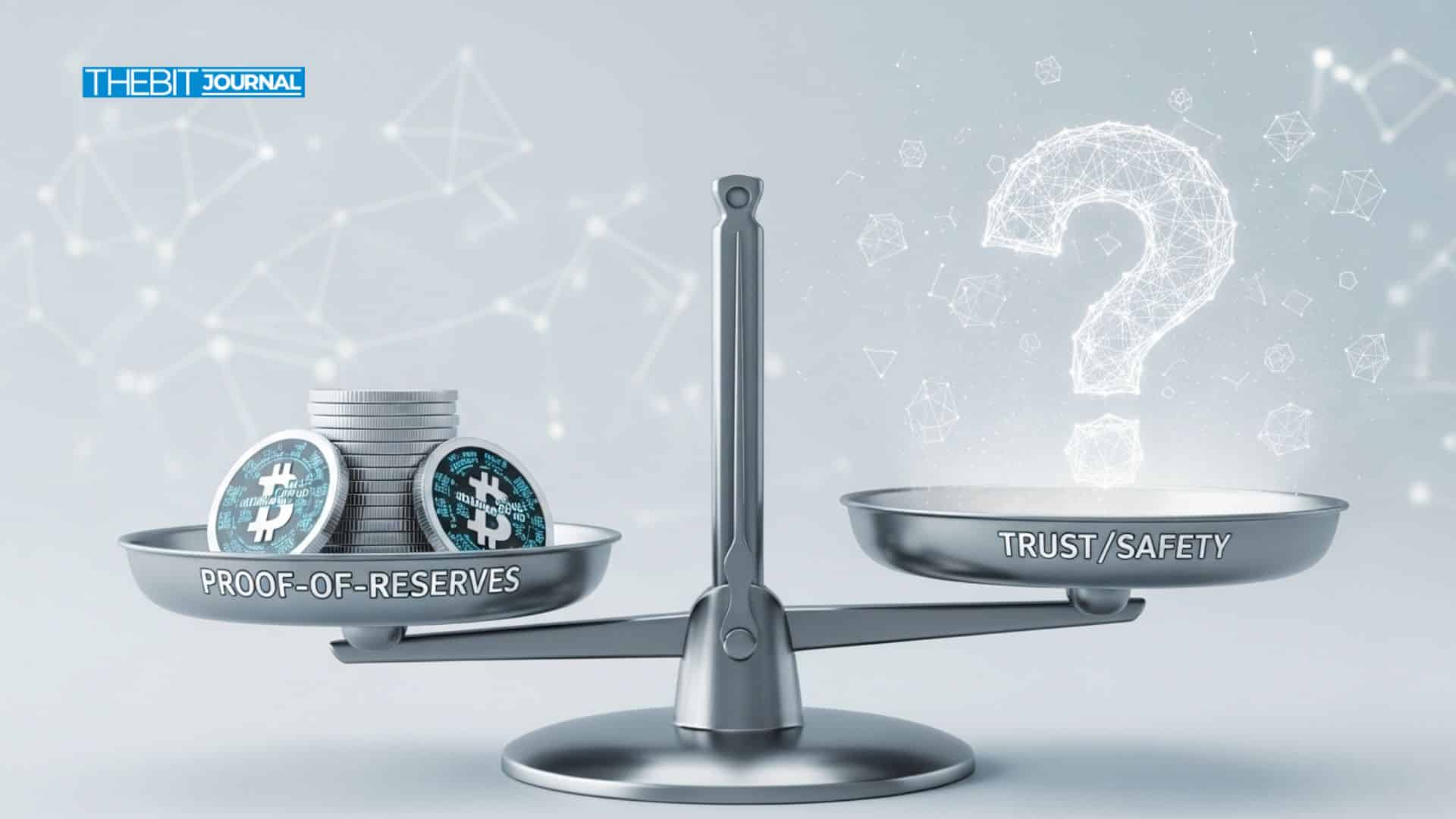
Why a Proof-of-Reserves Passing Does Not Make an Exchange Safe
Proof-of-reserves’s primary weakness lies in what is not covered. Assets alone do not define financial health. Solvency depends on assets exceeding liabilities, and liabilities are far more complex to measure.
Some exchanges only provide spot user balances in publications of their liabilities. Any other obligation like margin exposure, lending products, inner loans, judicial claims or offline payables could be left out. When liabilities are incomplete, an exchange can look fully backed even though it is financially brittle.
Timing also matters. Proof-of-reserves is usually a print. It’s one single snapshot, not a prolonged reality. Assets may be temporarily deposited, loaned or rearranged before an attestation is made and then repositioned afterwards. The report may even be technically true while providing an illusory sense of stability.
Another issue is asset availability. Proof-of-reserves generally does not reveal if funds are spoken for. Collateralized assets, lent assets and those linked to structured products may not be available at a time of increased withdrawals.
Holding assets and the capacity to deploy them in times of stress are two different things.
Trust in proof of reserves is made even more complex by liquidity. Large balances in thinly traded tokens may look strong on paper but cannot be converted quickly without severe price impact.
Proof-of-reserves does not test liquidity capacity, which is typically what really matters in a crisis.
Why Proof-of-Reserves Isn’t an Audit
One of the most confusing things is how proof-of-reserves reports are presented. Most users view them as audits. They are not.
The majority of proof-of-reserves engagements are more like agreed-upon procedures than assurance audits. Under International Standard on Related Services 4400, an agreed-upon procedures engagement does not produce an opinion. Only what was tested and what was seen are reported. The reader is the one who makes meaning.
Regulators have made this distinction clear, time and again. The Public Company Accounting Oversight Board has warned that even proof-of-reserves reports do not furnish helpful assurance of an exchange’s ability to meet its obligations and should not be regarded as indications or confirmations of solvency.
This worry grew after 2022, when a number of firms halted or suspended crypto proof-of-reserves work, arguing that the reports were being misinterpreted as guarantees. It remains an issue in 2026 because proof-of-reserves itself has not changed. It remains narrow by design.
What Then Creates Trust Other Than Proof of Reserves
If PoR is a mere starting point, trust demands steps beyond that. The first is full disclosure of solvency. That it showing assets against a whole lot of promises to people, not piecemeal images of what’s coming due.
More recent cryptographic techniques such as privacy-preserving solvency proofs, are aimed at filling this gap, but adoption however, seems quite fragmented.

Operational assurance is equally important. A balance snapshot does not reveal that an exchange has strong internal controls. Institutional due diligence is more focused on management discipline, access controls, segregation of duties, incident response plans and custody workflows that have been tested over time.
These are not directly learnable from proofs-of-reserves alone. Liquidity transparency also matters. There must be clarity for users as to whether reserves are unencumbered and when they can be converted in times of stress.
Solvency without liquidity does not prevent withdrawal freezes. Governance and disclosure frameworks provide the structures that would promote trust over time.
Clear custody structures, conflict resolution and consistent reporting across products like yield, margin and lending offer context that proof-of-reserves alone cannot furnish.
Without these levels, the chain of evidence that backs proof of reserves trust remains incomplete.
Conclusion
Proof-of-reserves makes things more transparent, but transparency is not safety. It has no bearing on the solvency or liquidity of an exchange, nor its operational stability.
Treating the proof-of-reserves as if it were a safety certificate, creates a false sense of security.
In 2026, as cryptocurrency markets mature, the conversation is changing. PORs is now not seen as an endpoint; it’s the floor.
True trust comes from a combination of reserve transparency and full liability disclosure, operational assurance, liquidity resolution, and governance oversight.
Without those pieces, proof-of-reserves trust will still be sorely limited no matter how polished the reports appear.
Glossary
Proof-of-Reserves: A cryptographic method utilized by crypto platforms in order to show that they are in control of certain assets on-chain at some point in time.
The Merkle Tree: a cryptographic structure that enables users prove that their balance was included in the credits without needing to reveal private data concerning other users.
Solvency: whether a company’s total assets surpass its total liabilities.
Liquidity: the speed in which assets can be turned into usable funds without significant loss.
Agreed upon procedures: limited verification engagements that report findings; but do not express an assurance on the subject matter.
Frequently Asked Questions About Proof-of-Reserves
Will proof-of-reserves ensure user’s funds are safe?
No. It merely shows that assets existed at a point in time, and does not demonstrate solvency or liquidity during times of strain.
Why do exchanges still halt withdrawals after releasing proof-of-reserves?
Because proof-of-reserves does not prove that assets are encumbered, liquid or sufficient to cover all liabilities.
Is proof of reserves equivalent to a financial audit?
No. The majority of proof-of-reserves reports aren’t audited, and don’t include assurance opinions.
Can proof-of-reserves increase trust in any way?
Yes. It improves transparency, but it must be paired with full liability disclosure and operational oversight to be meaningful.
References