






The United States’ Commerce Department will start releasing US GDP data on blockchain to promote transparent and tamper-resistant data distribution.
According to a revelation by Commerce Secretary Howard Lutnick on the Kobeissi Letter social media X handle, the plan will begin with US GDP data on blockchain. Still, it will later extend to additional government agencies.
The official stated that the government had proposed the idea earlier this year, but it would be implemented through the Gross Domestic Product (GDP) to facilitate public access and distribution.
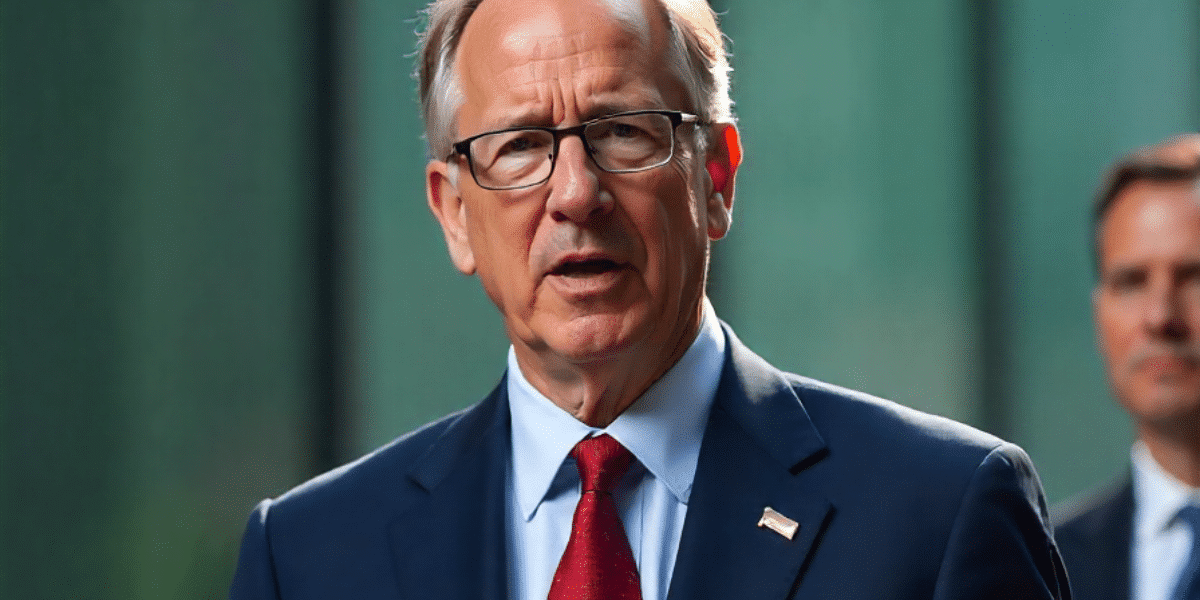
Key Statistics of US GDP Data on Blockchain
Speaking during a cabinet meeting held on Tuesday, Howard Lutnick revealed that the department would issue key statistics of US GDP data on blockchain. During that time, he addressed US President Donald Trump as the “crypto president.” Addressing the president directly, Lutnick told Trump GDP would be the first data the department would share, making it accessible to everyone. He stated:
“The Department of Commerce is going to start issuing its statistics on the blockchain […] you wanted the crypto President, and we are going to put our GDP on the blockchain so people can use the Blockchain for data and distribution […] we’re just ironing out all of the details so we can do it.”
Also read: Breaking: President Trump Signs Order to End Crypto Banking Ban – Market Reacts

Similar to Elon Musk’s Concept
Howard Lutnick’s push to place US GDP data on blockchain aligns with the government’s move toward transparency and efficiency in how money is spent, and putting the details where they can be scrutinized. According to a January 2025 executive order, the Trump administration directed all federal agencies to support digital asset innovation, aiming to create a more favorable regulatory framework.
Before his fallout with the US President, Elon Musk proposed publishing US GDP data on blockchain through his D.O.G.E. department, which features a group of 100 experts working on publishing government spending on blockchain for accountability purposes. Nonetheless, Musk’s project is still a “work in progress,” and the results are yet to be seen.
Also Read: Elon Musk Hints at Joining Donald Trump as D.O.G.E., Spikes DOGE Price by 5%
Other Governments Have done it
The move to integrate technology into public administration aligns with similar initiatives taken by other administrations. For example, in 2016, the Estonian government integrated a blockchain system into its e-health system to safeguard over one million patient records.
In 2018, the European Blockchain Partnership and the European Commission launched the European Blockchain Services Infrastructure. The initiative enables member states to host validator nodes, facilitating a decentralized structure that delivers trustworthy and verifiable cross-border public services.
In 2021, Australia and Singapore tested a blockchain system designed to issue and verify cross-border trade documentation that has cut costs and reduced paperwork. In 2024, California’s Department of Motor Vehicles utilized blockchain technology to digitize 42 million car titles, aiming to curb fraud and streamline vehicle transfers.
Conclusion
If carried successfully, Howard Lutnick’s push to incorporate US GDP data on blockchain would be the first significant implementation of blockchain in the government’s economic reporting. By putting GDP data figures on-chain, the department would ensure the statistics are accessible, verifiable, and tamper-proof.
Read more blockchain news on Our Website.
Summary
- US Commerce Secretary Howard Lutnick has revealed plans by his department to share statistics on a blockchain.
- The department will begin by incorporating US GDP data into blockchain, and subsequently, other departments will follow.
- The official stated that the initiative aligns with Trump’s image as the “crypto president.”
- The initiative will help to modernize data distribution and make federal statistics accessible and verifiable via blockchain technology.
Glossary of Key Terms
Blockchain: The blockchain is the underlying decentralized digital ledger technology that records all transactions.
GDP: Gross domestic product (GDP) is the standard measure of the value added created through the production of goods and services in a country during a given period.
Trump’s crypto initiative: The plan by US President Donald Trump “to make America a crypto capital of the world,” emphasizing the need to embrace digital assets to drive economic growth and technological leadership – and he’s delivering on that promise.
Decentralization: Decentralization means that no single entity or central authority controls the network or its data; instead, control and decision-making are distributed across a network of independent participants called nodes.
FAQs for US GDP data on blockchain
What is blockchain?
Blockchain is a public ledger or distributed database that utilizes open-source technology, where information becomes immutable and details are accessible to anyone at any time.
How can blockchain be used in business?
Blockchain helps eliminate middlemen by enabling the secure storage of business processes, such as records and contracts, between participants in an encrypted manner.
How is data stored on blockchain?
The blockchain’s distributed database maintains the details of every transaction in a series of blocks that are added together in chronological order. The stored transaction details in the block are collectively referred to as the genesis block.
What are the types of blockchain?
There are different types of blockchain, including:
Public Blockchain: A platform where anyone with an internet connection can become a part of the blockchain network and can access current records and verify transactions.
Private Blockchain: It is a decentralized platform with specific restrictions and permissions for joining the network.