


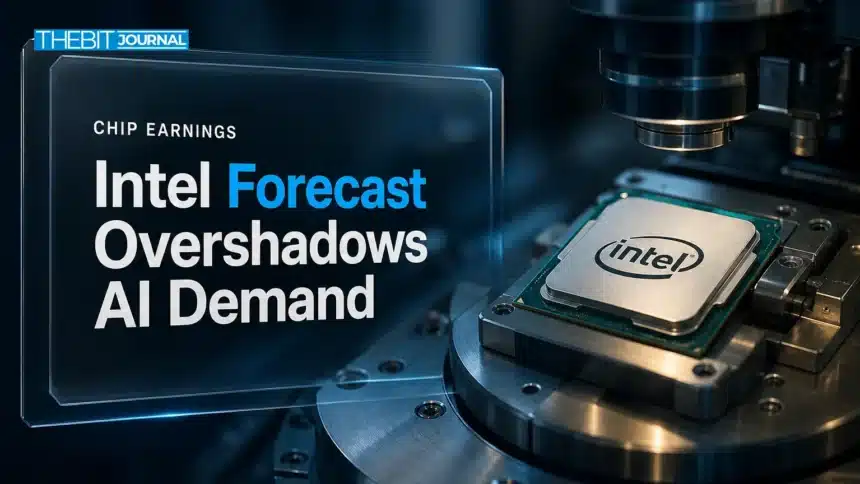

The Intel stock crash erased more than $146 billion in market value on October 30, 2026, after disappointing guidance overshadowed strong quarterly earnings, according to Decrypt. Shares fell nearly 30% to $65.76 on Friday. The outlet described the plunge as Intel’s worst single-day decline in more than 50 years, as booming AI demand ran up against production constraints.
- Intel forecast fourth-quarter revenue of $15 billion to $16 billion, below analysts’ $17.07 billion estimate, Decrypt reported.
- Adjusted earnings guidance of $0.25 per share also missed Wall Street’s $0.43 expectation.
- Third-quarter Data Center and AI revenue rose 78% year over year to $7.3 billion.
- Manufacturing and packaging shortages restricted output, while an accident at an Israeli factory added pressure.
- CFO Dave Zinsner warned that positive free cash flow was unlikely in 2027.
Timeline of the Intel stock crash
- September 2025: Nvidia invested $5 billion in Intel and agreed to collaborate on custom PC and data-center processors, according to Decrypt.
- Third quarter of 2026: Intel generated $16.5 billion in revenue, up 21% year over year, and adjusted earnings of $0.52 per share. Earnings exceeded both company guidance and analysts’ expectations.
- October 30, 2026: Decrypt reported the historic selloff following Intel’s weaker-than-expected fourth-quarter outlook.
Background: AI demand meets factory limits
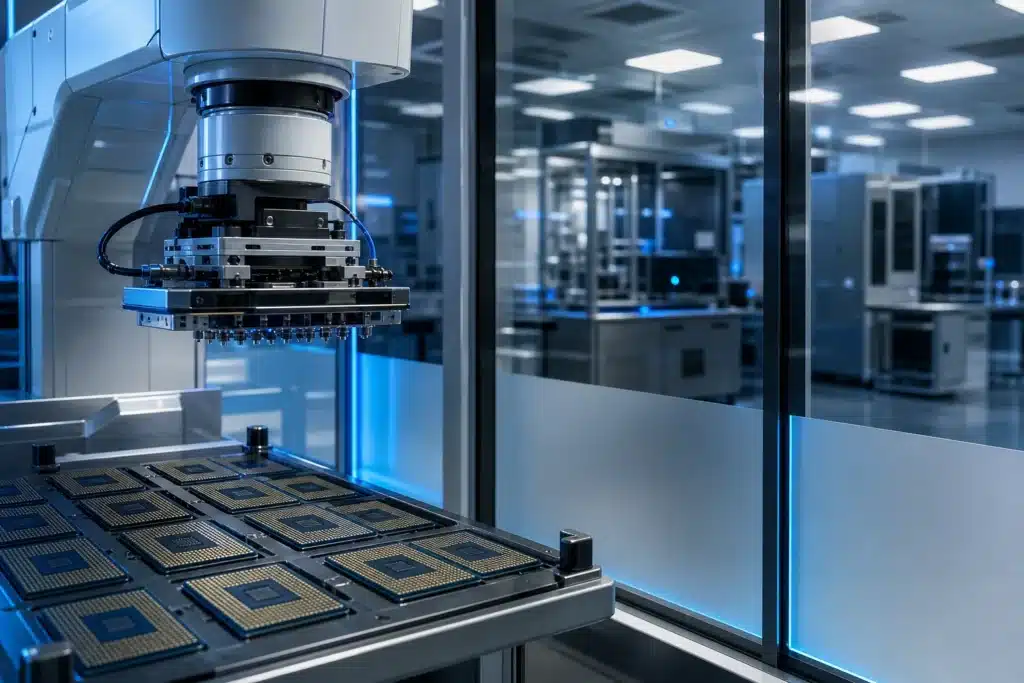
The Intel stock crash did not reflect a shortage of demand for AI server processors. According to Decrypt’s October 30 report, demand was booming, but manufacturing and packaging bottlenecks prevented Intel from producing enough chips.
The Data Center and AI division’s results show that strength. Alongside its $7.3 billion in quarterly revenue, the division generated $3 billion in operating profit. The issue described in the report was Intel’s limited ability to capitalize on demand, not an absence of business from the AI infrastructure buildout.
Intel is also trying to rebuild its manufacturing business and compete with TSMC. Its foundry ambitions involve making chips for outside customers as well as for its own products. Decrypt reported that the factories supporting this recovery require substantial spending.
The established PC business presents a different problem. Intel expects that market to contract through 2027, according to the report. The company therefore faces weaker demand in one business while struggling to meet demand in another.
These are separate operating pressures. Decrypt’s account of Intel’s manufacturing constraints and PC outlook identifies both as factors behind the expected deterioration in gross margins, alongside the factory accident in Israel.
Reactions: Investors focused on the forecast
The quarterly results preceding the Intel stock crash were stronger than expected. Decrypt reported that adjusted earnings beat Intel’s $0.38 guidance and Wall Street’s $0.40 estimate. Zinsner described the quarter as Intel’s eighth consecutive period of exceeding its financial expectations.
The fourth-quarter outlook was weaker. The table compares results, guidance and analyst expectations reported by Decrypt on October 30, 2026.
| Measure | Third-quarter result | Fourth-quarter guidance | Fourth-quarter analyst estimate |
|---|---|---|---|
| Revenue | $16.5 billion | $15 billion to $16 billion | $17.07 billion |
| Adjusted earnings per share | $0.52 | $0.25 | $0.43 |
| Non-GAAP gross margin | 44.1% | 38% | Not provided |
The gross-margin forecast points to a smaller share of revenue remaining after direct production costs. It also contrasts with the strong growth reported by the Data Center and AI division: demand growth in that business did not prevent Intel from forecasting a lower company-wide margin.
The revenue outlook’s midpoint was $15.5 billion, roughly $1.6 billion below analysts’ expectations. Decrypt’s reporting on the fourth-quarter forecast shortfall puts that gap at the center of the selloff, despite the stronger third-quarter results.
Outlook: Capacity and cash take priority
The Intel stock crash leaves a sharp contrast between current demand and the cost of expanding supply. Intel’s outlook includes both production limitations and substantial investment requirements. Neither the strong quarterly results nor booming server demand removes those constraints.
According to Decrypt, Zinsner called 2027 an investment year and said positive free cash flow was unlikely. He also said Intel expects returns on invested capital of at least 20% on manufacturing-node investments. That figure is a management projection, not a reported investment result.
Several major projects will require substantial spending at the same time, Zinsner acknowledged. Whether those investments deliver the expected returns remains uncertain. The reported share-price decline also shows that strong product demand can coexist with substantial equity losses.
FAQ
What caused the Intel stock crash?
According to Decrypt, fourth-quarter revenue and earnings guidance fell short of analyst expectations, overshadowing strong third-quarter results. The report also identified production constraints, PC weakness and investment spending as pressures on Intel’s outlook.
Is Intel’s AI chip demand weakening?
Not according to Decrypt’s report. It described booming server-processor demand, with manufacturing and packaging shortages limiting Intel’s ability to meet it.
Does Intel expect positive free cash flow in 2027?
Decrypt reported that CFO Dave Zinsner considered it unlikely as Intel funds manufacturing expansion. This was management’s outlook for the coming year, not a reported annual cash-flow result.
Sources
This article is for informational purposes only and does not constitute financial or investment advice. Cryptocurrencies are highly volatile; always do your own research before investing.