




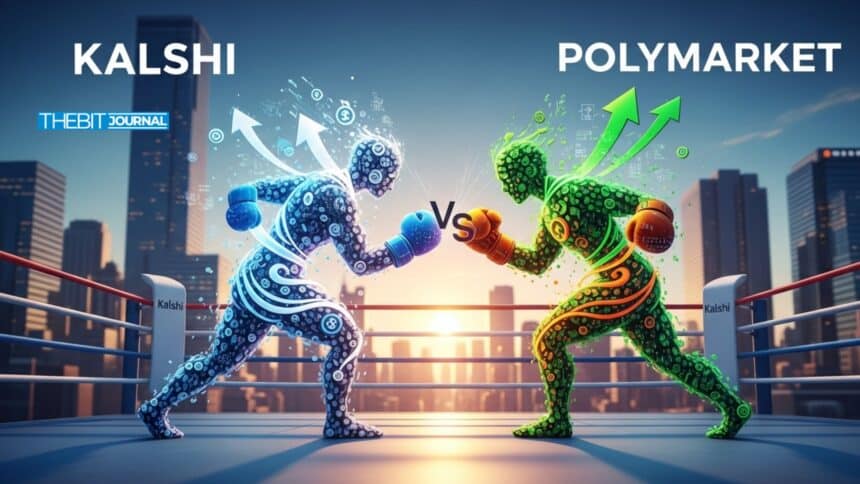

The race between Kalshi vs Polymarket has moved into a new phase with the launch of crypto perpetual futures in the United States.
Polymarket introduced perpetual futures trading on April 21, while Kalshi prepared its “Timeless” product for launch on April 27 in New York. These two moves point squarely to the most liquid and profitable crypto derivatives segment which is the perpetual futures, previously dominated offshore.
Recent reporting makes it clear that this is structural expansion. Bloomberg and market coverage show Kalshi’s product is tied to cryptocurrency prices and built under US regulatory oversight, making it one of the first CFTC-alignment perpetual futures products in the country.
Polymarket’s rollout shows a faster, crypto native approach, putting leveraged trading directly into its prediction-market ecosystem.
Prediction Markets Open Up to Become Full-Fletched Derivatives Venues
Originally prediction markets operated on two-way outcomes such as an election, inflation, a news event, or a target price of an asset. These platforms like Kalshi vs Polymarket transformed public sentiment into probabilities which are tradable.
That model expanded quickly. However research and market tracking revealed prediction market activity surged 138 million transactions per month as of April 2026, indicating adoption rising beyond mere speculation.
However event contracts have a limitation which is that they expire upon resolution of outcomes.
That limitation is now being removed. Perpetual futures offer this continuous exposure that can last indefinitely. So rather than wait for resolution, traders are adjusting their positions in real time to the way prices move.
This change transforms prediction markets into continuous trading venues, placing them closer to traditional derivatives exchanges.
Why Perpetual Futures Dominate Crypto Trading Structure
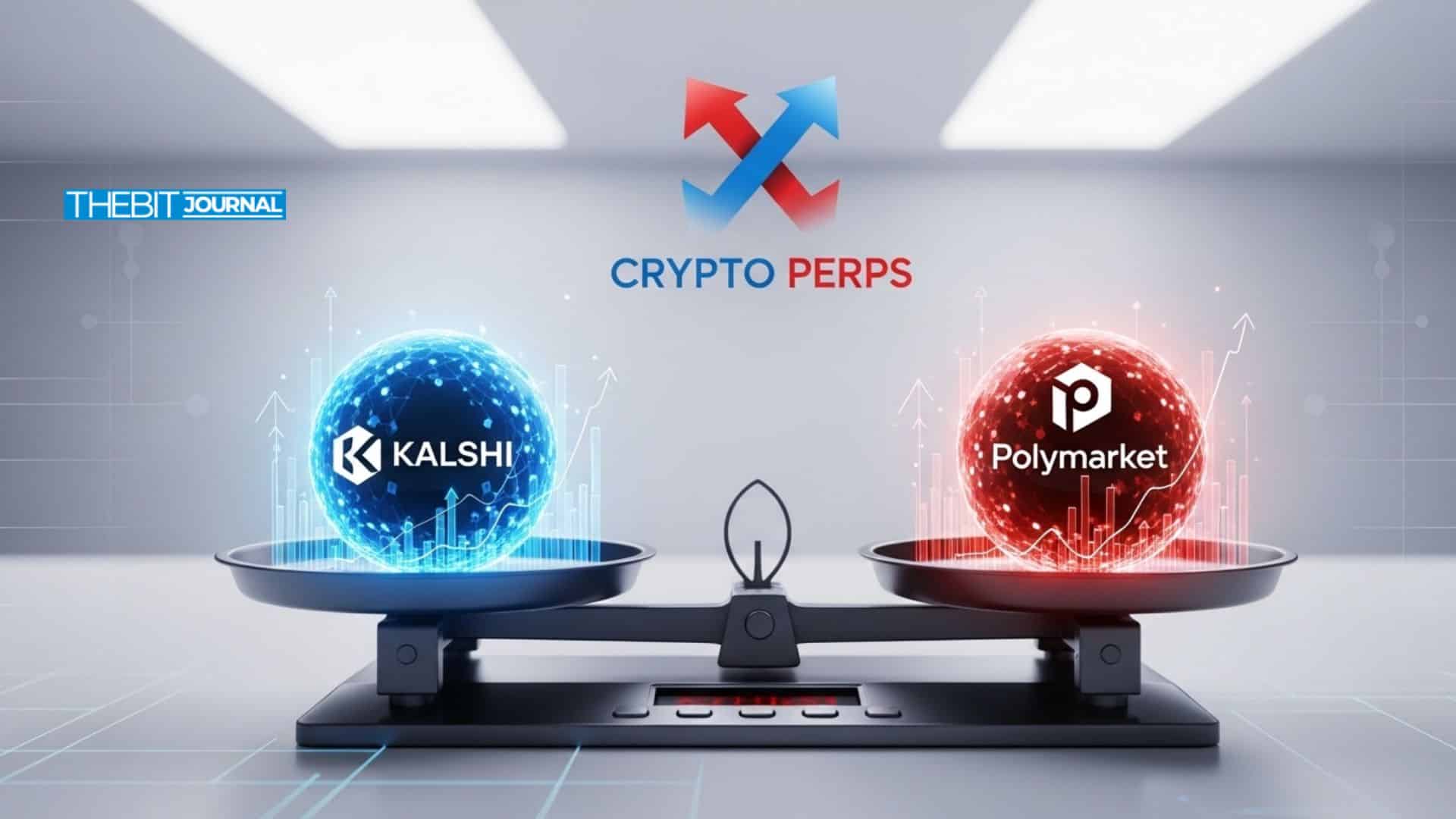
Perpetual futures also known simply as “perps” are already the most heavily traded crypto derivative worldwide.
They are non-expiring, unlike traditional futures contracts. Instead, the system relies on a funding rate to ensure contract prices are kept in line with what is going on in spot markets. Funding is charged to traders depending on whether they go long or short.
This structure enables: Continuous trading without rollover risk; High leverage exposure (typically up to 10x or more across crypto markets); Changing liquidity cycles driven by active repositioning
Recent industry data confirms the scale of this segment. Global perp markets generated over $60 trillion in annual trading volume in 2025, far exceeding spot crypto activity.
Polymarket’s implementation includes leveraged exposure across a range of crypto and macro assets, while Kalshi has sought to implement the “Timeless” product through a ratio system structured under a regulated US framework using dollar-denominated collateral at launch.
Economically, the incentive is obvious: perpetual futures are designed to generate continuous fee flow, higher trading frequency, and deeper liquidity than event contracts.
Regulatory Shift Enables US-based Perp Expansion
The introduction of these Kalshi vs Polymarket crypto perpetual futures US products is directly tied with regulatory changes.
One of the main factors is that the Commodity Futures Trading Commission (CFTC) has expressed a desire to formally structure perpetual futures in a U.S. market structure. More recent policy proposals reveal that regulatory authorities are heading towards permitting “true perpetual futures” under specific conditions.
This is consistent with broader coordination between the SEC and CFTC made under these reforms, which are aimed at crypto market structure modernization and bringing derivatives activity onshore.
Kalshi’s position is particularly important because it operates as a regulated exchange under CFTC oversight. The “Timeless” brand feature is a direct test of whether these offshore-native products will be able to work within the confines of US compliance frameworks.
Polymarket on the other hand, is taking advantage of recent regulatory approvals to operate more out in the open US market, bridging the gap with offshore competitors.
However, legal tension remains high. Disputes over whether prediction markets are supposed derivatives or gambling products continue in state and federal courts, with different jurisdictions challenging them.

Kalshi vs Polymarket: Two Competing Models for the Same Market
Despite launching similar products, Kalshi vs Polymarket represent two fundamentally different execution models.
Kalshi is compliance-first. Polymarket is execution-first.
Kalshi’s “Timeless” structure uses USD collateral and fits within US regulatory reporting systems. It is expected to be used by institutions, has regulated access and works with existing financial infrastructure.
Polymarket is a crypto-native platform focused on speed, leverage and rapid product deployment. The April 21 launch of perpetual futures also included leveraged positions in crypto, equities and commodities, suggesting aspirations beyond prediction markets.
Industry comparisons show clearly that Kalshi is focused on US regulators and institutional users while Polymarket aims to serve active crypto-native traders looking for fast execution.
Studies on prediction-market trading behavior have shown that both the use of liquidity-efficient allocation strategies and their performance across exchanges is dependent on trades being executed in a regulated manner, rendering the execution environment an important factor.
Conclusion
Kalshi vs Polymarket are not only introducing new products, they are also transforming what the future of prediction markets looks like. One is transitioning into a regulated financial venue, and the other as a high-speed crypto trading layer.
Global perp trading volumes now account for the bulk of crypto derivatives activity while prediction-market usage has surged into the hundreds of millions of monthly transactions.
As long as adoption continues, US-based perpetual futures could eliminate dependence on offshore exchanges and transfer much of that liquidity in regulated domestic platforms.
Glossary
Perpetual Futures: Never-expiring futures contracts.
Funding Rate: Payment system that helps balance both long and short positions.
Leverage: Capital borrowed to increase exposure.
Prediction Market: A market in which users trade on the outcome of future events
CFTC: US derivatives regulator.
Frequently Asked Questions About the Kalshi vs Polymarket Crypto Perpetual Futures
What are the Kalshi vs Polymarket crypto perpetual futures?
Derivatives that allow traders to hold leveraged positions without expiry dates.
Why are Kalshi vs Polymarket launching them now?
Regulatory conditions in the US are changing to structured approval of perpetual futures.
How is Kalshi different from Polymarket?
Kalshi is regulated and compliance-focused; Polymarket is crypto-native and execution focused.
Why are Perps important in crypto Trading?
They create nonstop trading activity and liquidity, plus higher volume compared to standard futures.
Are perpetual futures risky?
Yes. Leverage can amplify gains but it also amplifies losses, raising the risk of liquidation.
References