





This article was first published on The Bit Journal.
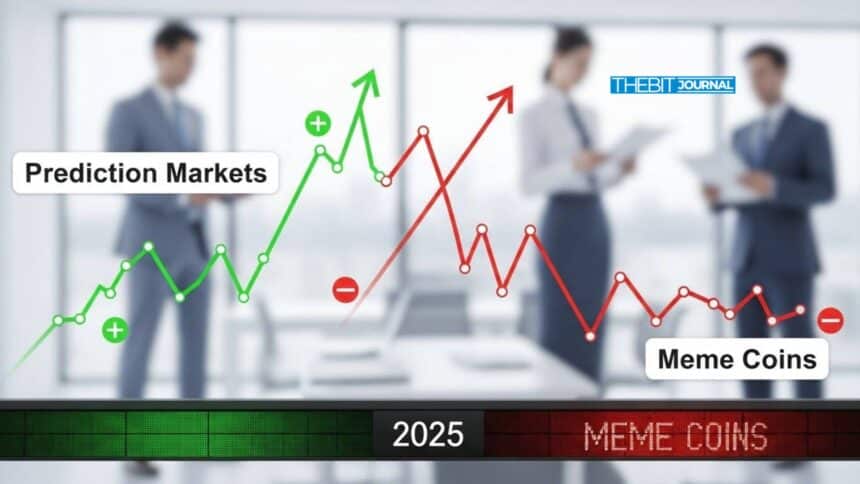
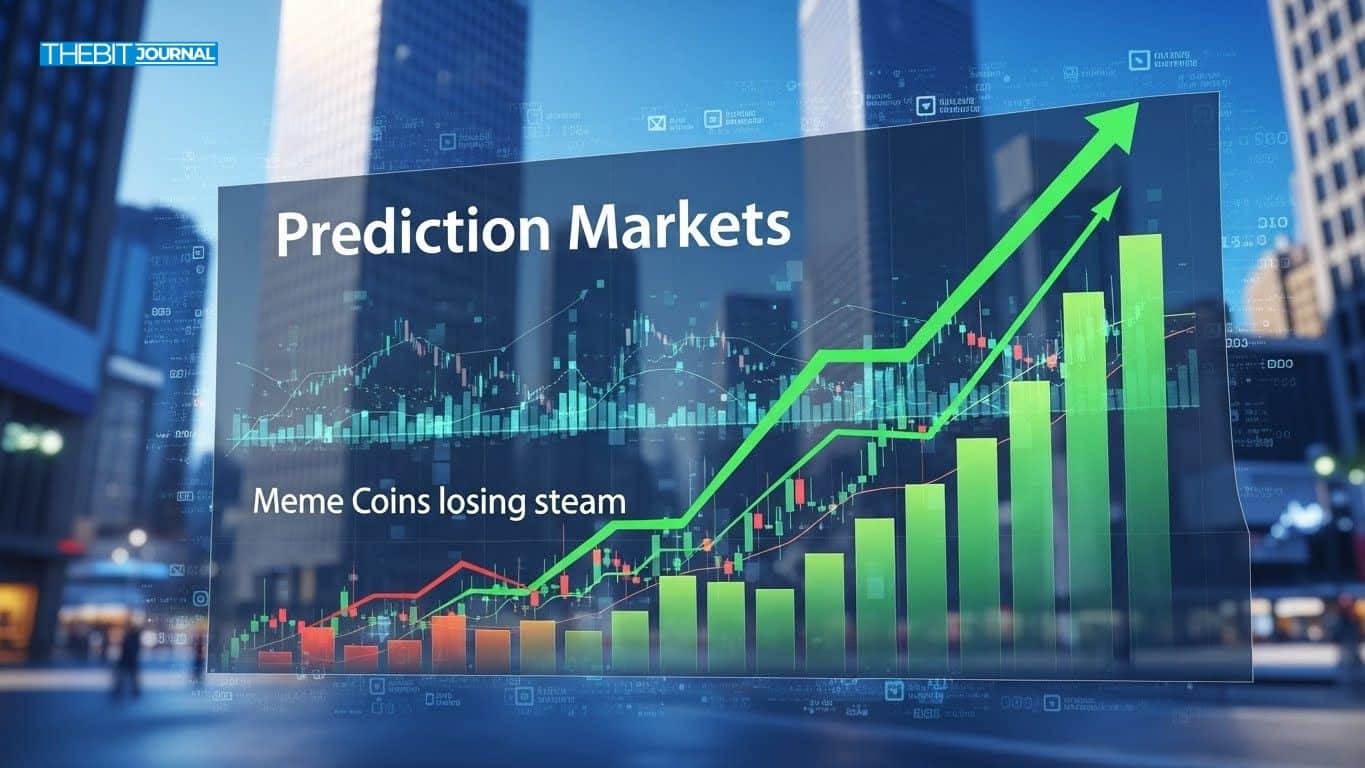
Prediction markets’ growth has kicked into high gear, and the once-dominant meme coins are struggling to stay afloat. Platforms like Kalshi, Polymarket, and Limitless have caught the attention of traders and are seeing huge volumes come.
Reports reveal the total on-chain and off-chain prediction market activity now racking up tens of billions in bets on real-world outcomes.
Meanwhile, a host of meme tokens that used to be all the rage are now finding it hard to live up to their earlier highs.
The Rise of Prediction Markets in 2025
2025 has been really striking for crypto traders, and one of the trends has been the growth of prediction markets.
According to some numbers, Kalshi, Polymarket, and Limitless have together seen around $44B in trading activity this year, with Kalshi alone regularly hitting around $1b in weekly volume.
The beauty of these markets is that traders can buy and sell contracts that settle on real-world outcomes, be it election results or sports matches etc, giving a much more structured form of speculation compared to just buying/selling tokens
Monthly on-chain prediction market activity has gone from almost nothing in early 2024 to an astonishing $13B by the end of 2025, a 130-fold increase according to a joint project by Keyrock and Dune Analytics.
Meme Coins’ Heavy Retreat
Meme coins totally dominated the crypto scene in 2023-2024 with their market capitalization peaking at incredible levels. However, by late 2025, there was quite a notable pullback.
Reports suggest that the market cap of meme coins went from around $150B in late 2024 to around $30B by the end of 2025 as a result of shrinking enthusiasm, lower trading volumes, and a marked change in investor attitude.
Now, where meme coins used to offer high volatility and the potential for eye-watering gains, their recent slump has left a lot of speculative traders searching for a new place to put their money, and it’s that which has helped drive interest in prediction markets so much.
Key Drivers Behind Prediction Markets Growth
The story of prediction markets’ growth in 2025 is a story of several m factors coming together. For a start, the bigger exchanges and platforms are starting to take event contracts a lot more seriously.
Coinbase announced plans to offer thousands of prediction contracts tied to sports, politics, market outcomes etc, and starting to integrate these into their core trading services.
Prediction markets are also seeing sustained user engagement due to the fact that they’re tapping into real-world relevance. These markets are letting traders put their money on real events like election results or some new economic data.
Why Prediction Markets Are So Different From Meme Coins
One big difference between prediction markets growth and meme coin speculation is how the contracts are structured and the way the money is paid out.
Prediction markets allow participants bet on specific “yes” or “no” outcomes tied to real events, with prices reflecting how confident everyone is that one side will win.
These contracts are clear-cut so that when the event happens, people know exactly how to settle up using oracles that grab the real data and feed onto the blockchain.
Meme coins, on the other hand, let their price get blown up by community sentiment and social media hype.
Indeed, they can create huge price swings and sudden big moves but their value usually rests on factors such as how the community is feeling and what the story is about that particular token.
This is in contrast to prediction markets which appeal to participants who want in on event-driven speculation as opposed to wild narrative speculation.

What This Means for the Market And Where Things Are Headed
The rapid acceleration of prediction markets has changed the way the market looks in 2025.
Although meme coins still have a lot of cultural pull and they’re still capable of getting a lot of people excited, data suggests more and more traders are looking for a different kind of speculative outlet.
This is seen in the monthly volumes on platforms like Kalshi and Polymarket going up, and big exchanges now getting into the game too.
Non-sports markets like economic performance, political events, and new tech adoption are starting to take off, which tells us that it’s not just about entertainment; traders are using the markets as a real way to tap into what’s happening in the world.
All these show that speculation in crypto is shifting away from just about anything-to-do-with-tokens and is instead bringing together finance and real life.
Conclusion
Prediction markets growth in 2025 is a big story within the crypto world. With the monthly volumes expanding and platforms like Kalshi and Polymarket attracting traders in droves, these prediction markets are carving out their own space that works on top of, rather than replacing the meme coin scene.
As the hype around memes starts to normalize, prediction markets are starting to come out as a parallel arena where participants can play for real-life outcomes in a crypto way.
Glossary
Prediction Markets: Those platforms where users can trade on contracts that are tied to a specific outcome, the prices are actually a reflection of what everyone thinks is likely to happen.
Meme Coins: Cryptocurrencies that aren’t really about anything in particular, but are valued for community engagement and what might happen to the price next.
Oracles: Systems that can prove to a blockchain that some data that was worked out ‘off-chain’ is true, making it easier to settle bets on things that haven’t happened yet.
Notional Volume: A measure of all the money that would change hands if every single contract that’s been made on a platform got triggered – basically a gauge of how much action is going on there.
User Retention: A number that tells what percentage of people who start using a platform actually go back to it over time.
Frequently Asked Questions About Prediction Markets vs Meme coins
What are prediction markets?
Prediction markets are trading platforms where one can buy and sell contracts based on what they think the result of a real-world event will be – like a presidential election or some new economic numbers.
Why has prediction markets growth been so explosive in 2025?
It’s all been driven by participants actually trading in bigger numbers, the big exchanges starting to take them seriously, and loads of people just getting hooked on watching the prices for contracts based on real-world events.
How do prediction markets differ from meme coins?
Prediction markets are all about building up a structured contract that pays out based on a specific event happening, the price of the contract is simply what the market thinks will happen. Meme coins, on the other hand, are just a bit more of a hype- they’re valued because traders are having fun speculating about what might happen to the price.
Are meme coins still relevant?
Meme coins are still a thing, still attracting traders even if some traders are beginning to lose interest and switch over to prediction markets.
What platforms are currently dominating the prediction markets?
Kalshi and Polymarket are probably the two biggest players right now as they’ve got the biggest volume and are getting the most attention from participants who are using the platforms.
References
Cryptonews
MEXC
Cryptopolitan
RootData
The Coin Republic