
The old argument never really leaves crypto for long. It just waits for the right spark. This time, that spark came when Peter Schiff took aim at Tim Draper’s long-running belief that Bitcoin could move from a speculative asset into a real form of money. What followed was not just another social media spat.
It reopened a bigger conversation about trust, scarcity, ownership, and what investors actually want when markets feel uncertain. At the center of it all sits the Bitcoin vs gold debate, a rivalry that keeps returning because both assets claim to solve the same problem in very different ways. Bitcoin offers portability, fixed supply, and digital reach. Gold offers history, familiarity, and a reputation built over centuries.
Why the Bitcoin vs gold debate is back in focus
Schiff’s criticism landed after Draper argued that businesses may one day put up signs saying they accept Bitcoin, even if adoption starts slowly and even if many merchants still prefer stability today. Draper’s point was not that the change would happen overnight. It was that usage tends to begin at the edges, then spread once confidence grows. Schiff, as expected, pushed back from the other side, defending gold’s staying power and questioning whether Bitcoin’s price swings make it fit for serious monetary use.
That exchange mattered because it touched a nerve that goes well beyond two well-known personalities. The Bitcoin vs gold debate has always been about more than price. It is really about what people trust when inflation lingers, currencies lose some shine, and investors start looking for assets that feel harder, scarcer, and less exposed to policy mistakes. Gold has the advantage of age. Bitcoin has the advantage of design. One is old money with deep roots. The other is a digital challenger still building its case in real time.
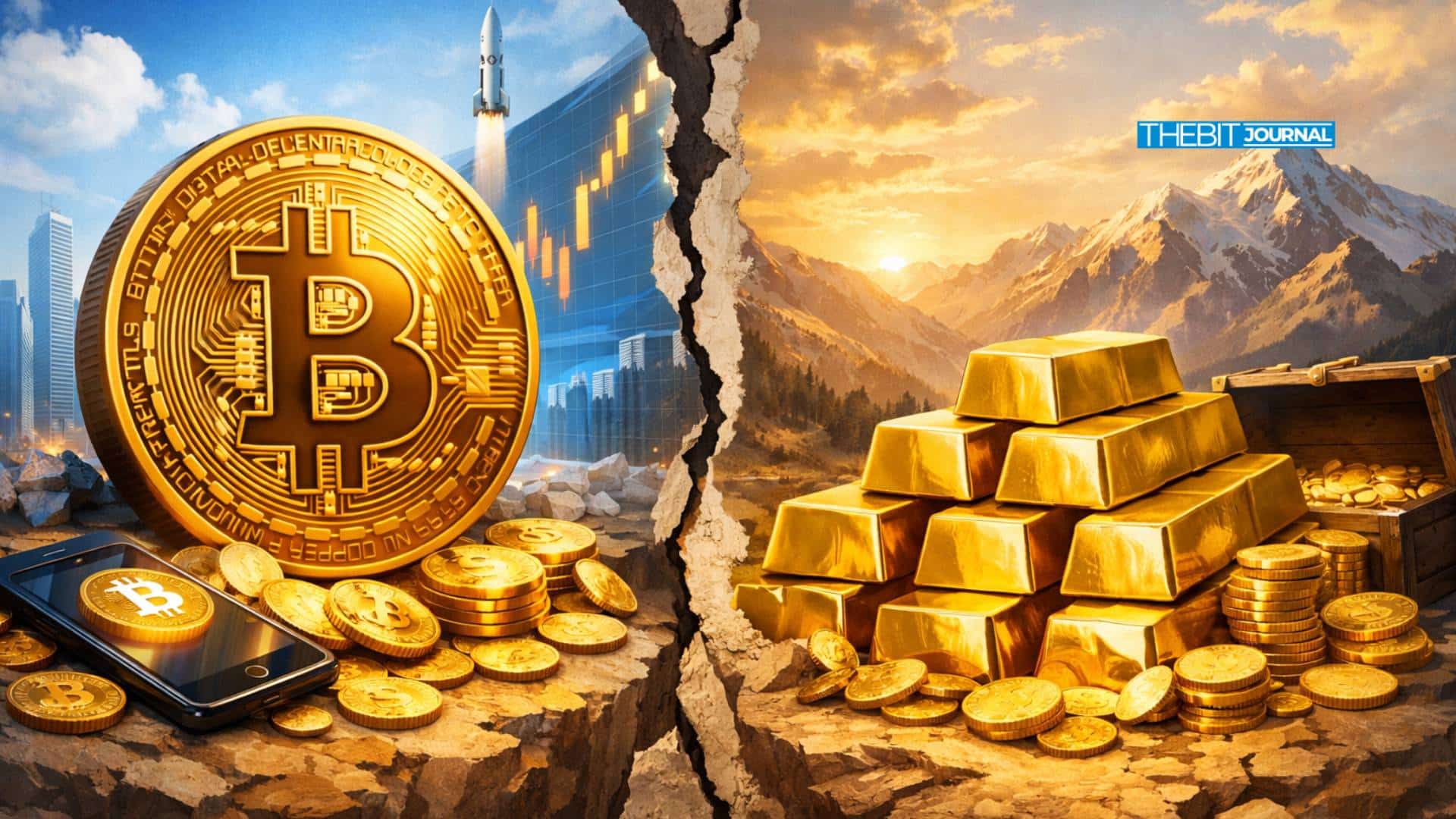
There was another layer to this round of the argument. Supporters of Bitcoin used the moment to criticize tokenized gold, saying that digital wrappers around physical bullion still carry the same old risks tied to custody, seizure, and centralized control. In their view, tokenized gold may look modern, but it does not solve the deeper trust problem the way Bitcoin tries to.
That is why the Bitcoin vs gold debate keeps finding fresh energy whenever tokenization enters the picture. It is not just about metals versus code. It is about whether a digital asset should depend on a real-world custodian at all.
The market numbers tell a more nuanced story
At the time of the discussion, Bitcoin was trading near $71,693 and rising over the previous 24 hours, while gold had slipped to around $5,020. That short-term divergence pushed the gold-to-Bitcoin ratio lower, which some traders read as a sign that Bitcoin was regaining relative strength. In practical terms, that ratio helps investors judge opportunity cost. If Bitcoin rises faster than gold, capital starts asking hard questions. The Bitcoin vs gold debate becomes less theoretical when one asset is clearly moving with stronger momentum.
Still, momentum and dominance are not the same thing. Gold remained the world’s largest asset by market capitalization at about $34.906 trillion, while Bitcoin stood near $1.480 trillion and ranked 12th globally on the market cap table shown in the data reviewed.
It shows why institutions still treat gold as a foundational defensive asset, even when Bitcoin captures more excitement and stronger upside narratives. In other words, the Bitcoin vs gold debate may feel emotionally charged online, but the capital base behind gold remains enormous and deeply entrenched.
What crypto investors are really watching now
It is also about indicators. Price is the obvious one, but it is not the only one worth watching. Relative performance against gold matters because it reveals where risk appetite is flowing. Market capitalization matters because it shows how much institutional conviction each asset still commands.
Volatility matters because it shapes how usable Bitcoin can be in payments and treasury strategies. Adoption signals matter too, especially when public figures talk about merchants accepting BTC in ordinary commerce. Those are the details that turn the Bitcoin vs gold debate from a noisy headline into a meaningful market framework.
There is also a narrative factor that should not be ignored. Gold feels safe because it is familiar. Bitcoin feels compelling because it is programmable, borderless, and fixed in supply. In risk-off conditions, investors often lean toward what they already know. But in growth cycles, they tend to reward assets with larger upside and stronger network effects. That tension is why the Bitcoin vs gold debate refuses to fade. Each market environment gives one side a better sales pitch.
Could Bitcoin move closer to real-world payments?
Draper’s retail adoption argument deserves more attention than it usually gets. Payment adoption often begins with a simple symbolic gesture. A business adds an option. A few customers use it. Infrastructure improves. Fees become easier to manage. Reporting becomes clearer. Then what once looked fringe starts to feel normal. That path is slow, but it is how many financial habits change. The Bitcoin vs gold debate enters a different phase if Bitcoin is judged not only as digital property, but also as usable money in selected settings.
That does not mean Bitcoin is ready to replace gold, or that gold has suddenly lost relevance. It means the competition is no longer limited to store-of-value branding. Bitcoin keeps trying to expand its identity while gold largely protects the one it already has. That difference is important. Gold does not need to reinvent itself. Bitcoin still does, and that is both its risk and its appeal.
Conclusion
This latest clash did not settle anything, and perhaps that is the point. Gold still holds the scale, the history, and the comfort of tradition. Bitcoin still holds the growth story, the digital edge, and the promise of a financial system built for the internet age.
For now, the Bitcoin vs gold debate remains open because both assets speak to the same investor fear from opposite directions. One says safety through permanence. The other says safety through mathematical scarcity. Markets will keep deciding, one cycle at a time.
FAQs
What sparked the latest Bitcoin vs gold debate?
The latest Bitcoin vs gold debate gained traction after Peter Schiff criticized Tim Draper’s pro-Bitcoin remarks, especially Draper’s suggestion that retailers could gradually begin accepting Bitcoin as payment.
Why do investors compare Bitcoin and gold?
They compare them because both are seen as alternatives to fiat currency risk. Gold is valued for its long history and perceived stability, while Bitcoin is valued for its fixed supply, portability, and digital ownership model.
What is tokenized gold?
Tokenized gold is a digital token designed to represent ownership of physical gold held by a custodian. It can improve transferability, but it still depends on trust in storage, redemption, and issuer transparency.
Is Bitcoin larger than gold by market value?
No. Gold remains far larger by total market capitalization. The gap is still wide, even though Bitcoin has grown into one of the world’s largest assets.
Glossary of Key Terms
Bitcoin: A decentralized digital asset with a fixed supply of 21 million coins, often described as digital gold.
Gold-to-Bitcoin ratio: A comparative measure used to assess how gold performs relative to Bitcoin over time.
Tokenized gold: A blockchain-based digital representation of physical gold held in custody.
Market capitalization: The total market value of an asset, often used to compare size and influence across markets.
Volatility: The speed and magnitude of price movement in an asset over a given period.
Store of value: An asset that investors expect to preserve purchasing power over time.
Sources
Disclaimer: This article is for informational purposes only and does not constitute investment, financial, or legal advice. Digital assets and commodities carry risk, and readers should conduct their own research before making any financial decision.