




This article was first published on The Bit Journal.
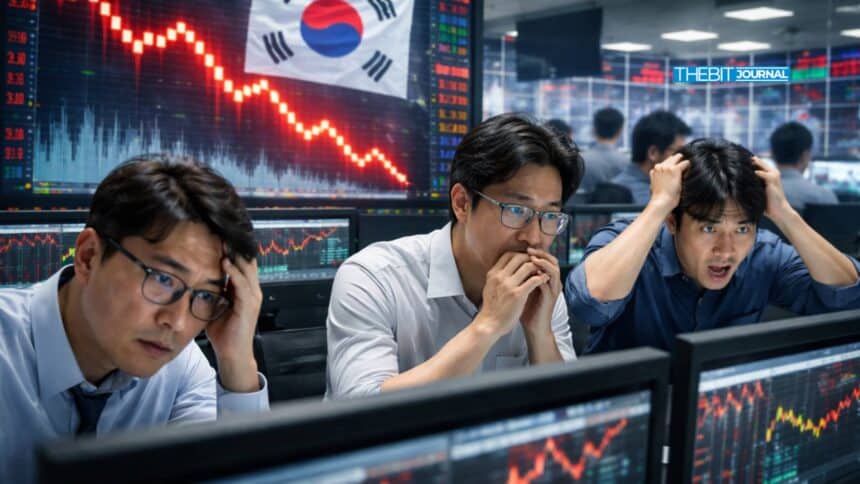
South Korean shares hit a wall this week, and crypto traders felt the jolt even if they never touch Seoul equities. The South Korean stock market crash pushed the benchmark into a circuit breaker, freezing trading for 20 minutes and turning a bad open into a full risk-off moment. When a major market needs an enforced pause, global desks tend to do the same thing: cut exposure, raise cash, and stop giving leverage the benefit of the doubt.
How the South Korean stock market crash triggered a trading halt
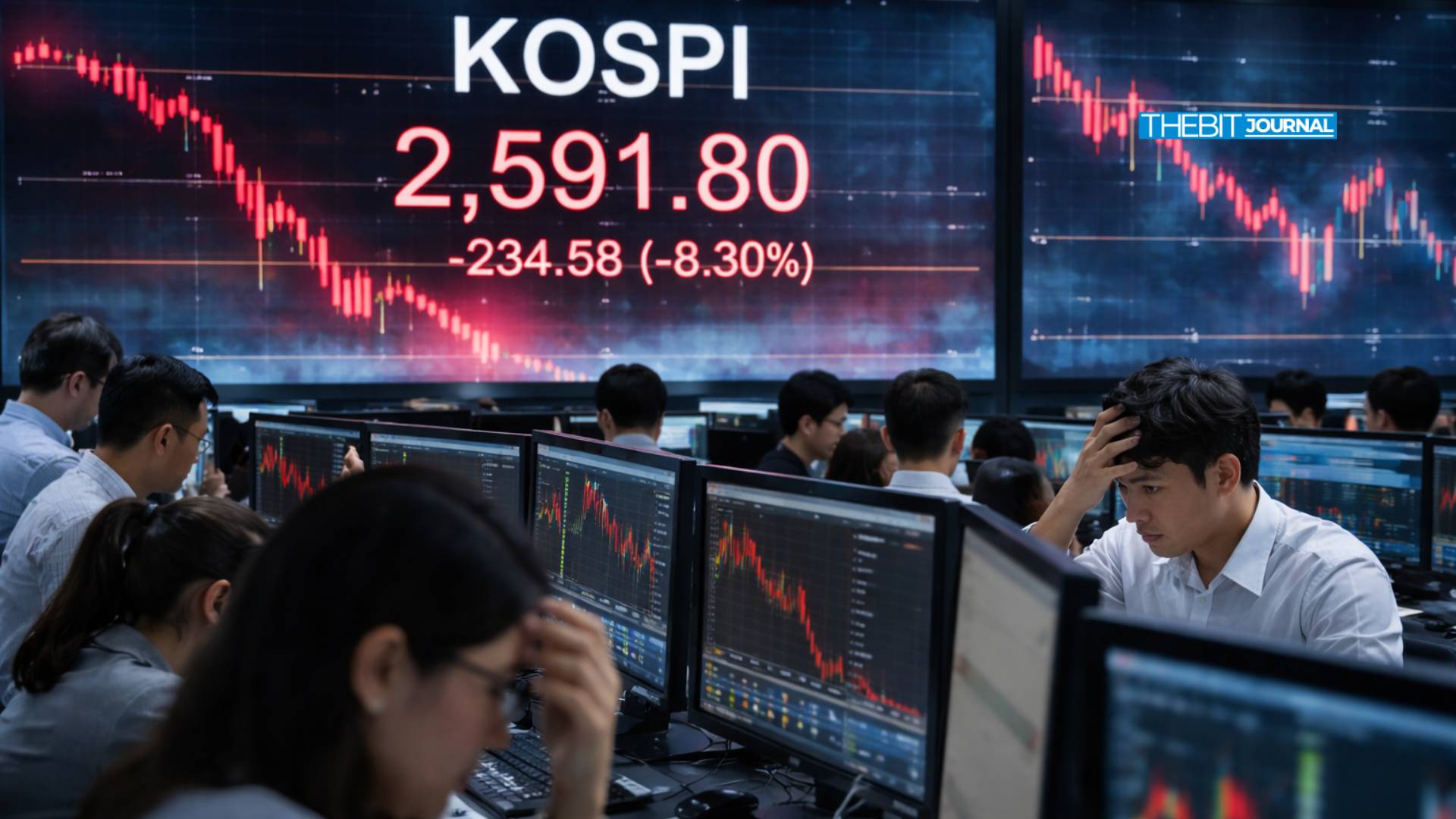
The exchange operator activated circuit breakers after losses widened past the 8% threshold, suspending trading while prices tried to find a floor. The slide built on a sharp drop from the prior session and was linked to escalating Middle East conflict fears and higher energy costs, a sensitive pressure point for an economy that imports most of its fuel.
Retail trader Jessica Chung captured the mood inside a tech hub south of Seoul:
“I heard some of my colleagues gasping ‘What the hell?’ as the KOSPI’s losses widened past 8% in the morning.”
Why the South Korean stock market crash matters for crypto
This selloff is not a crypto-specific event, but it tightens the same plumbing crypto relies on: liquidity. In risk-off bursts, market makers widen spreads, options desks raise implied volatility, and derivatives leverage becomes expensive. That mix usually hits smaller tokens first, then bleeds into majors if selling turns forced.
Bitcoin often behaves like a high-beta risk asset during equity shocks. It can still differentiate later if currency stress and policy expectations take over the narrative. The won sliding past the psychologically important 1,500-per-dollar level added to that cross-asset tension.
The signals traders used during the South Korean stock market crash
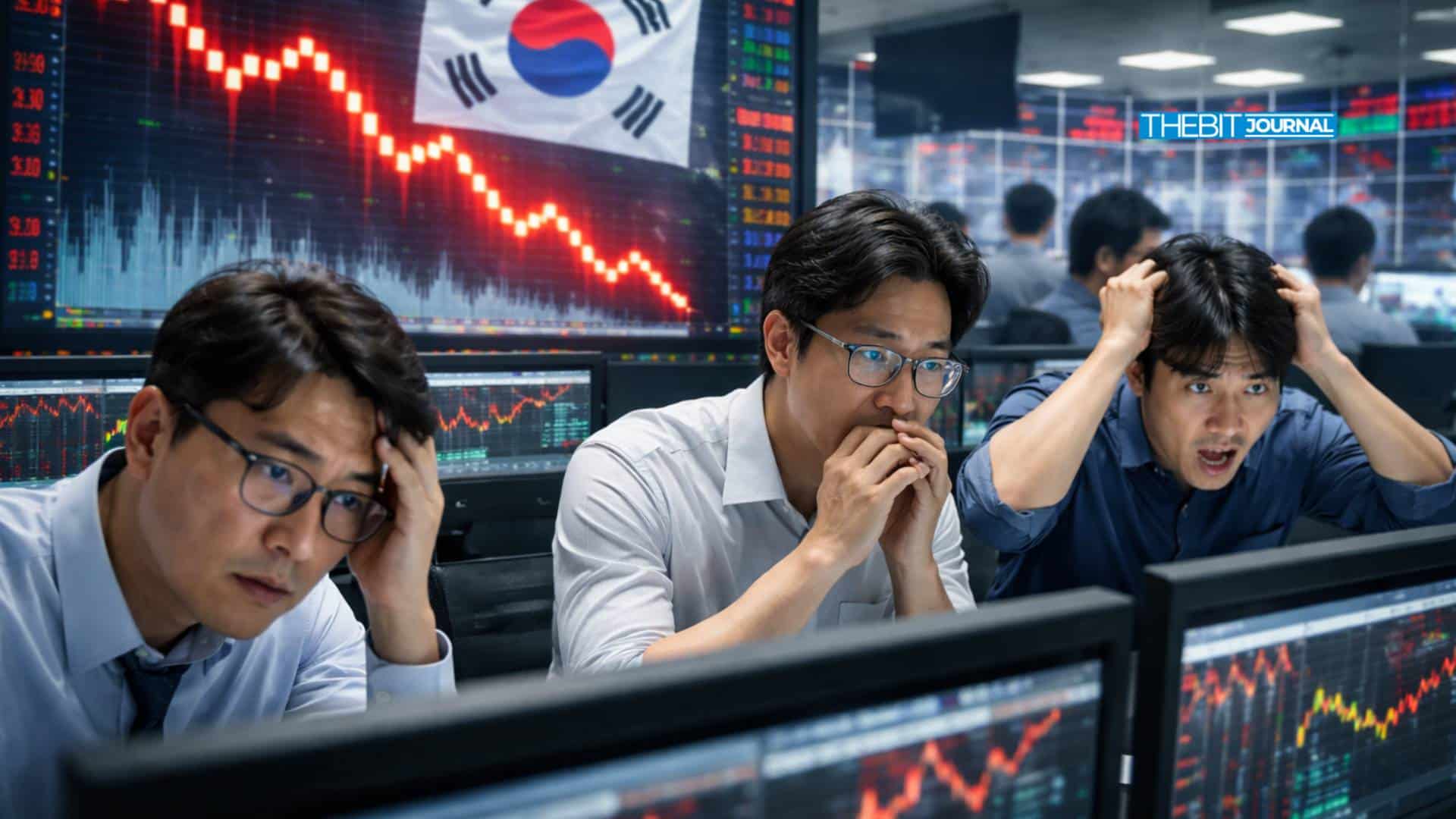
During the South Korean stock market crash, crypto desks watched indicators that translate stress into numbers. Funding rates on perpetuals were one. When funding turns negative, shorts are paying to stay short, often after long leverage has been cleared out. Liquidations were another, because liquidation waves can push price lower quickly and then fade once forced selling ends.
Flows mattered too. Exchange inflows can hint at near-term sell intent, while stablecoin moves can show whether traders are stepping to cash or preparing bids. Options implied volatility rising faster than spot often signals demand for protection.
On the equity side, analysts pointed to foreign outflows as an accelerant. Tareck Horchani, head of Prime Brokerage Dealing at Maybank Securities in Singapore, said:
“We are definitely seeing foreign outflows driving the move, particularly in the large-cap tech names that had led the rally year-to-date.”
Conclusion
The South Korean stock market crash delivered a reminder that markets do not need to be broken to be dangerous, they only need to be crowded. For crypto, the practical response is to track leverage, liquidity, and flows, then size risk accordingly. The South Korean stock market crash keeps risk filters cautious across tokens today. If risk appetite stays fragile, crypto can remain sensitive to sudden deleveraging even when the long-term thesis has not changed.
FAQs
Q: Does the South Korean stock market crash automatically mean crypto will fall?
A: It does not guarantee direction, but it often raises volatility and reduces leverage.
Q: What is the quickest crypto stress signal during this episode?
A: Funding and liquidations usually react first.
Q: Can Bitcoin decouple after the South Korean stock market crash?
A: Yes, especially if currency volatility becomes the driver.
Glossary
Circuit breaker: A rules-based pause after a sharp move to reduce disorderly trading.
Funding rate: A periodic payment between long and short perpetual traders.
Liquidation: A forced close of leveraged positions when margin is insufficient.
Sources
Disclaimer: This article is for informational purposes only and does not constitute investment advice. Crypto is volatile, and readers should assess risk independently.