




Last updated on, 19th July, 2026
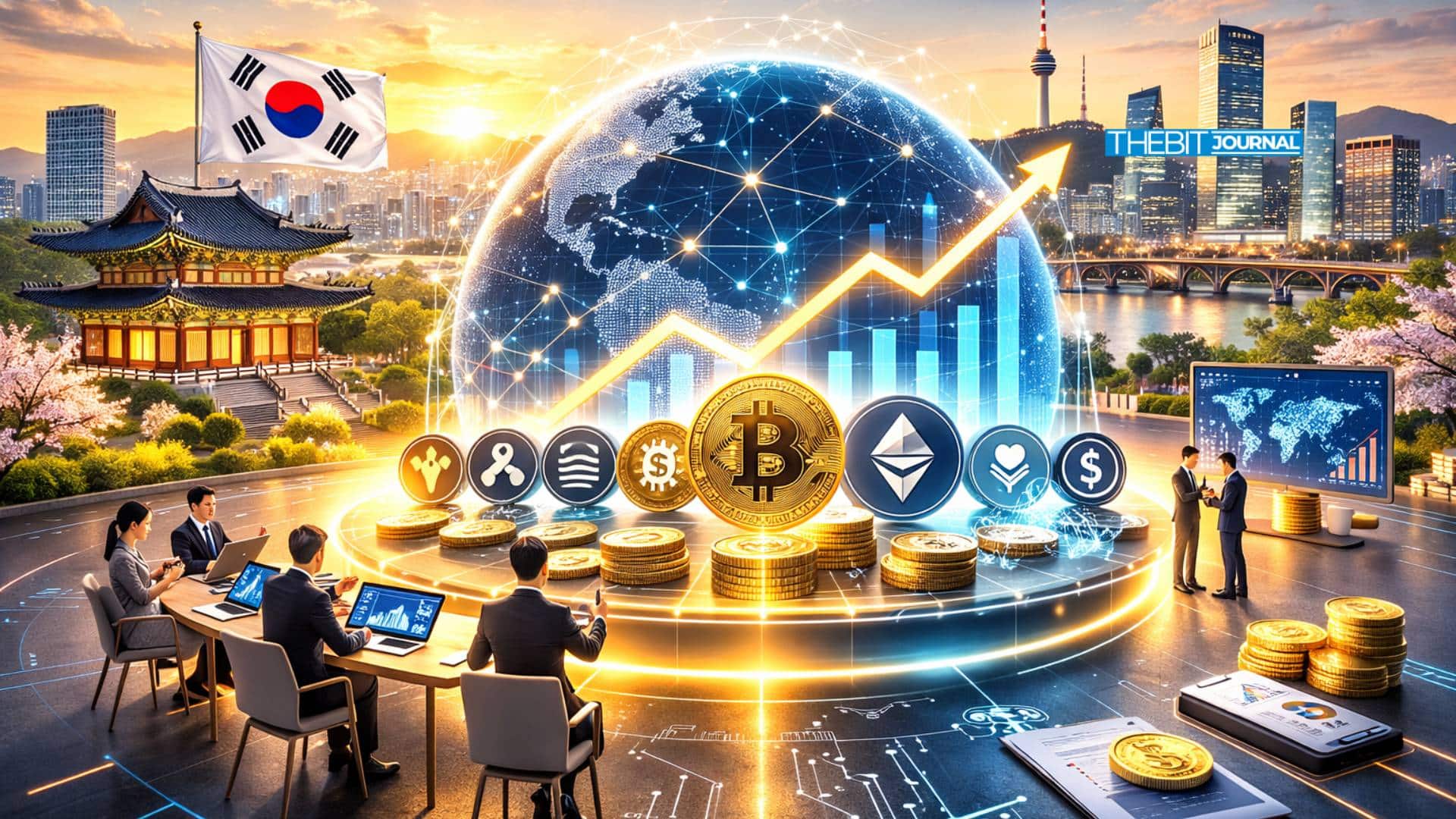
South Korea today is loosening Asia’s watched crypto restrictions. After years of keeping corporations on the sidelines, regulators are moving from an outright block to a supervised entry, letting listed companies and registered professional investment firms trade digital assets again under new guidance. The South Korea corporate crypto ban is not ending with a blank check. It is closer to a carefully marked on-ramp, built to bring institutional flows back without inviting the kind of frenzy that originally triggered the crackdown.
Why the South Korea corporate crypto ban happened in 2017
The South Korea corporate crypto ban traces back to 2017, when retail speculation surged and authorities worried about money laundering, manipulation, and spillover risks to the broader financial system.
The market kept moving, but it moved mostly on retail energy. That helped create a distinct structure: heavy local participation, periodic bursts of volatility, and persistent questions about how much activity was pushed offshore to gain exposure through foreign venues and products.
What the new framework actually allows
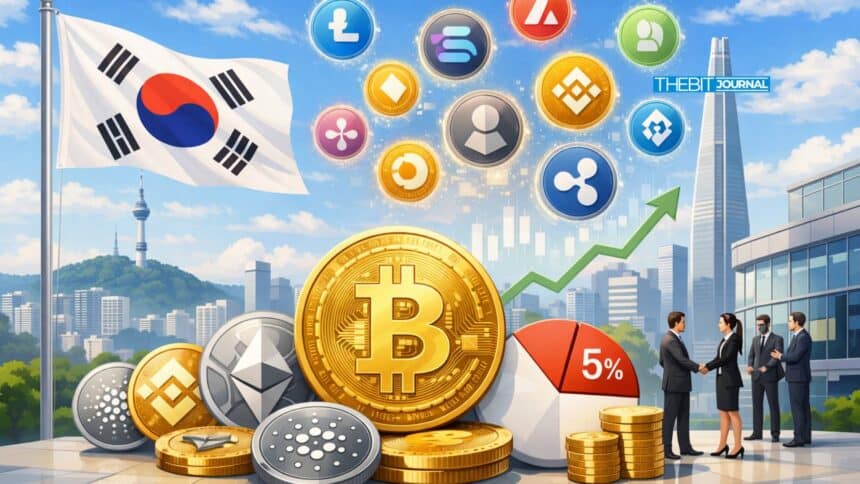
The end of the South Korea corporate crypto ban is not a free-for-all. The Financial Services Commission’s updated approach centers on eligibility, limits, and venue control. Corporate participation is aimed at publicly listed entities and professional firms that can show governance and risk controls. A company can allocate up to 5% of its equity capital to crypto, which is large enough to matter, but small enough to prevent a single treasury decision from becoming a systemic headache.
Asset choice is also narrowed. Investments are restricted to the top 20 cryptocurrencies by market value, a design that steers corporate flows toward the deepest markets and away from thin, easily distorted tokens. Trading is expected to run through regulated domestic exchanges, keeping oversight and surveillance closer to home.
Corporate Access Is Part of a Phased Regulatory Shift
South Korea’s policy change began with a Financial Services Commission roadmap published in February 2025, rather than a sudden reversal of the restrictions applied through banking guidance since 2017. The roadmap first opened limited transactions for government bodies, nonprofit organizations, universities, charities, and licensed crypto exchanges before moving toward professional investors and listed companies.
This staged approach is important because corporate access still depends on real-name bank accounts, internal approval procedures, anti-money-laundering checks, custody arrangements, and documented risk controls. The proposed 5% annual limit and top-20 asset rule are designed to keep treasury exposure concentrated in relatively liquid markets, but they do not guarantee that every eligible company will immediately begin buying crypto. Corporate boards will still need to consider accounting treatment, price volatility, shareholder interests, and whether digital assets serve a genuine treasury purpose.
Prices of Major Assets Likely to Receive Early Attention
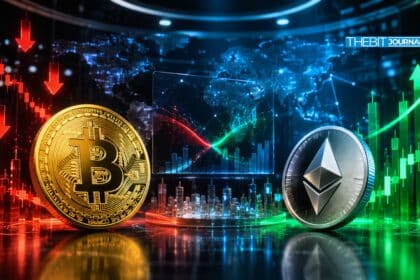
Bitcoin and Ether are likely to remain the clearest institutional candidates because they offer deeper global liquidity, established custody infrastructure, and more mature price discovery than smaller tokens. Other high-cap assets may qualify under a top-20 framework, but eligibility can change as market rankings shift and domestic exchanges apply their own listing standards. The table below provides a market snapshot on July 19, 2026, rather than a prediction of which assets South Korean companies will purchase.
| Digital asset | Approximate price | Potential corporate appeal | Key risk |
|---|---|---|---|
| Bitcoin (BTC) | $64,723 | Deepest liquidity and widely recognized treasury asset | High volatility and accounting exposure |
| Ether (ETH) | $1,624.95 | Large market, established network and institutional custody | Regulatory and technology-related risk |
| XRP | $1.059 | Strong liquidity and cross-border payment use case | Greater sensitivity to legal and policy changes |
| Solana (SOL) | $77.97 | Active network and broad trading availability | Higher technical and market volatility |
Current market prices can change rapidly, so the more useful signal will be whether Korean exchange volumes, order-book depth, and corporate account openings rise after implementation.
Why this matters for Bitcoin, Ether, and market structure
Because the rulebook caps size and narrows the eligible list, the South Korea corporate crypto ban rollback is more likely to change market quality than spark a price boom. If corporate activity ramps up, it should show up first in tighter spreads, steadier liquidity, and cleaner execution for large orders. It is less about a sudden pop and more about smoother plumbing.
Selective access matters, because concentrated demand tends to support the largest assets first, especially Bitcoin and Ether, while smaller projects may see little direct benefit.
Indicators traders can track to confirm the shift
To judge whether the South Korea corporate crypto ban change is moving from paper to reality, traders tend to watch practical indicators.
Liquidity is the first tell. If order books deepen and spreads narrow on major pairs, that is a sign that larger, price-sensitive participants are active. Next is volume consistency. Retail-driven markets often spike around headlines and then fade; professional flows usually look steadier across sessions.

Volatility deserves attention, but in context. It can rise at the start of a new regime as risk desks test limits and execution patterns change, then ease once behavior normalizes. Finally, the local price premium, often called the kimchi premium, can offer clues about whether domestic pricing is becoming more efficient and more connected to global markets as the South Korea corporate crypto ban fades from view.
The bigger story: stablecoins and spot ETFs in 2026
Officials have framed the South Korea corporate crypto ban reversal as part of a broader 2026 agenda that includes stablecoin rules and groundwork for spot crypto exchange traded funds. Stablecoins matter because they are the settlement backbone for much of crypto trading. Spot ETFs matter because they can channel demand through regulated wrappers, potentially broadening participation beyond direct corporate treasuries. If those pieces advance, the South Korea corporate crypto ban shift could carry more weight than the initial 5% limit suggests.
Conclusion
The South Korea corporate crypto ban is ending in a way that looks deliberate, not celebratory. The rules invite corporate participation while keeping token selection and scale under control. In the near term, the market should expect gradual effects: better liquidity, more professional execution, and clearer regulatory footing. Over time, the real acceleration may depend on how stablecoin policy and spot ETF pathways develop across 2026.
FAQs
What is the South Korea corporate crypto ban?
The South Korea corporate crypto ban was a restriction introduced in 2017 that largely prevented corporations and professional investors from trading crypto domestically.
How much crypto exposure can a listed company take now?
Under the updated guidance, eligible listed companies can allocate up to 5% of equity capital to crypto, subject to compliance and governance controls.
Which assets are allowed under the new rules?
Eligible investments are limited to the top 20 cryptocurrencies by market value, focusing on more liquid markets.
Glossary of key terms
Equity capital: A measure of a company’s net worth used as the base for allocation limits.
Liquidity: How easily an asset can be traded without moving the price sharply.
Spread: The gap between the best bid and best ask, where tighter spreads usually signal healthier trading.
Order book depth: The amount of buy and sell interest across price levels.
Kimchi premium: A local price premium for crypto in South Korea relative to global markets.
Disclaimer: This article is for informational purposes only and does not constitute investment advice. Digital assets are volatile, and readers should consider risk carefully before investing.
Sources