






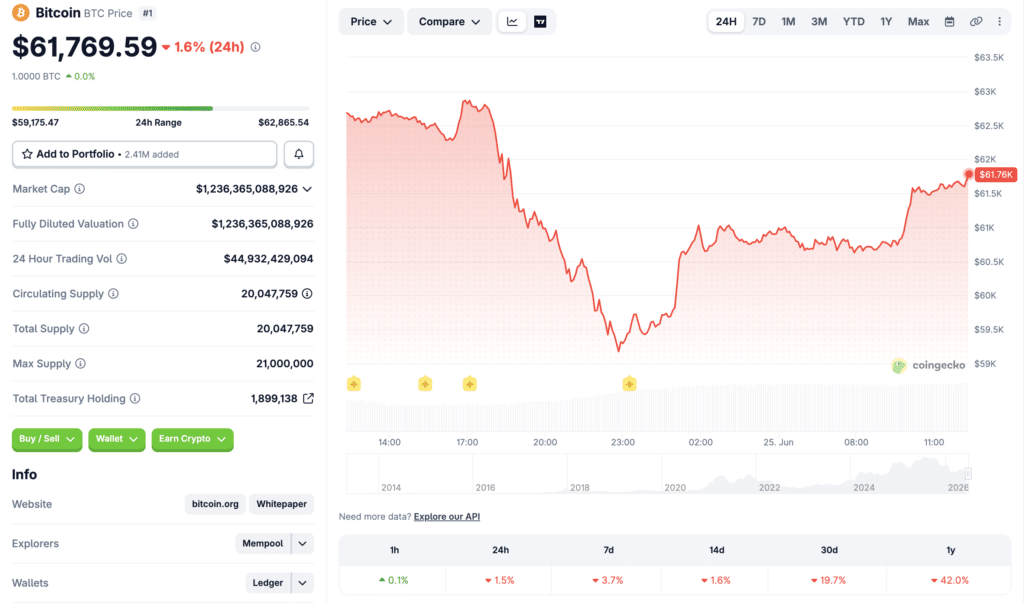
Strategy STRC has become one of the most interesting events that occur in the corporation’s Bitcoin industry amid growing financial pressure and difficulty in maintaining an aggressive growth model. Bitcoin is the largest cryptocurrency in the world, whose price is approximately $61,640, and market capitalization exceeds $1.23 trillion. Although institutionalization is constantly growing, Strategy company (which was known before as MicroStrategy), comes under increasing criticism for how it finances the growth of its Bitcoin treasury.
The focal point of this situation is Strategy STRC – it is a preferred stock tool that allows purchasing Bitcoin and receiving high dividends from investments. Nonetheless, recent market changes make us believe that the company has come to a point where its financing model will have to change. High dividend payments, lack of cash, and purchase of Bitcoin require the same amount of money from the company. This is why many people are wondering about the sustainability of the financing method, what Strategy STRC means for shareholders, further Bitcoin buying, and so on.
Strategy STRC Stress Forces Difficult Choices for Management
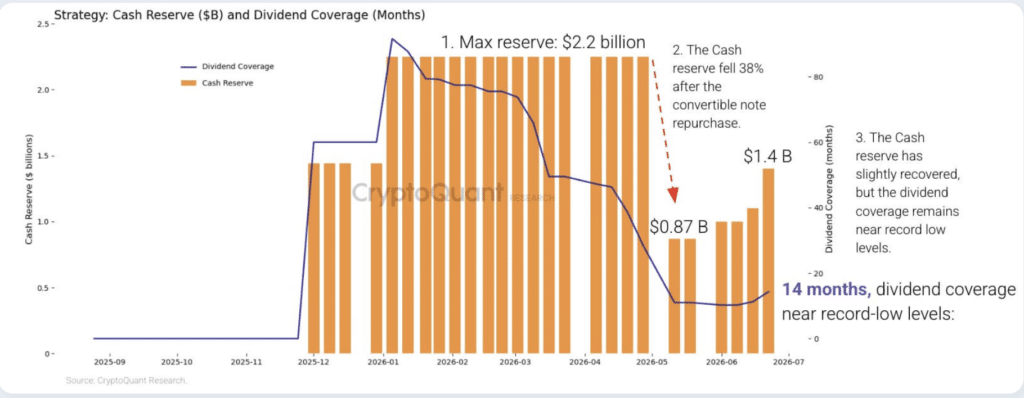
The recent pressure surrounding Strategy STRC emerged after the company used roughly $1.5 billion to repurchase convertible notes. While the move reduced future debt obligations, it significantly reduced liquid capital available to support dividends and operational flexibility.
As concerns grew, the STRC preferred stock fell well below its intended $100 value, dropping to around $82.50. This decline triggered fresh concerns regarding Strategy STRC stress and the company’s ability to maintain investor confidence. The challenge is straightforward yet significant. Capital allocated toward rebuilding reserves cannot simultaneously be used for Bitcoin acquisitions. This situation places management in a difficult position as competing priorities continue to grow.
Why Strategy STRC Is Under Pressure in 2026
Many analysts believe the pressure on Strategy STRC stems from rapidly increasing dividend obligations. According to market estimates, annual preferred dividend commitments have expanded dramatically, reaching approximately $1.2 billion compared with roughly $300 million earlier in the year.
At the same time, Strategy cash reserves have declined substantially. This combination creates a situation where recurring financial obligations continue rising while liquidity becomes more constrained. The issue has sparked intense debate among analysts evaluating the Strategy funding model. Some view the current environment as temporary stress, while others believe it signals deeper structural challenges that could affect future Bitcoin accumulation plans.
Strategy Cash Reserves Versus Bitcoin Purchases
One of the biggest questions facing investors involves Strategy STRC cash reserves versus Bitcoin purchases. Historically, Michael Saylor Strategy focused aggressively on acquiring Bitcoin whenever capital became available. That strategy helped build one of the largest corporate Bitcoin treasury positions in history.
Recent actions suggest priorities may be shifting. Strategy raised approximately $335.5 million through MSTR stock sales but allocated nearly 90% of those proceeds toward rebuilding cash reserves. Only a small portion funded additional Bitcoin acquisitions. This decision highlights how liquidity management has become increasingly important. For now, preserving financial flexibility appears more important than maximizing Bitcoin accumulation.
How Strategy STRC Impacts Bitcoin Holdings
Despite recent concerns, Strategy Bitcoin holdings continue expanding. The company currently controls more than 847,000 Bitcoin acquired at an average purchase price exceeding $75,000 per coin. This massive position remains the foundation of the firm’s investment thesis.
However, understanding how Strategy STRC impacts Bitcoin holdings requires looking beyond total Bitcoin ownership. The key issue involves how much Bitcoin exposure exists on a per-share basis. As additional shares enter circulation, shareholders own a smaller percentage of the overall company. Even if total Bitcoin holdings increase, shareholder exposure may not grow at the same pace, creating concerns about long-term value creation.
Strategy Stock Dilution Becomes a Growing Concern
The debate surrounding Strategy stock dilution has intensified following recent fundraising efforts. Selling additional MSTR stock provides immediate liquidity and helps strengthen balance sheet flexibility. However, it also increases the total number of outstanding shares.
This creates a trade-off that many investors find difficult to ignore. Existing shareholders effectively become a funding source supporting both Bitcoin acquisitions and cash reserve rebuilding. While supporters argue that new capital can create long-term value, critics point to Strategy STRC and shareholder dilution risks as a growing concern. The sustainability of this approach depends heavily on maintaining investor demand and market confidence.

Can Strategy STRC Continue Buying Bitcoin?
The question of whether Strategy STRC can continue buying Bitcoin has become one of the most discussed topics among cryptocurrency investors. Some analysts argue that Bitcoin purchases should temporarily slow until dividend coverage and liquidity metrics improve.
Others believe the current market weakness represents an opportunity rather than a threat. Supporters note that the company still controls billions of dollars worth of Bitcoin and retains access to capital markets. The disagreement reflects broader uncertainty surrounding the future of the Strategy funding model. Investors remain divided between prioritizing balance sheet stability and maintaining aggressive Bitcoin accumulation strategies.
Strategy STRC Preferred Stock Decline Explained
The Strategy STRC preferred stock decline explained debate centers on investor expectations rather than outright structural failure. Some market observers compare the decline to a traditional repricing process where investors simply demand higher yields due to increased risk perceptions.
Supporters emphasize that STRC remains a preferred stock security rather than a stablecoin or algorithmic product. Meanwhile, critics argue that the falling price reflects concerns about liquidity, dividend coverage, and capital allocation. Regardless of interpretation, the decline highlights growing sensitivity among investors toward the company’s increasingly complex financial structure.
Strategy STRC Crisis and MSTR Stock Outlook
The Strategy STRC crisis and MSTR stock outlook remain closely connected. As long as MSTR stock trades at a premium relative to underlying Bitcoin exposure, Strategy can continue raising capital efficiently. That premium has been a cornerstone of the company’s expansion strategy.
However, risks increase if market sentiment weakens or capital costs rise. Lower premiums would make fundraising less attractive and reduce the efficiency of new equity issuance. Investors are therefore monitoring both Bitcoin price performance and corporate financing conditions. The future trajectory of MSTR stock could significantly influence Strategy’s ability to sustain growth without excessive dilution.

What Strategy STRC Means for Bitcoin Investors
Understanding what Strategy STRC means for Bitcoin investors extends beyond a single company’s balance sheet. Strategy remains one of the largest and most influential institutional holders of Bitcoin globally. Its financing decisions often serve as a benchmark for other corporate Bitcoin treasury companies.
If the model succeeds, it could reinforce institutional confidence in large-scale Bitcoin accumulation strategies. If challenges intensify, it may encourage corporations to adopt more conservative treasury approaches. Consequently, developments surrounding Strategy STRC and the future of Bitcoin accumulation could have broader implications across the digital asset industry.
Conclusion
Strategy STRC has evolved into one of the most closely watched corporate finance stories in the cryptocurrency market. Rising dividend obligations, declining liquidity, and growing reliance on equity issuance have created difficult decisions for management. The company must now balance shareholder interests, reserve rebuilding, and Bitcoin expansion without undermining long-term confidence.
While Strategy Bitcoin holdings remain substantial, the growing debate over dilution and liquidity cannot be ignored. Investors should closely monitor cash reserves, dividend coverage, and future fundraising activities. The next phase of Michael Saylor Strategy may determine whether its Bitcoin-first model becomes a blueprint for corporate adoption or a cautionary tale about financial complexity.
Appendix: Glossary of Key Terms
Strategy STRC: Variable Rate Series A Perpetual Stretch Preferred Stock issued by Strategy.
MSTR Stock: Common shares of Strategy traded on public markets.
Bitcoin Treasury Company: A corporation that holds Bitcoin as a major treasury asset.
Stock Dilution: Reduction in shareholder ownership percentage caused by issuing new shares.
Dividend Coverage: The ability of a company to meet dividend obligations using available resources.
Corporate Bitcoin Treasury: A strategy where businesses allocate capital into Bitcoin holdings.
Frequently Asked Questions About Strategy STRC
What is Strategy STRC?
Strategy STRC is a preferred stock product designed to help Strategy raise capital while funding Bitcoin purchases.
Why is Strategy STRC under pressure in 2026?
The pressure stems from rising dividend obligations, declining liquidity reserves, and increasing investor concerns regarding capital allocation.
How does Strategy STRC affect shareholders?
The company often raises capital through stock issuance, which can increase dilution and reduce ownership percentages for existing shareholders.
Can Strategy continue buying Bitcoin?
Yes, but future purchases may depend on liquidity levels, dividend obligations, and access to capital markets.
Why are investors concerned about dilution?
Additional stock issuance increases the share count, potentially reducing per-share Bitcoin exposure and shareholder ownership.
References