







The way we own and invest in things is changing fast. In the past, you had to buy a whole property or an entire painting if you wanted to invest in it. Now, thanks to blockchain, you can own a small piece of these assets without spending millions. This process is called tokenization of real-world assets or RWAs. It is opening doors for more people to invest in things they could never afford before.
In this blog, we will explain tokenization in simple words. We will look at how it works, why it matters, and how it is changing investments in real estate, fine art, and many other things.
What is Tokenization of Real-World Assets?
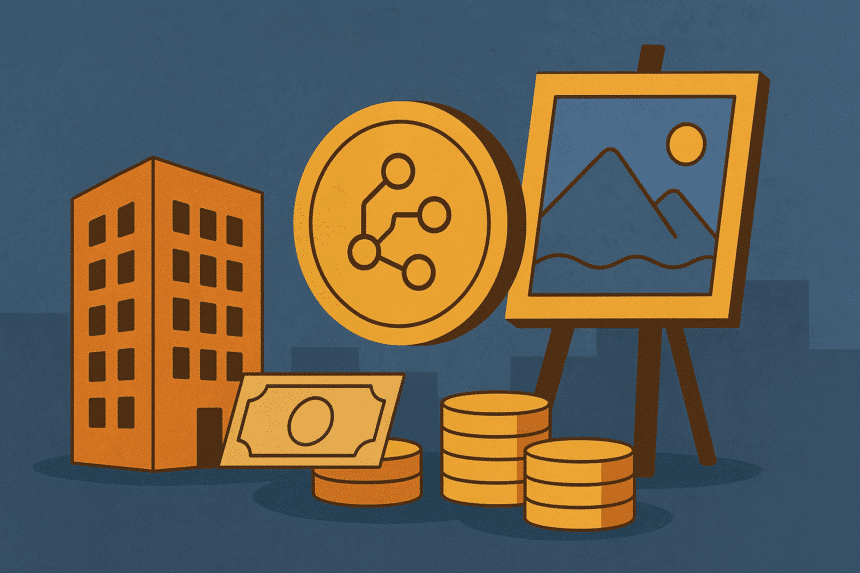
Real-world assets are those that you can touch, see, and use in day-to-day life. These include houses, land, cars, gold, art, and even rare collectibles. Tokenization implies the conversion of the possession of these actual items into digital tokens in a blockchain. The asset is divided into tokens that form a share. In case you have one token, you will own that proportion of the asset. It is as if you owned a stock in a company, but rather than owning a fraction of a business, you own a fraction of a physical object.
The biggest difference between owning something physically and owning it digitally is how you trade it. With tokenization, you can buy and sell your share online easily, without the paperwork or delays of traditional sales.
How Does Tokenization Work for Real-World Assets?
Tokenization is made possible by blockchain technology. This is the same technology that powers cryptocurrencies like Bitcoin and Ethereum.
The process is simple to understand when broken down:
- Identify the Asset – A real object like a building, artwork, or gold is chosen for tokenization.
- Valuation – The total value of the asset is calculated.
- Create Tokens – The asset is divided into digital parts (tokens) using blockchain.
- Sell or Distribute Tokens – Investors can buy these tokens.
- Ownership Rights – Holding a token gives you the right to a share of profits, usage, or value.
Imagine a $1 million apartment building. Instead of one person buying it all, the owner divides it into 1,000 tokens. Each token is worth $1,000. People can buy as many tokens as they want.
| Asset | Total Value | Number of Tokens | Price Per Token |
| Apartment Building | $1,000,000 | 1,000 | $1,000 |
This way, 100 different people could each invest $10,000 and own 10 tokens. Everyone owns a share without having to buy the whole building.
Benefits of Tokenizing Real-World Assets
tokenization of real-world assets is becoming popular because it changes how people invest. It removes many barriers that existed in the past.
Easier Access to Investments
You no longer need millions to invest in prime real estate or fine art. Small investors can now join the same markets as wealthy individuals.
Lower Transaction Costs
Traditional buying and selling often involve banks, agents, and lawyers. This means high fees. Tokenization cuts down these middlemen, lowering costs.
Faster Transactions and Settlements
Blockchain allows instant transfers, unlike traditional systems that can take weeks or months.
More Transparency and Security
Every transaction is recorded on a blockchain. It cannot be changed without everyone knowing. This builds trust.
| Feature | Traditional System | Tokenized System |
| Transaction Speed | Weeks or Months | Instant to Few Minutes |
| Minimum Investment | Very High | Very Low |
| Fees | High | Lower |
| Transparency | Limited | High |
| Global Access | Limited | Worldwide |
Tokenization of Real Estate
Real estate is one of the top areas for tokenization of real-world assets. Property is expensive, so fractional ownership helps more people invest.
In simple words, fractional ownership means you buy only a part of the property. If the property makes rental income or increases in value, you get a share based on the tokens you own.
Example: A $500,000 apartment is split into 5,000 tokens. If you buy 50 tokens, you own 1% of the apartment.
| Apartment Value | Number of Tokens | Tokens Owned | Ownership Share |
| $500,000 | 5,000 | 50 | 1% |
Tokenization of Fine Art
Fine art has always been for the rich. Buying a Picasso or Van Gogh is not possible for most people. Tokenization is changing that.
Now, a $20 million painting can be split into thousands of tokens. A person can invest $500 and still own a fraction of that masterpiece.
Art tokenization benefits both artists and investors:
- Artists can raise money without selling the whole artwork.
- Investors can trade art shares like they trade stocks.
Example: The “Everydays” digital art by Beeple was sold for $69 million in 2021. If tokenized, small investors could have owned a share of this famous work.
Other Assets That Can Be Tokenized
Tokenization is not limited to real estate and art. Many types of assets can be turned into tokens.
Commodities
Gold, silver, oil, and other raw materials can be tokenized. Instead of buying a whole gold bar, you can own a small share digitally.
Collectibles
Luxury watches, rare cars, and sports memorabilia are also being tokenized. This lets fans and collectors invest together.
Intellectual Property and Royalties
Music rights, patents, and movie revenues can be shared through tokenization. Owners can sell a part of their future earnings.
| Asset Type | Example | Benefit |
| Real Estate | Apartment Building | Fractional Ownership |
| Fine Art | Famous Painting | Affordable Investment |
| Commodities | Gold | Easy Trading |
| Collectibles | Luxury Watch | Shared Ownership |
| Intellectual Property | Music Royalties | Passive Income |
Risks and Challenges of Tokenization
While tokenization of real-world assets is exciting, it has some risks.
Legal and Regulatory Issues
Different countries have different rules for tokenized assets. This can make trading complicated.
Market Risks
Token prices can go up and down just like stocks. You might not always make a profit.
Technology Risks
If the blockchain platform is hacked or fails, your tokens could be at risk. It is important to research well before investing in any tokenized asset.
How to Start Investing in Tokenized Assets
If you want to try investing in tokenized assets, start small and be careful.
- Choose a Platform – Many online platforms now offer tokenized asset investments.
- Do Your Research – Understand the asset and the risks.
- Check Regulations – Make sure the investment follows your country’s laws.
Some popular platforms focus on real estate tokenization, while others offer art, gold, or collectibles. Pick one that matches your interests.
Future of Tokenized Real-World Assets
Analysts are of the view that tokenization will continue to expand. Nearly any value can be tokenized in the future. It is beginning to attract the attention of governments and large corporations. Others are developing regulations to ensure tokenization is more secure. Others are starting their platforms.
Decentralized finance (DeFi) and Web3 will be significant as well. Such new systems will facilitate investment, trading, and ownership of assets even more conveniently digitally.
Final Thoughts
The process of tokenization of real-world assets is transforming the investment process. It allows more individuals to have a share of things such as property and art, which are very costly. It brings speed, cost, and accessibility of investing to everyone. Although it is a risk, the payoff is large.
Whether it is a piece of real estate or a fine art, tokenization is breaking new ground in the world of investors. It is an excellent future for this new form of owning and trading assets.
Summary
The tokenization of real-world assets (RWA) is revolutionizing the way people invest in property, art, and other valuable assets. It enables fractional ownership, high-speed transactions, and accessibility to any location because it is possible to convert the ownership into digital tokens on a blockchain. This blog describes what tokenization is, how it works, its advantages and drawbacks, and its effect on real estate, fine art, commodities, collectibles, and intellectual property. This guide will help you learn more about the expanding world of tokenized assets, whether you are a first-time investor or a seasoned trader.
Glossary
Blockchain – A digital system that records transactions in a secure, public, and unchangeable way.
Tokenization – The process of converting ownership of an asset into digital tokens on a blockchain.
Real-World Assets (RWAs) – Physical or tangible items like real estate, art, gold, or collectibles.
Fractional Ownership – Owning a small portion of an asset instead of the whole thing.
Smart Contract – A self-executing digital agreement stored on a blockchain that runs automatically when conditions are met.
Decentralized Finance (DeFi) – Financial systems that run on blockchain without traditional banks or intermediaries.
Commodities – Raw materials like gold, oil, or silver that can be bought and sold.