





Digital money now sits on kitchen tables and appears in school group chats. Parents pay with phones, move coins across borders and keep part of their savings in digital form. In that setting, the obvious question appears: how can families include children in this new landscape without turning pocket money into pure speculation?
One large global exchange has answered with Binance Junior, promoted as a dedicated junior wallet for kids and teenagers. The app was unveiled during a major blockchain week event in early December 2025 as a stand-alone, parent-controlled mobile experience focused on long-term savings rather than fast trading. It allows adults to deposit crypto on behalf of children aged roughly 6 to 17, set spending and transfer limits and, in some regions, enable yield products when local rules allow.
The concept is straightforward: parents stay in full control of the money and the rules. Children see real balances, learn basic money skills and begin to understand crypto step by step inside a tightly supervised environment.
How the product works and where the junior wallet sits in the ecosystem
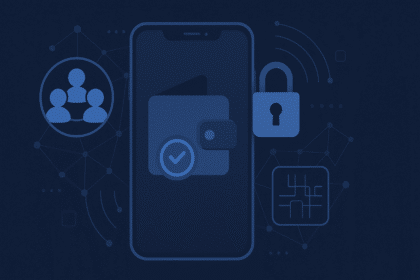
From a technical point of view, the junior wallet is a custodial sub-account that sits under a fully verified adult profile. A parent or guardian completes identity checks on the main account, then creates a linked profile for a child between 6 and 17, or up to the local age of majority, where that is higher. The child signs in through a separate mobile app that shows a simplified dashboard focused on balances, savings and a very small set of actions.
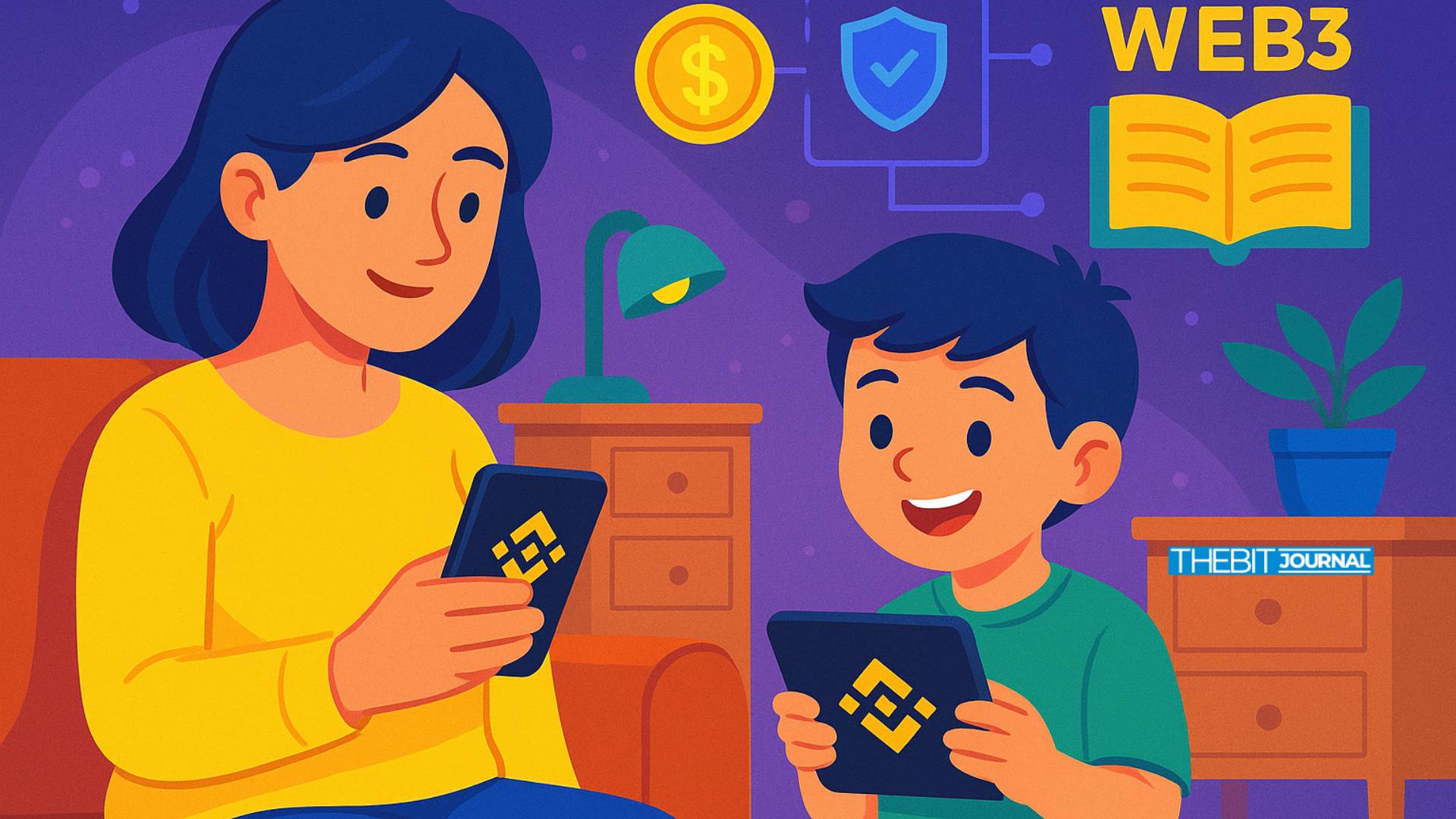
Functionally, the experience looks closer to a traditional custodial bank account than to a trading screen. Legal responsibility and ultimate authority stay with the adult. The child gains a sense of ownership by watching deposits arrive, setting simple savings goals and monitoring small rewards over time. In this sense, the junior wallet acts as a bridge between familiar ideas like piggy banks and the more abstract world of digital assets.
Funding, controls and earn features
When a parent activates the junior wallet, the first practical decision is how funds will move. Money can flow in from the main account on the platform or from an external on-chain wallet, as long as the network and asset are supported. Every transfer appears on a shared dashboard, so adults see exactly when and how balances change. Parents decide whether the child can send funds only back to the main profile, to a sibling account or to a limited circle of other supervised users, subject to local regulations.
Controls are central to the design. Spot trading is disabled. Margin, futures and other leveraged products do not appear. Transfers to unknown third parties are blocked. Instead, parents can, in many regions, route part or all of the balance into flexible Simple Earn style products that pay a yield on supported assets. These products work like on-platform savings, with transparent rates and no complex DeFi steps.
Used this way, the junior wallet becomes a digital savings jar inside a larger ecosystem. Children can see that holding a relatively steady asset over time can generate extra return, which opens the door to conversations about interest, compounding, risk and reward, without exposing them to the stress of fast intraday price swings.
Family-centric savings and the education angle
Industry coverage of the launch has framed the app as part of a wider move toward family-centric finance in the digital asset world. Public statements around the release stress that parents control every key setting, from daily limits and asset choices to the decision to enable yield products at all. Children see large numbers, clear labels such as “Save”, “Earn” and “Send”, and do not face the usual wall of charts and order books.
The educational angle sits at the center of the pitch. Global studies repeatedly show that many teenagers finish school without a firm grasp of interest rates, inflation or basic risk management. At the same time, more households use stablecoins for remittances, hold long-term crypto positions, or interact with tokens in games. Binance links the app to wider learning efforts, including in-app explainers and a child-friendly book, “ABCs of Crypto”, that walks families through blockchain basics and digital money concepts.
Used carefully, the junior wallet can support regular family conversations about saving for specific goals, choosing more stable assets rather than highly volatile ones, and staying patient through normal market ups and downs. It turns an abstract topic into a shared routine, such as checking a small savings pot once a month and talking about what changed and why.

Risks, regulation and the public debate
Not everyone welcomes the idea. Critics on social media argue that any form of crypto exposure for minors is inappropriate, even inside a tightly supervised structure. Others worry that a junior wallet might blur the line between neutral financial education and brand promotion, or that children may associate digital assets too strongly with the hope of quick gains. Several commentators have compared the launch to earlier debates about youth marketing in online trading apps and gaming.
Regulators are likely to study this area closely. The product defines clear age bands, ties all activity to an adult identity, blocks open market trading and narrows the routes that funds can follow. Parents receive notifications for every transaction and retain the ability to pause or close access quickly. In some regions, children above a certain age can request transfers, but these remain capped by daily limits and restricted to a narrow set of approved recipients, usually parents or other supervised profiles.
These features align with a broader trend in financial oversight, where supervisors expect strict guardrails for youth-facing products, especially in higher-risk areas such as digital assets. For families, those safeguards reduce, but never remove, the need for active discussion and clear rules at home.
Conclusion
In simple terms, Binance Junior applies the familiar idea of a children’s savings account to the world of digital assets. For parents, the junior wallet offers a way to stay in full control while giving children a guided introduction to crypto under clear, visible rules. For young users, it provides a first taste of financial responsibility in a controlled setting, where mistakes are limited, explanations are encouraged and each action can turn into a teaching moment.
As with any financial product that involves real money and minors, caution, modest sums and honest conversations remain essential. Used thoughtfully, this structure can support better money skills, higher financial literacy and a healthier attitude toward risk. It also signals that the crypto sector is preparing to serve whole families, not only traders and institutions, as digital assets move deeper into everyday life.
Frequently Asked Questions
What is Binance Junior in practical terms?
Binance Junior is a parent-controlled crypto app that links a child sub-account to an adult main account.
What ages can use the app?
The service targets young users from about 6 to 17 years old, with some regions allowing use up to the local legal age of majority.
Does this make crypto safe for kids?
The structure improves safety through controls, limits and adult oversight, but it does not remove risk. Asset prices can still rise or fall, and families remain responsible for choosing conservative allocations, setting clear rules and treating the app as an education tool, not a shortcut to wealth.
Glossary of Key Terms
Custodial account
An account where a third party or an adult legally controls the assets on behalf of another person. In this context, the parent controls the crypto that belongs to the child profile.
Sub-account
A secondary account that is linked to a main account. The sub-account has its own balances and settings, but the main account owner can see and control everything.
Flexible Simple Earn
A yield product that allows users to place supported assets into a flexible savings pool and receive interest like returns, while still being able to withdraw relatively easily.
Stablecoin
A digital asset that aims to track the value of a reference asset, most often a fiat currency such as USD or EUR. Stablecoins are often used for savings, payments and transfers in crypto ecosystems.
References