




Crypto opens doors for fast payments and new apps. It also draws crooks. Every common crypto scam follows the same playbook. Create trust, promise gains, then lock victims out. In 2024, U.S. consumers reported $12.5 billion lost to fraud, and investment scams led the losses at $5.7 billion. Crypto schemes fuel a large share of that pain.
Scams shift across platforms, but red flags stay the same. Learning how each common crypto scam works cuts risk fast. This guide breaks down the top schemes, shows how they work, and gives clear steps to stay safe. It uses plain language. It also links to current law-enforcement data and actions.
What Is A Common Crypto Scam?
A common crypto scam tricks people into sending coins to fake wallets or fake platforms. The scammer uses social media, texts, apps, or search ads. The pitch looks real. The site looks real. The pressure feels real. Then the money is gone.
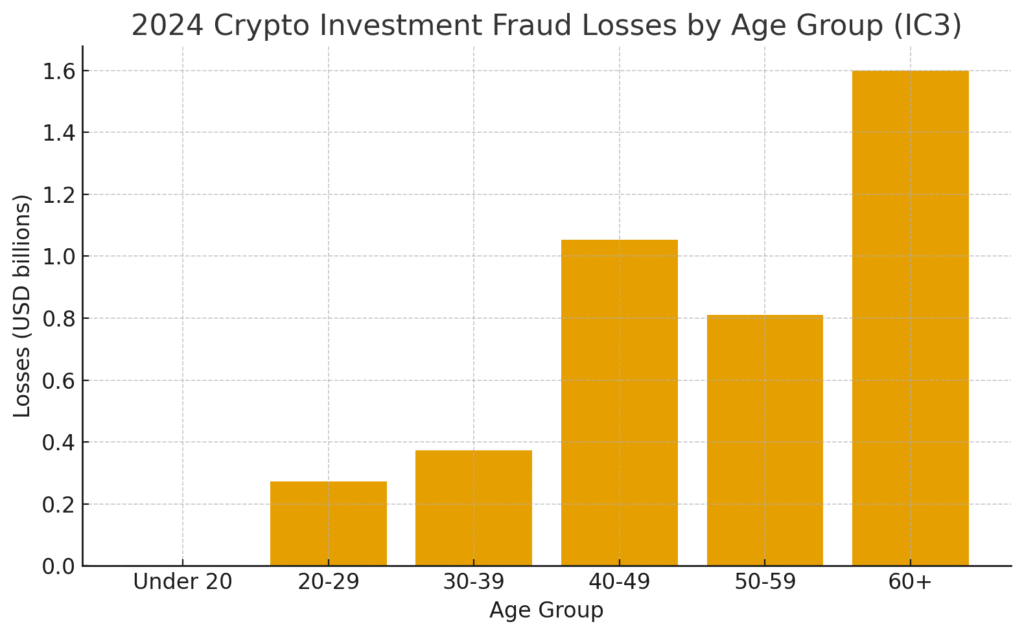
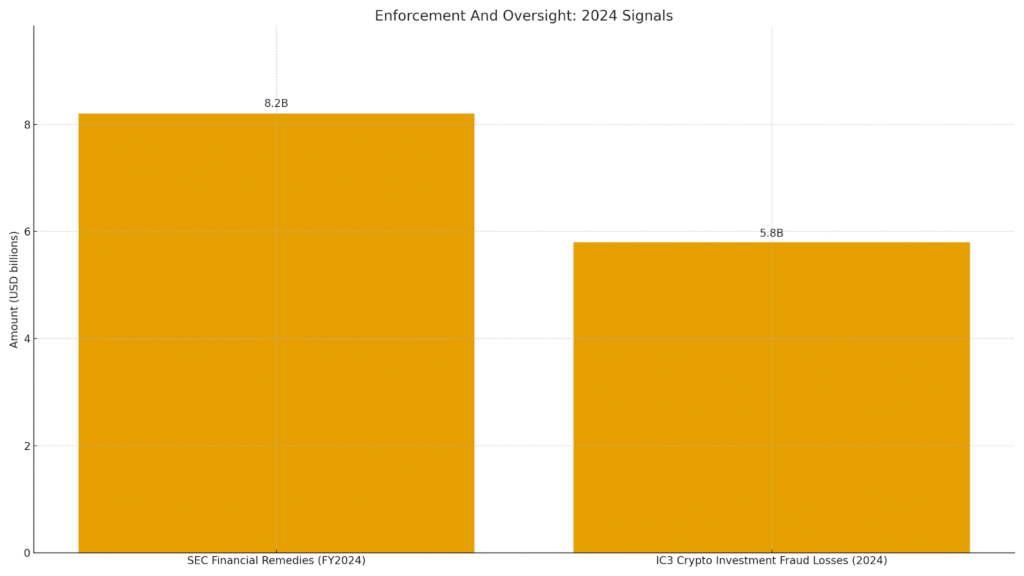
The FBI calls the biggest version of this problem “cryptocurrency investment fraud,” often known as pig butchering. The victim thinks they are on a real trading site. They see fake gains. When they try to withdraw, the site adds fees, taxes, or simply blocks them. In 2024, the FBI logged 41,557 such complaints, with $5.8 billion in losses.
Why This Matters Right Now
Fraud losses keep rising. The FTC says total U.S. fraud losses hit $12.5 billion in 2024, up 25 percent from 2023. Investment scams were the top money loser at $5.7 billion.
Criminals also steal funds through hacks and private key theft. Chainalysis estimates stolen crypto hit about $2.2 billion in 2024, with a surge in key compromises and state-sponsored attacks.
The FBI’s 2024 Internet Crime Report shows total online crime losses of $16.6 billion. Older adults suffered heavy harm, with $4.8 billion in losses for victims aged 60 and up.
The Top 5 Scams And How They Work
1. Pig-Butchering Investment Schemes
How it starts: A friendly text, a dating app match, or a social media DM. The person seems kind and smart. They share a “safe” way to trade crypto.
How it works: The victim funds an account on a slick website. The balance appears to grow. When the victim asks to withdraw, the site demands fees or taxes. Then the account freezes. The FBI warns this is one of the most damaging fraud types today.
Quick defense: Never move money based on a new online friend. Check any platform’s legal name, company filings, and domain age. Make a small test withdrawal before you add more funds.
2. Impersonation And Giveaway Scams
How it starts: A fake X, Telegram, or YouTube account that looks like a famous founder, exchange, or brand. “Send 0.5 ETH, get 1 ETH back.”
How it works: The wallet address belongs to the scammer. There is no prize. The FTC ranks imposter fraud among top consumer scams each year. Crypto “giveaways” are a twist on the same trick.
Quick defense: Assume every giveaway is fake. Brands do not ask you to send crypto to receive crypto. Verify official handles on the brand’s own website.
3. Phishing And Wallet-Drainer Links
How it starts: An airdrop, mint, or urgent “account alert.” The link opens a site that asks for a seed phrase or a blind “Sign” in your wallet.
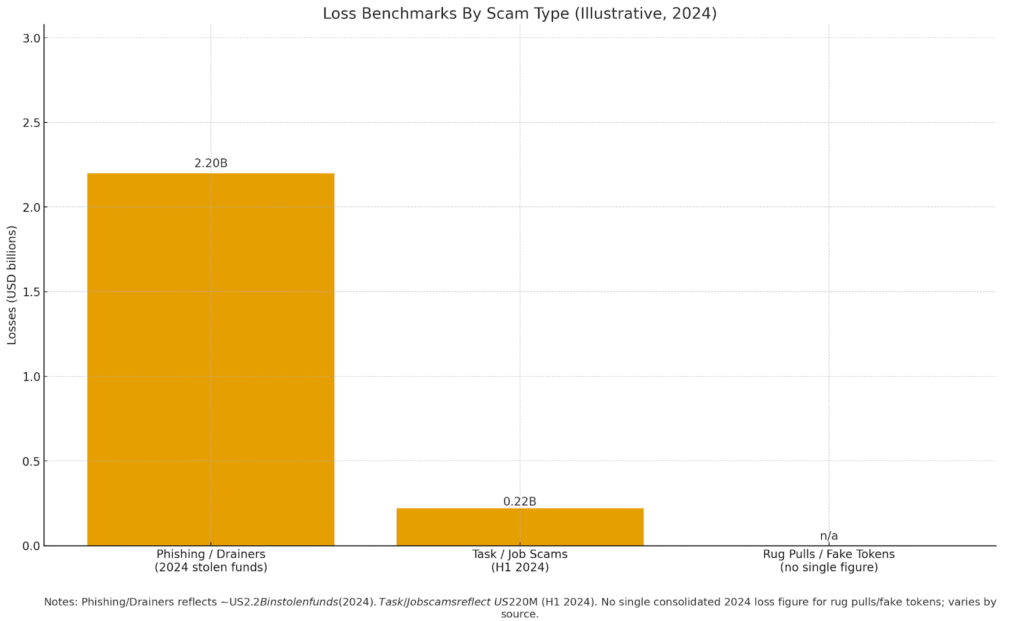
How it works: A drainer drains tokens after you sign a malicious permission. Or a fake support agent steals your seed phrase. Stolen funds rose to about $2.2 billion in 2024, with private key compromises playing a big role.
Quick defense: Never share your seed phrase. Limit token approvals. Use a hardware wallet for large balances. Revoke old approvals often.
4. Fraud Jobs And “Task” Scams
How it starts: A recruiter pings on WhatsApp or SMS. “Boost this app. Get paid daily.” Small payouts build trust.
How it works: The tasks soon require “fees” to unlock larger payouts. Victims keep paying. Then contact stops. The FTC flagged these game-like task scams and tied them to crypto payments. Losses topped $220 million in the first half of 2024.
Quick defense: Do not pay to get paid. Ignore random job texts. Check the company’s site and job board, not a private chat link.
5. Rug Pulls And Fake Tokens
How it starts: A hot new token with a catchy name and a big “community.” The site shows audits and TVL charts. The team is “doxxed.”
How it works: Liquidity gets pulled. The contract blocks sells. Or the token never had real liquidity. Chainalysis notes that scams, stolen funds, and laundering continue to shift toward stablecoins and DeFi rails, where fake tokens can spread fast.
Quick defense: Treat anonymous launches as high risk. Check for real liquidity on major DEXs. Read the contract or use reputable scanners. Avoid tokens with trading limits coded in.
Red Flags And Safer Moves
| Scam Type | Red Flags | Safer Move |
| Pig-Butchering | New online contact pushes crypto trading. Profits show fast. Withdrawals fail or need “tax.” | Stop. Report to IC3 and your exchange. Use only registered platforms. Test withdrawals. |
| Impersonation/Giveaway | “Send 1 ETH, get 2 ETH.” New handle with few followers. Slight spelling changes. | Visit the brand’s website. Find official links. Assume giveaways are fake. |
| Phishing/Drainers | Urgent security alerts. Seed phrase prompts. Blind wallet “Sign.” | Never share seed. Use hardware wallets. Revoke approvals often. |
| Task/Job | Pay fees to unlock pay. WhatsApp recruiter only. | Do not pay to get paid. Apply through verified sites. |
| Rug Pulls/Fake Tokens | Locked sells. Admin mints. No real liquidity. | Avoid hype tokens. Check contract and liquidity. Use trusted scanners. |
Security And Regulatory Context
The Current Risk Picture
- Total fraud losses: $12.5 billion in 2024, up 25 percent year over year. Investment scams led with $5.7 billion.
- Online crime losses: $16.6 billion in 2024, per the FBI. Older adults took heavy losses.
- Crypto-specific harms: $5.8 billion lost to crypto investment fraud in 2024 in IC3 complaints. Stolen funds are near $2.2 billion.
These numbers differ because each source tracks a slice of the problem. The FTC tracks broad consumer fraud. The FBI tracks online crime reports. Chainalysis tracks on-chain flows and hacks. Together, the data show a clear trend. Losses are rising. Scammers target people of all ages.
Enforcement And Oversight
The SEC and CFTC continue to file cases tied to crypto fraud and unregistered offerings. In fiscal 2024, the SEC announced a record $8.2 billion in financial remedies, even as total actions fell. Independent research tallies show most 2024 crypto actions involved fraud or unregistered offerings.
Law enforcement also warns about pig-butchering. The U.S. Secret Service outlines the tactics: fake identities, romance hooks, and cloned trading portals.
What this means for users: Regulators are active, but recovery is hard. Prevention beats cure. Use only platforms that follow clear KYC, market-abuse, and custody rules in your region. Keep funds in wallets you control when not trading.
How To Verify A Platform In 10 Minutes
- Check legal name and entity. Search state filings and the company site.
- Find the real domain. Look for SSL, years of history, and the same company name.
- Search the name plus “scam” and “complaints.” Scan for patterns, not one-off posts.
- Test withdrawal. Send a small amount and withdraw it.
- Review permissions. In DeFi, read what your wallet will allow.
- Use a hardware wallet for large balances.
- Enable 2FA on every exchange account. Prefer app-based 2FA over SMS.
- Set alerts for transfers above a threshold.
- Segment funds. Keep hot wallet balances low.
- Back up seed phrases offline in two places.
A Common Crypto Scam In The Wild: A Quick Walkthrough
- Hook: A text says, “Wrong number, but you seem kind.” Chat moves to daily life talk.
- Bridge: The person shares “their” trading wins. They show screenshots and invite a look.
- Demo: A link leads to a site that mirrors a real exchange. Prices match. A small deposit appears to grow.
- Commitment: The site “rewards” larger deposits. The victim adds more.
- The block: Withdrawal fails. Support asks for tax or fee. The site goes silent.
This is the pattern the FBI highlights. It feeds on trust and time, not just code.
Quick Recovery Steps If You Are Hit
- Stop all transfers. Do not send “taxes” or “unlock fees.”
- Collect evidence. Save URLs, wallet addresses, TXIDs, emails, and chat logs.
- Report fast. File with IC3, the FTC, and your local police. Alert your bank and exchange. The FBI’s Recovery Asset Team and related programs can sometimes freeze funds.
- Revoke approvals. Use a token approval tool to cut off drainers.
- Secure accounts. Change passwords and enable 2FA.
- Seek support. The FBI notes that many victims feel shame. Help exists, and fast reporting helps others too.
Best Practices Checklist
- Use a hardware wallet for savings.
- Keep hot wallet balances small.
- Verify domains through the official site.
- Treat DMs and cold outreach as high risk.
- Never share a seed phrase.
- Revoke token approvals monthly.
- Test withdrawals before adding size.
- Educate family, especially older relatives, who face higher losses.
Conclusion
Every common crypto scam aims to separate users from their keys or coins. The tactics change, but the signs stay the same. Slow down, verify, and test withdrawals. Keep long-term funds in cold storage.
Learn the red flags and share them with friends and family. Do these small steps well, and most scams fail before they start. Share this guide with someone who trades or uses new apps. Spot one common crypto scam early and most losses never happen.
FAQs About Common Crypto Scam
How can someone spot a common crypto scam fast?
Look for urgency, guaranteed returns, and requests to send crypto first. Check domains, test withdrawals, and never share a seed phrase.
Are giveaways ever real?
Legit brands do not ask you to send crypto to receive crypto. Treat every giveaway as fake unless verified on the brand’s own site.
What is the safest way to hold coins?
Use a hardware wallet for savings. Keep small amounts in hot wallets for daily use. Enable 2FA on exchange accounts.
Can victims get funds back?
Sometimes. Report at once. Banks and exchanges can try to freeze transfers. Success rates vary and drop over time.
Are stablecoins safer from scams?
Stablecoins still face phishing, drainers, and fake platforms. Scammers have shifted activity toward stablecoins in some areas. Risk comes from people and permissions, not the coin alone.
Glossary
- Airdrop: A free token distribution, often used for marketing.
- Approval: A wallet permission that lets a contract move tokens on a user’s behalf.
- DEX: A decentralized exchange that lets wallets trade without a custodian.
- Hardware Wallet: A device that stores private keys offline.
- KYC: Rules that require platforms to verify user identity.
- Phishing: A trick to steal secrets through fake sites or messages.
- Pig-Butchering: A long con that builds trust, then steals funds through fake investments.
- Rug Pull: A token project that pulls liquidity or blocks sells to trap buyers.
- Seed Phrase: A secret list of words that can restore a wallet.
- Token Approval Revoke: The act of removing a contract’s rights to move tokens.
Summary
Crypto scams thrive on trust and speed. The biggest threat today is crypto investment fraud, often called pig-butchering. Victims meet a friendly contact online, move funds to a slick but fake site, and then face blocked withdrawals. U.S. fraud losses rose to $12.5 billion in 2024, with investment scams leading the way at $5.7 billion. FBI data shows $5.8 billion lost to crypto investment fraud and heavy impact on older adults. Stolen funds reached about $2.2 billion, with a shift toward key theft and stablecoin flows. Users can cut risk by avoiding cold DMs, never sharing seed phrases, testing withdrawals, revoking token approvals, and using hardware wallets. Report fast to IC3 and the FTC if hit.